 Preview
 Send
Send Share
Share
 Details

 Download
 Similars
 X-Ray
X-Ray Diaporama
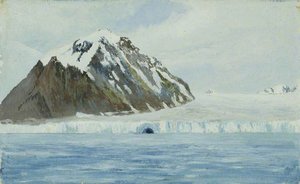
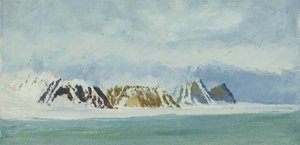
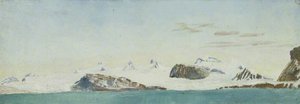
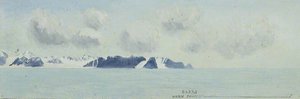
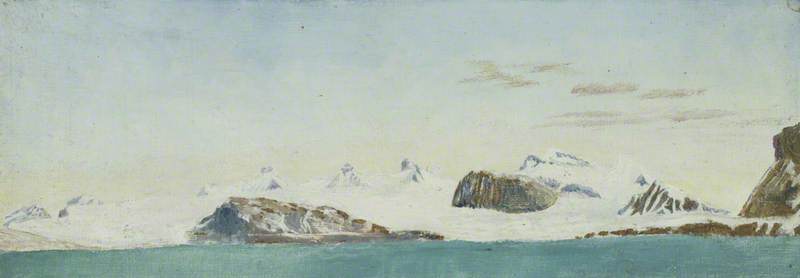
The Kroner Glacier, King's Bay, Spitsbergen
 1921
1921 13.0 x 36.0 cm
 Scott Polar Research Institute
 Read More
Hand Made Oil Reproduction
Hand-painted oil on canvas in your size and frame, made to order by our artists. ( Buy Print Buy Image)




































Pick from our preset sizes that match the artwork's original proportions.

You may enter your own dimensions to fit a specific frame or space. If your selected size does not match the original image's proportions, we will either crop the artwork or extend the painting with additional hand-painted elements. A digital mockup will be sent for your approval before production begins.
Please note that the on-screen preview does not reflect the actual cropping or extension. Only the mockup will accurately show the final composition.
While custom sizes are available, we recommend selecting a dimension from the predefined list to preserve the original proportions.
After order, ArtsDot.com team will email client for instructions and provide a mockup preview
Worldwide Delivery () in 3/4 weeks instead of standard 5 weeks. (22 August). No compromise on quality.

Free Worldwide Express Shipping

High-Quality Linen Canvas

Full Shipping Insurance

Customs Tax Refund Guarantee

True Color Matching Guarantee

60-Day Return Policy (Defects Only)

100% Money-Back Guarantee

Bulk Discount Offer
 Glass option is only available in size under 110 CM

The Kroner Glacier, King's Bay, Spitsbergen
Reproduction Medium
Reproduction Size
-


Total Price
$ 263
Related Artworks









Artist Biography
Roger Pocock (1865 – 1941): A Visionary Landscape Painter of the Bloomsbury Aesthetic
Roger Pocock was a British landscape painter born in 1865, whose artistic career blossomed during the vibrant intellectual milieu of the Bloomsbury Group. Though largely unrecognized during his lifetime, Pocock’s distinctive style—characterized by luminous color palettes and masterful depictions of Arctic vistas—has garnered renewed appreciation in recent decades, cementing his place as a significant figure within British Impressionism and Art Nouveau. His work embodies a profound connection to nature alongside an engagement with philosophical ideas that shaped the era's artistic discourse.Early Life & Artistic Training
Born in London, Pocock’s formative years were marked by exposure to influential artistic circles. He received his initial training at Slade School of Fine Art, where he honed his skills under renowned instructors like Frederic Leighton and William Holman Hunt—artists deeply committed to capturing the grandeur of the British landscape tradition. This grounding in academic painting instilled a meticulous attention to detail and compositional structure, which would later inform Pocock’s own artistic explorations. However, it was his fascination with the Arctic landscapes that truly captivated him.The Arctic Inspirations & Artistic Style
Driven by an unwavering desire to translate the sublime beauty of the Arctic wilderness onto canvas, Pocock embarked on expeditions to Spitsbergen and Greenland during the early 20th century. These journeys profoundly impacted his artistic vision, propelling him toward a style that prioritized atmospheric perspective and expressive color harmonies—elements strongly influenced by Impressionist techniques but infused with a uniquely poetic sensibility. His paintings eschewed mere topographical accuracy; instead, they aimed to convey the emotional resonance of these desolate environments, capturing fleeting moments of light and shadow with remarkable sensitivity. The use of bold brushstrokes and vibrant hues – particularly blues and greens – became hallmarks of his oeuvre.Connections to Bloomsbury & Artistic Influences
Pocock’s artistic pursuits intersected seamlessly with the intellectual currents circulating within the Bloomsbury Group—a collective of writers, artists, and thinkers who championed aesthetic individualism and challenged conventional social norms. Figures like Virginia Woolf, Vanessa Bell, and Edward Burne-Jones served as fellow travelers on his artistic journey, fostering a shared appreciation for exploring psychological depth alongside visual splendor. Pocock’s stylistic choices mirrored the broader Bloomsbury ethos: rejecting academic conventions in favor of subjective experience and prioritizing emotional truth over literal representation. He drew inspiration from artists such as Claude Monet and Edvard Munch, adapting their innovative approaches to color and composition to his own distinctive vision.Notable Works & Legacy
Among Pocock’s most celebrated paintings are “The Alkhornet from within Ice Fiord” and “West Coast of Spitsbergen from Horn Sound,” which exemplify the artist's mastery of capturing Arctic landscapes with breathtaking luminosity and textural richness. These works reside in prestigious museums like Kelvingrove Art Gallery & Museum in Glasgow and Centre Pompidou in Paris, demonstrating the enduring appeal of his artistic vision. Pocock’s legacy extends beyond individual masterpieces; he represents a pivotal voice within British Impressionism—a testament to the transformative power of observation and imagination in shaping artistic expression. His paintings continue to inspire artists today with their evocative portrayal of wilderness and their unwavering commitment to conveying profound emotional truths.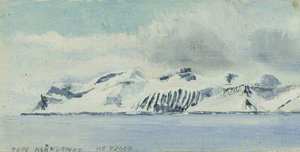
roger pocock
1865 - 1941
Quick Facts
- Artistic Movement Or Style: Romanticism
- Artists Or Movements Influenced By This Artist: ['Romantic Landscape Painting']
- Artists Who Influenced This Artist:
- John Constable
- William Turner
- Date Of Birth: 1865
- Date Of Death: 1941
- Full Name: Roger Pocock
- Nationality: British
- Notable Artworks:
- The Alkhornet from within Ice Fiord
- West Coast of Spitsbergen from Horn Sound, Northwards, No.1
- West Coast, South of King's Bay
- Place Of Birth: London, England