

 Send
Send Share
Share
 Details

 Download
 Similars
 Diaporama
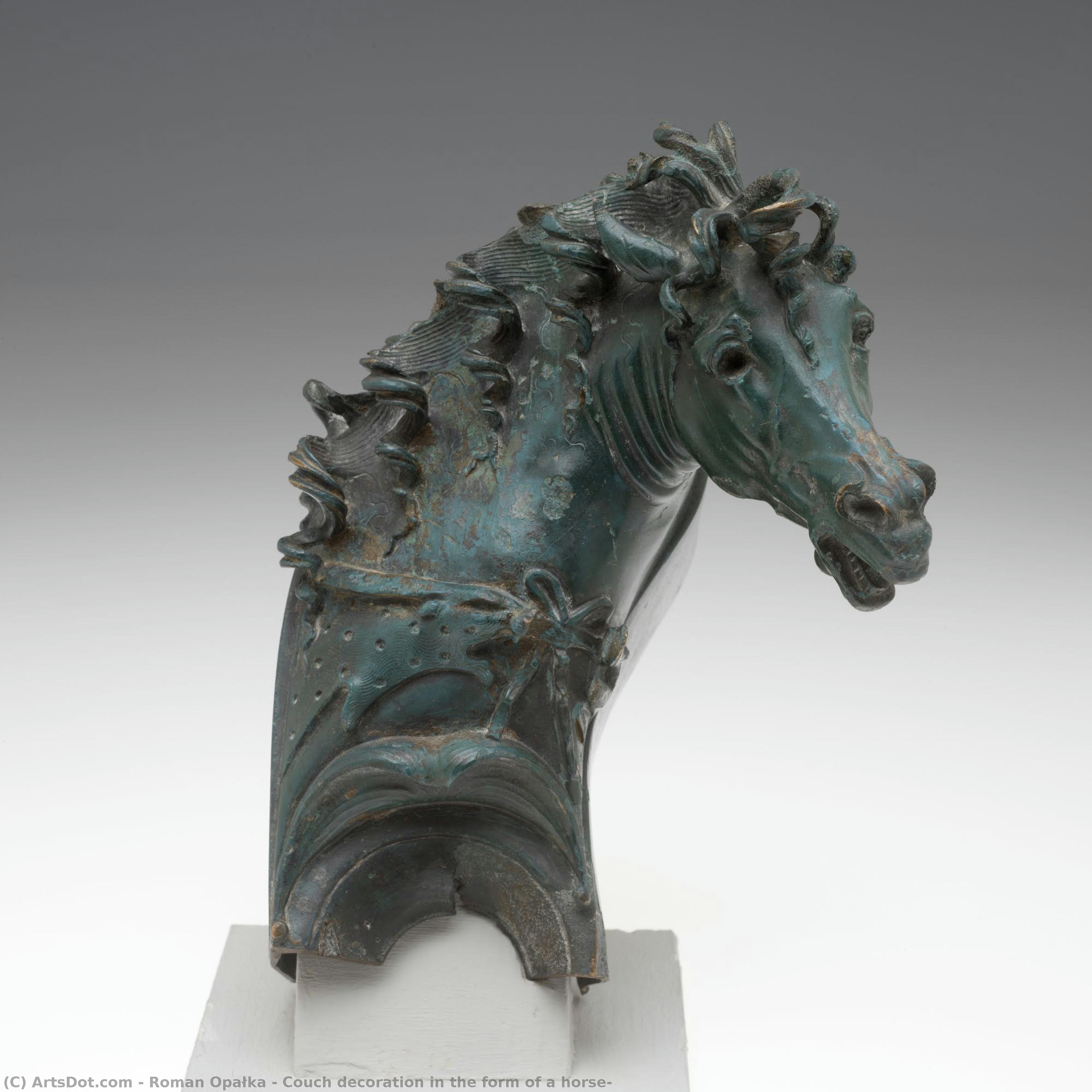
Couch decoration in the form of a horse
 Sculpture Bronze
- Sculpture
- Conceptual Art
 Renaissance
 17.0 x 13.0 cm
 Rhode Island School of Design Museum of Art
 Read More
Purchase a high-resolution, enhanced digital image, far superior to the online preview.
Each file is meticulously prepared by our in-house specialists using advanced tools and expert manual retouching. We ensure every image has exceptional clarity, precise color accuracy, and fine detail.
The final file is delivered via email within 72 hours, optimized for immediate use in professional, editorial, and print environments. This is the same quality trusted by top-tier design studios, publishers, and galleries.
Digital Image
Download a high-resolution file for personal display, printing, and creative projects. ( Buy Print Buy Hand Made Painting)
Included in Every Digital Image Order
Expert Digital Delivery, Guaranteed
When you choose ArtsDot.com, you're not just getting an image - you're receiving a professionally enhanced digital artwork, crafted with precision and backed by a satisfaction guarantee. Here's everything that comes with your order, automatically:

Fast Email Delivery
Your high-resolution digital image file will be emailed to you within 72 hours of ordering - ready for immediate use.

AI-Enhanced Digital File
Your artwork is professionally optimized using advanced AI tools and manual editing, ensuring maximum detail, clarity, and color accuracy.

Free Lifetime Re-Delivery
Accidentally deleted or lost your file? No worries - we'll resend it to you anytime, free of charge.

No Import Fees - Ever
Enjoy your artwork instantly with zero customs, duties, or delivery fees - digital downloads are always tax-free.

Color Accuracy Guarantee
We ensure your digital image reflects the original colors as closely as possible using professional tools and color management.

60-Day Satisfaction Guarantee
If you're not satisfied with your digital image, we'll revise it or refund 100% within 60 days - no questions asked.

100% Money-Back Guarantee
Not satisfied? Get a full refund within 60 days of receiving your digital file - no questions asked.

Bulk Order Discounts
Buy 3 images, save 10% - Buy 5, save 15% - Buy 10+, save 20%. Great for creative projects, galleries, and agencies.
A Bronze Echo of Strength and Time: Roman Opałka’s ‘Couch Decoration in the Form of a Horse’
Roman Opałka's 'Couch Decoration in the Form of a Horse,' a bronze sculpture measuring 17 x 13 cm, is more than just a depiction of equine grace; it’s a poignant meditation on endurance, memory, and the relentless march of time. Crafted by this singular artist between 1965 and 2011 – a period defined by his deeply philosophical engagement with art – the piece resonates with a quiet power born from meticulous technique and a profound understanding of symbolic language. Born in Abbeville, France, to Polish parents who experienced displacement during World War II, Opałka’s life was intrinsically linked to themes of identity and historical weight, concerns that are powerfully embodied within this sculpture.
Sculptural Realism and the Language of Bronze
- Medium: The work is executed in bronze, a material chosen not merely for its aesthetic qualities but also for its inherent connection to permanence and historical significance. Bronze, often associated with ancient civilizations and monumental sculpture, immediately elevates the piece beyond a simple decorative object.
- Technique: Opałka’s mastery of lost-wax casting is evident in the intricate detailing – the flowing lines of the mane, the sharply defined musculature of the neck, and the subtle textures that mimic the natural patina of aged bronze. This technique, demanding immense skill and patience, allows for a remarkable level of realism within a stylized representation.
- Composition: The sculpture’s tight framing, focusing intently on the horse's head, creates an immediate sense of intimacy, drawing the viewer into its powerful presence. The slight downward angle further emphasizes the animal’s strength and nobility.
Symbolism and the Weight of History
The horse itself is a potent symbol across cultures – representing strength, freedom, nobility, and even divine power. In Opałka's hands, this symbolism is amplified by the sculpture’s aged patina, which speaks to centuries of history and endurance. The muted teal-blue hue of the bronze, derived from its natural oxidation process, adds to this sense of antiquity, suggesting a timeless quality that transcends any specific era. The pedestal, likely crafted from plaster or stone, provides a grounding element, anchoring the sculpture in the present while simultaneously referencing classical artistic traditions.
A Reflection on Time and Memory
Opałka’s work is deeply rooted in his personal experiences – his family's displacement, his upbringing in Poland, and his lifelong fascination with the passage of time. ‘Couch Decoration in the Form of a Horse’ can be interpreted as a visual representation of this preoccupation, inviting contemplation on themes of memory, loss, and the enduring power of nature. The sculpture’s quiet elegance evokes a sense of timeless beauty, suggesting that even in the face of adversity, there is always something to hold onto – a symbol of strength, a reminder of our connection to the past.
Perfect for Collection & Interior Design
This hand-painted reproduction captures the essence of Opałka’s artistic vision with exceptional detail and fidelity. Its size (17 x 13 cm) makes it ideal for display on a mantelpiece, bookshelf, or as a striking accent piece within any interior design scheme. The sculpture's timeless subject matter and sophisticated aesthetic will undoubtedly appeal to discerning collectors and those seeking to infuse their spaces with a touch of quiet elegance and historical resonance.
Related Artworks



Artist Biography
A Life Dedicated to Counting: The Singular Vision of Roman Opałka
Roman Opałka, born in 1931 in Abbeville-Saint-Lucien, France, to Polish parents, embarked on an artistic journey that defied conventional categorization. His life, marked by displacement and a profound engagement with philosophical inquiry, ultimately led him to create one of the most conceptually rigorous and emotionally resonant bodies of work in contemporary art. The family’s return to Poland in 1946 following World War II deeply impacted Opałka, shaping his early experiences and fueling a lifelong exploration of identity, memory, and the relentless passage of time. He initially trained in lithography at a graphics school in Łódź before continuing his artistic education at the School of Art and Design there, laying the groundwork for an approach that would transcend traditional mediums and embrace conceptual frameworks.The Genesis of Infinity: OPALKA 1965/1 – ∞
Opałka’s career wasn't a linear progression through styles but rather a constant questioning of artistic boundaries, culminating in the monumental project that would define his legacy: OPALKA 1965/1 – ∞. Beginning on September 1st, 1965, he committed himself to painting canvases sequentially numbered from one onwards. Each canvas bore the next integer in the series, rendered in black against a stark white background. This wasn’t merely an exercise in enumeration; it was a profound meditation on time, mortality, and the human condition. As the numbers grew larger, they began to spill over the edges of the canvases, visually representing the inexorable march forward and the artist's own aging process. The scale of this undertaking is almost incomprehensible – 233 “Details” were completed during his lifetime, encompassing over five million numbers. He meticulously documented each stage, recording himself vocalizing the numbers in Polish before painting them, creating a multi-layered artwork that encompassed visual, auditory, and performative elements. The gradual lightening of the background, beginning in 1972 with the addition of one percent white to each successive canvas, further emphasized the passage of time and the approaching “horizon” of white on white – a symbolic vanishing point representing infinity.Influences and Artistic Development
While Opałka’s work is often associated with minimalism due to its apparent simplicity, it's an oversimplification that belies the depth of his conceptual concerns. He was profoundly influenced by Marcel Duchamp, particularly Duchamp’s rejection of traditional artistic conventions and embrace of intellectual playfulness. The spirit of Dada and Surrealism also resonated within his early explorations. However, Opałka wasn’t simply mimicking existing movements; he was forging a unique path that drew upon diverse sources. His earlier works reveal a fascination with texture and abstraction, demonstrating a willingness to experiment with various materials and techniques before settling on the rigorous structure of the numbering series. He explored monochrome compositions – his “Chronomes” – and abstract drawings, constantly searching for a visual language capable of expressing his evolving philosophical ideas. These early experiments were crucial stepping stones toward the conceptual clarity and sustained commitment that characterized OPALKA 1965/1 – ∞.Legacy and Historical Significance
Roman Opałka’s death in 2011 marked the end of an extraordinary artistic life, but his work continues to resonate with audiences today. His relentless dedication to a single, seemingly simple concept challenged conventional notions of artistic creation and offered a powerful meditation on mortality, infinity, and the human condition. His influence can be seen in the works of numerous artists who explore themes of repetition, sequence, and process-based art. Opałka’s project transcends the boundaries of painting; it is a philosophical statement, a performance piece, and a testament to the power of sustained artistic vision. His work remains relevant in contemporary discussions about time, identity, and the search for meaning in an increasingly complex world. Exhibitions of his work have been held in prestigious institutions worldwide, including the Indianapolis Museum of Art, the Philadelphia Museum of Art, and the Museum Pomorskie in Poland, solidifying his place as a significant figure in 20th and 21st-century art history. Opałka’s legacy is not merely one of artistic innovation but also of unwavering commitment to an idea – a testament to the enduring power of conceptual art.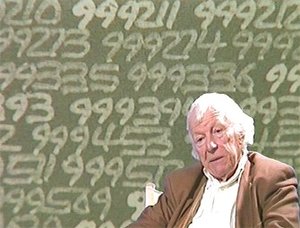
Roman Opałka
1931 - 2011 , France
Quick Facts
- Artistic Movement Or Style: Conceptual Art
- Artists Or Movements Influenced By This Artist:
- Minimalism
- Process-based art
- Artists Who Influenced This Artist: ['Marcel Duchamp']
- Date Of Birth: August 27, 1931
- Date Of Death: August 6, 2011
- Full Name: Roman Opałka
- Nationality: Polish-French
- Notable Artworks:
- OPALKA 1965/1 - ∞
- table top
- Relief of a Falling Warrior
- Ornament with Wolf
- Place Of Birth: Abbeville, France

