 Preview
 Send
Send Share
Share
 Details

 Download
 Similars
 X-Ray
X-Ray Diaporama
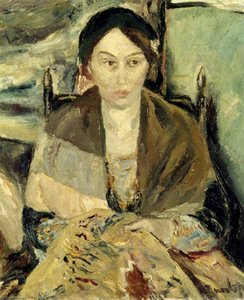
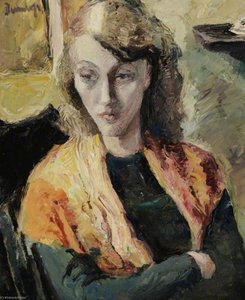
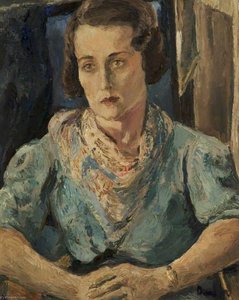
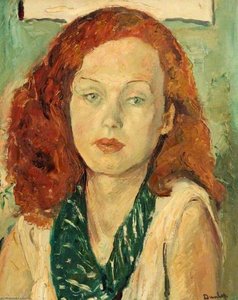
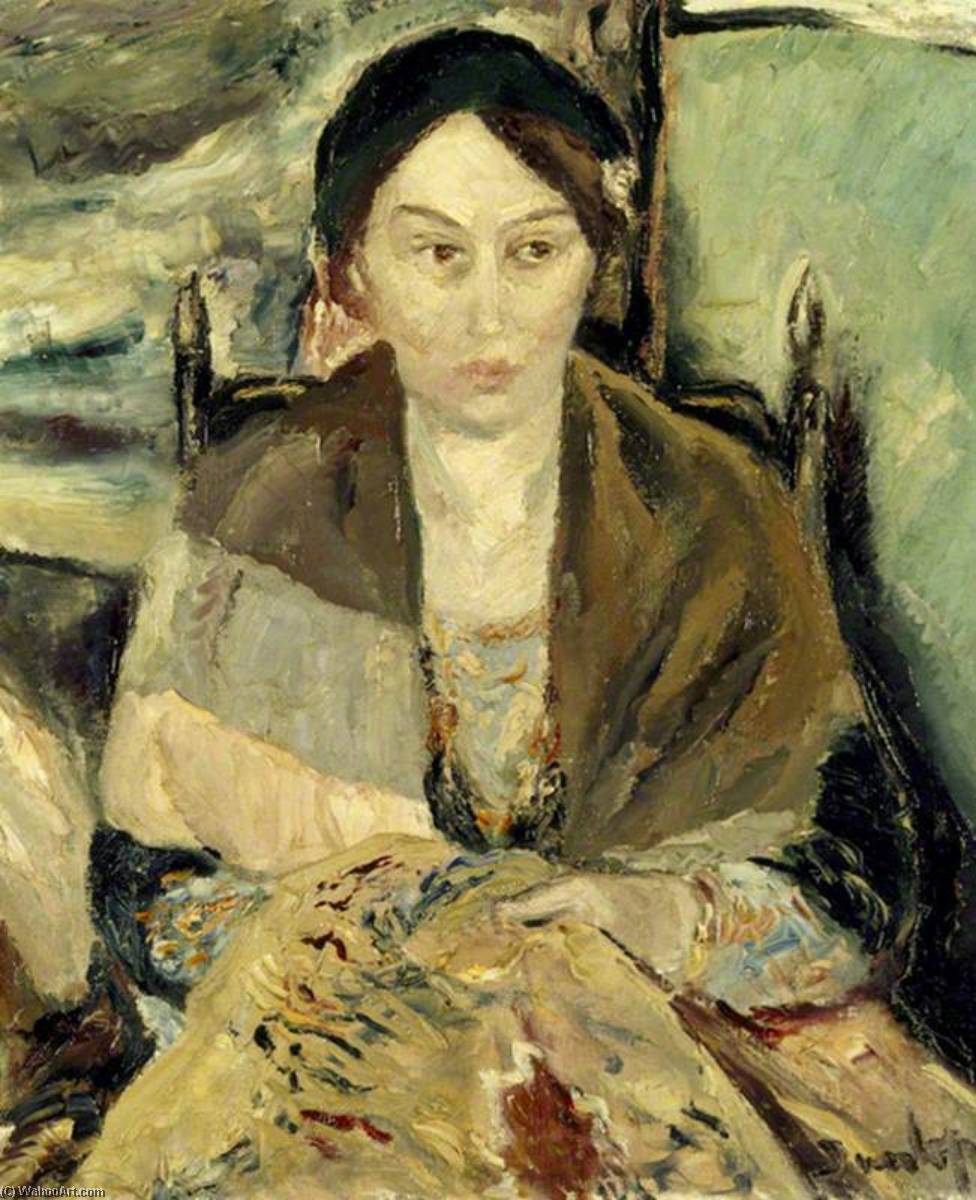
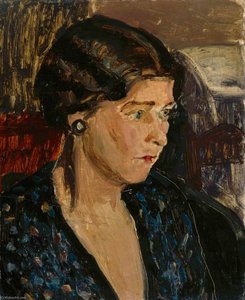
Dorothy Wynne Wiggin (1882–1957), Lady Elton
 Oil
Oil- WallArt
- Contemporary Realism
 1930
1930- Modern
 76.0 x 61.0 cm
 National Trust
 Read More
Giclée / Art Print
Museum-quality giclée or canvas print with fast production and flexible finish options. ( Buy Hand Made Painting Buy Image)




P118B $10

P118H $10

P118W $10

P438Z $10

P508JH $12

P508YH $12

P805H $10

P805Z $10

P919BZ $10

P919G $10

P919XJ $10

P959ZH $10

P968JZ $12

W106C $8

W218G $10

W218JH $8

W218Y $10

W307PJ $10

W316G $10

W316PJ $8

W316Y $10

W398PJ $8

W4111J $10

W500HY $15

W500JH $15

W692G $12

W849H $8

W940BG $15

W953PJ $8




Pick from our preset sizes that match the artwork's original proportions.

You may enter your own dimensions to fit a specific frame or space. If your selected size does not match the original image's proportions, we will either crop the artwork or extend the image with a mirrored or solid-fill edge. A digital mockup will be sent for your approval before production begins.
Please note that the on-screen preview does not reflect the actual cropping or extension. Only the mockup will accurately show the final composition.
While custom sizes are available, we recommend selecting a dimension from the predefined list to preserve the original proportions.
Worldwide Delivery () in 2 weeks instead of standard 4/5 weeks. (24 August)

Free Worldwide Express Shipping

High-Quality Linen Canvas

Full Shipping Insurance

Customs Tax Refund Guarantee

True Color Matching Guarantee

60-Day Return Policy (Defects Only)

100% Money-Back Guarantee

Bulk Discount Offer
 Glass option is only available in size under 110 CM

Dorothy Wynne Wiggin (1882–1957), Lady Elton
Giclée / Art Print
Reproduction Size
-


Total Price
$ 63
Collectible Description
A Glimpse into an Elegant Era
In this evocative portrait from 1930, Ronald Ossory Dunlop captures more than just a likeness; he preserves a moment of quiet, aristocratic introspection. The subject, Dorothy Wynne Wiggin, known as Lady Elton, is depicted in a pose that suggests a profound connection to the world beyond the frame. Seated in an exquisitely ornate chair, her head is turned slightly away from the viewer, her gaze drifting toward something unseen. This subtle movement creates a sense of narrative mystery, inviting the observer to wonder what caught her attention in that fleeting second of stillness. The composition is layered with depth, as the presence of other figures—partially glimpsed on the periphery—suggests a larger social tapestry, placing Lady Elton within the vibrant, intellectual circles of her time.
The painting serves as a masterful study of texture and light, where the soft fall of her long hair and the delicate drape of the scarf around her neck are rendered with a painterly grace. Dunlop’s ability to balance the intricate details of the furniture with the ethereal quality of the subject's expression creates a captivating tension. For the discerning collector or interior designer, this piece offers a sophisticated focal point, bringing an air of historical prestige and classical elegance to any curated space.
The Mastery of Ronald Ossory Dunlop
To understand the soul of this portrait, one must look to the artistic lineage of its creator. Born into the culturally rich atmosphere of the Irish Literary Renaissance, Ronald Ossory Dunlop was deeply influenced by the mystical and spiritualist currents that defined his era. His upbringing, surrounded by luminaries such as W.B. Yeats, instilled in him a sensitivity to the unseen layers of reality. This is evident in his technique, characterized by an alla prima approach that allows for a spontaneous, vibrant energy to breathe through the oil pigments.
Dunlop’s brushwork does not merely sit upon the canvas; it dances with a rhythmic vitality that breathes life into the sitter. The way he handles light suggests a profound understanding of atmosphere, transforming a standard portrait into a psychological landscape. His training across Manchester, Wimbledon, and Paris provided him with a diverse technical vocabulary, allowing him to blend classical portraiture traditions with a modern, fluid sensibility. This unique fusion makes his work particularly appealing to those who appreciate art that feels both timeless and strikingly alive.
A Timeless Addition to the Modern Interior
For those seeking to infuse their homes or galleries with a sense of storied history, a high-quality reproduction of this work offers an unparalleled opportunity. The portrait of Lady Elton is not merely a decorative element; it is a conversation piece that evokes the glamour and intellectual depth of the early 20th century. Its palette and composition are versatile enough to complement both traditional period rooms and contemporary minimalist settings, providing a touch of soulful sophistication.
Investing in such a reproduction allows for the appreciation of fine art's emotional impact without the constraints of museum-grade acquisitions. The piece invites viewers to linger, to study the interplay of shadow and light, and to lose themselves in the quiet dignity of Lady Elton’s gaze. It is an ideal selection for anyone looking to anchor a room with a sense of permanence, grace, and the enduring beauty of the Irish painterly tradition.
Related Artworks

Artist Biography
Ronald Ossory Dunlop: A Life in Paint
Early Life and Education
- Born: Dublin, Ireland, June 28, 1894.
- Dunlop came from a Scottish-Irish Quaker family with artistic inclinations; his mother was a watercolour painter.
- His early life was steeped in the atmosphere of the Irish Literary Renaissance, as his father was close friends with prominent figures like W.B. Yeats and George Russell (Æ).
- The family moved to New York in 1899, then London in 1902, maintaining a strong connection to Dublin through annual visits.
- He studied at Manchester School of Art, Wimbledon College of Art, and Paris, gaining a diverse artistic foundation.
Artistic Development & Influences
- Dunlop’s early career involved time in an advertising agency before dedicating himself fully to painting.
- Influences: The artistic and literary environment of his upbringing, particularly the mystical and spiritualist currents surrounding figures like Yeats and Russell, profoundly shaped his aesthetic sensibility.
- He associated with a group of young artists exhibiting at the Hurricane Lamp Gallery in Chelsea, contributing to the development of ‘Emotionism’.
- His style evolved towards a painterly exuberance, characterized by bold brushwork and vibrant color palettes. He became known as an 'alla prima' painter – working directly onto the canvas in a single session.
The Emotionist Group & Artistic Philosophy
- In 1923, Dunlop founded the Emotionist Group, advocating for art as an expression of inner essence and emotional experience.
- He penned a manifesto for the group, stating “Art is the expression of the essence of life,” reflecting their belief in subjective interpretation and artistic freedom.
- Dunlop joined The London Group in 1931, further solidifying his position within the avant-garde art scene.
Exhibition & Recognition
- Dunlop was a prolific exhibitor, showcasing his work at prestigious venues including the Royal Academy, New English Art Club, Leicester Galleries, and the Royal Hibernian Academy.
- His first one-man show took place in 1928 at the Redfern Gallery in London.
- Major Achievement: Elected a full member of the Royal Academy in 1950, marking the pinnacle of his professional recognition.
- His work is held in numerous public collections, including the Tate Gallery, Crawford Gallery (Cork), Cheltenham Art Gallery & Museum, and the National Portrait Gallery (London).
Themes & Style
- Dunlop’s oeuvre encompasses landscapes, seascapes, figure studies, portraits, and still life.
- He frequently depicted scenes of the English countryside, particularly around Barnham, West Sussex, where he lived later in life.
- Style: Characterized by a vibrant palette, energetic brushwork, and an emphasis on capturing atmosphere and emotional resonance. His work often possesses a sense of immediacy and spontaneity.
Later Life & Legacy
- Dunlop spent much of his life in England, eventually settling in Barnham, West Sussex.
- He continued to paint and exhibit until his death on May 18, 1973.
- Historical Significance: Dunlop’s work represents a bridge between traditional painting techniques and the expressive freedom of modernism. His vibrant style and dedication to capturing emotional truth continue to resonate with audiences today. However, his popularity has also led to numerous forgeries appearing on the market.
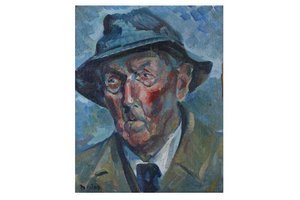
Ronald Ossory Dunlop
1894 - 1973 , Ireland
Quick Facts
- Birth Date: 1894-06-28
- Birth Place: Dublin, Ireland
- Death Date: 1973-05-18
- Influenced By: W. B. Yeats, James Stephens, George Russell
- Movement: Emotionism, British Impressionism
- Name: Ronald Ossory Dunlop
- Nationality: Irish
- Notable Works:
- Self Portrait
- Walberswick
- Mrs R. O. Dunlop
- Snow at Stratford on Avon
- St Tropez, South of France
- The Thames at Sunbury
Related Articles
Ronald Ossory Dunlop: A Study in Early Canadian Modernism & Evocative Landscape Painting
Discover the captivating world of Ronald Ossory Dunlop, a pivotal Irish painter known for his 'alla prima' landscapes & emotive portraits. Explore his life, techniques, and key artworks with ArtsDot.
Edward Hopper's Masterpieces: 25 Iconic Paintings & Their Enduring Legacy | ArtsDot
Explore 25 iconic Edward Hopper paintings & their stories. Discover American realism, urban loneliness, and timeless beauty through his masterpieces. Find museum-quality art reproductions & curated decor ideas at ArtsDot.com.

Georges Seurat's Masterpieces: 25 Paintings That Defined Pointillism | ArtsDot
Explore 25 iconic Georges Seurat paintings & discover the brilliance of Pointillism. From 'La Grande Jatte' to his harbor scenes, delve into art history with ArtsDot.com. Find museum-quality reproductions for your home decor. Explore the full collection online!
Egon Schiele's Masterpieces: 25 Paintings That Define Expressionism | ArtsDot
Delve into the haunting world of Egon Schiele with our curated selection of his 25 most iconic Expressionist paintings. Explore the artist's life, technique & emotional depth. Find museum-quality Schiele reproductions and elevate your home decor on ArtsDot.com.
Dante Gabriel Rossetti's 25 Masterpieces: A Journey Through Victorian Art & Symbolism | ArtsDot
Explore 25 iconic artworks by Dante Gabriel Rossetti, a leading Pre-Raphaelite artist. Discover the stories behind masterpieces like 'Proserpine' & 'Beata Beatrix'. Find museum-quality art reproductions and elevate your home decor with ArtsDot.com.