 Preview
 Send
Send Share
Share
 Details

 Download
 Similars
 X-Ray
X-Ray Diaporama
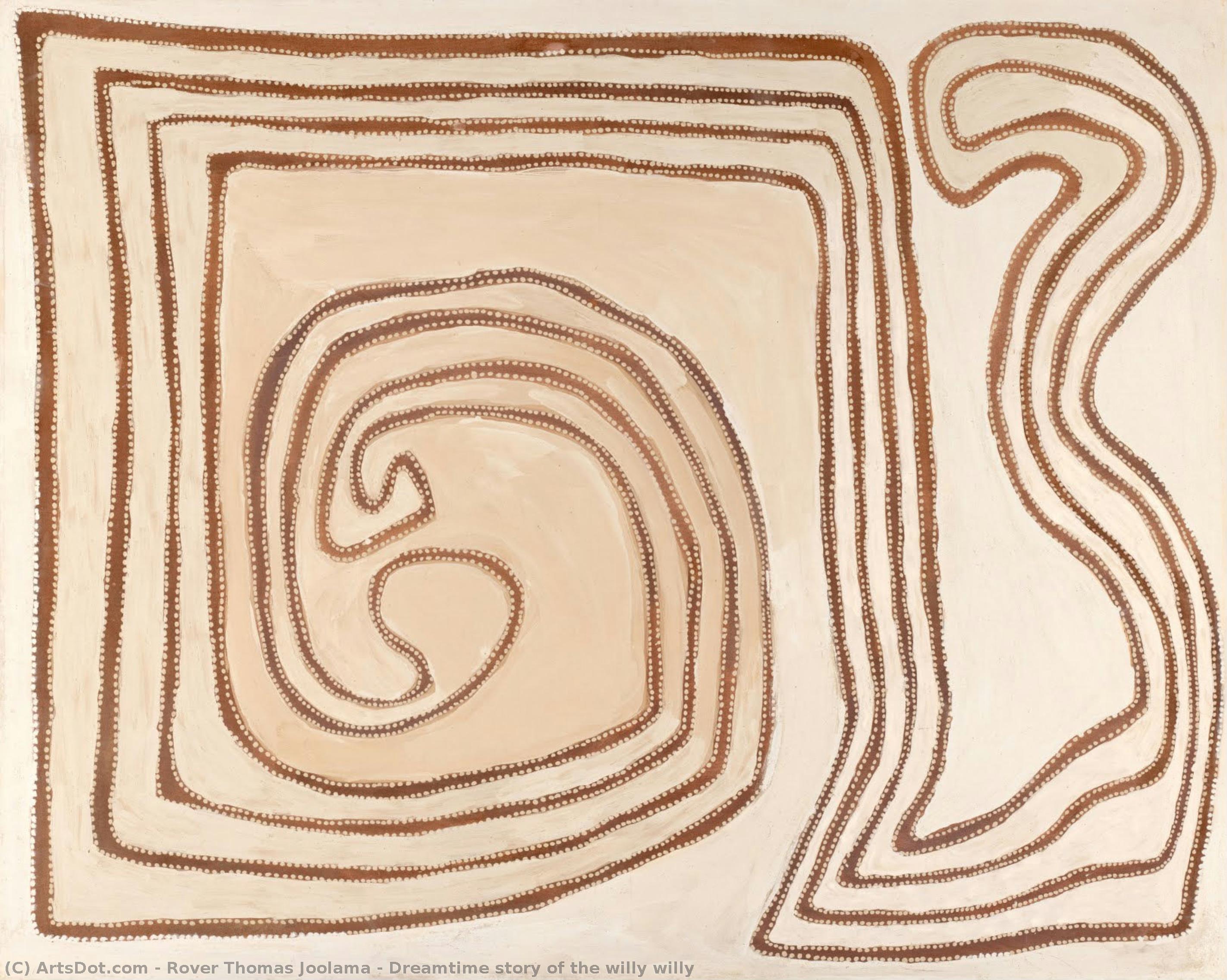
Dreamtime story of the willy willy
 Pigment
- Contemporary Aboriginal Art
 1989
1989- Contemporary
 160.0 x 200.0 cm
 National Gallery of Victoria
 Read More
Giclée / Art Print
Museum-quality giclée or canvas print with fast production and flexible finish options. ( Buy Hand Made Painting Buy Image)




































Pick from our preset sizes that match the artwork's original proportions.

You may enter your own dimensions to fit a specific frame or space. If your selected size does not match the original image's proportions, we will either crop the artwork or extend the image with a mirrored or solid-fill edge. A digital mockup will be sent for your approval before production begins.
Please note that the on-screen preview does not reflect the actual cropping or extension. Only the mockup will accurately show the final composition.
While custom sizes are available, we recommend selecting a dimension from the predefined list to preserve the original proportions.
Worldwide Delivery () in 2 weeks instead of standard 4/5 weeks. (27 August)

Free Worldwide Express Shipping

High-Quality Linen Canvas

Full Shipping Insurance

Customs Tax Refund Guarantee

True Color Matching Guarantee

60-Day Return Policy (Defects Only)

100% Money-Back Guarantee

Bulk Discount Offer
 Glass option is only available in size under 110 CM

Dreamtime story of the willy willy
Giclée / Art Print
Reproduction Size
-


Total Price
$ 63
The Dance of Dust and Spirit
In the vast, sun-drenched expanse of the East Kimberley, stories are not merely told; they are etched into the very fabric of the landscape. Rover Thomas Joolama, a pioneer of the East Kimberley school, captures this profound connection in his breathtaking masterpiece, Dreamtime story of the willy willy. This work is far more than a visual representation of a weather phenomenon; it is a sacred cartography of ancestral movement. The painting traces the path of miowin, a spiraling dust storm, as it surges across the matte, white surface of the land. Through a mesmerizing use of red-ochre glyphs, Joolama guides the viewer’s eye along an ancient trail, following the storm's increasing velocity as it travels through Jaru country toward the badangu ngapa—the vital main waterhole.
The emotional resonance of the piece lies in its climactic moment of convergence. As the spiral reaches its zenith, the willy willy is consumed by Garagi, the Rainbow Serpent. This encounter symbolizes the eternal cycle of nature and the powerful, often turbulent, forces that govern the Australian wilderness. For the collector or the interior designer, this painting offers a profound sense of movement and cosmic balance, making it a centerpiece that commands attention while inviting deep, meditative contemplation.
A Masterclass in Aboriginal Minimalism
Technically, Joolama’s work is a triumph of purposeful simplicity. Utilizing pigment on a large-scale canvas measuring 160 x 200 cm, the artist employs a restrained yet powerful color palette of earthy browns, stark whites, and deep ochres. This minimalist approach does not diminish the impact; rather, it amplifies the spiritual weight of the symbols. The texture of the pigment lends a rich, tactile quality to the work, reminiscent of the very earth it depicts. The composition functions much like a labyrinth or a celestial map, where every line and dot serves as a vessel for historical truth.
The stylistic brilliance of this piece lies in its ability to bridge the gap between traditional Aboriginal storytelling and modern abstract expressionism. To an observer, the intricate designs may appear as an abstract maze, but to those familiar with the Kimberley traditions, they are legible records of Dreamtime myths. This duality makes the artwork exceptionally versatile for high-end contemporary spaces, where it can serve as both a sophisticated aesthetic element and a profound cultural artifact.
Timeless Elegance for the Discerning Collector
Owning a reproduction of such a significant work allows one to bring the ancient energy of the Great Sandy Desert into a modern living environment. Whether placed in a curated gallery setting or as a focal point in a luxury residential interior, Dreamtime story of the willy willy provides an unparalleled sense of groundedness and prestige. The historical significance of Joolama’s contribution to Australian art history ensures that this piece remains a timeless investment in both culture and style.
For those seeking to decorate with intention, this artwork offers:
- Cultural Depth: A direct connection to the ancestral narratives of the Wangkajunga and Kukatja people.
- Visual Harmony: A neutral yet vibrant color scheme that complements both minimalist and organic interior design palettes.
- Narrative Power: A conversation starter that explores themes of nature, myth, and the enduring spirit of the Australian landscape.
Related Artworks
Artist Biography
early life and career
rover thomas joolama, a wangkajunga and kukatja aboriginal australian artist, was born in 1926 at gunawaggi near well 33 on the canning stock route in the great sandy desert of western australia. he spent most of his life working as a stockman in the east kimberley in the north of western australia.artistic journey
thomas began painting on canvas in the early 1980s, soon becoming a pioneer artist of what was later known as the east kimberley school. his work was characterized by its unique blend of traditional aboriginal storytelling and modern artistic expression.- dreamtime story of the willy willy (160 x 200 cm, national gallery of victoria, melbourne, australia, pigment) is a notable example of his work, showcasing his ability to capture the essence of ancestral myths in a modern context.
- yari country (160 x 200 cm, national gallery of victoria, melbourne, australia, pigment) demonstrates thomas's skill in conveying the stories of his people through vibrant, abstract compositions.
awards and exhibitions
thomas was awarded the john mccaughey prize at the art gallery of new south wales in 1990. his work was also featured in a solo exhibition, roads cross: the paintings of rover thomas, at the national gallery of australia, canberra in 1994.legacy and impact
thomas's contributions to aboriginal australian art are undeniable. his unique style has inspired generations of artists, and his work continues to be celebrated globally. as a pioneer of the east kimberley school, thomas paved the way for future aboriginal artists to share their stories through art. view more works by rover thomas joolama on ArtsDot: [https://ArtsDot.com/@/rover-thomas-joolama](https://ArtsDot.com/@/rover-thomas-joolama) explore the national gallery of victoria's collection on ArtsDot: /en/art/show/art-d3c5zh-en/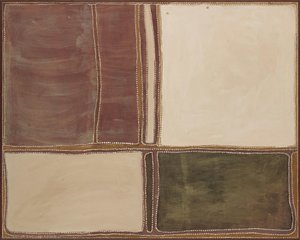
rover thomas joolama
1926 - 1998 , Australia
Quick Facts
- Artistic Movement Or Style: Impressionism
- Artists Or Movements Influenced By This Artist:
- Degas
- Manet
- Artists Who Influenced This Artist:
- Eugène Boudin
- Mary Cassatt
- Date Of Birth: May 22, 1844
- Date Of Death: June 14, 1926
- Full Name: Mary Stevenson Cassatt
- Nationality: American
- Notable Artworks:
- The Mandolin Player
- Little Girl in a Blue Armchair
- Born to Sing
- Place Of Birth: Allegheny City, PA
Related Articles

White on Canvas: 10 Masterpieces & Timeless Elegance for Your Home Decor
Explore 10 iconic white paintings by Monet, Whistler & Rothko! Discover the stories behind these serene masterpieces and their impact on art history. Find museum-quality reproductions for your home decor at .

Crimson Threads of Narrative: Exploring Symbolism & Representation in Artworks Featuring the Red Dress
Explore the rich symbolism of the red dress in art history! From ancient power displays to iconic portraits like Cézanne’s 'Madame Cezanne', discover the cultural and artistic significance behind this captivating color. Expert analysis & insights.
Mark Rothko's Masterpieces: 25 Paintings That Define Abstract Expressionism | ArtsDot
Explore 25 iconic Mark Rothko paintings that define Abstract Expressionism. Discover the stories, colors & emotions behind these masterpieces. Find museum-quality art reproductions and curated decor ideas at ArtsDot.com.
The Subtleties of White: Exploring Absence, Light & Symbolism in Art History
Explore the profound symbolism & history of white in art! From ancient purity to modern abstraction, discover how artists have used absence & light. Expert insights from ArtsDot.
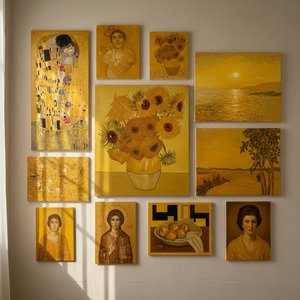
Golden Hues: Top 10 Paintings Dominated by Yellow Ochre |
Explore 10 iconic paintings bathed in golden yellow ochre! From Van Gogh's sunflowers to Monet’s haystacks, discover the stories behind these masterpieces. Find museum-quality art reproductions & elevate your home decor on .