 Preview
 Send
Send Share
Share
 Details

 Download
 Similars
 X-Ray
X-Ray Diaporama
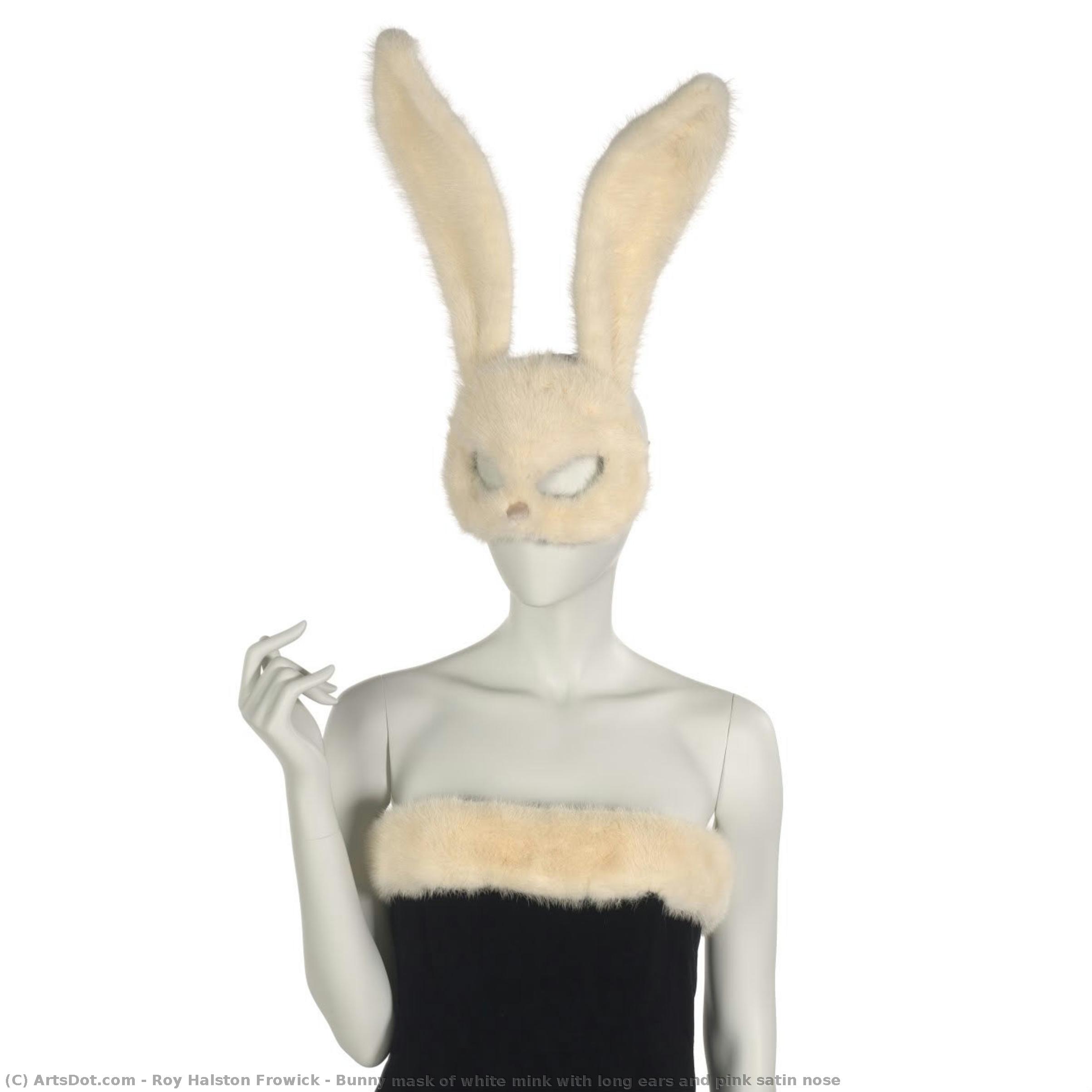
Bunny mask of white mink with long ears and pink satin nose


 Read More
Giclée / Art Print
Museum-quality giclée or canvas print with fast production and flexible finish options. ( Buy Hand Made Painting Buy Image)




P118B $10

P118H $10

P118W $10

P438Z $10

P508JH $12

P508YH $12

P805H $10

P805Z $10

P919BZ $10

P919G $10

P919XJ $10

P959ZH $10

P968JZ $12

W106C $8

W218G $10

W218JH $8

W218Y $10

W307PJ $10

W316G $10

W316PJ $8

W316Y $10

W398PJ $8

W4111J $10

W500HY $15

W500JH $15

W692G $12

W849H $8

W940BG $15

W953PJ $8




Pick from our preset sizes that match the artwork's original proportions.

You may enter your own dimensions to fit a specific frame or space. If your selected size does not match the original image's proportions, we will either crop the artwork or extend the image with a mirrored or solid-fill edge. A digital mockup will be sent for your approval before production begins.
Please note that the on-screen preview does not reflect the actual cropping or extension. Only the mockup will accurately show the final composition.
While custom sizes are available, we recommend selecting a dimension from the predefined list to preserve the original proportions.
Worldwide Delivery () in 2 weeks instead of standard 4/5 weeks. (28 August)

Free Worldwide Express Shipping

High-Quality Linen Canvas

Full Shipping Insurance

Customs Tax Refund Guarantee

True Color Matching Guarantee

60-Day Return Policy (Defects Only)

100% Money-Back Guarantee

Bulk Discount Offer
 Glass option is only available in size under 110 CM

Bunny mask of white mink with long ears and pink satin nose
Giclée / Art Print
Reproduction Size
-


Total Price
$ 63
A Glimpse of Glamour: Roy Halston Frowick’s ‘Bunny Mask’
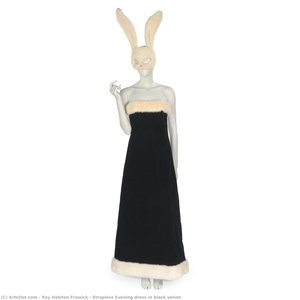
Roy Halston Frowick's 1966 “Bunny Mask” isn’t merely a costume; it’s a crystallized moment of mid-century exuberance, a testament to the designer’s mastery of texture and his uncanny ability to capture the spirit of an era. This arresting image, often found in archives and now meticulously reproduced, offers a captivating window into the world of Studio 54, high fashion, and the burgeoning counterculture that defined the late 1960s. The stark white background immediately isolates the subject – a mannequin draped in a lavish white mink bunny costume – amplifying its impact and drawing the viewer’s attention to every exquisite detail.
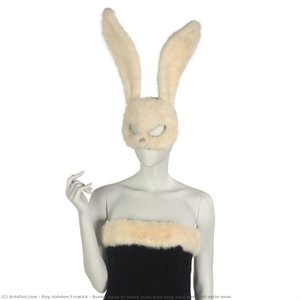
The design itself is deceptively simple, yet profoundly evocative. A pristine white mink forms the body of the “bunny,” meticulously sculpted into a playful, anthropomorphic shape. Long, flowing ears cascade down, adding an element of whimsical charm, while a delicate pink satin nose provides a touch of unexpected elegance. The overall effect is one of luxurious absurdity – a creature both familiar and utterly fantastical. It’s a deliberate juxtaposition, mirroring the era's fascination with escapism and the blurring lines between reality and fantasy.
The Designer and His Context
Roy Halston Frowick, or simply “Halston,” as he was affectionately known, emerged as a pivotal figure in American fashion during a period of dramatic social and cultural change. Born in Des Moines, Iowa, in 1932, his early career as a milliner for wealthy clients laid the foundation for his later success. His breakthrough came with Jacqueline Kennedy’s iconic pillbox hat – a seemingly small commission that catapulted him to national fame and established his reputation for understated elegance. Halston wasn't just designing clothes; he was crafting an entire lifestyle, embodying the glamour and sophistication of the 1970s.
The mid-1960s were a time of immense upheaval – the Civil Rights Movement, the Vietnam War protests, and the rise of youth culture. Halston’s designs offered a counterpoint to the more rigid formality of previous decades. His clothes were comfortable, flowing, and often featured bold colors and geometric patterns, reflecting the spirit of liberation and experimentation that characterized the era. He was deeply influenced by minimalist art and architecture, seeking to create clothing that was both beautiful and functional.
Technique and Materiality
The photograph itself is a carefully constructed tableau, likely staged in a studio setting. The use of stark white lighting emphasizes the texture and sheen of the mink fur – its luxurious softness practically palpable through the image. The mannequin’s pose is deliberately neutral, allowing the costume to take center stage. Note the smooth curves of the fur, meticulously rendered to create an illusion of depth and volume. The pink satin nose, a small but significant detail, adds a touch of playful contrast against the predominantly white palette.
The choice of mink as the primary material speaks volumes about Halston’s aesthetic – it represents wealth, indulgence, and a certain level of decadent glamour. The meticulous craftsmanship evident in the costume's construction underscores Halston’s commitment to quality and attention to detail. The photograph captures not just an object but also the process of creation, hinting at the artistry involved in bringing this fantastical vision to life.
Symbolism and Legacy
Beyond its aesthetic appeal, “Bunny Mask” carries a potent symbolic weight. The bunny itself is a classic motif associated with innocence, playfulness, and fertility – qualities often juxtaposed with the darker realities of the era. The mask, in turn, represents concealment, transformation, and the performance of identity. Together, they suggest a desire to escape into a world of fantasy, a yearning for a simpler time, or perhaps a commentary on the artificiality of celebrity culture.
Halston’s legacy extends far beyond his iconic designs. He was a pioneer in American fashion, challenging traditional notions of luxury and paving the way for a more inclusive and expressive approach to style. Reproductions like this one allow us to appreciate not only his artistic talent but also the cultural context that shaped his work – a world brimming with both excitement and uncertainty.
Related Artworks



Artist Biography
Roy Halston Frowick: A Biography
Early Life and Education
- Roy Halston Frowick was born on April 23, 1932, in Des Moines, Iowa.
- He showed an early interest in fashion, creating hats for family and friends from a young age.
- Halston studied at the Art Institute of Chicago before transferring to Indiana University but did not complete his degree.
- He then moved to New York City to pursue a career in fashion design.
Early Career & Millinery Success
- Halston began his professional life as a milliner, designing hats for various clients.
- His breakthrough moment came in 1961 when he designed the iconic pillbox hat worn by Jacqueline Kennedy to her husband’s presidential inauguration.
- This commission catapulted him into national prominence and established his reputation for elegant simplicity.
Transition to Women's Fashion
- In the mid-1960s, Halston transitioned from hat design to women’s clothing.
- He opened his own boutique on Madison Avenue in New York City in 1968.
- His designs were characterized by clean lines, luxurious fabrics like cashmere and Ultrasuede, and a relaxed, comfortable fit.
The Halston Era: 1970s Dominance
- The 1970s marked the height of Halston’s success. He became synonymous with American fashion and a glamorous lifestyle.
- He dressed some of the most iconic women of the era, including Liza Minnelli, Bianca Jagger, and Babe Paley.
- Halston's designs were frequently seen at Studio 54 and other exclusive nightclubs, embodying the spirit of the decade.
- He created a signature Ultrasuede shirtdress that became incredibly popular for its versatility and ease of wear.
Influences & Artistic Development
- Halston was influenced by minimalist art and architecture, which informed his clean aesthetic.
- He admired the work of artists like Andy Warhol, with whom he developed a close friendship.
- His designs were also inspired by classic Hollywood glamour and a desire to create clothing that empowered women.
- Simplicity and comfort were key tenets of his design philosophy.
Major Achievements & Historical Significance
- Halston redefined American fashion, moving away from the structured styles of the past towards a more relaxed and modern aesthetic.
- He popularized Ultrasuede as a luxury fabric and helped to establish it as a staple in women’s wardrobes.
- His designs captured the spirit of the 1970s and continue to influence fashion today.
- Halston successfully built a lifestyle brand, encompassing clothing, accessories, and fragrances.
Later Years & Legacy
- In the 1980s, Halston faced business challenges and ultimately lost control of his company due to poor management decisions.
- He continued to design but struggled to regain his former prominence.
- Halston died on March 26, 1990, in San Francisco, California, from complications related to AIDS.
- Despite the difficulties he faced later in life, Halston remains a celebrated figure in fashion history, remembered for his innovative designs and enduring style. His work continues to be studied and admired by designers and fashion enthusiasts alike.
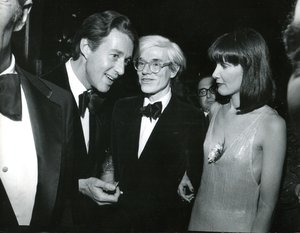
roy halston frowick
1932 - 1990 , United States of America
Quick Facts
- Birth Date: April 23, 1932
- Birth Place: Des Moines, Iowa, United States
- Death Date: March 26, 1990
- Movement: Minimalism, 1970s Fashion
- Name: Roy Halston Frowick
- Nationality: American
- Notable Works:
- Pillbox hat for Jackie Kennedy
- Ultrasuede dresses
Related Articles
Roy Lichtenstein's Masterpieces: 25 Iconic Pop Artworks for Your Home | ArtsDot
Explore Roy Lichtenstein's 25 most iconic Pop Art masterpieces! Discover the stories behind 'Drowning Girl', 'Look Mickey' & more. Find museum-quality reproductions and elevate your home decor with ArtsDot. Explore the full collection online.

Beyond the Ben-Day Dots: Roy Lichtenstein's Pop Art Revolution & Enduring Legacy
Explore Roy Lichtenstein's revolutionary Pop Art! Discover the story behind Ben-Day dots, iconic works like 'Whaam!', and investment insights for collectors. Expert analysis & high-quality reproductions at ArtsDot.
The Psychology of the Palette: Decoding Roy Lichtenstein’s Bold Color Theory
Explore the vibrant psychology behind Roy Lichtenstein’s color theory. Discover how Ben-Day dots and primary colors revolutionized Pop Art, transforming mass media into timeless masterpieces for modern collectors and interior design enthusiasts.
Shifting Perspectives: Artistic Responses to Social Change in the 1960s
Explore how artists responded to social & political change in the 1960s. Discover Social Realism, Neue Sachlichkeit, Pop Art & more. Expert insights for collectors.

Shifting Perspectives: Artistic Responses to Sociopolitical Change in 1960s Art
Explore the powerful artistic responses to the sociopolitical upheaval of the 1960s. Discover Pop Art's rebellion, Social Realism’s impact & more. Expert insights for collectors and enthusiasts.