 Send
Send Share
Share
 Details

 Download
 Similars
 Diaporama
Bandstand, Town Gardens, Quarry Road, Old Town, Swindon


 Read More
Hand Made Oil Reproduction
Hand-painted oil on canvas in your size and frame, made to order by our artists. ( Buy Print Buy Image)




































Pick from our preset sizes that match the artwork's original proportions.

You may enter your own dimensions to fit a specific frame or space. If your selected size does not match the original image's proportions, we will either crop the artwork or extend the painting with additional hand-painted elements. A digital mockup will be sent for your approval before production begins.
Please note that the on-screen preview does not reflect the actual cropping or extension. Only the mockup will accurately show the final composition.
While custom sizes are available, we recommend selecting a dimension from the predefined list to preserve the original proportions.
After order, ArtsDot.com team will email client for instructions and provide a mockup preview
Worldwide Delivery () in 3/4 weeks instead of standard 5 weeks. (6 September). No compromise on quality.

Free Worldwide Express Shipping

High-Quality Linen Canvas

Full Shipping Insurance

Customs Tax Refund Guarantee

True Color Matching Guarantee

100-Day Return Policy (Defects Only)

100% Money-Back Guarantee

Bulk Discount Offer
 Glass option is only available in size under 110 CM

Bandstand, Town Gardens, Quarry Road, Old Town, Swindon
Reproduction Medium
Reproduction Size
-


Total Price
$ 263
A Window into the Past: The Timeless Allure of Swindon's Bandstand
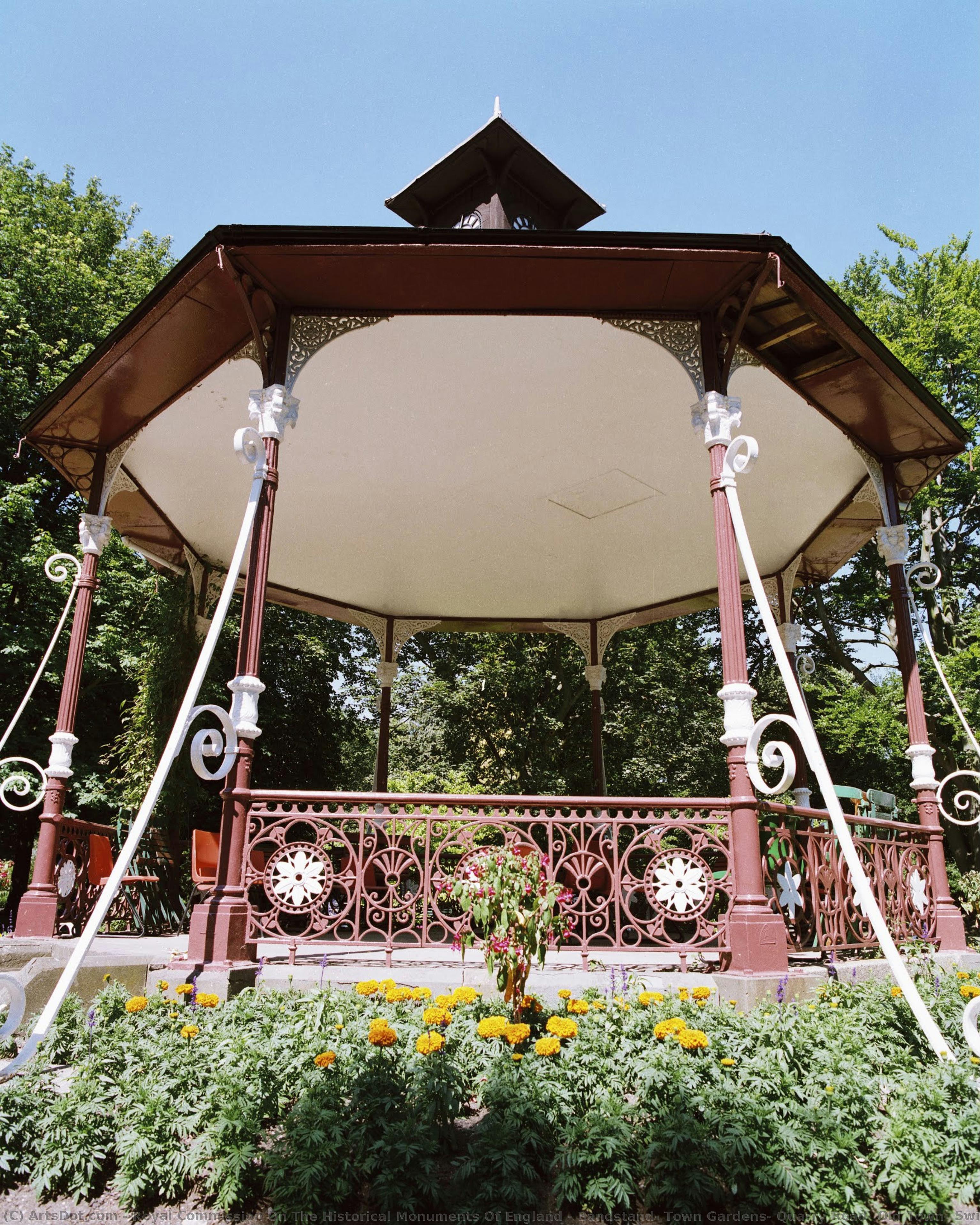
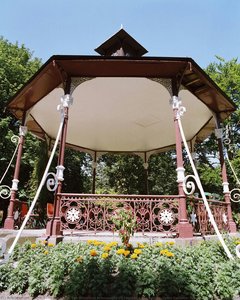
In the quiet, captured moments of 1995, there exists a visual portal that transports the viewer far beyond the frantic pace of modern life. This evocative black and white photograph, titled Bandstand, Town Gardens, Quarry Road, Old Town, Swindon, serves as more than just a documentary record; it is a soulful meditation on nostalgia and the enduring spirit of community spaces. Captured by the meticulous eyes of the Royal Commission on the Historical Monuments of England, the image presents a scene of profound stillness. The bandstand, with its sturdy wooden construction and distinctive brown roof, stands as a silent sentinel in the heart of the gardens. The presence of two clocks, positioned with careful symmetry, suggests a world where time was measured not by digital urgency, but by the rhythmic passing of seasons and the shared melodies played beneath that very canopy.
The aesthetic power of this piece lies in its monochromatic mastery. By stripping away the distractions of color, the photograph emphasizes texture, light, and shadow, allowing the viewer to focus on the architectural integrity of the structure. The interplay between the dark, weathered wood of the bandstand and the soft, diffused light creates a sense of depth that invites the eye to wander through the garden. A solitary bench sits poised for a weary traveler, while a potted plant in the foreground provides a delicate touch of organic life against the structured geometry of the man-made monument. This contrast between the permanent architectural feat and the ephemeral greenery evokes a poignant sense of the cycle of life—the enduring legacy of historical monuments juxtaposed with the fleeting beauty of nature.
For the discerning collector or interior designer, this work offers a sophisticated layer of narrative depth to any curated space. It is an ideal selection for those seeking to introduce a sense of heritage and contemplative calm into a room. Whether placed in a minimalist contemporary setting to provide a historical anchor or nestled within a classic study to enhance a mood of scholarly reflection, the photograph acts as a conversation piece. It does not merely decorate a wall; it invites an emotional resonance, prompting guests to pause and reflect on the layers of history embedded in our landscapes. Owning a high-quality reproduction of this work is an opportunity to preserve a fragment of England's architectural soul, bringing the quiet dignity of Old Town Swindon into the intimate sanctuary of the home.
Related Artworks


Artist Biography
The Royal Commission on the Historical Monuments of England: A Legacy in Documentation
Established in 1908, the Royal Commission on the Historical Monuments of England (RCHME) wasn’t an artist in the traditional sense—no canvases bear their signature, no sculptures grace museum halls under their name. Instead, the RCHME was a vital force dedicated to preserving and understanding England's rich architectural and archaeological heritage through meticulous documentation. Born from a growing concern that invaluable historical structures were being lost or neglected, the Commission embarked on an ambitious project: to create a comprehensive inventory of the nation’s monuments, from prehistoric sites to buildings dating up to 1700—a period later extended to 1850.
Origins and Early Endeavors
The impetus for the RCHME arose from a confluence of factors in the late 19th and early 20th centuries. The Ancient Monuments Protection Act of 1882 had provided initial legal safeguards, but critics like David Murray argued that effective preservation required detailed knowledge of *what* needed protecting. Gerard Baldwin Brown further championed the idea of a Royal Commission modeled after continental European examples, believing a systematic survey was essential. Following the establishment of similar commissions in Scotland and Wales, the Royal Warrant for the RCHME arrived on October 27th, 1908, setting in motion decades of dedicated research.
The initial focus was clear: to record “Ancient and Historical Monuments and Constructions connected with or illustrative of the contemporary culture, civilization and conditions of life of the people of England.” Hertfordshire became the first county selected for survey, resulting in a landmark volume published in 1910. This set the precedent for a county-by-county approach that would define much of the Commission’s early work. The task was immense, requiring teams of archaeologists, architects, historians, and photographers to meticulously document structures, create detailed plans, and compile comprehensive reports.
The Scope of Their Work: Beyond Inventory
While initially conceived as an inventory project, the RCHME's role evolved over time. They didn’t simply catalogue buildings; they sought to understand their historical context, architectural significance, and cultural importance. This involved not only detailed descriptions but also extensive research into ownership records, social histories, and construction techniques. The Commission’s publications became invaluable resources for scholars, architects, and anyone interested in England's past.
The RCHME’s work extended beyond purely academic pursuits. Their documentation played a crucial role during World War II with the establishment of the National Buildings Record (NBR) in 1941. The NBR focused on recording buildings at risk from bombing raids, creating a vital archive of structures that might otherwise have been lost forever. This wartime effort underscored the practical importance of their work and cemented their position as guardians of England’s heritage.
A Changing Landscape: Merging with English Heritage
Throughout the 20th century, the RCHME continued to publish county inventories, producing approximately 40 volumes. However, in the early 1980s, a shift occurred towards more thematic publications. This change reflected evolving priorities and a growing recognition of the need for broader historical studies. The Commission’s remit was also expanded through successive Royal Warrants.
In 1999, a significant chapter closed as the RCHME merged with English Heritage. While the name disappeared, its legacy lived on. The research section and extensive archive were absorbed into Historic England, ensuring that the Commission’s invaluable work continued to inform preservation efforts and scholarly research. Today, over a million records created by the RCHME are accessible online, providing an unparalleled resource for understanding England's architectural and archaeological past.
The Enduring Significance
The Royal Commission on the Historical Monuments of England may not have produced works of art in the conventional sense, but their contribution to our understanding and preservation of England’s heritage is immeasurable. They were pioneers in systematic documentation, establishing standards for recording and analysis that continue to be followed today. Their work serves as a powerful reminder of the importance of preserving our past—not just for its aesthetic beauty, but for the insights it offers into the lives, cultures, and civilizations that have shaped our world.
royal commission on the historical monuments of england
1908 - 1999 , United Kingdom
Quick Facts
- Artistic Movement Or Style: Historic Preservation
- Artists Or Movements Influenced By This Artist: ['English Heritage']
- Artists Who Influenced This Artist: ['David Murray']
- Date Of Death: 1999
- Full Name: Royal Commission on the Historical Monuments of England
- Nationality: British
- Notable Artworks:
- Terraced houses, Bristol Street, Swindon
- Bandstand, Town Gardens, Quarry Road, Old Town, Swindon
- The ruins of Corfe Castle, Dorset
- Place Of Birth: United Kingdom
Related Articles

White on Canvas: 10 Masterpieces & Timeless Elegance for Your Home Decor
Explore 10 iconic white paintings by Monet, Whistler & Rothko! Discover the stories behind these serene masterpieces and their impact on art history. Find museum-quality reproductions for your home decor at .

Monochrome Visions: Exploring the Aesthetic & Historical Significance of Black & White Photography
Explore the rich history & artistic power of black and white photography. From early techniques to iconic masters like Ansel Adams, discover why monochrome continues to captivate art lovers today. Expert insights for collectors.

Dark Masterpieces: 10 Iconic Paintings Dominated by Black Tones |
Explore 10 iconic paintings dominated by black tones, from Rembrandt’s chiaroscuro to Goya's dark expressions. Discover the stories behind these masterpieces & find museum-quality art reproductions for your home at .
Cultivating Paradise: A Historical & Artistic Exploration of Gardens in Painting
Explore the rich history of gardens in painting! Discover masterpieces from Renaissance to Impressionism & beyond. Learn about symbolism, artists like Monet & Klimt, and find your perfect artwork at ArtsDot.

Chromatic Absence: Exploring the Aesthetic Power of Black & White Art
Explore the captivating world of monochrome art! Discover its rich history, influential artists like Malevich & Klein, and profound emotional impact. Expert insights for collectors & design enthusiasts.