 Preview
 Send
Send Share
Share
 Details

 Download
 Similars
 X-Ray
X-Ray Diaporama
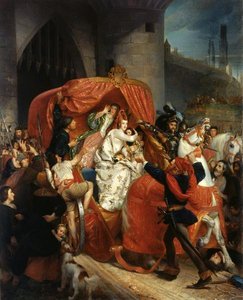
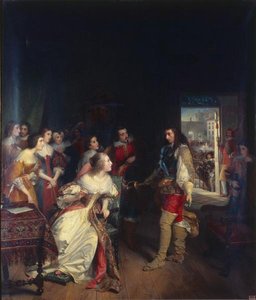
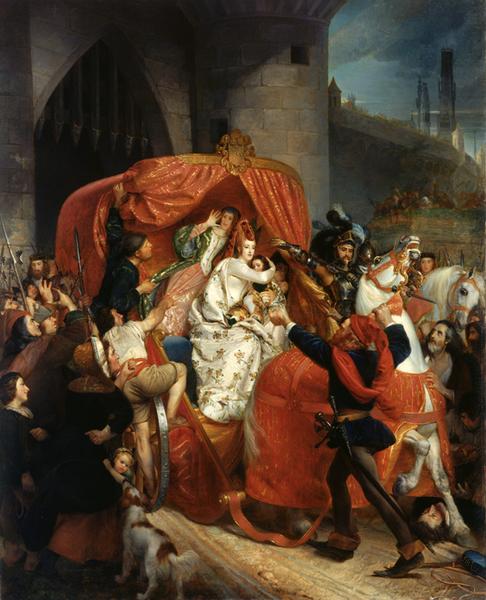
REVOLTE A BRUGES EN 1436
 Read More
Hand Made Oil Reproduction
Hand-painted oil on canvas in your size and frame, made to order by our artists. ( Buy Print Buy Image)




































Pick from our preset sizes that match the artwork's original proportions.

You may enter your own dimensions to fit a specific frame or space. If your selected size does not match the original image's proportions, we will either crop the artwork or extend the painting with additional hand-painted elements. A digital mockup will be sent for your approval before production begins.
Please note that the on-screen preview does not reflect the actual cropping or extension. Only the mockup will accurately show the final composition.
While custom sizes are available, we recommend selecting a dimension from the predefined list to preserve the original proportions.
After order, ArtsDot.com team will email client for instructions and provide a mockup preview
Worldwide Delivery () in 3/4 weeks instead of standard 5 weeks. (26 August). No compromise on quality.

Free Worldwide Express Shipping

High-Quality Linen Canvas

Full Shipping Insurance

Customs Tax Refund Guarantee

True Color Matching Guarantee

60-Day Return Policy (Defects Only)

100% Money-Back Guarantee

Bulk Discount Offer
 Glass option is only available in size under 110 CM

REVOLTE A BRUGES EN 1436
Reproduction Medium
Reproduction Size
-


Total Price
$ 438
Related Artworks










Artist Biography
A Legacy of Neoclassical Grace: The Life of Sophie Rude
Born into the vibrant artistic atmosphere of Dijon on June 16, 1797, Sophie Rude, née Frémiet, was destined for a life defined by the brush and the canvas. As the daughter of Jean-Baptiste Frémiet, the assistant curator of the Dijon Museum, her childhood was steeped in the reverence of classical antiquity and the patronage of great masters. This early immersion provided more than just exposure; it offered a foundation of profound artistic discipline. Under the guidance of Anatole Devosge, a student of the legendary Jacques-Louis David, Sophie began to master the rigorous tenets of Neoclassicism. Her education was not merely about technique but about absorbing a visual language of idealized forms, balanced compositions, and a restrained emotional depth that would become her hallmark.
The political tides of 19th-century France played a pivotal role in shaping her trajectory. Following the Second Bourbon Restoration in 1815, Sophie’s family joined many Bonapartist exiles in relocating to Brussels. It was within this period of displacement and new beginnings that her talent truly began to flourish. In Brussels, she had the extraordinary opportunity to study under Jacques-Louis David himself, working as a copyist of his masterpieces. This direct lineage to the master of Neoclassim allowed her to refine a style characterized by meticulous detail and a luminous clarity, bridging the gap between the grand traditions of the past and the evolving sensibilities of her era.
Artistic Mastery and Mythological Vision
Sophie Rude’s career was marked by an ability to breathe life into the legends of old. Her work often wandered through the realms of mythology, where she could explore the dramatic tension between human emotion and divine grandeur. One of her most celebrated early triumphs came in 1820 with Belle Anthia, a piece that achieved significant acclaim at an exhibition in Ghent. This success was followed by further accolades, such as the gold medal awarded in 1824 for her poignant portrayal of the nymph Pirene as a mother. These works were not merely decorative; they were studies in tonal gradation and the expressive power of light, capturing the ethereal quality of mythological figures with a palpable sense of dignity.
Her marriage to the renowned sculptor François Rude in 1821 created a formidable artistic partnership. While she maintained her distinct identity as a painter, their lives were deeply intertwined by art and shared history. Sophie’s influence even extended into the realm of sculpture; she famously served as the living model for the female figure representing the Genius of War in her husband's monumental frieze, The Departure of the Volunteers (also known as La Marseillaise), on the Arc de Triomphe. This connection between the painter’s eye and the sculptor’s chisel highlights the seamless integration of different artistic disciplines within her life.
Historical Significance and Enduring Spirit
As the Rude family returned to France and settled in Paris in 1826, Sophie’s repertoire expanded to include historical scenes that reflected the shifting spirit of her time. Her ability to navigate between the mythological and the historical allowed her to remain relevant amidst the changing artistic currents of the mid-19th century. Whether she was capturing the sorrow of Neptune mourning his son Cenchirias or painting portraits of the contemporary elite, her work remained anchored in a profound respect for structure and classical beauty.
Though much of her early output in Brussels was tragically lost—including several commissions for the royal palace at Tervuren destroyed by fire—the legacy of Sophie Rude remains etched in the annals of French art. She stands as a testament to the resilience of female artists in an era of great transition, a pioneer who successfully navigated the complexities of political exile and gendered expectations to leave an indelible mark on the Neoclassical tradition. Her life was a masterful composition of personal devotion, academic rigor, and an unwavering commitment to the sublime.
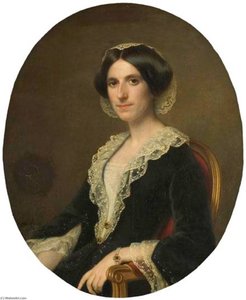
rude (fremiet) sophie
1797 - 1867
Quick Facts
- Artistic Movement Or Style: Neoclassical Art
- Artists Or Movements Influenced By This Artist: ['François Rude']
- Artists Who Influenced This Artist: ['Jacques-Louis David']
- Date Of Birth: June 16, 1797
- Date Of Death: December 4, 1867
- Full Name: Sophie Rude
- Nationality: French
- Notable Artworks:
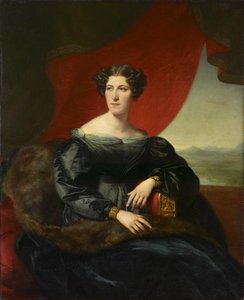
- Portrait de Madame Serieux
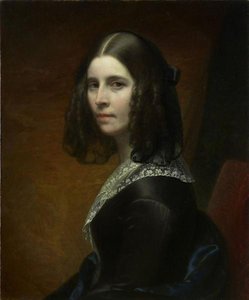
- Portrait de l’artiste
- Place Of Birth: Dijon, France