 Preview
 Send
Send Share
Share
 Details

 Download
 Similars
 X-Ray
X-Ray Diaporama
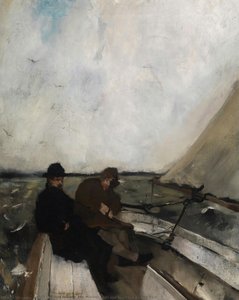
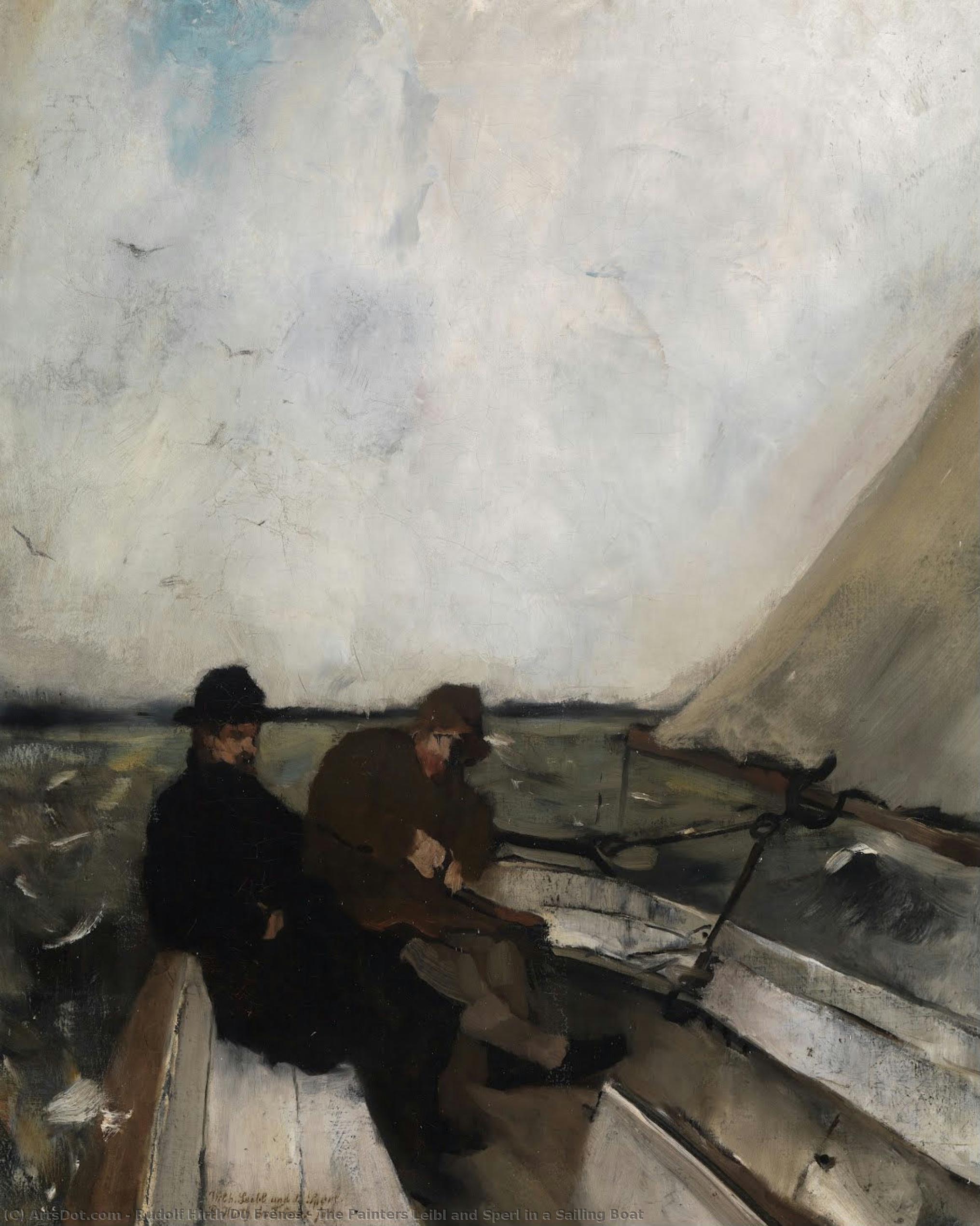
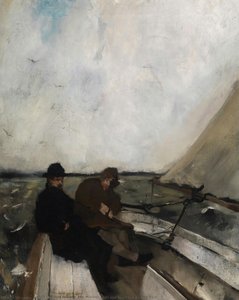
The Painters Leibl and Sperl in a Sailing Boat
 1875
1875 5.0 x 64.0 cm
 Staatliche Kunsthalle Karlsruhe
 Read More
Giclée / Art Print
Museum-quality giclée or canvas print with fast production and flexible finish options. ( Buy Hand Made Painting Buy Image)




































Pick from our preset sizes that match the artwork's original proportions.

You may enter your own dimensions to fit a specific frame or space. If your selected size does not match the original image's proportions, we will either crop the artwork or extend the image with a mirrored or solid-fill edge. A digital mockup will be sent for your approval before production begins.
Please note that the on-screen preview does not reflect the actual cropping or extension. Only the mockup will accurately show the final composition.
While custom sizes are available, we recommend selecting a dimension from the predefined list to preserve the original proportions.
Worldwide Delivery () in 2 weeks instead of standard 4/5 weeks. (6 September)

Free Worldwide Express Shipping

High-Quality Linen Canvas

Full Shipping Insurance

Customs Tax Refund Guarantee

True Color Matching Guarantee

100-Day Return Policy (Defects Only)

100% Money-Back Guarantee

Bulk Discount Offer
 Glass option is only available in size under 110 CM

The Painters Leibl and Sperl in a Sailing Boat
Giclée / Art Print
Reproduction Size
-


Total Price
$ 63
Related Artworks






Artist Biography
The Quiet Brilliance of Rudolf Hirth du Frênes
In the grand tapestry of nineteenth-century German art, certain names resonate with thunderous fame, while others whisper with a more profound, understated elegance. Rudolf Hirth du Frênes belongs to that second, more intimate category—a master of German Realism whose brush captured the soul of the landscape and the quiet dignity of human presence. Born in 1846 in Gräfentonna, near Gotha, his very name tells a story of heritage; he adopted his mother’s maiden name for his professional identity, a gesture that reflected a deep-seated respect for familial roots even as he sought to carve out his own place in the evolving art world.
His artistic journey began with rigorous academic discipline. At just fifteen years old, he entered the Academy of Fine Arts in Nuremberg, studying under August von Kreling. This foundational period was soon followed by a pivotal move to the Academy of Fine and Applied Arts in Munich, where he became a pupil of Hermann Anschütz. It was within these hallowed halls that Hirth du Frênes began to develop the technical precision and classical compositional strength that would become hallmarks of his style. However, it was not merely through formal instruction that his talent matured, but through the vibrant, collaborative spirit of the Munich art scene.
The Leibl Circle and the Spirit of Realism
The true metamorphosis of Hirth du Frênes’ artistry occurred when he joined the Leibl-Kreis, or the Leibl Circle. This influential collective, featuring luminaries such as Wilhelm Leibl, Johann Sperl, and Theodor Alt, became a crucible for shared aesthetic experimentation. Moving away from the rigid academicism of the past, this group embraced a vision rooted in the principles of Realism and the burgeoning influence of Impressionism. They sought to capture the fleeting nuances of light and the palpable textures of the natural world through plein air painting.
Under the profound influence of Wilhelm Leibl, Hirth du Frênes learned to find beauty in the unadorned. His work began to resonate with a deep emotional sincerity, particularly when depicting rural landscapes. This period of his life was marked by an intense focus on capturing the essence of a moment—the way light filters through a canopy or the heavy stillness of a summer afternoon. Even as he encountered the works of masters like Frans Hals, which introduced a new rhythmic vitality to his brushwork, his heart remained tethered to the honest, grounded depictions of life that defined the Leibl Circle’s mission.
European Horizons and a Lasting Legacy
Between 1880 and 1885, Hirth du Frênes embarked on an expansive period of travel that would forever alter his visual vocabulary. His expeditions through Holland, Belgium, and France exposed him to the diverse light and atmosphere of Western Europe. Visiting the great studios, galleries, and museums of these nations, he absorbed the traditions of Dutch masters and the fresh, atmospheric perspectives of French painters. These years abroad acted as a vital infusion of creativity, allowing him to integrate a broader European sensibility into his German Realist foundation.
Upon returning to Germany, Hirth du Frênes settled in Dießen am Ammersee, eventually moving to Miltenberg, where he passed away in 1916. While much of his later career was dedicated to portraiture—a necessary pursuit for his livelihood—his early and middle-period landscapes remain his most enduring contributions to the art historical canon. His legacy is one of quiet strength:
- Technical Mastery: A seamless blend of academic precision and spontaneous, impressionistic light.
- Emotional Depth: An ability to imbue simple rural scenes with a sense of profound, lasting emotion.
- Historical Significance: A key figure in the Leibl Circle who helped bridge the gap between traditional German Realism and modern European landscape painting.
rudolf hirth du frênes
1846 - 1916 , Germany
Quick Facts
- Artistic Movement Or Style: German Realist
- Artists Or Movements Influenced By This Artist: ['Leibl Circle']
- Artists Who Influenced This Artist:
- Gustave Courbet
- Arthur von Ramberg
- Hermann Anschütz
- Date Of Birth: July 24, 1846
- Date Of Death: May 1, 1916
- Full Name: Rudolf Hirth du Frênes
- Nationality: German
- Notable Artworks:
- The Painters Leibl and Sperl in a Sailing Boat
- At the Beach
- Place Of Birth: Grafenau, Germany