 Preview
 Send
Send Share
Share
 Details

 Download
 Similars
 X-Ray
X-Ray Diaporama
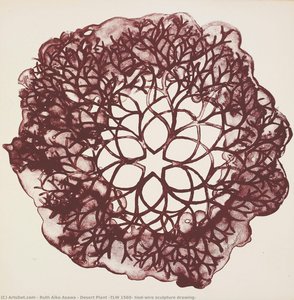
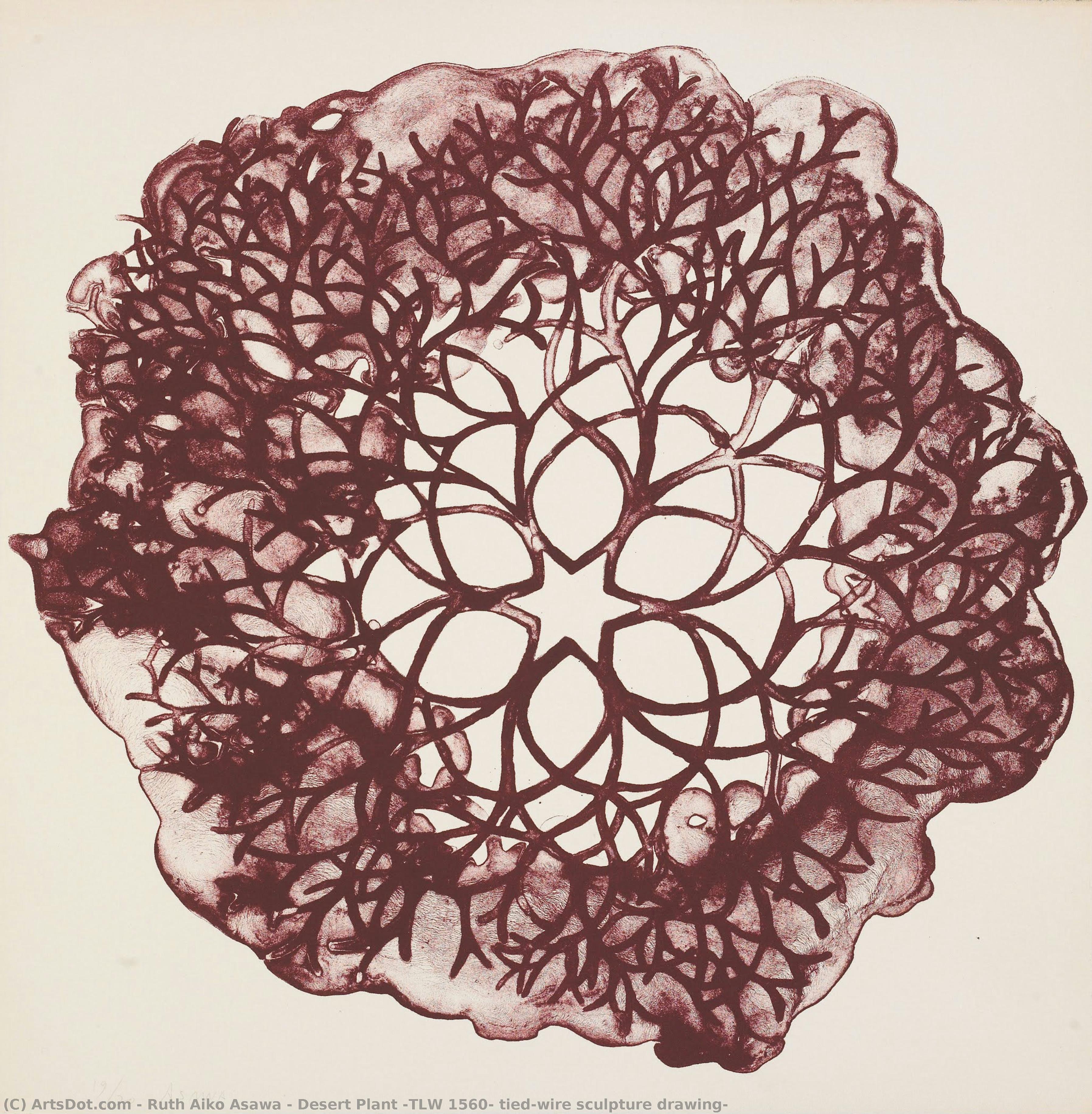
Desert Plant (TLW 1560, tied-wire sculpture drawing)
 Acrylic
- WallArt
- Abstract Expressionism
 1965
1965 27.0 x 27.0 cm
 de Young Museum
 Read More
Giclée / Art Print
Museum-quality giclée or canvas print with fast production and flexible finish options. ( Buy Hand Made Painting Buy Image)




P118B $10

P118H $10

P118W $10

P438Z $10

P508JH $12

P508YH $12

P805H $10

P805Z $10

P919BZ $10

P919G $10

P919XJ $10

P959ZH $10

P968JZ $12

W106C $8

W218G $10

W218JH $8

W218Y $10

W307PJ $10

W316G $10

W316PJ $8

W316Y $10

W398PJ $8

W4111J $10

W500HY $15

W500JH $15

W692G $12

W849H $8

W940BG $15

W953PJ $8




Pick from our preset sizes that match the artwork's original proportions.

You may enter your own dimensions to fit a specific frame or space. If your selected size does not match the original image's proportions, we will either crop the artwork or extend the image with a mirrored or solid-fill edge. A digital mockup will be sent for your approval before production begins.
Please note that the on-screen preview does not reflect the actual cropping or extension. Only the mockup will accurately show the final composition.
While custom sizes are available, we recommend selecting a dimension from the predefined list to preserve the original proportions.
Worldwide Delivery () in 2 weeks instead of standard 4/5 weeks. (26 August)

Free Worldwide Express Shipping

High-Quality Linen Canvas

Full Shipping Insurance

Customs Tax Refund Guarantee

True Color Matching Guarantee

60-Day Return Policy (Defects Only)

100% Money-Back Guarantee

Bulk Discount Offer
 Glass option is only available in size under 110 CM

Desert Plant (TLW 1560, tied-wire sculpture drawing)
Giclée / Art Print
Reproduction Size
-


Total Price
$ 63
Collectible Description
Ruth Aiko Asawa’s “Desert Plant” – A Testament to Resilience and Organic Form
This exquisite 27 x 27 cm print captures a pivotal moment in the career of Ruth Aiko Asawa, one of the most significant sculptors of the 20th century. “Desert Plant (TLW 1560, tied-wire sculpture drawing)” isn’t merely a depiction of a botanical subject; it's an embodiment of Asawa’s deeply personal journey – a story interwoven with hardship, resilience, and an unwavering belief in the power of accessible art. Created in 1965, this piece exemplifies her signature style: intricate networks of interconnected lines that evoke the delicate beauty of natural forms, particularly those found in arid landscapes.
A Sculptor Forged by Adversity
Born in Norwalk, California, in 1926, Asawa’s early life was profoundly shaped by the experiences of her Japanese immigrant parents during World War II. Their forced relocation and incarceration in internment camps – Santa Anita and Rohwer – left an indelible mark, fueling a lifelong commitment to social justice and informing her artistic vision. This biographical context is crucial to understanding the emotional depth embedded within her work; the seemingly simple lines of “Desert Plant” resonate with a quiet strength born from confronting profound adversity.
Technique and Style: The Language of Wire
Asawa’s technique was revolutionary. She pioneered the use of tied-wire sculpture, creating delicate, three-dimensional forms by meticulously connecting individual wires – often using a needle and thread – to build complex structures that appeared to grow organically. The print showcases this process brilliantly, revealing the precision and patience required to execute her vision. The circular form, punctuated by a central hole, mimics the appearance of a blooming flower or a seed pod, while the surrounding web-like structure suggests the intricate patterns found in desert flora – cacti, succulents, and other resilient plants adapted to harsh environments. The red circle adds a vibrant focal point, drawing the eye into the heart of the composition.
- Material: Print on paper
- Technique: Reproduction of a tied-wire sculpture drawing
- Dimensions: 27 x 27 cm
Symbolism and Emotional Impact – A Bloom from the Dust
“Desert Plant” transcends a simple botanical illustration. It represents hope, resilience, and the ability to find beauty even in challenging circumstances. The desert itself is a powerful symbol of endurance, mirroring Asawa’s own story. The interconnected lines symbolize connection, community, and the delicate balance within nature – themes that resonated deeply with the artist. This piece invites contemplation on themes of survival, adaptation, and the transformative power of art. It's a poignant reminder that even from seemingly barren landscapes, beauty can emerge.
Related Artworks



Artist Biography
A Life Intertwined with Resilience and Art
Ruth Aiko Asawa, born in 1926 on a truck farm in Norwalk, California, emerged as one of the most innovative sculptors of the 20th century. Her story is not merely an artistic journey but a testament to resilience, shaped profoundly by the tumultuous events of her early life. The daughter of Japanese immigrants, Asawa experienced firsthand the injustice and pain of World War II when she and her family were forcibly removed from their home and incarcerated in Japanese American internment camps – first at Santa Anita racetrack, then Rohwer War Relocation Center in Arkansas. This experience, a deep wound inflicted by prejudice, would become an enduring undercurrent in her life and work, fueling a commitment to social justice and the belief that art should be accessible to all. Within the confines of the camp, amidst hardship and uncertainty, Asawa discovered a nascent artistic spark, receiving drawing lessons from fellow internees who were professional illustrators – a small act of defiance and creativity blossoming in the face of adversity.Formative Years and Artistic Awakening
Asawa’s path to becoming an artist was not straightforward. Initially intending to become a teacher, she enrolled at Milwaukee State Teachers College (now University of Wisconsin–Milwaukee) in 1943, only to encounter discrimination that prevented her from completing student teaching requirements due to her Japanese ancestry. This obstacle led her to Black Mountain College in North Carolina in 1946, an experimental and groundbreaking institution that proved pivotal in shaping her artistic vision. At Black Mountain, she found herself immersed in a vibrant community of artists and thinkers, including Josef Albers, whose teachings on color theory would deeply influence her work, and Buckminster Fuller, the visionary architect known for his geodesic domes. It was here, surrounded by intellectual curiosity and creative freedom, that Asawa began to explore sculpture. A transformative journey to Mexico in 1947 exposed her to traditional basket weaving techniques, a revelation that would become central to her artistic practice. She observed local artisans skillfully manipulating wire into intricate forms, sparking an idea that would define her signature style.The Dance of Wire and Light
Ruth Asawa is most celebrated for her mesmerizing looped-wire sculptures – delicate, ethereal creations that seem to defy gravity. These are not static objects but dynamic entities, capturing light and shadow in a constantly shifting interplay. She developed a unique technique of meticulously weaving wire into complex, floating structures resembling plants, marine life, or abstract forms. The process was intensely labor-intensive, requiring patience, precision, and an intuitive understanding of the material. Her early work also encompassed paintings and drawings, exploring abstraction and her deep connection to the natural world. The influence of Albers’ color theory is evident in how she utilized light and shadow within the wire sculptures, creating a sense of depth and movement. These weren't merely forms; they were explorations of space, transparency, and the very essence of line. They seemed to breathe with an organic life of their own.A Legacy of Public Art and Enduring Influence
Asawa’s artistic achievements extended beyond her studio practice. She was a passionate advocate for public art, believing that it should be accessible to everyone, enriching communities and fostering a sense of shared experience. This conviction led her to co-found the San Francisco School of the Arts in 1982, later renamed the Ruth Asawa San Francisco School of the Arts in 2010 – a testament to her dedication to arts education. Her work is now featured in prominent museum collections worldwide, including the Solomon R. Guggenheim Museum and the Whitney Museum of American Art. Fifteen of her wire sculptures are permanently displayed in the de Young Museum’s Hamon Observation Tower in San Francisco, offering visitors an immersive experience within her delicate creations. In 2020, the U.S. Postal Service honored Asawa with a series of ten stamps featuring her iconic wire sculptures, solidifying her place in American cultural history. Her impact resonates not only through her art but also through her unwavering commitment to making art an integral part of everyday life.A Lasting Impression
Ruth Asawa’s legacy extends far beyond the beauty and innovation of her sculptures. She challenged conventional notions of what sculpture could be, expanding the possibilities of materials and pushing the boundaries of artistic expression. Her story is one of overcoming adversity with grace and creativity, transforming personal trauma into a powerful force for positive change.- She demonstrated that art can be both deeply personal and universally accessible.
- Her commitment to arts education continues to inspire generations of artists and educators.
- Asawa’s work serves as a reminder of the importance of resilience, empathy, and the enduring power of the human spirit.
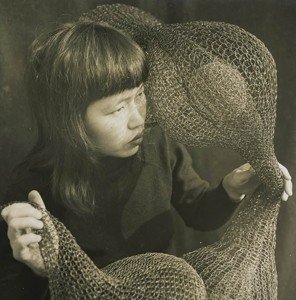
Ruth Aiko Asawa
1926 - 2013 , United States of America
Quick Facts
- Artistic Movement Or Style: Modernism, Sculpture
- Artists Who Influenced This Artist:
- Josef Albers
- Buckminster Fuller
- Date Of Birth: January 24, 1926
- Date Of Death: August 5, 2013
- Full Name: Ruth Aiko Asawa
- Nationality: American
- Notable Artworks:
- Stem with Leaves
- Untitled
- Place Of Birth: Norwalk, USA
Related Articles

Bronze Sculptures That Defined Art History | ArtsDot
Journey through art history with our Top 10 bronze sculptures! Explore masterpieces by Rodin, Michelangelo & more. Discover stories behind iconic statues and find museum-quality reproductions for your home decor at ArtsDot.com.

The Enduring Form: Exploring Themes & Techniques in Sculpture Across Historical Periods
Explore the rich history of sculpture from ancient masterpieces to contemporary innovations. Discover key techniques, influential artists & investment potential for discerning art collectors.

Paul Manship: Reassessing the Master of American Art Deco Sculpture
Explore the captivating world of Paul Manship, a leading figure in American Art Deco sculpture. Discover his iconic works like Prometheus, influence on modernism, and investment potential. Expert insights for collectors.

Bronze Age to Modern Masters: 10 Sculptures That Redefined Art | ArtsDot
Journey through art history with 10 legendary bronze sculptures – from Michelangelo's David to Rodin’s Thinker. Explore the stories, techniques & timeless beauty of these masterpieces. Find museum-quality reproductions & elevate your home decor on ArtsDot.com.

The Enduring Form: Sculpture Across History, Technique & Emotional Resonance
Explore the rich history of sculpture with ArtsDot. Discover key techniques, influential artists & investment potential for discerning collectors. Expert insights into valuing and collecting timeless masterpieces.