 Preview
 Send
Send Share
Share
 Details

 Download
 Similars
 X-Ray
X-Ray Diaporama
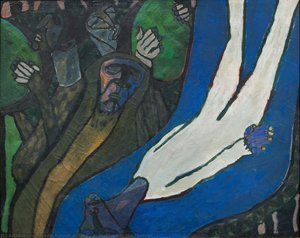
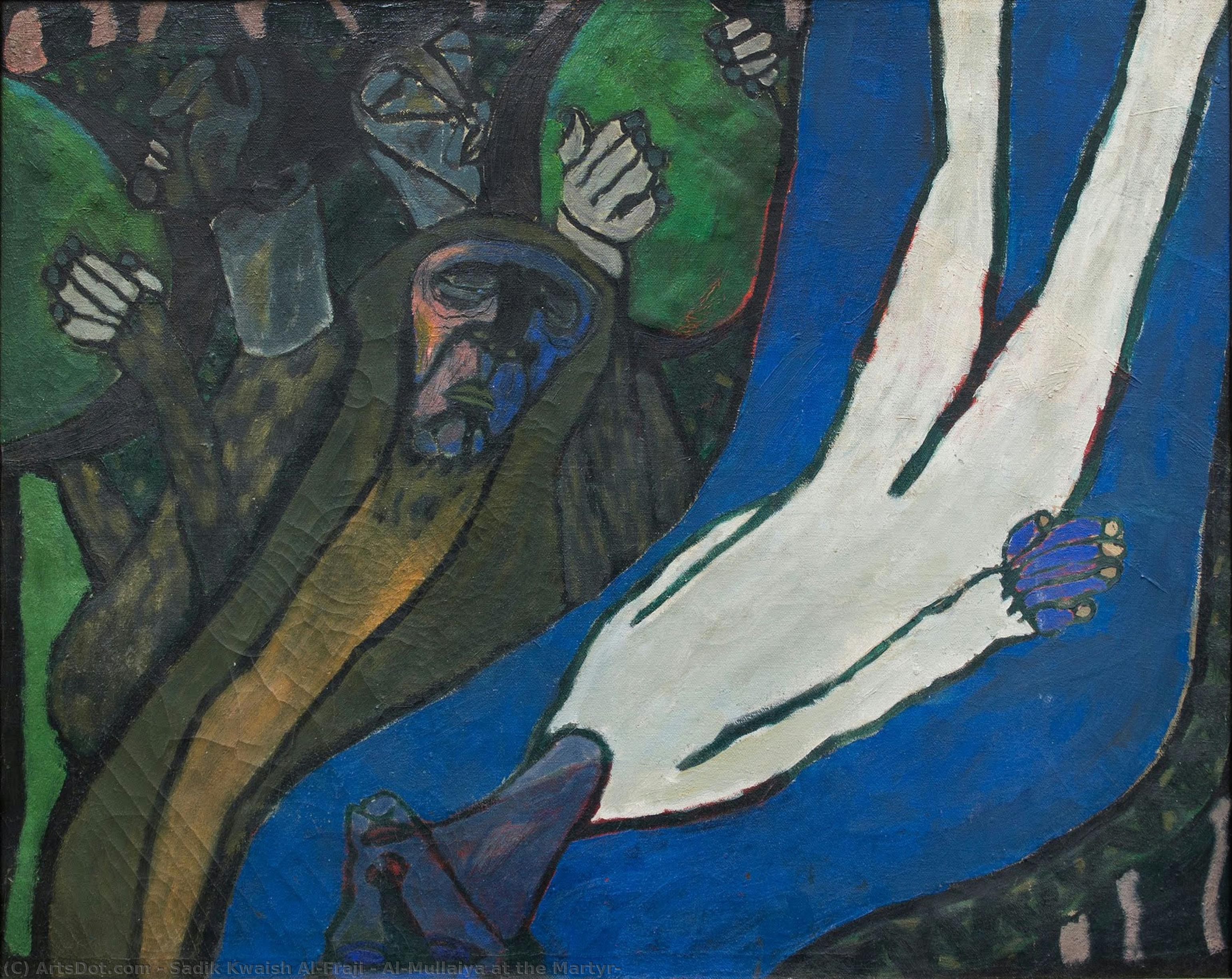
Al-Mullaiya at the Martyr
 Oil On Canvas
- WallArt
- Contemporary Realism
 Contemporary
 70.0 x 90.0 cm
 Ibrahimi Collection
 Read More
Giclée / Art Print
Museum-quality giclée or canvas print with fast production and flexible finish options. ( Buy Hand Made Painting Buy Image)




P118B $10

P118H $10

P118W $10

P438Z $10

P508JH $12

P508YH $12

P805H $10

P805Z $10

P919BZ $10

P919G $10

P919XJ $10

P959ZH $10

P968JZ $12

W106C $8

W218G $10

W218JH $8

W218Y $10

W307PJ $10

W316G $10

W316PJ $8

W316Y $10

W398PJ $8

W4111J $10

W500HY $15

W500JH $15

W692G $12

W849H $8

W940BG $15

W953PJ $8




Pick from our preset sizes that match the artwork's original proportions.

You may enter your own dimensions to fit a specific frame or space. If your selected size does not match the original image's proportions, we will either crop the artwork or extend the image with a mirrored or solid-fill edge. A digital mockup will be sent for your approval before production begins.
Please note that the on-screen preview does not reflect the actual cropping or extension. Only the mockup will accurately show the final composition.
While custom sizes are available, we recommend selecting a dimension from the predefined list to preserve the original proportions.
Worldwide Delivery () in 2 weeks instead of standard 4/5 weeks. (24 August)

Free Worldwide Express Shipping

High-Quality Linen Canvas

Full Shipping Insurance

Customs Tax Refund Guarantee

True Color Matching Guarantee

60-Day Return Policy (Defects Only)

100% Money-Back Guarantee

Bulk Discount Offer
 Glass option is only available in size under 110 CM

Al-Mullaiya at the Martyr
Giclée / Art Print
Reproduction Size
-


Total Price
$ 63
Collectible Description
A Poignant Encounter in the Shadows of Memory
In the evocative oil on canvas titled Al-Mullaiya at the Martyr, the Iraqi master Sadik Kwaish Alfraji invites viewers into a hauntingly beautiful tableau that blurs the line between historical tragedy and existential reflection. The scene unfolds within the dense, atmospheric embrace of a forest, where the interplay of light and shadow creates a stage for a profound human drama. At the heart of this composition, a central figure holds a knife, a gesture that vibrates with tension and gravity, surrounded by a group of individuals whose presence feels both immediate and ghostly. The artist masterfully utilizes the depth of the woodland setting to envelop the subjects, making the viewer feel like an accidental witness to a moment frozen in time—a moment where life, death, and the weight of legacy collide.
Alfraji’s technique is nothing short of mesmerizing, characterized by a meticulous approach to texture and atmosphere that draws from his deep roots in both fine arts and graphic design. The brushwork serves to build a sense of layered reality; the trees are not merely background elements but living, breathing sentinels that frame the human struggle. Small, delicate details—such as the presence of two birds positioned at opposite corners of the canvas—act as subtle anchors within the composition, perhaps symbolizing the fleeting nature of life or the watchful eyes of fate. This careful balance of large-scale emotional weight and minute detail ensures that the painting rewards prolonged contemplation, offering new layers of meaning with every glance.
Symbolism and the Weight of the Iraqi Spirit
To understand Al-Mullaiya at the Martyr, one must look through the lens of Alfraji’s broader artistic mission: the exploration of mortality and the enduring power of memory. The title itself suggests a narrative of sacrifice and reverence, themes that resonate deeply within the context of contemporary Iraqi art. The knife, while a symbol of potential violence, also serves as an instrument of transition, marking the threshold between the living and the martyred. The forest, often a site of both sanctuary and peril in classical iconography, becomes a metaphor for the subconscious—a place where memories are buried and where the shadows of the past continue to haunt the present.
For the discerning collector or interior designer, this piece offers more than mere decoration; it provides a profound emotional anchor for a space. The painting’s somber palette and dramatic composition make it an ideal centerpiece for rooms designed for reflection, such as a private study, a library, or a sophisticated gallery wall. As a high-quality reproduction, the work captures the intense chiaroscuro and the soulful depth of Alfraqi's original vision, allowing the heavy atmosphere of the Baghdad-born artist to transform any environment into a sanctuary of intellectual and emotional depth.
Related Artworks
Artist Biography
The Shadowed Soul: The Existential Journey of Sadik Kwaish Alfraji
In the quiet, contemplative spaces of contemporary art, few voices resonate with as much haunting intimacy as that of Sadik Kwaish Alfraji. Born in Baghdad in 1960, Alfraji’s life and work are inextricably linked to the shifting sands of history and the profound weight of human memory. His artistic odyssey began amidst the vibrant yet turbulent atmosphere of Iraq, where he first cultivated his skills at the Institute of Fine Arts in Baghdad. This early period was marked by a rigorous training in painting and printmaking, providing him with a technical foundation that would later serve as the scaffolding for much more complex, multi-media explorations. As a young artist in the 1980s, he even ventured into the realm of animation for children’s television, a surprising precursor to the dark, moving silhouettes that would eventually define his mature aesthetic.
The trajectory of Alfraji’s career was profoundly shaped by the geopolitical upheavals of his homeland. Leaving Iraq in the 1990s and eventually settling in Amersfoort, Netherlands, he carried with him a sense of fragmentation and displacement that would become the emotional core of his oeuvre. This transition from the familiar landscapes of Baghdad to the European continent infused his work with a unique tension between belonging and exile. His later studies in Graphic Design at Constantijn Huygens in the Netherlands further expanded his creative vocabulary, allowing him to merge the tactile nature of traditional painting with the precision of graphic art and the immersive potential of video animation and installation.
A Visual Language of Absence and Presence
To encounter an Alfraji piece is to enter a world of profound existential inquiry. He is perhaps best known for his preoccupation with the problem of existence, a theme he explores through a signature visual language characterized by dark, shadowy figures. These silhouettes—often rendered in charcoal or ink—act as vessels for the viewer's own anxieties and reflections. They are not merely shapes, but rather "black voids" that function as filters through which the complexities of life, loss, and vulnerability are processed. By minimizing formal properties and focusing on the subtle inflections of a solitary character’s movement, Alfraji captures the fragility of the human condition within psychologically laden environments.
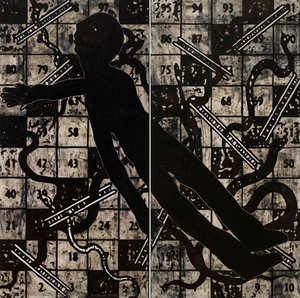
His technical mastery allows him to traverse various mediums to tell these stories of fragmentation. Whether through the bold, expressionistic lines of an oil painting like Snakes and Ladders—which uses a game board metaphor to evoke life's unpredictable uncertainties—or the melancholic movement of his animated works, the artist maintains a consistent emotional frequency. His animations, such as the poignant Ali’s Boat, serve as elegies for lost homes and fractured connections, bridging the gap between personal biography and universal themes of longing. This ability to blend the graphic with the painterly creates an immersive experience where shadows possess as much weight as light.
Legacy and Global Resonance
The significance of Sadik Kwaish Alfraji lies in his ability to transform personal and historical trauma into a universal dialogue on mortality. His work does not merely document the struggles of the Iraqi diaspora; it transcends them to touch upon the fundamental human fear of erasure. This profound resonance has earned him prestigious recognition on the global stage, with his works finding homes in esteemed institutions such as the British Museum and being featured in major international forums like the Venice Biennale.
Throughout his career, Alfraji has maintained a presence in the most vital art hubs, from solo exhibitions in Madrid and Munich to significant showcases at the Ayyam Gallery in Dubai and London. His contributions to contemporary art are marked by several key achievements:
- Interdisciplinary Innovation: The seamless integration of animation, installation, and traditional printmaking to create multi-sensory existential narratives.
- Philosophical Depth: The successful translation of complex existentialist and sophist philosophies into a visceral, visual medium.
- Cultural Bridge-Building: Creating a body of work that speaks simultaneously to the specific historical context of Iraq and the broader global experience of displacement and human frailty.
Ultimately, Alfraji remains an artist of the threshold, standing between light and shadow, memory and forgetting, presence and absence. His work continues to challenge viewers to confront the void, finding within that darkness a profound and necessary reflection of our shared humanity.
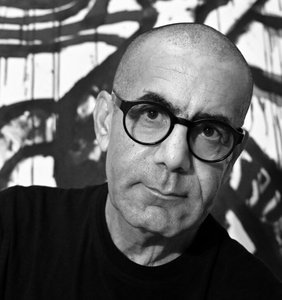
sadik kwaish alfraji
1960 - , Iraq
Quick Facts
- Artistic Movement Or Style: Existentialism; Dark, shadowy figures
- Artists Or Movements Influenced By This Artist:
- Venice Biennale
- British Museum
- Artists Who Influenced This Artist:
- German Expressionists
- European Art
- Date Of Birth: 1960 Baghdad, Iraq
- Full Name: Sadik Kwaish Alfraji
- Nationality: Iraqi
- Notable Artworks:
- Snakes and Ladders
- Al-Mullaiya at the Martyr
- Place Of Birth: Baghdad, Iraq
Related Articles
Dramatic Masterpieces: 10 Artworks for a Powerful Home Decor Statement |
Explore 10 dramatic artworks by masters like Caravaggio, Van Gogh & Munch. Uncover the stories behind these powerful paintings and find museum-quality reproductions to transform your home decor. Discover all masterpieces on .
Dramatic Art: 10 Masterpieces That Stir the Soul |
Explore 10 dramatic artworks by masters like Rembrandt & Munch that stir deep emotion. Discover art history, techniques & find museum-quality reproductions for your home at . Explore the full collection online.
The Enchanted Canopy: Exploring Forests in Art History – From Romantic Idealization to Ecological Consciousness
Explore the rich history of forests in art! Discover Romantic masterpieces by Friedrich & Monet, Symbolist depths, and contemporary visions. Find inspiration & quality reproductions at ArtsDot.
Nature’s Sanctuary: Curating Enchanting Forest Artworks to Transform Your Home into a Serene Woodland Retreat
Transform your home into a serene woodland retreat with enchanting forest artworks. Discover museum-quality oil reproductions and custom landscape commissions designed to bring the peaceful beauty of nature indoors.
The Power of Narrative Tension: Exploring Dramatic Scenes in Art History
Explore the captivating power of dramatic scenes in art history. Discover Baroque masters like Ribera & Caravaggio, learn about chiaroscuro techniques, and gain insights for building a powerful art collection with ArtsDot.