

 Preview
 Send
Send Share
Share
 Details

 Download
 Similars
 X-Ray
X-Ray Diaporama
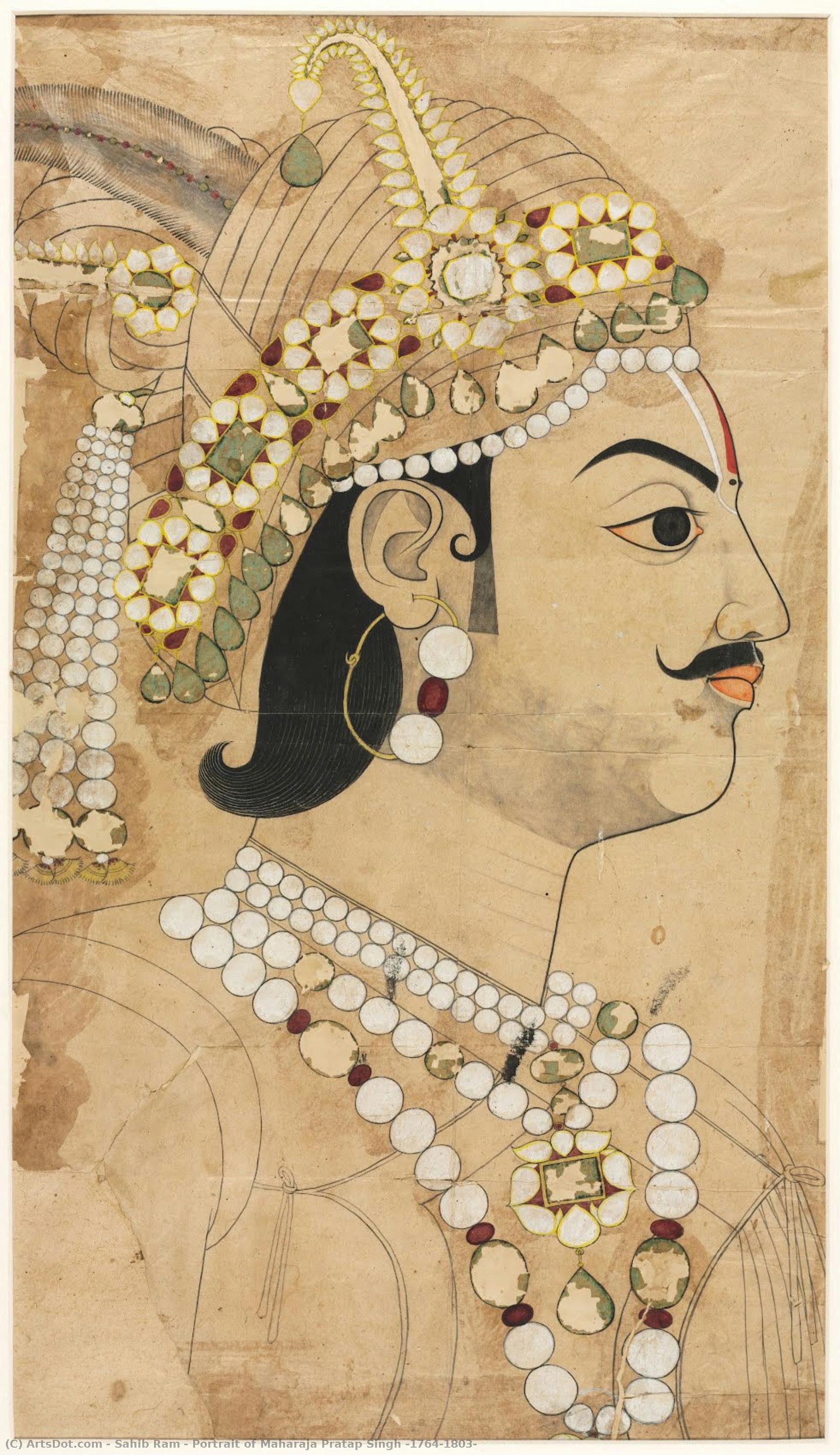
Portrait of Maharaja Pratap Singh (1764–1803)
 Painting
- Impressionistic Realism
 1793
1793 61.0 x 40.0 cm
 Cleveland Museum of Art
 Read More
Purchase a high-resolution, enhanced digital image, far superior to the online preview.
Each file is meticulously prepared by our in-house specialists using advanced tools and expert manual retouching. We ensure every image has exceptional clarity, precise color accuracy, and fine detail.
The final file is delivered via email within 72 hours, optimized for immediate use in professional, editorial, and print environments. This is the same quality trusted by top-tier design studios, publishers, and galleries.
Digital Image
Download a high-resolution file for personal display, printing, and creative projects. ( Buy Print Buy Hand Made Painting)
Included in Every Digital Image Order
Expert Digital Delivery, Guaranteed
When you choose ArtsDot.com, you're not just getting an image - you're receiving a professionally enhanced digital artwork, crafted with precision and backed by a satisfaction guarantee. Here's everything that comes with your order, automatically:

Fast Email Delivery
Your high-resolution digital image file will be emailed to you within 72 hours of ordering - ready for immediate use.

AI-Enhanced Digital File
Your artwork is professionally optimized using advanced AI tools and manual editing, ensuring maximum detail, clarity, and color accuracy.

Free Lifetime Re-Delivery
Accidentally deleted or lost your file? No worries - we'll resend it to you anytime, free of charge.

No Import Fees - Ever
Enjoy your artwork instantly with zero customs, duties, or delivery fees - digital downloads are always tax-free.

Color Accuracy Guarantee
We ensure your digital image reflects the original colors as closely as possible using professional tools and color management.

60-Day Satisfaction Guarantee
If you're not satisfied with your digital image, we'll revise it or refund 100% within 60 days - no questions asked.

100% Money-Back Guarantee
Not satisfied? Get a full refund within 60 days of receiving your digital file - no questions asked.

Bulk Order Discounts
Buy 3 images, save 10% - Buy 5, save 15% - Buy 10+, save 20%. Great for creative projects, galleries, and agencies.
Portrait of Maharaja Pratap Singh (1764–1803): A Window into Jaipur’s Royal Atelier
This striking portrait captures the essence of Maharaja Pratap Singh, ruler of Jaipur between 1778 and 1803 – a young man poised at the cusp of leadership amidst a flourishing artistic environment. Painted circa 1793, it stands as a testament to Sahib Ram's mastery within Jaipur’s royal suratkhana, demonstrating a remarkable fusion of Mughal grandeur and indigenous Indian sensibilities. More than just an image of royalty, this artwork speaks volumes about faith, patronage, and the meticulous craftsmanship that defined Rajasthan’s golden age.Subject Matter and Composition
The portrait depicts Maharaja Pratap Singh in profile, presenting a dignified gaze directed towards the viewer. His attire—elaborate robes adorned with jewels—underscores his status as paramount ruler. Notably, a prominent forehead mark signifies devotion to Krishna, a central figure in Hindu mythology and deeply ingrained within Jaipur’s cultural heritage. The artist skillfully employs pyramidal composition, anchoring Singh's form against a subtly textured background that hints at the opulent palace walls. Two birds perched in the upper left and right corners add visual interest and perhaps symbolize auspiciousness or vigilance – elements frequently incorporated into royal iconography.Style and Technique: Mughal Influence Meets Jaipur Tradition
Sahib Ram’s distinctive style exemplifies the prevailing artistic trends of his time, blending influences from Mughal painting with established Jaipur traditions. The meticulous detailing—particularly in Singh's facial features and jewelry—reveals a dedication to realism achieved through layering techniques and subtle shading. Observe how the artist captures the texture of fabric and the brilliance of gemstones, demonstrating an understanding of optical illusion that was characteristic of Mughal ateliers. Yet, unlike purely Mughal portraits, this piece retains elements of Indian decorative art, evident in the stylized birds and the overall harmonious balance of colors.Historical Context: Jaipur’s Artistic Renaissance
The portrait emerges from a period of remarkable artistic innovation in Jaipur during the reigns of Maharaja Madho Singh I and his son, Pratap Singh. Recognizing the importance of visual representation for legitimizing power and projecting prestige, Pratap Singh actively fostered an atelier comprising approximately fifty painters – Sahib Ram among them—who produced artworks celebrating royal achievements and upholding Hindu values. This patronage fueled a vibrant cultural landscape, attracting artists from across India and establishing Jaipur as a beacon of artistic excellence. The painting reflects the broader ethos of the era: a commitment to beauty, craftsmanship, and conveying spiritual significance.Symbolism and Emotional Impact
Beyond its formal elements, the portrait conveys profound symbolism. Singh’s gaze embodies regal dignity and unwavering resolve—qualities essential for maintaining stability during turbulent times. The forehead mark symbolizes Krishna worship, reflecting Pratap Singh's piety and reinforcing his connection to Hindu cosmology. Sahib Ram’s masterful execution evokes a sense of reverence for artistic skill and invites contemplation on the legacy of Jaipur’s royal atelier. Ultimately, this portrait transcends mere likeness; it captures the spirit of a ruler who embodied both power and grace—a timeless image resonating with beauty and historical significance.Provenance and Legacy
The artwork's journey through history includes its acquisition by Doris Wiener Gallery in 1975, followed by sales to Paul F. Walter and Sotheby’s before finding its current home with Dr. Norman Zaworski. Its subsequent inclusion in exhibitions like “The Sensuous Line: Indian Drawings from the Paul F. Walter Collection” ensures that Sahib Ram's masterpiece continues to inspire appreciation for Rajput art and its enduring influence on Indian visual culture.Related Artworks
![Pierced Screen [jali] — Mughal Dynasty, Mughal Decorative Arts](/media/artworks/images-thumb/9b/8d/9b8d5dcd213b4ce13074c46df78390a9.jpg)
Artist Biography
The Master of the Jaipur Atelier
In the vibrant, sun-drenched history of Rajasthan, few names resonate with the quiet authority of Sahib Ram. Born in 1745 within the illustrious artistic lineage of Jaipur, India, Sahib Ram was more than a mere painter; he was a cornerstone of the royal suratkhana—the prestigious workshop that served as the beating heart of creative innovation under the reigns of Maharaja Madho Singh I and his successor, Maharaja Sawai Pratap Singh. His life was woven into the very fabric of the Jaipur court, a world where art, devotion, and political power converged in a brilliant display of cultural splendor.
The foundations of his mastery were laid in the intimate setting of his family’s workshop, where he received rigorous training from his father. This early immersion in the traditions of Indian miniature painting instilled in him a profound respect for meticulous observation and the disciplined execution of line. As he ascended to the position of head of the Jaipur workshop, Sahib Ram became a bridge between eras, blending the established Mughal aesthetic with indigenous Rajasthani sensibilities. His role was not merely that of a creator but of a leader, overseeing an atelier that flourished under royal patronage, where even the most delicate brushstrokes were intended to immortalize the grandeur of the princely state.
A Symphony of Color and Line
The true genius of Sahib Ram is most vividly realized in his command over opaque watercolor on paper. This medium allowed him to transcend the flat boundaries of traditional portraiture, imbuing his subjects with a remarkable sense of tonal depth and textural richness. His technique was characterized by a sophisticated use of finely controlled line brushwork, which could capture the shimmering intricacy of royal jewelry or the soft, almond-shaped gaze of a monarch with breathtaking precision. Unlike many of his contemporaries who relied on heavy ornamentation, Sahib Ram often utilized flattened planes of color paired with subtle gradations to create an atmosphere of profound serenity and grace.
His works frequently served as preparatory studies for even larger-scale masterpieces, such as palace murals. In these intimate drawings and paintings, one can observe a delicate balance between reality and symbolism. For instance, in his depictions of Maharaja Pratap Singh, the artist subtly integrates elements of Hindu devotion, such as the peacock feather sarpech or specific forehead markings, which link the ruler to the god Krishna. This ability to weave religious iconography into the very essence of royal portraiture demonstrates a profound understanding of how art functions as both a record of history and a vessel for spiritual identity.
Legacy of the Jaipur School
Though historical records regarding his personal life remain as delicate as his brushwork, Sahib Ram’s impact on the trajectory of Indian art is undeniable. He presided over an era where the Jaipur school reached new heights of sophistication, influencing generations of painters who followed in his footsteps. His ability to harmonize the structured elegance of Mughal influence with the emotive, vibrant spirit of Rajasthan helped define a unique visual language that continues to captivate scholars and collectors worldwide.
Today, the works attributed to Sahib Ram reside in some of the world's most esteemed institutions, including The Metropolitan Museum of Art and the Cleveland Museum of Art. These treasures serve as enduring testaments to a master who could capture the fleeting light of a royal court and freeze it in time through the medium of pigment and paper. His legacy remains a vital chapter in the story of Indian art, reminding us of a period when the artist's hand was essential in shaping the visual soul of a kingdom.
Sahib Ram
1745 - 1803 , India
Quick Facts
- Artistic Movement Or Style: Opaque watercolor
- Artists Or Movements Influenced By This Artist: ['European Influences']
- Artists Who Influenced This Artist: ['Mughal Painting']
- Date Of Birth: Jaipur, India (1745)
- Date Of Death: 1803
- Full Name: Sahib Ram
- Nationality: Indian
- Notable Artworks:
- Singer and Sarinda Player
- Portrait of Maharaja Pratap Singh
- Place Of Birth: Jaipur, India

