

 Preview
 Send
Send Share
Share
 Details

 Download
 Similars
 X-Ray
X-Ray Diaporama
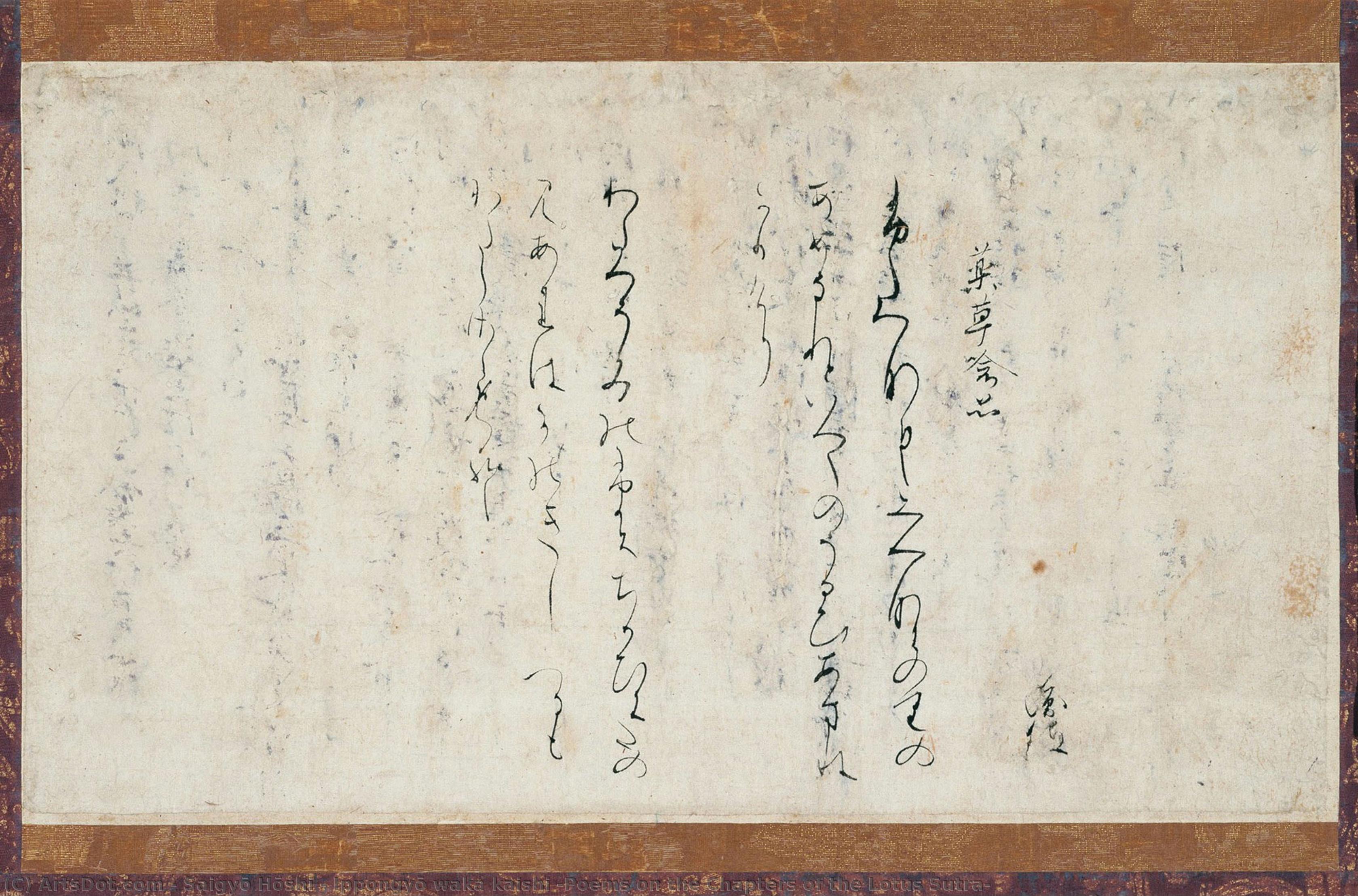
Ippongyō waka kaishi (Poems on the Chapters of the Lotus Sutra)
 Read More
Purchase a high-resolution, enhanced digital image, far superior to the online preview.
Each file is meticulously prepared by our in-house specialists using advanced tools and expert manual retouching. We ensure every image has exceptional clarity, precise color accuracy, and fine detail.
The final file is delivered via email within 72 hours, optimized for immediate use in professional, editorial, and print environments. This is the same quality trusted by top-tier design studios, publishers, and galleries.
Digital Image
Download a high-resolution file for personal display, printing, and creative projects. ( Buy Print Buy Hand Made Painting)
Included in Every Digital Image Order
Expert Digital Delivery, Guaranteed
When you choose ArtsDot.com, you're not just getting an image - you're receiving a professionally enhanced digital artwork, crafted with precision and backed by a satisfaction guarantee. Here's everything that comes with your order, automatically:

Fast Email Delivery
Your high-resolution digital image file will be emailed to you within 72 hours of ordering - ready for immediate use.

AI-Enhanced Digital File
Your artwork is professionally optimized using advanced AI tools and manual editing, ensuring maximum detail, clarity, and color accuracy.

Free Lifetime Re-Delivery
Accidentally deleted or lost your file? No worries - we'll resend it to you anytime, free of charge.

No Import Fees - Ever
Enjoy your artwork instantly with zero customs, duties, or delivery fees - digital downloads are always tax-free.

Color Accuracy Guarantee
We ensure your digital image reflects the original colors as closely as possible using professional tools and color management.

60-Day Satisfaction Guarantee
If you're not satisfied with your digital image, we'll revise it or refund 100% within 60 days - no questions asked.

100% Money-Back Guarantee
Not satisfied? Get a full refund within 60 days of receiving your digital file - no questions asked.

Bulk Order Discounts
Buy 3 images, save 10% - Buy 5, save 15% - Buy 10+, save 20%. Great for creative projects, galleries, and agencies.
Related Artworks









Artist Biography
The Wandering Soul: The Life and Legacy of Saigyō Hōshi
In the quiet, mist-covered landscapes of twelfth-century Japan, there lived a man whose spirit was as untethered as the wind. Saigyō Hōshi, born in Kyoto in 1118, was far more than a mere monk; he was a wandering poet whose verses captured the very heartbeat of the Japanese wilderness. Living during the twilight of the Heian period, Saigyō navigated a world caught between the rigid structures of imperial court life and the profound, solitary simplicity of Buddhist asceticism. His journey from a young man of noble connections to a wandering monk is a testament to a soul seeking truth through the transient beauty of the natural world.
The essence of Saigyō’s work lies in his mastery of waka, a classical form of Japanese poetry characterized by its delicate emotional resonance and rhythmic elegance. His life was defined by a profound sense of impermanence—the Buddhist concept of mujo. Through his eyes, we see the cherry blossoms not just as flowers, but as symbols of the fleeting nature of existence; we hear the mountain streams not merely as water, but as the relentless passage of time. His poetry does not merely describe nature; it inhabits it, blending the observer with the observed until the boundary between the human heart and the landscape dissolves.
A Tapestry of Nature and Spirit
Saigyō’s artistic development was deeply intertwined with his physical travels across the Japanese archipelago. As he wandered through remote mountains, ancient shrines, and moonlit groves, each landscape became a stanza in his lifelong epic. His style is marked by an extraordinary ability to evoke vivid imagery through minimalist language. He possessed a unique talent for finding the infinite within the infinitesimal, using natural elements like dew, moonlight, and autumn leaves to mirror the complexities of human longing and spiritual devotion.
While Saigyō lived centuries before the rise of the ukiyo-e movement, his poetic sensibilities laid the aesthetic groundwork for much of what would later define Japanese visual art. The way he framed a single branch against a pale sky or captured the melancholy of a fading twilight prefigured the compositions of masters like Ando Hiroshige and Katsushika Hokusai. His influence even reached into the brushstrokes of the Kanō school, as his themes of natural solitude and seasonal transition became foundational motifs in Japanese painting. To read Saigyō is to witness the birth of a uniquely Japanese aesthetic—one that finds profound meaning in the ephemeral.
Enduring Influence on the Japanese Soul
The historical significance of Saigyō Hōshi cannot be overstated. He stands as a pillar of the Japanese literary tradition, a figure whose influence bridged the gap between the aristocratic elegance of the Heian era and the rugged, spiritual depth of the medieval period. His poems were not merely personal reflections but became part of a collective cultural consciousness, shaping how generations of Japanese people perceived their relationship with the earth.
His achievements are best understood through the lasting impact of his voice:
- Literary Mastery: He elevated the waka form to new heights of emotional complexity and spiritual depth.
- Cultural Iconography: He established the archetype of the "poet-monk," a figure of profound cultural importance in Japanese history.
- Aesthetic Foundation: His focus on nature, solitude, and the beauty of decay provided a blueprint for centuries of subsequent Japanese art, from calligraphy to landscape painting.
Today, Saigyō Hōshi remains a beacon for anyone seeking beauty in the transient. His life reminds us that even in a world of constant change, there is a profound, enduring grace to be found in the simple act of witnessing the world with an open and compassionate heart.
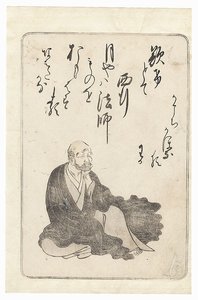
saigyō hōshi
1118 - 1190 , Japan
Quick Facts
- Artistic Movement Or Style: Ukiyo-e influenced / Zen Buddhism
- Artists Who Influenced This Artist:
- Andō Hiroshige
- Katsushika Hokusai
- Ton’a
- Date Of Birth: 1118
- Full Name: Satō Norikiyo / Saigyō Hōshi
- Nationality: Japanese
- Notable Artworks:
- Three Poems from the Later Collection of Japanese Poems
- Poem By Saigyô Hōshi
- Ippongyō waka kaishi
- Place Of Birth: Kyoto, Japan

