Menu
FREE ART CONSULTATION
PreviewPreview AR previewAR preview Buy Print Buy PrintBuy Hand Made Painting Buy Hand Made Painting SendSend
DetailsDetails Add to favorites Add to favorites DownloadDownload SimilarsSimilars X-RayX-Ray DiaporamaDiaporama

Illustrations of Uji Tea Production

  • Creation date1803
  • Dimensions32.0 x 1648.0 cm

Discover Saito Motonari's stunning 19th-century Japanese paintings! Explore 'Uji Tea Production' & his unique artistic style. A master of traditional art.

Purchase a high-resolution, enhanced digital image, far superior to the online preview.

Each file is meticulously prepared by our in-house specialists using advanced tools and expert manual retouching. We ensure every image has exceptional clarity, precise color accuracy, and fine detail.

The final file is delivered via email within 72 hours, optimized for immediate use in professional, editorial, and print environments. This is the same quality trusted by top-tier design studios, publishers, and galleries.

Digital Image

Download a high-resolution file for personal display, printing, and creative projects. (Buy Print Buy PrintBuy Hand Made Painting Buy Hand Made Painting)

Total Price

$ 24.00

Included in Every Digital Image Order

Expert Digital Delivery, Guaranteed

When you choose ArtsDot.com, you're not just getting an image - you're receiving a professionally enhanced digital artwork, crafted with precision and backed by a satisfaction guarantee. Here's everything that comes with your order, automatically:

shipping_icon
Fast Email Delivery

Your high-resolution digital image file will be emailed to you within 72 hours of ordering - ready for immediate use.

canvas_icon
AI-Enhanced Digital File

Your artwork is professionally optimized using advanced AI tools and manual editing, ensuring maximum detail, clarity, and color accuracy.

insurance_icon
Free Lifetime Re-Delivery

Accidentally deleted or lost your file? No worries - we'll resend it to you anytime, free of charge.

tax_icon
No Import Fees - Ever

Enjoy your artwork instantly with zero customs, duties, or delivery fees - digital downloads are always tax-free.

color_icon
Color Accuracy Guarantee

We ensure your digital image reflects the original colors as closely as possible using professional tools and color management.

return_icon
60-Day Satisfaction Guarantee

If you're not satisfied with your digital image, we'll revise it or refund 100% within 60 days - no questions asked.

guarantee_icon
100% Money-Back Guarantee

Not satisfied? Get a full refund within 60 days of receiving your digital file - no questions asked.

discount_icon
Bulk Order Discounts

Buy 3 images, save 10% - Buy 5, save 15% - Buy 10+, save 20%. Great for creative projects, galleries, and agencies.

Collectible Description

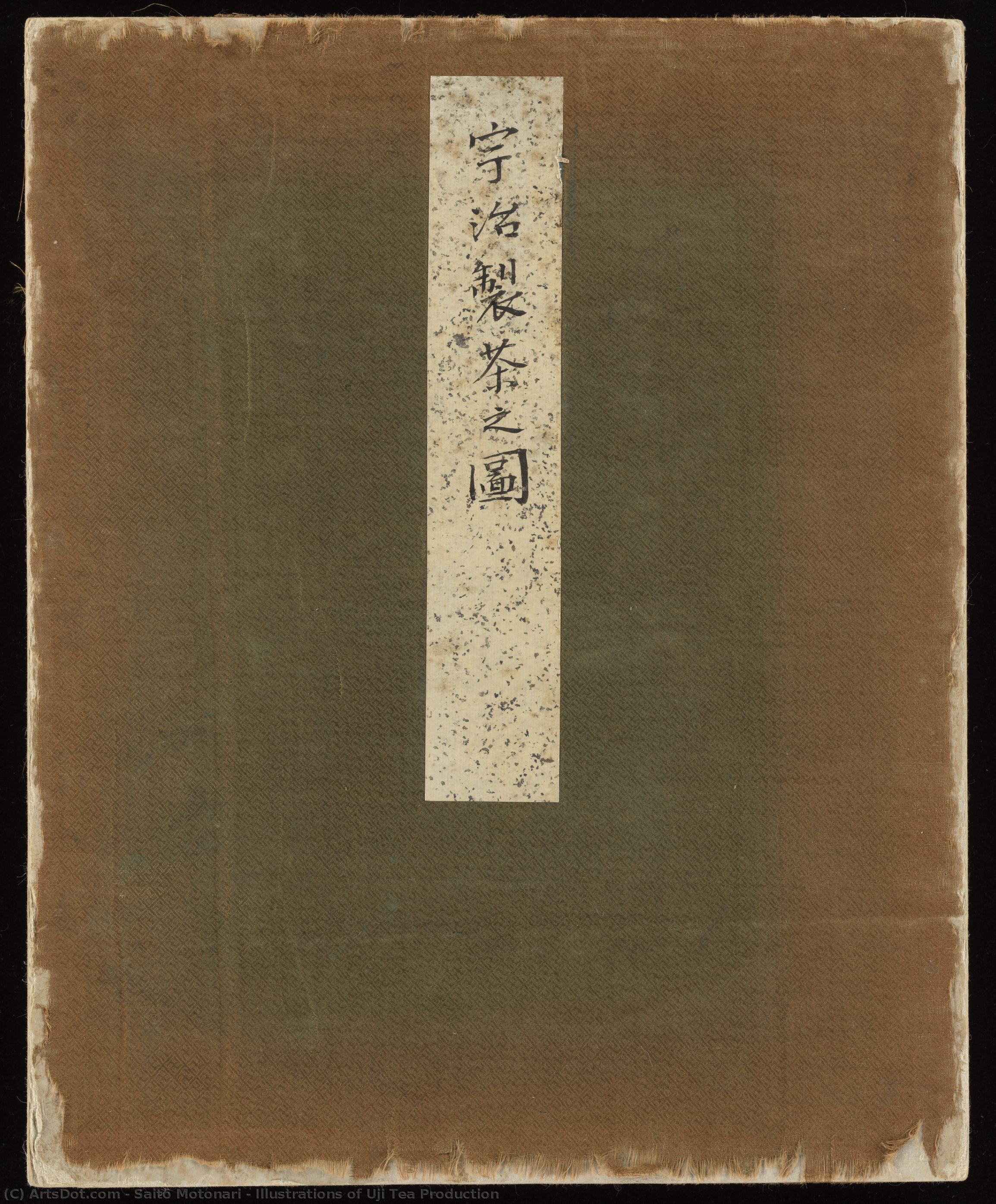
This folding album was originally created as handscroll, about a foot tall and over fifty feet long, capturing in remarkable detail every stage of production of deluxe green tea in Uji, near Kyoto. The imagery starts in the early spring and charts each stage of growing, harvesting, culling the best leaves, and drying of the tea leaves. The final scene shows a group of men enjoying bowls of tea. Even to this day, Uji is famous for its variety of teas used for both tea ceremony and everyday imbibing. As early as the thirteenth century, by which time the consumption of tea was becoming more common in Japan, tea growers discovered that the quality of the soil as well as the local climate in Uji made for ideal conditions for tea cultivation. The various types of tea enjoyed in Japan since medieval times, whether matcha¸ sencha, ūroncha (Oolong tea), bancha, hōjicha (roasted tea), genmaicha (brown rice tea), gyokuro (deluxe shade-grown green tea) are all made from the same Camellia Sinensus plant, though various subspecies have been cultivated over the years. The variations in taste, appearance, and texture depends on what time of year the leaves are harvested, whether they are fermented or not, and then how they are dried and processed.Nothing is known about the painter, identified in the Preface as Saitō Motonari 斎藤玄就 (pronunciation unsure) except that he lived in Uji. A single-page preface to the scroll in literary Chinese was boldly brushed by the monk Nindō Sōen 忍道宗延of Daitokuji Temple in Murasakino, Kyoto. Sōen was the fourteenth head abbot of Hōshun’in, 芳春院 a subtemple in the northern precincts of Daitokuji, and a noted practitioner of wabicha tea ceremony. He notes that he is a friend of Saitō Motonari, the painter of this handscroll. Sōen notes that the special quality of tea produced in Uji is due to the way the tea bushes are shaded while growing.An almost identical scroll, except that it lacks captions, was exhibited at the Urasenke Chadō Shiryō-kan in Kyoto in 2021. That scroll, which features the title “Illustrations of Uji Tea Picking and Tea Production” (Uji tekicha oyobi teisaku no zu) was painted by Matsushita Sakae and is dated Meiji 29 (1896),and must have been copied from this earlier version. See http://5106.jp/japanese-tea/6671/ The album can be described as follows:1. Cover with the hand-brushed title slip “Illustrations of Uji Tea Production” (Uji sei-cha no zu 宇治製茶之図) 2. A single-page preface to the scroll brushed by the monk Sōen 宗延 from Daitokuji Temple in Murasakino, Kyoto. He notes that he is a friend of the artist Saitō Motonari 斎藤玄就 (pronunciation unsure) who painted this handscroll of scenes of tea production. The opening two characters are read Uji 菟道, though today 宇治is the standard way to write the place name. Sōen notes that the special quality of tea produced in Uji is due to the way the tea bushes are shaded while growing. The preface is dated to the kigai cyclical year of the Kyōwa era (1803). 3. The opening illustration features a large, roofed gateway to the tea plantation. 4. Preparations are already underway in the first lunar month with workers weaving the reed matting that will be used to carry out the “shaded cultivation” (oishita saibai) distinctive to Uji tea since the late sixteenth century.5. Bamboo baskets of various sizes are woven6. From the beginning of the second month, the large blankets used for collecting, spreading, and cooling the tea leaves are repaired.7. Bamboo used to support the reed canopies is carried in from huts in the fields around the time cherry trees bloom.8. Bamboo scaffolding to support the reed canopies (yoshizu) is erected over the young tea bushes in the third month. According to the caption here, the first picking of young tea takes place eighty-eight nights after the end of winter and this early crop produces the highest quality tea.9. Reed canopies are being installed to slow the photosynthesis process and thereby reduce the bitterness of the tea.10. Paper markers are tied to tea bushes to indicate which should be harvested first. 11. During the rainy season, groups of women tea pickers wear raincoats made from reeds (mino). 12. Men transport the tea leaves in large baskets hoisted upon their shoulders. 13. Agricultural supervisors (nobugyō) of the Shogunate check harvest records, while women are harvesting tea during a short period of time in the early summer. Some of the women carry their children on their backs. 14. Women pause in picking tea to watch a group of samurai officials pass by. 15. A procession of a samurai family. 16. Harvested tea leaves are brought to the tea processing building in large baskets.17. Tea leaves are brought indoors where, under the supervision of the owner, they are weighed and transferred to “cooling baskets” (suzushi kago).18. Leaves are spread on large tables where women remove stems and other impurities. 19. Leaves undergo a steaming process. 20. A clerk sitting beside a Japanese clock co../..

Artist Biography

The Artistic Genesis of Saitō Motonari

In the culturally rich landscapes of Aizu Bangi, the foundations of a significant artistic journey were laid during the early 19th century. This was an era defined by profound tradition and meticulous craftsmanship, a period where Saitō Motonari emerged as a painter capable of capturing the very soul of Japanese life. His early years were characterized by a rigorous immersion into the classical techniques of Japanese painting, a discipline that required not only steady hands but an eye for the subtle nuances of nature and human industry. It is believed that through dedicated study within traditional workshops, Motonari mastered the delicate balance of line and color that would later define his most celebrated contributions to the art world.

A Visual Chronicle of Uji Tea Production

The pinnacle of Motonari’s creative output is perhaps best embodied in his 1803 masterpiece, Illustrations of Uji Tea Production. This work serves as more than a mere painting; it is a vibrant historical document that breathes life into the storied tea-growing traditions of the Uji region. Through the use of bold colors and an extraordinary level of intricate detail, Motonari guides the viewer through the rhythmic, seasonal labor involved in cultivating Japan's most prestigious leaves. Each stroke of his brush captures the essence of the process, from the careful tending of the tea bushes to the final preparation, creating a narrative that is both educational and deeply aesthetic. The painting reflects a profound respect for the natural world and the human hand that shapes it, embodying the spirit of the era's traditional art forms.

Legacy and Historical Resonance

While the specific stylistic labels of his era can be complex, Motonari’s work stands as a testament to the enduring power of Japanese tradition. He operated in an era populated by other notable figures, such as Kinpūsha Toyomaro, whose works shared a similar dedication to capturing contemporary life through a stylized lens. Today, the traces of Motonari's brilliance can be found in prestigious collections, where his depictions of Uji tea production continue to inspire awe and scholarly interest. His ability to weave historical significance with artistic beauty ensures that his name remains etched in the annals of Japanese art history, standing alongside legends like Utagawa Hiroshige and Tsukioka Yoshitoshi as a master of visual storytelling.
Quick Facts

  • Artistic Movement Or Style: World Goes Pop
  • Artists Or Movements Influenced By This Artist: ['Influences various contemporary artists']
  • Artists Who Influenced This Artist: ['Influenced by diverse artists within the World Goes Pop movement']
  • Date Of Death: Living
  • Notable Artworks: ['Various works featured in The World Goes Pop exhibition']
  • Place Of Birth: WahooArt