 Preview
 Send
Send Share
Share
 Details

 Download
 Similars
 X-Ray
X-Ray Diaporama
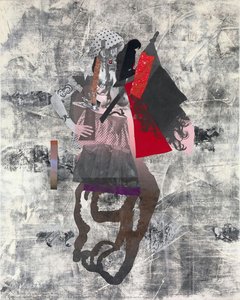
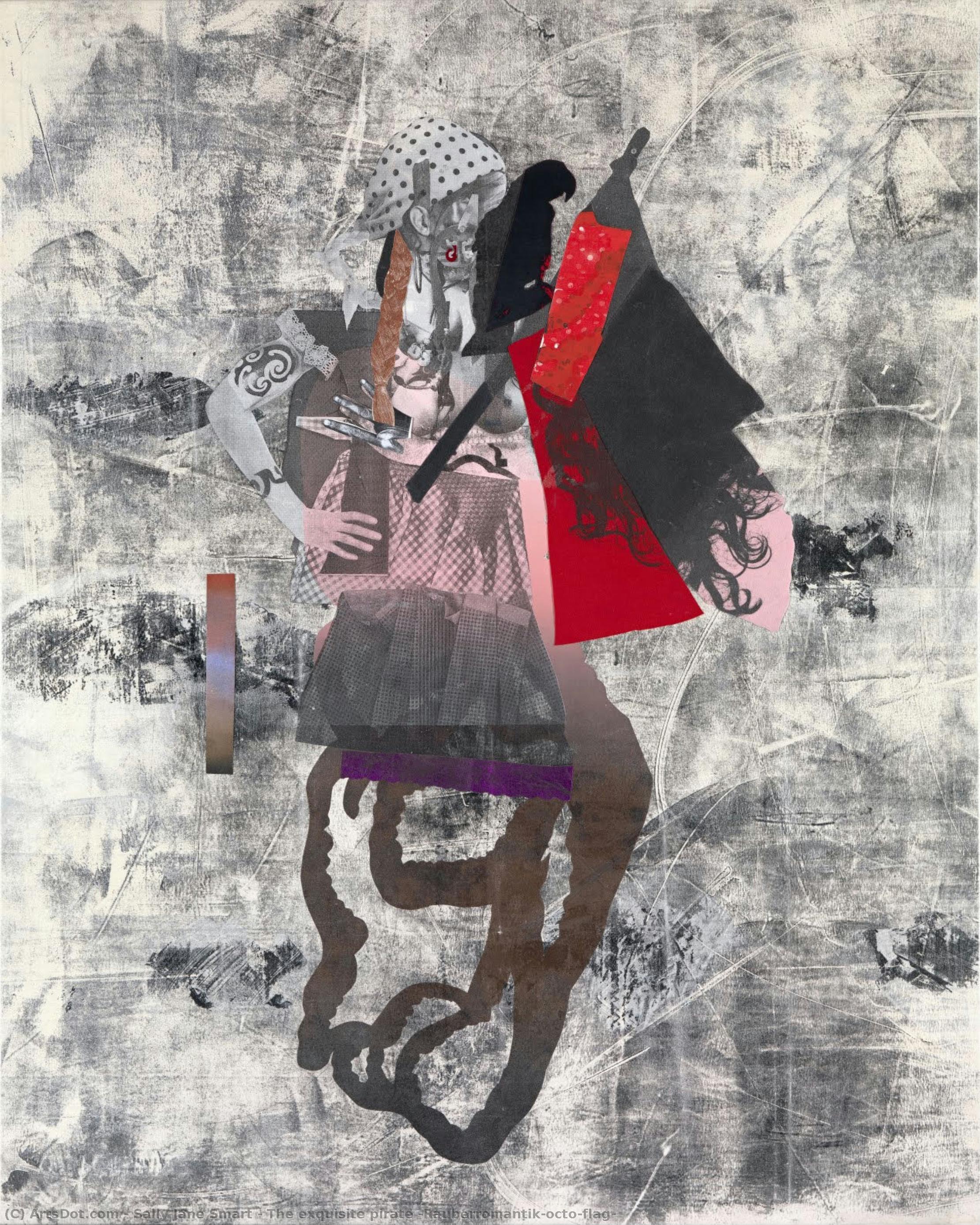
The exquisite pirate (Rauberromantik/octo/flag)
 Contemporary
 2008
2008 190.0 x 152.0 cm
 National Gallery of Victoria
 Read More
Hand Made Oil Reproduction
Hand-painted oil on canvas in your size and frame, made to order by our artists. ( Buy Print Buy Image)




































Pick from our preset sizes that match the artwork's original proportions.

You may enter your own dimensions to fit a specific frame or space. If your selected size does not match the original image's proportions, we will either crop the artwork or extend the painting with additional hand-painted elements. A digital mockup will be sent for your approval before production begins.
Please note that the on-screen preview does not reflect the actual cropping or extension. Only the mockup will accurately show the final composition.
While custom sizes are available, we recommend selecting a dimension from the predefined list to preserve the original proportions.
After order, ArtsDot.com team will email client for instructions and provide a mockup preview
Worldwide Delivery () in 3/4 weeks instead of standard 5 weeks. (20 August). No compromise on quality.

Free Worldwide Express Shipping

High-Quality Linen Canvas

Full Shipping Insurance

Customs Tax Refund Guarantee

True Color Matching Guarantee

60-Day Return Policy (Defects Only)

100% Money-Back Guarantee

Bulk Discount Offer
 Glass option is only available in size under 110 CM

The exquisite pirate (Rauberromantik/octo/flag)
Reproduction Medium
Reproduction Size
-


Total Price
$ 263
Artwork Description
Related Artworks
Artist Biography
The Crucible of Change: An Exploration of the Art of the 1960s
The decade of the 1960s wasn’t merely a period marked by social upheaval and cultural shifts; it was, fundamentally, an artistic crucible. Emerging from the shadow of Abstract Expressionism – with its emphasis on individual emotion and sprawling canvases – a new generation of artists sought to redefine art's purpose, challenging established conventions and embracing the burgeoning realities of a rapidly changing world. This wasn’t simply about stylistic innovation; it represented a profound questioning of what constituted “art” itself, fueled by philosophical currents, technological advancements, and a growing dissatisfaction with the perceived elitism of the traditional art establishment. The movement was not monolithic, but rather a constellation of interconnected approaches – Pop Art, Minimalism, Conceptual Art, Happenings – each reacting to its predecessors and reflecting the anxieties and aspirations of the era.- Pop Art’s Embrace of Popular Culture: Artists like Andy Warhol, Roy Lichtenstein, and Robert Rauschenberg seized upon the imagery of mass media—advertising, comic books, celebrity photographs—as their primary subject matter. This wasn't a cynical critique, but an exploration of how images permeated everyday life and shaped our perceptions. Warhol’s iconic silkscreen portraits of Marilyn Monroe and Elvis Presley elevated these figures to the status of art, blurring the lines between high and low culture. Lichtenstein’s meticulous reproductions of Ben-Day dots from comic strips demonstrated the power of industrial printing techniques to create visually arresting works. Rauschenberg's "Combine" paintings – collages incorporating found objects alongside painted surfaces – further challenged traditional notions of artistic authorship and material.
- Minimalism: Reduction to Essence Simultaneously, a group of artists—Donald Judd, Sol LeWitt, Dan Flavin—championed Minimalism’s austere aesthetic. Rejecting expressive content, they sought to reduce art to its essential components: simple geometric forms, industrial materials (steel, concrete, plexiglass), and carefully calibrated lighting. The goal wasn't to create beautiful objects but to provoke a direct, unmediated experience of space and perception. Judd’s boxes, for example, were deliberately devoid of decoration or narrative, inviting viewers to contemplate their own relationship to the artwork and the surrounding environment.
- Conceptual Art: Ideas Over Objects Closely related to Minimalism was Conceptual Art, which prioritized the idea behind the work over its physical manifestation. Artists like Joseph Kosuth questioned the very definition of art, exploring concepts such as language, signs, and representation. His seminal work, “One and Three Chairs,” consisted of a single chair, a photograph of a chair, and a written description of a chair – demonstrating that the artwork’s meaning resided in the conceptual framework rather than the tangible object itself.
The Seeds of Rebellion: Influences and Context
To understand the radicalism of 1960s art, it's crucial to consider the broader cultural context. The decade witnessed a confluence of events that profoundly impacted artistic production: the Civil Rights Movement, the Vietnam War protests, the rise of feminism, and the burgeoning counterculture movement all fueled a spirit of rebellion against established norms. The influence of European avant-garde movements—Dadaism, Surrealism, and Abstract Expressionism—continued to resonate, but they were now filtered through a distinctly American lens. The post-war economic boom created both unprecedented prosperity and anxieties about consumerism, providing fertile ground for artists exploring themes of mass culture and the commodification of art.- The Legacy of Abstract Expressionism: While rejecting the emotional intensity of Abstract Expressionism, these new movements built upon its legacy of experimentation with form and materiality. Artists like Rauschenberg and Lichtenstein acknowledged the influence of Jackson Pollock’s drip paintings, but sought to move beyond the subjective expression of the individual artist.
- The Impact of Technology: The development of new technologies—silkscreen printing, industrial materials, neon lighting—offered artists unprecedented tools for creating their work. Warhol's use of silkscreen printing allowed him to mass-produce images with remarkable precision and speed, while Flavin’s fluorescent light sculptures transformed the gallery space into a dynamic environment.
- Philosophical Currents: The ideas of philosophers like Martin Heidegger, Jean-Paul Sartre, and Ludwig Wittgenstein profoundly influenced artists' thinking about art's role in society and its relationship to language and perception.
Key Figures and Their Distinct Voices
The 1960s witnessed the emergence of a diverse group of artists who each developed a unique voice within the broader movement. Each artist’s work reflected their individual concerns and approaches, contributing to the richness and complexity of the era's artistic landscape.- Andy Warhol: The undisputed king of Pop Art, Warhol explored themes of celebrity, consumerism, and mass media through his iconic silkscreen portraits and repeated imagery.
- Roy Lichtenstein: Known for his meticulous reproductions of comic book panels, Lichtenstein elevated commercial art to the level of fine art, challenging traditional notions of artistic skill and originality.
- Donald Judd: A key figure in Minimalism, Judd’s boxes and sculptures sought to strip away all unnecessary ornamentation, reducing art to its essential geometric forms.
- Sol LeWitt: LeWitt's conceptual works—wall drawings, mazes, and structures—explored the relationship between idea and execution, often employing anonymous assistants to carry out his instructions.
A Lasting Legacy: The Enduring Influence of 1960s Art
The art of the 1960s fundamentally altered the course of modern art history. Its embrace of popular culture, its rejection of traditional artistic conventions, and its emphasis on conceptual ideas paved the way for subsequent movements such as Conceptualism, Minimalism, and Neo-Expressionism. The decade’s artists challenged viewers to reconsider their assumptions about art's purpose and value, demonstrating that art could be found in unexpected places—in advertising, in everyday objects, and even in the absence of traditional form. The legacy of this transformative period continues to resonate today, shaping contemporary artistic practices and influencing our understanding of art’s role in society.
sally jane smart
1960 - , Australia
Quick Facts
- Artistic Movement Or Style: Hand-painted reproductions
- Artists Or Movements Influenced By This Artist: ['']
- Artists Who Influenced This Artist: ['']
- Date Of Birth: 1960
- Full Name: WahooArt
- Notable Artworks: ['Various famous artworks']
- Place Of Birth: WahooArt
Related Articles
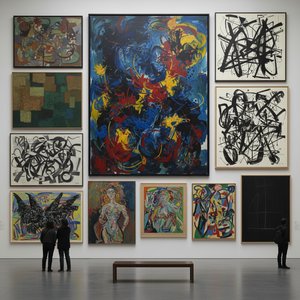
Abstract Expressionism's 10 Defining Masterpieces |
Explore 10 defining Abstract Expressionism masterpieces by Pollock, Rothko & de Kooning. Discover the stories behind these iconic paintings and find museum-quality art reproductions to elevate your home decor on .
Kandinsky's Masterpieces: 25 Paintings That Define Abstract Art | ArtsDot
Journey through Wassily Kandinsky's 25 most iconic abstract paintings. Explore his revolutionary use of color, form & spiritual expressionism. Find museum-quality Kandinsky reproductions and elevate your home decor with ArtsDot.com. Discover all masterpieces on ArtsDot.com!

Geometric Abstraction's 10 Defining Masterpieces | Art for Your Home - ArtsDot
Explore 10 defining masterpieces of Geometric Abstraction! Discover Kandinsky, Mondrian & Malevich’s iconic works. Find museum-quality art reproductions and curated decor ideas to elevate your home at ArtsDot.com.
Beyond Representation: Exploring the Emotional Landscape of Abstract Expressionism
Explore the profound emotional world of Abstract Expressionism with ArtsDot. Discover key artists like Pollock & Rothko, learn about collecting, and find museum-quality reproductions to inspire your space.
Navigating Abstract Expression: A Guide to Contemporary Movements for Emotional Resonance in Art Selection
Explore the evolution of Abstract Expressionism & discover contemporary movements for emotional resonance. Expert guidance for discerning art collectors seeking lasting value. ArtsDot.