

 Preview
 Send
Send Share
Share
 Details

 Download
 Similars
 X-Ray
X-Ray Diaporama
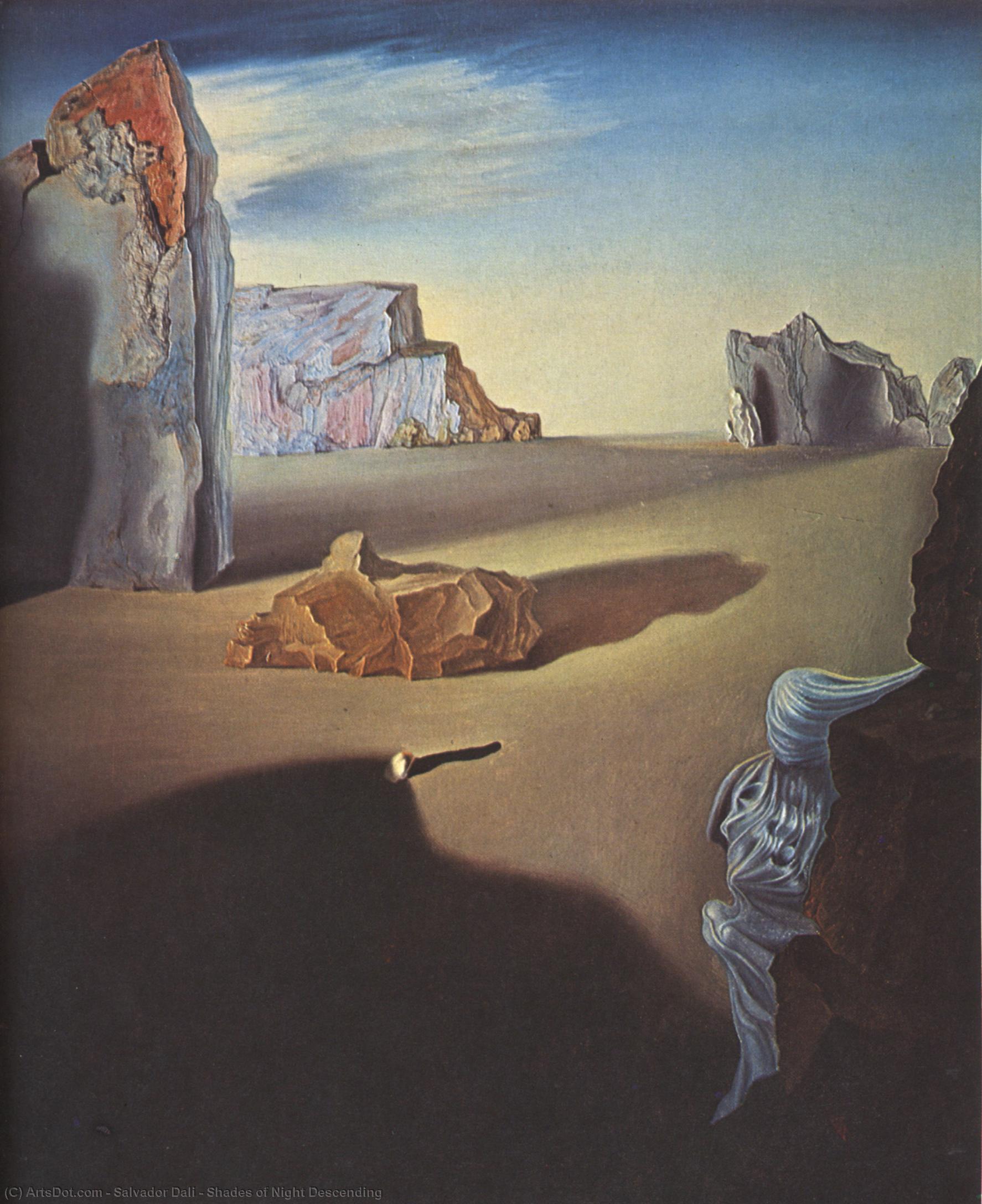
Shades of Night Descending
 Oil On Canvas
- WallArt
- Surrealism
 1931
1931- Renaissance
 61.0 x 49.0 cm
 Read More
Purchase a high-resolution, enhanced digital image, far superior to the online preview.
Each file is meticulously prepared by our in-house specialists using advanced tools and expert manual retouching. We ensure every image has exceptional clarity, precise color accuracy, and fine detail.
The final file is delivered via email within 72 hours, optimized for immediate use in professional, editorial, and print environments. This is the same quality trusted by top-tier design studios, publishers, and galleries.
Digital Image
Download a high-resolution file for personal display, printing, and creative projects. ( Buy Print Buy Hand Made Painting)
Included in Every Digital Image Order
Expert Digital Delivery, Guaranteed
When you choose ArtsDot.com, you're not just getting an image - you're receiving a professionally enhanced digital artwork, crafted with precision and backed by a satisfaction guarantee. Here's everything that comes with your order, automatically:

Fast Email Delivery
Your high-resolution digital image file will be emailed to you within 72 hours of ordering - ready for immediate use.

AI-Enhanced Digital File
Your artwork is professionally optimized using advanced AI tools and manual editing, ensuring maximum detail, clarity, and color accuracy.

Free Lifetime Re-Delivery
Accidentally deleted or lost your file? No worries - we'll resend it to you anytime, free of charge.

No Import Fees - Ever
Enjoy your artwork instantly with zero customs, duties, or delivery fees - digital downloads are always tax-free.

Color Accuracy Guarantee
We ensure your digital image reflects the original colors as closely as possible using professional tools and color management.

60-Day Satisfaction Guarantee
If you're not satisfied with your digital image, we'll revise it or refund 100% within 60 days - no questions asked.

100% Money-Back Guarantee
Not satisfied? Get a full refund within 60 days of receiving your digital file - no questions asked.

Bulk Order Discounts
Buy 3 images, save 10% - Buy 5, save 15% - Buy 10+, save 20%. Great for creative projects, galleries, and agencies.
Shades of Night Descending - Salvador Dalí
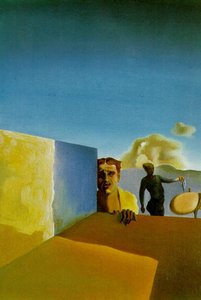
Salvador Dalí’s “Shades of Night Descending,” completed in 1931 during his formative Surrealist years, stands as an emblem of the movement's audacious exploration into the subconscious realm. More than just a landscape painting—though undeniably rooted in observation—it embodies Dali’s masterful manipulation of visual paradoxes and dreamlike distortions to convey profound emotional resonance. Measuring 61 x 49.8 cm on canvas, executed in oil with meticulous detail, the artwork transports viewers into a desolate yet strangely captivating panorama dominated by towering rocky formations and an overcast sky pregnant with impending rain. ### The Surrealist Movement: A Quest for Absolute Reality The Surrealist movement emerged from the ashes of Dada nihilism in the early 1920s, fueled by a fervent desire to liberate art from rational constraints and tap into the untapped potential of dreams and irrational thought. Artists like André Breton championed this revolutionary philosophy, arguing that true creativity resided beyond logic—in accessing the hidden depths of the human psyche. Dali’s “Shades of Night Descending” perfectly encapsulates this ethos, rejecting conventional representational conventions in favor of a deliberately unsettling juxtaposition of forms and textures designed to provoke contemplation and challenge perceptions. ### Composition and Symbolism: Layers of Meaning The painting's composition is strikingly asymmetrical, emphasizing the dominance of jagged rocks that ascend towards the horizon—a visual metaphor for confronting formidable obstacles and anxieties. Scattered across the barren terrain are colossal boulders, rendered with painstaking realism yet imbued with an aura of instability and decay. Above them stretches a turbulent sky, bruised purple and grey, mirroring the emotional turmoil underlying Dali’s artistic vision. Notably positioned at the base of the image are two sports balls—a seemingly incongruous element that symbolizes playful pursuits and fleeting moments of joy amidst the pervasive gloom. These spheres serve as a poignant reminder of the ephemeral nature of existence and the importance of savoring life's pleasures before it vanishes into darkness. ### Artistic Significance: Dali’s Surrealist Style Revisited “Shades of Night Descending” exemplifies Dali’s signature Surrealist style—characterized by meticulous draftsmanship combined with hallucinatory imagery and dreamlike distortions. Like many of his seminal works, including “Combinations,” this painting demonstrates Dali's innovative approach to art, rejecting traditional perspective and employing techniques borrowed from Cubism and Futurism to create a visually arresting spectacle. The artist’s deliberate disregard for conventional aesthetic standards—his embrace of irrationality and subconscious impulses—solidifies Dali’s position as one of the most influential figures in 20th-century art history. His exploration of themes such as fear, isolation, and mortality continues to resonate with audiences today, cementing “Shades of Night Descending”'s place among the masterpieces of Surrealism. ### Artist’s Background: Dali – A Pioneer of Dreamlike Vision Salvador Dalí was born in Figueres, Catalonia, Spain, in 1904—a child prodigy who quickly established himself as a prodigious draftsman and painter. Influenced by Impressionism and the Renaissance masters from an early age, he embarked on a lifelong pursuit of artistic innovation—rejecting academic conventions in favor of experimentation and psychological insight. Dali’s fascination with Freud's theories of psychoanalysis profoundly shaped his artistic worldview—inspiring him to delve into the subconscious mind and translate its enigmatic imagery onto canvas. For more information about Dali and his oeuvre, visit Salvador Dalí at ArtsDot.com – a comprehensive resource dedicated to celebrating the legacy of this visionary artist. ### Historical Context: Painting Through Time The history of painting spans millennia—from prehistoric cave paintings to Renaissance frescoes to Impressionist landscapes to Abstract Expressionist canvases—representing an astonishing diversity of artistic styles and cultural traditions. Each epoch contributes its unique perspective on human experience—reflecting prevailing social, political, and philosophical ideas. To gain a deeper understanding of the evolution of painting, consult History of Painting on Wikipedia – a scholarly examination of art history that traces developments from antiquity to the present day. ### Conclusion: A Masterpiece of Surrealist Expression “Shades of Night Descending” by Salvador Dalí stands as an unparalleled achievement of Surrealist expression—a testament to Dali’s artistic genius and his unwavering commitment to exploring the boundaries of perception. Its haunting beauty—its unsettling juxtaposition of forms and textures—continues to captivate viewers worldwide, securing its place among the most enduring symbols of the Surrealist movement. If you aspire to experience the transformative power of Surrealism firsthand, ArtsDot offers meticulously crafted oil painting reproductions of Dali’s iconic artworks—including “Shades of Night Descending” – allowing you to immerse yourself in the visionary world of Salvador Dalí.Related Artworks
Artist Biography
A Life Submerged in Dreams: The World of Salvador Dalí
Salvador Domingo Felipe Jacinto Dalí i Domènech, a name synonymous with surrealism, was born on May 11, 1904, in the sun-drenched town of Figueres, Spain. His existence was destined to be anything but ordinary, a life meticulously crafted as a performance, an exploration of the subconscious rendered visible through startling imagery and technical brilliance. The shadow of loss loomed early; his older brother, also named Salvador, had died just nine months before Dalí’s birth, a trauma that would permeate his art with themes of duality and replacement. This formative experience, coupled with a complex relationship with his stern yet pragmatic father and the indulgent affection of his mother, shaped a personality both flamboyant and deeply introspective. From a young age, Dalí demonstrated an exceptional artistic talent, nurtured through formal training at the San Fernando Academy of Fine Arts in Madrid. However, it was a pivotal encounter with modern painting – particularly the works of Impressionists and Renaissance masters – that ignited within him a fervent desire to break from tradition and forge his own unique path.
The Crucible of Paris and the Birth of a Surrealist Vision
A journey to Paris in 1926 proved transformative, immersing Dalí in the heart of the avant-garde movement. He found himself drawn to the rebellious spirit of Dadaism, its rejection of logic and embrace of absurdity resonating with his own burgeoning artistic inclinations. More importantly, it was in Paris that he fully embraced Surrealism, connecting with key figures like André Breton, Pablo Picasso – whom Dalí deeply revered – and Joan Miró. This encounter wasn’t merely an adoption of a style; Dalí revolutionized the movement itself. He developed what he termed the “paranoiac-critical method,” a self-induced state of paranoia designed to unlock the hidden imagery of the subconscious mind. This technique allowed him to translate dreams, anxieties, and deeply personal symbols onto canvas with startling clarity and meticulous detail. The result was a world populated by melting clocks, elongated shadows, distorted figures, and bizarre juxtapositions – hallmarks of his instantly recognizable style. The Persistence of Memory, completed in 1931, remains perhaps his most iconic work, encapsulating the Surrealist exploration of time’s fluidity, the fragility of memory, and the inevitability of decay.
Beyond the Canvas: A Prolific and Multifaceted Artist
Dalí's creative output extended far beyond painting. He was a remarkably prolific artist, venturing into sculpture, film – notably collaborations with Alfred Hitchcock in Spellbound and Walt Disney – graphic arts, jewelry design, and even stage sets. His fascination wasn’t limited to traditional artistic mediums; he explored the boundaries of commercial art, designing advertisements and window displays. Recurring motifs permeated his work: ants symbolizing decay, eggs representing pre-natal life and hope, crutches signifying support and fragility, drawers hinting at hidden secrets, and melting objects embodying the instability of reality. These symbols weren’t arbitrary; they were deeply personal, rooted in his own anxieties, desires, and memories. Works like Juliet's Tomb, a poignant exploration of loss, Mannequin (Barcelona Mannequin), reflecting an obsession with artificiality and identity, and Landscape with Flies, a disturbing depiction of mortality, demonstrate the breadth and depth of his thematic concerns. His meticulous technique, honed through years of practice, allowed him to render these fantastical visions with photographic realism, further amplifying their unsettling power.
Eccentricity, Legacy, and Enduring Influence
Throughout his life, Dalí cultivated a persona as flamboyant and eccentric as his art. He embraced self-promotion, understanding the power of spectacle in capturing public attention. His marriage to Gala Éluard in 1934 was pivotal, not only personally but artistically; she became his muse, business manager, and unwavering supporter. While his later years were marked by increasing commercial ventures and a sometimes controversial embrace of the Francoist regime, his artistic legacy remains immense. He died on January 23, 1989, leaving behind a body of work that continues to challenge, provoke, and inspire. The Salvador Dalí Museum in St. Petersburg, Florida, stands as a testament to his enduring appeal, housing an extensive collection that allows visitors to immerse themselves in the world of this extraordinary artist. Dalí transcended the boundaries of art, becoming a cultural icon whose influence can be seen in fashion, film, advertising, and popular culture. He remains one of the most recognizable and influential artists of the 20th century—a true visionary who dared to explore the depths of the subconscious and translate its mysteries onto canvas for all the world to see.
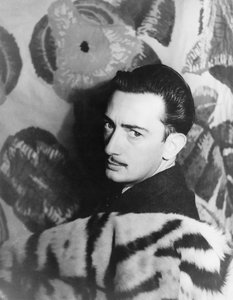
Salvador Dalí
1904 - 1989 , Spain
Quick Facts
- Artistic Movement Or Style: Surrealism
- Artists Or Movements Influenced By This Artist:
- Pop art
- Contemporary artists
- Artists Who Influenced This Artist:
- Cubism
- Dada
- Pablo Picasso
- Date Of Birth: May 11, 1904
- Date Of Death: January 23, 1989
- Full Name: Salvador Domingo Felipe Jacinto Dalí i Domènech
- Nationality: Spanish
- Notable Artworks:
- Persistence of Memory
- Juliet's Tomb
- Mannequin
- Landscape with Flies
- The Angelus of Gala
- Place Of Birth (City And Country): Figueres, Spain

