 Preview
 Send
Send Share
Share
 Details

 Download
 Similars
 X-Ray
X-Ray Diaporama
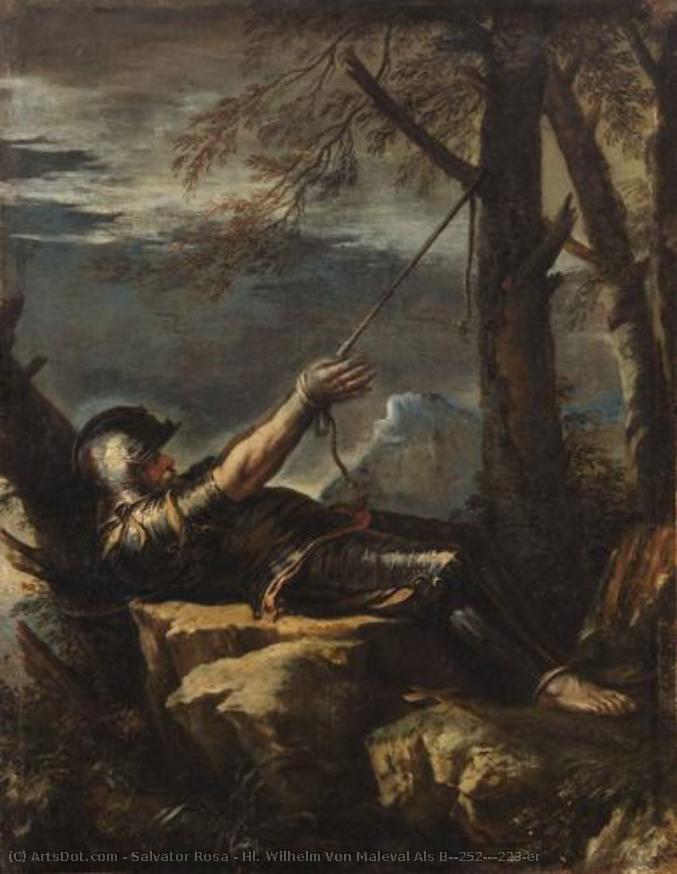
Hl. Wilhelm Von Maleval Als Büßer


 Read More
Hand Made Oil Reproduction
Hand-painted oil on canvas in your size and frame, made to order by our artists. ( Buy Print Buy Image)




P118B $10

P118H $10

P118W $10

P438Z $10

P508JH $12

P508YH $12

P805H $10

P805Z $10

P919BZ $10

P919G $10

P919XJ $10

P959ZH $10

P968JZ $12

W106C $8

W218G $10

W218JH $8

W218Y $10

W307PJ $10

W316G $10

W316PJ $8

W316Y $10

W398PJ $8

W4111J $10

W500HY $15

W500JH $15

W692G $12

W849H $8

W940BG $15

W953PJ $8




Pick from our preset sizes that match the artwork's original proportions.

You may enter your own dimensions to fit a specific frame or space. If your selected size does not match the original image's proportions, we will either crop the artwork or extend the painting with additional hand-painted elements. A digital mockup will be sent for your approval before production begins.
Please note that the on-screen preview does not reflect the actual cropping or extension. Only the mockup will accurately show the final composition.
While custom sizes are available, we recommend selecting a dimension from the predefined list to preserve the original proportions.
After order, ArtsDot.com team will email client for instructions and provide a mockup preview
Worldwide Delivery () in 3/4 weeks instead of standard 5 weeks. (21 August). No compromise on quality.

Free Worldwide Express Shipping

High-Quality Linen Canvas

Full Shipping Insurance

Customs Tax Refund Guarantee

True Color Matching Guarantee

60-Day Return Policy (Defects Only)

100% Money-Back Guarantee

Bulk Discount Offer
 Glass option is only available in size under 110 CM

Hl. Wilhelm Von Maleval Als Büßer
Reproduction Medium
Reproduction Size
-


Total Price
$ 263
Artwork Description
A Symphony of Shadows and Spiritual Agony
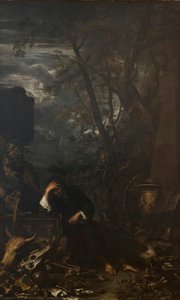
In the heart of the Baroque era, few artists could capture the raw, unvarnished essence of human suffering quite like Salvator Rosa. His masterpiece, Hl. Wilhelm Von Maleval Als Büßer, painted around 1645, serves as a profound window into a soul in the midst of divine penance. The canvas does not merely depict a scene; it orchestrates a dramatic tableau of spiritual torment and resolute faith. As the viewer encounters this monumental work, they are immediately struck by the palpable sense of sorrow that radiates from the central figure of Saint William of Maleval. Through a masterful application of chiaroscuro, Rosa manipulates light and shadow to create an atmosphere of oppressive gloom, where every flicker of illumination serves only to heighten the visibility of the saint's excruciating struggle.
The composition is anchored by the figure of Wilhelm, whose physical form is rendered with an unflinching naturalism that was revolutionary for its time. Eschewing the polished, idealized beauty of the Renaissance, Rosa embraces a gritty realism, meticulously detailing the tension in the musculature and the vulnerability of the flesh. This focus on the raw human experience allows the viewer to connect deeply with the saint's psychological state. The background—a turbulent, untamed landscape filled with skeletal trees and a heavy, cloud-strewn sky—acts as an emotional mirror to the internal tempest raging within the subject. It is a world where nature itself seems to participate in the gravity of the saint's devotion.
The Mastery of Baroque Technique and Texture
To behold this painting is to witness the pinnacle of Baroque technical prowess. Rosa’s use of oil on canvas allows for a rich, layered depth that brings the textures of the scene to life with startling clarity. One can almost feel the rough bark of the trees, the cold weight of the armor, and the dampness of the somber atmosphere. The artist’s brushwork is deliberate and painstaking, creating a tactile quality that invites close inspection. This level of detail is not merely decorative; it serves to ground the spiritual narrative in a tangible, physical reality, making the saint's penance feel all the more immediate and visceral.
The interplay of light is perhaps the most captivating element for any collector or designer. The way the light catches the edges of the figure against the encroaching darkness creates a sense of movement and drama that is quintessential to the period. For those looking to incorporate such a piece into a curated space, its ability to command attention through contrast makes it an extraordinary focal point. It possesses a rhythmic intensity that can transform a room, offering a sophisticated blend of historical gravity and aesthetic brilliance.
A Legacy of Rebellion and Devotion
Historically, this work emerged from a Europe deeply transformed by the Protestant Reformation and the subsequent Counter-Reformation. This was an era defined by intense religious fervor and a preoccupation with themes of repentance, divine judgment, and the salvation of the soul. Rosa, often regarded as a rebellious spirit within the art world, utilized these religious motifs to explore deeper philosophical questions about the human condition. His ability to blend the sacred with the wild, untamed elements of nature reflects a unique intellectual climate where faith and the natural world were inextricably linked.
For the discerning art lover, Hl. Wilhelm Von Maleval Als Büßer offers more than just visual splendor; it offers a profound emotional journey. It is a piece that speaks to the resilience of the spirit and the beauty found within struggle. Whether displayed in a private gallery or as a centerpiece in a thoughtfully designed interior, this reproduction brings with it the enduring legacy of Salvator Rosa—a master who dared to find the sublime within the shadows.
Related Artworks



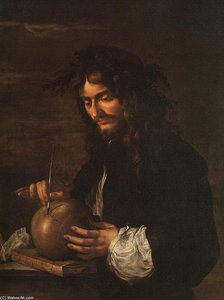
Artist Biography
**early life and training**
salvator rosa, an italian baroque painter, poet, and printmaker, was born in arenella, naples, on either june 20 or july 21, 1615. his mother, giulia greca rosa, was a member of one of the greek families of sicily. despite his father's wishes for him to become a lawyer or priest, salvator showed a preference for the arts from an early age.**artistic career**
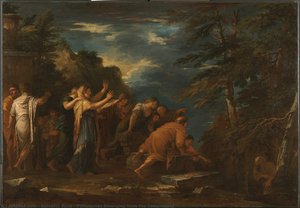
salvator rosa's artistic career was marked by his unorthodox and extravagant style, which set him apart from his contemporaries. he was active in naples, rome, and florence, and his work was influenced by the naturalism of ribera and the classicism of poussin. however, he refused to be tied down by any particular style or movement.- pythagoras emerging from the underworld (kimbell art museum, fort worth, united states), one of his most famous works, showcases his unique blend of philosophical and artistic themes.
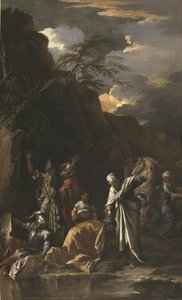
- his the baptism of the eunuch (chrysler museum of art, norfolk, united states) demonstrates his ability to infuse high drama into even minor bible stories.
**influences and legacy**
salvator rosa's work had a significant impact on the development of baroque art. his influence can be seen in the works of later artists, such as luca giordano, who continued to push the boundaries of artistic expression. **important links:** salvator rosa's profile on ArtsDot wikipedia: salvator rosa pythagoras emerging from the underworld on ArtsDot**conclusion**
salvator rosa's life and work continue to fascinate art lovers and historians alike. his unorthodox style and perpetual rebellion against the norms of his time have cemented his place in the annals of baroque art. as a painter, poet, and printmaker, he remains an enigmatic figure, and his work continues to inspire new generations of artists and art enthusiasts.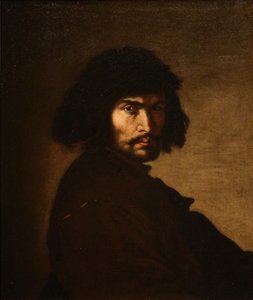
Salvator Rosa
1615 - 1673 , Italy
Quick Facts
- Artistic Movement Or Style: Baroque art
- Artists Or Movements Influenced By This Artist: ['Luca Giordano']
- Artists Who Influenced This Artist: ['José de Ribera']
- Date Of Birth: June 20, 1615
- Full Name: Salvator Rosa
- Nationality: Italian
- Notable Artworks:
- View of the Gulf of Salerno
- Study for 'Il Genio di Rosa
- Grotto with Cascades
- Place Of Birth: Arenella, Sicily
Related Articles
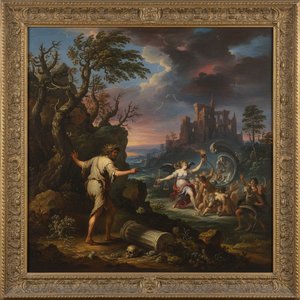
Salvator Rosa: A Baroque Rebel's Vision of Landscape, Allegory & the Human Condition
Explore the captivating world of Salvator Rosa, a rebellious Baroque master. Discover his dramatic landscapes, allegorical paintings & lasting influence on Romanticism. Hand-painted reproductions available at ArtsDot.

The Visceral Stage: Exploring Dramatic Narratives & Emotional Intensity in Baroque Art
Explore the dramatic world of Baroque art! Discover iconic masters like Caravaggio & Rembrandt, their techniques, and the movement's lasting impact. Expert insights for collectors & enthusiasts at ArtsDot.

Baroque Masterpieces: 10 Paintings That Defined an Era |
Journey through the drama & grandeur of Baroque art! Explore 10 masterpieces by Caravaggio, Rembrandt, Rubens & more. Discover stunning oil paintings, rich colors & timeless stories. Find museum-quality reproductions at .

Giclée Prints: Archival Quality & Aesthetic Nuances for the Discerning Collector
Explore the world of giclée prints with ArtsDot. Learn about archival quality, aesthetic nuances & investment potential. Expert guidance for discerning art collectors seeking museum-quality reproductions and lasting value.

The Dramatic Flourish: Exploring the Baroque Movement's Enduring Legacy in Art History
Explore the dramatic world of Baroque art! Discover iconic artists like Caravaggio & Rubens, defining techniques, and its lasting impact on art history. Expert insights for collectors & enthusiasts at ArtsDot.