 Preview
 Send
Send Share
Share
 Details

 Download
 Similars
 X-Ray
X-Ray Diaporama
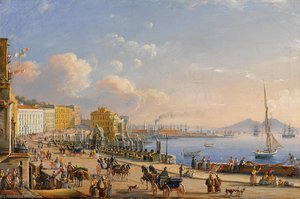
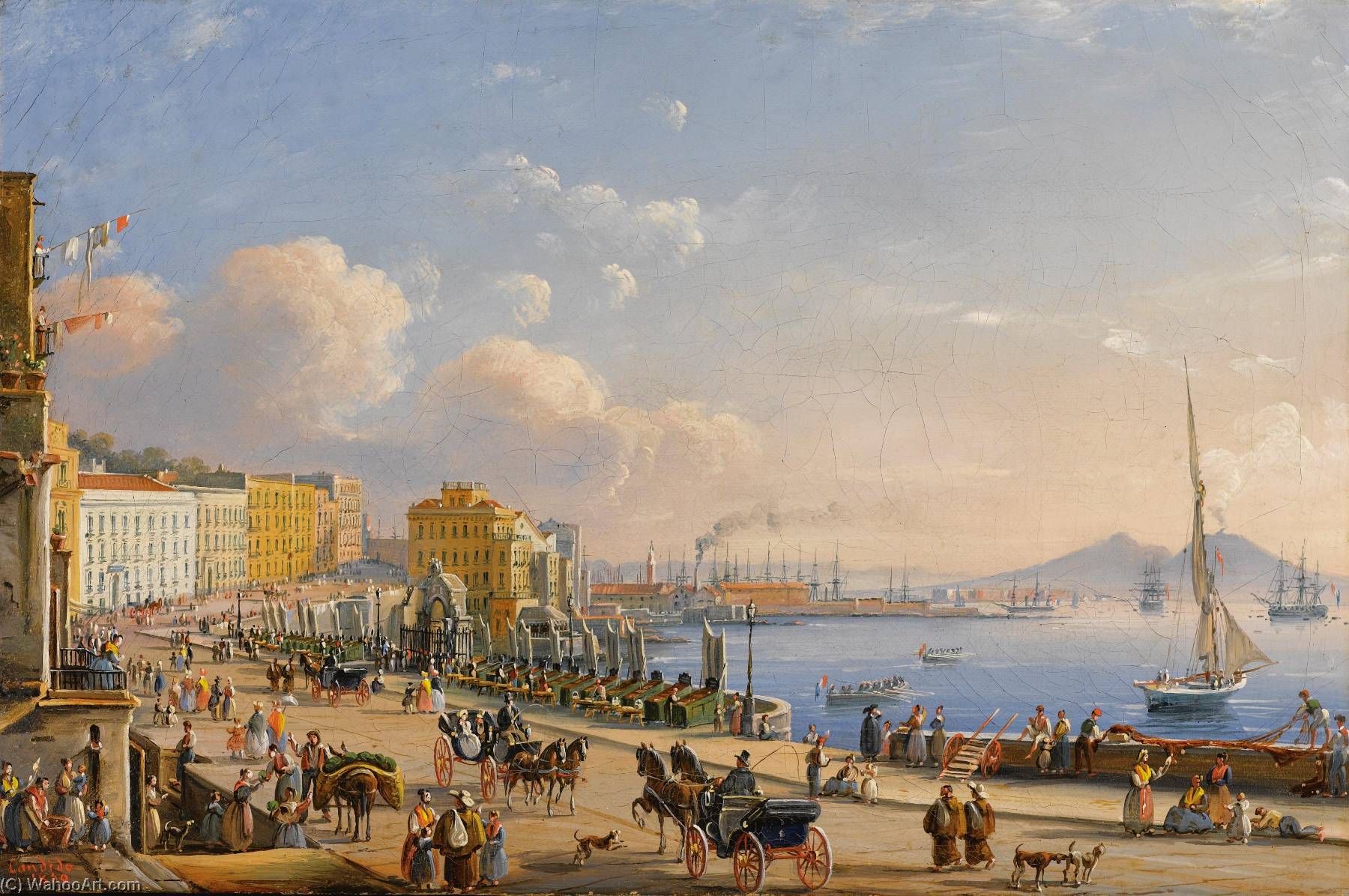
Veduta di Napoli da Santa Lucia
 Read More
Hand Made Oil Reproduction
Hand-painted oil on canvas in your size and frame, made to order by our artists. ( Buy Print Buy Image)




































Pick from our preset sizes that match the artwork's original proportions.

You may enter your own dimensions to fit a specific frame or space. If your selected size does not match the original image's proportions, we will either crop the artwork or extend the painting with additional hand-painted elements. A digital mockup will be sent for your approval before production begins.
Please note that the on-screen preview does not reflect the actual cropping or extension. Only the mockup will accurately show the final composition.
While custom sizes are available, we recommend selecting a dimension from the predefined list to preserve the original proportions.
After order, ArtsDot.com team will email client for instructions and provide a mockup preview
Worldwide Delivery () in 3/4 weeks instead of standard 5 weeks. (31 August). No compromise on quality.

Free Worldwide Express Shipping

High-Quality Linen Canvas

Full Shipping Insurance

Customs Tax Refund Guarantee

True Color Matching Guarantee

60-Day Return Policy (Defects Only)

100% Money-Back Guarantee

Bulk Discount Offer
 Glass option is only available in size under 110 CM

Veduta di Napoli da Santa Lucia
Reproduction Medium
Reproduction Size
-


Total Price
$ 263
Related Artworks









Artist Biography
The Soul in Stone: The Visionary Legacy of Salvatore Candido
In the heart of the sun-drenched Amalfi Coast, where the rugged cliffs of Positano meet the shimmering Tyrrhenian Sea, a profound artistic consciousness was born. Salvatore Candido (1814–1869) emerged from this breathtaking landscape not merely as a sculptor, but as a bridge between two monumental eras of Italian art. His life and work stand as a testament to the delicate transition from the disciplined, serene perfection of Neoclassicism to the turbulent, emotive depths of the Romantic movement. To encounter Candido’s work is to witness a master grappling with the very essence of human existence, translating the cold rigidity of marble into the soft, aching pulse of life itself.
Candido’s formative years were steeped in the classical traditions that defined the Italian peninsula's cultural identity. His journey toward mastery led him to the prestigious Accademia di Belle Arti Napoli, a crucible of talent where he studied under the watchful eyes of masters such as Giuseppe Buonaccorsi and Luigi Sabatelli. Within these hallowed halls, Candito did not simply learn the mechanics of anatomy or the physics of weight; he absorbed the echoes of Antonio Canova’s grace and the narrative power of Francesco Hayez. This rigorous education provided him with a foundation of technical virtuosity, yet his spirit was inherently restless, seeking to infuse the classical form with the psychological complexity and dramatic tension that characterized the burgeoning Romantic era.
A Symphony of Emotion and Anatomical Precision
The true brilliance of Candido lies in his ability to manipulate light and shadow through the medium of stone. While his contemporaries often sought a static, idealized beauty, Candido pursued a more visceral truth. His sculptures are characterized by an extraordinary anatomical precision that serves a higher emotional purpose. He understood that a perfectly rendered muscle or a delicate vein is not merely a feat of skill, but a vehicle for conveying suffering, spirituality, and resilience. This is perhaps most evident in his celebrated works, such as “The Dying Slave” (1853), currently held in the Naples Museum, where the heavy atmosphere of mortality is palpable through the slumped posture and the expressive, exhausted gesture of the figure.
His repertoire was remarkably diverse, allowing him to traverse various thematic landscapes:
- Sacred Narratives: In works like “Saint Jerome,” residing in the Museo Nazionale Romano, Candido utilized religious iconography to explore profound themes of asceticism and divine connection, imbuing biblical figures with a deeply human vulnerability.
- Aristocratic Portraiture: He possessed a unique talent for capturing the dignity and quiet authority of his subjects, creating monumental portraits that served as enduring legacies for the Italian nobility.
- Romantic Dynamism: By embracing dramatic lighting and more fluid, energetic poses, he mirrored the era's fascination with individualism and the unpredictable nature of human emotion.
Historical Significance and Eternal Resonance
As the nineteenth century progressed, Italy found itself in a state of fervent nationalism and cultural rebirth. Candido’s art became a mirror to this zeitgeist. His work captured the tension between the desire to reclaim the grandeur of antiquity and the urgent need to express the contemporary anxieties of a nation seeking its identity. He did not shy away from the darker, more introspective aspects of the human condition; instead, he elevated them through a lens of classical elegance, making the profound struggles of the soul accessible and aesthetically sublime.
Today, the legacy of Salvatore Candido remains an essential chapter in the history of Italian sculpture. He stands as a pivotal figure who refused to let art remain stagnant within the confines of tradition. By infusing Neoclassical precision with Romantic passion, he created a visual language that continues to resonate with modern sensibilities. His ability to find the eternal within the ephemeral—to capture a fleeting moment of grief or a sudden burst of spiritual ecstasy in permanent stone—ensures that his voice remains as clear and moving today as it was during his lifetime in the nineteenth century.
Quick Facts
- Artistic Movement Or Style: Contemporary Realism
- Artists Or Movements Influenced By This Artist: ['Alejandro Jodorowski']
- Artists Who Influenced This Artist: ['Lucio Salvatore']
- Date Of Death: 13 March 1984
- Full Name: Salvatore Candido
- Nationality: Italian
- Notable Artworks: ['Profondo rosso']
- Place Of Birth: Positano, Italy