 Preview
 Send
Send Share
Share
 Details

 Download
 Similars
 X-Ray
X-Ray Diaporama
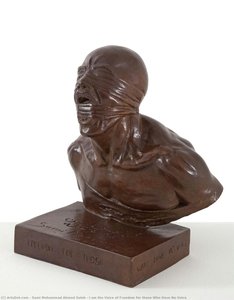
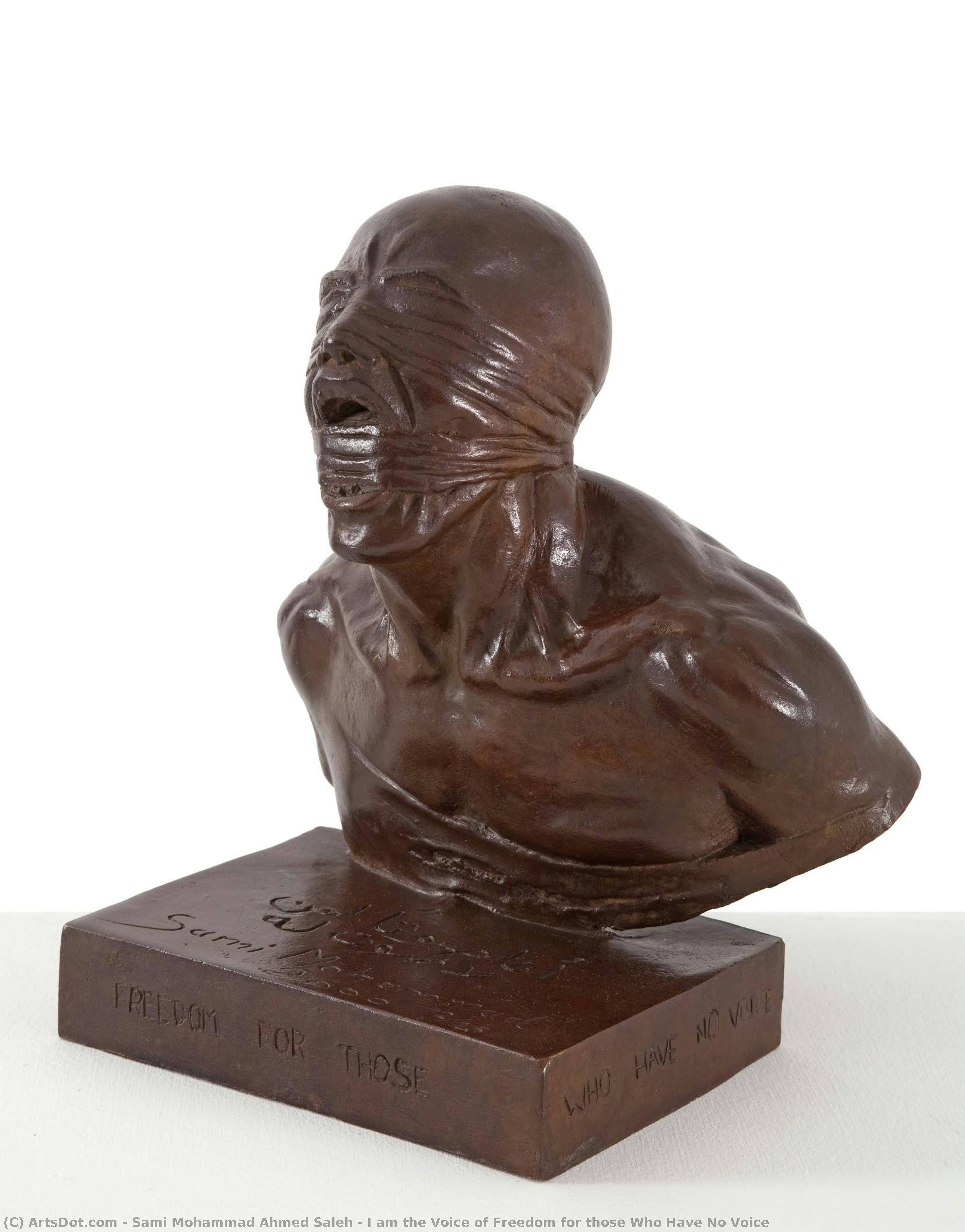
I am the Voice of Freedom for those Who Have No Voice
 2000
2000 17.0 x 20.0 cm
 Contemporary Art Platform
 Read More
Giclée / Art Print
Museum-quality giclée or canvas print with fast production and flexible finish options. ( Buy Hand Made Painting Buy Image)




































Pick from our preset sizes that match the artwork's original proportions.

You may enter your own dimensions to fit a specific frame or space. If your selected size does not match the original image's proportions, we will either crop the artwork or extend the image with a mirrored or solid-fill edge. A digital mockup will be sent for your approval before production begins.
Please note that the on-screen preview does not reflect the actual cropping or extension. Only the mockup will accurately show the final composition.
While custom sizes are available, we recommend selecting a dimension from the predefined list to preserve the original proportions.
Worldwide Delivery () in 2 weeks instead of standard 4/5 weeks. (6 September)

Free Worldwide Express Shipping

High-Quality Linen Canvas

Full Shipping Insurance

Customs Tax Refund Guarantee

True Color Matching Guarantee

100-Day Return Policy (Defects Only)

100% Money-Back Guarantee

Bulk Discount Offer
 Glass option is only available in size under 110 CM

I am the Voice of Freedom for those Who Have No Voice
Giclée / Art Print
Reproduction Size
-


Total Price
$ 63
Related Artworks





Artist Biography
The Genesis of a Sculptural Vision
In the heart of Kuwait City, where the sands meet the sea, the artistic journey of Sami Mohammad Ahmed Saleh began not with grand monuments, but with the simple, tactile joy of childhood. Long before he was a celebrated voice in the international art scene, he was a young boy captivated by the organic forms of birds and animals, molding them into small treasures for his friends. This innate connection to form found its first formal stage at Sabaah School, where his talent caught the eye of Sheikh Abdullah Al Jaber Al Sabah. His early triumphs, particularly in creating statues that commemorated the poignant history of the Battle of Port Said and Port Fouad, laid the foundation for a career defined by a profound commitment to historical and emotional truth.The Weight of Tradition and Technique
To understand the monumental scale of Saleh’s work, one must look toward the shadows of the Renaissance masters. His formal training at Cairo University, culminating in a degree in Fine Arts in 1970, allowed him to bridge the gap between raw instinct and classical mastery. He drew deep inspiration from the giants of art history—Michelangelo, Leonardo da Vinci, Raphael, and Bernini—absorbing their ability to infuse bronze and stone with an almost breathing vitality. This reverence for grandeur and emotional depth became the bedrock of his technique. Whether working in the initial, delicate stages of clay or moving through the structural rigor of gypsum, his ultimate goal remained the same: to translate complex human narratives into the enduring permanence of bronze.A Voice for the Voiceless
Saleh’s oeuvre is far more than a collection of beautiful objects; it is a visceral exploration of the human condition. His sculptures serve as silent witnesses to the most harrowing aspects of existence, grappling with themes of freedom, oppression, genocide, and suffering. Through his celebrated Box Series and works such as Sabra and Chantila, he invites the viewer into a space of moral reflection. He does not merely depict history; he captures its soul. This ability to give form to the intangible—to make the weight of injustice felt through the heavy texture of bronze—cemented his status as a significant figure in contemporary Middle Eastern art. His presence at the 2013 Venice Biennale as the first Kuwaiti artist to participate was a landmark moment, signaling to the world that the struggles and triumphs of his region were etched forever in the medium of sculpture.Legacy of the Bronze Chronicler
Beyond the abstract, Saleh’s work is deeply intertwined with the identity of Kuwait itself. His skill in capturing the likeness and spirit of leaders, such as his bronze statues of the late Amirs Sheikh Abdullah Al-Salem Al-Sabah and Sheikh Sabah Al-Salem Al-Sabah, demonstrates a unique ability to blend personal reverence with historical documentation. His process—often involving meticulous work in his studio followed by casting in the United Kingdom—reflects a globalized approach to a local legacy. Today, his work stands as a testament to the power of art to act as a vessel for memory, ensuring that the stories of those who have no voice are cast in a metal that defies the passage of time.
sami mohammad ahmed saleh
1943 - , Kuwait
Quick Facts
- Artistic Movement Or Style: Bronze sculpture
- Artists Or Movements Influenced By This Artist:
- Contemporary art
- Middle Eastern Art
- Artists Who Influenced This Artist:
- Michelangelo
- Leonardo da Vinci
- Raphael
- Gian Lorenzo Bernini
- Date Of Birth: October 1, 1943
- Full Name: Sami Mohammad Ahmed Saleh
- Nationality: Kuwaiti
- Notable Artworks:
- Box Series
- Sabra and Chantila
- Hunger and Mother
- Place Of Birth: Kuwait City, Kuwait