 Preview
 Send
Send Share
Share
 Details

 Download
 Similars
 X-Ray
X-Ray Diaporama
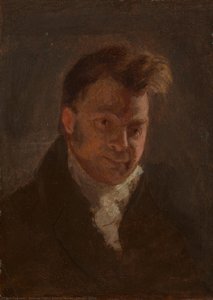
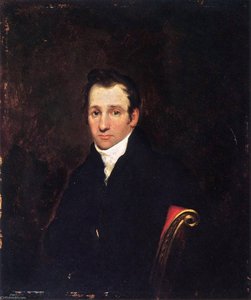
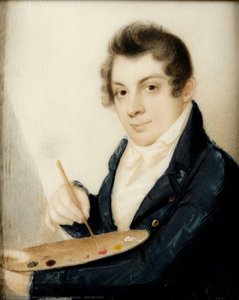
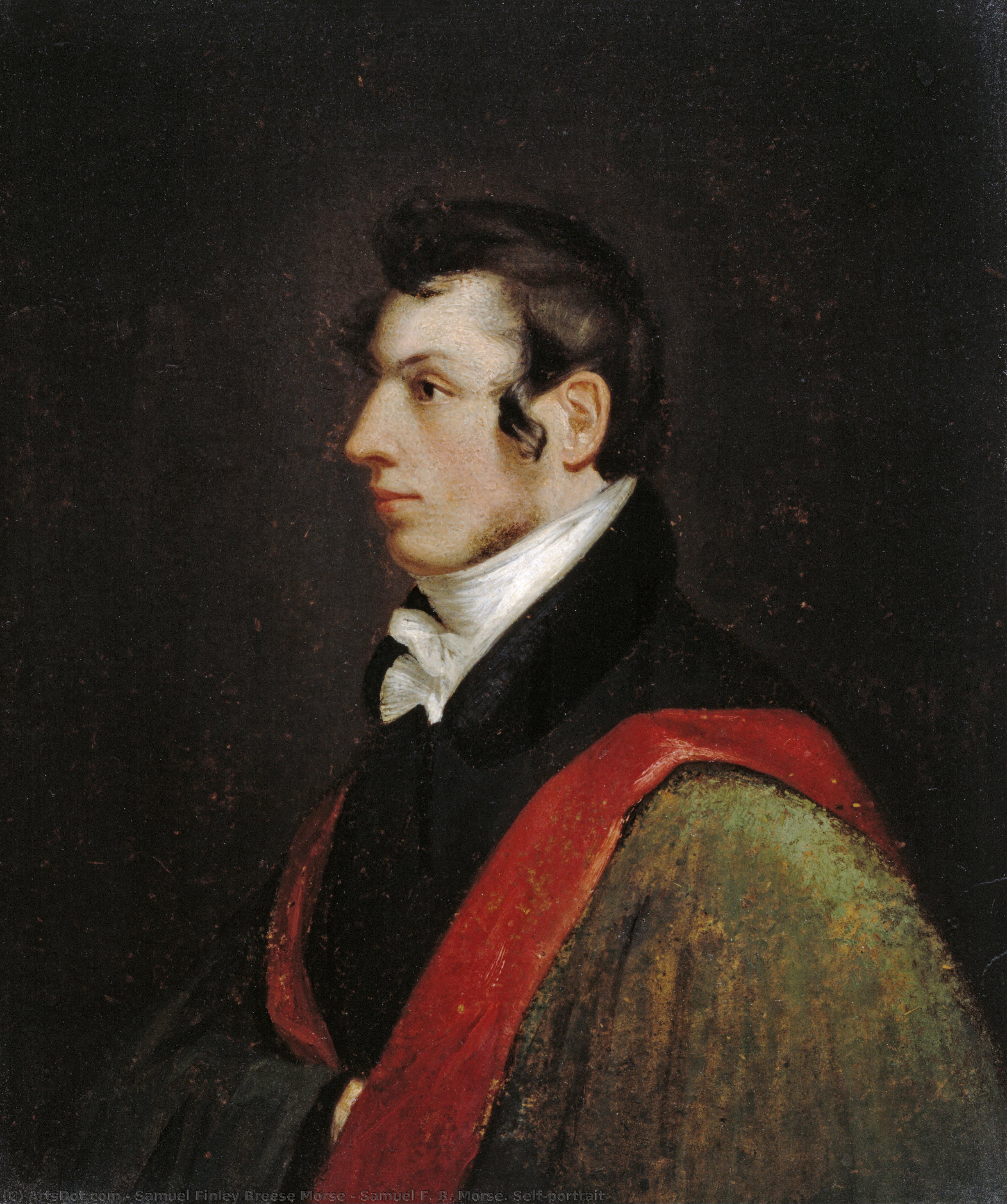
Samuel F. B. Morse. Self-portrait


 Read More
Hand Made Oil Reproduction
Hand-painted oil on canvas in your size and frame, made to order by our artists. ( Buy Print Buy Image)




P118B $10

P118H $10

P118W $10

P438Z $10

P508JH $12

P508YH $12

P805H $10

P805Z $10

P919BZ $10

P919G $10

P919XJ $10

P959ZH $10

P968JZ $12

W106C $8

W218G $10

W218JH $8

W218Y $10

W307PJ $10

W316G $10

W316PJ $8

W316Y $10

W398PJ $8

W4111J $10

W500HY $15

W500JH $15

W692G $12

W849H $8

W940BG $15

W953PJ $8




Pick from our preset sizes that match the artwork's original proportions.

You may enter your own dimensions to fit a specific frame or space. If your selected size does not match the original image's proportions, we will either crop the artwork or extend the painting with additional hand-painted elements. A digital mockup will be sent for your approval before production begins.
Please note that the on-screen preview does not reflect the actual cropping or extension. Only the mockup will accurately show the final composition.
While custom sizes are available, we recommend selecting a dimension from the predefined list to preserve the original proportions.
After order, ArtsDot.com team will email client for instructions and provide a mockup preview
Worldwide Delivery () in 3/4 weeks instead of standard 5 weeks. (21 August). No compromise on quality.

Free Worldwide Express Shipping

High-Quality Linen Canvas

Full Shipping Insurance

Customs Tax Refund Guarantee

True Color Matching Guarantee

60-Day Return Policy (Defects Only)

100% Money-Back Guarantee

Bulk Discount Offer
 Glass option is only available in size under 110 CM

Samuel F. B. Morse. Self-portrait
Reproduction Medium
Reproduction Size
-


Total Price
$ 263
Artwork Description
Samuel F. B. Morse: A Pioneer of Light and Communication
Samuel Finley Breese Morse’s “Self-Portrait,” painted in 1812, is more than just a likeness; it's a window into the mind of an extraordinary man – a painter grappling with artistic ambition, scientific curiosity, and the burgeoning identity of America. Created during a pivotal period of transition between Neoclassicism and Romanticism, this watercolor offers a remarkably intimate glimpse into the artist’s self-perception and his place within the evolving cultural landscape of early 19th-century America.
The portrait immediately draws the eye with its formal composition. Morse presents himself in attire typical of the era – a dark robe accented by a vibrant red sash, suggesting both dignity and perhaps a touch of theatrical flair. Beneath this formal exterior, his face is rendered with a quiet intensity, reflecting a thoughtful gaze that seems to hold a mixture of confidence and introspection. The careful attention to detail—the texture of his clothing, the subtle shading of his features—demonstrates Morse’s commitment to mastering the technical skills of portraiture, a discipline he initially pursued as a means of supporting himself while pursuing his artistic aspirations.
A Man of Two Worlds: Art and Invention
Morse's life was defined by a fascinating duality. While celebrated for his contributions to art, particularly his historical paintings like “Landing of the Pilgrims,” he simultaneously harbored an intense fascination with science and technology. This dual pursuit is powerfully evident in this self-portrait; it’s not merely a representation of a man but a statement about a mind constantly engaged in exploration – both artistic and intellectual. His early studies at Yale, encompassing subjects like electricity under Benjamin Silliman, laid the groundwork for his later groundbreaking invention: the telegraph.
Born into a deeply religious family—his father, Jedidiah Morse, was a prominent Calvinist minister and geographer—Morse’s upbringing instilled in him a strong sense of purpose and a belief in the importance of education. This intellectual rigor, combined with his artistic training, shaped his approach to both art and invention, fostering a desire to translate complex ideas into accessible forms. The portrait itself can be seen as an embodiment of this ambition – a carefully constructed image designed to convey not just appearance but also character and intellect.
Symbolism and the Artist’s Psyche
Beyond its formal elements, the “Self-Portrait” is rich in symbolic detail. The dark robe, while suggesting respectability, might also hint at a certain melancholy or introspection – qualities often associated with artists struggling to find their voice. The vibrant red sash could represent passion, energy, or even a touch of defiance against the constraints of societal expectations. Morse’s gaze, direct and unwavering, invites the viewer into his inner world, suggesting a man grappling with both artistic fulfillment and the challenges of navigating a rapidly changing America.
Furthermore, considering Morse's background as a Calvinist, elements of moral judgment are subtly present. The careful rendering of his features suggests an awareness of self-presentation and a desire to project an image of virtue and integrity – values deeply rooted in his religious upbringing. The portrait, therefore, becomes not just a visual record but also a meditation on identity, ambition, and the complex interplay between art, science, and faith.
A Legacy of Innovation
While this self-portrait offers a poignant glimpse into Morse’s artistic aspirations, it's crucial to acknowledge his enduring legacy as an inventor. His development of the telegraph revolutionized communication, transforming society in profound ways. “Self-Portrait” serves as a powerful reminder that innovation is rarely born from a single moment but often emerges from a lifelong pursuit of knowledge and a willingness to challenge conventional boundaries – qualities vividly embodied by Samuel Finley Breese Morse.
Related Artworks



Artist Biography
A Life Bridging Art and Innovation: Samuel Finley Breese Morse
Samuel Finley Breese Morse, a name inextricably linked to the dawn of modern communication, was far more than just the inventor of the telegraph and Morse code. He was a gifted and ambitious artist whose canvases captured the spirit of early 19th-century America, reflecting both its burgeoning national identity and the lingering echoes of European artistic traditions. Born in Charlestown, Massachusetts, on April 27, 1791, into a family steeped in intellectual and religious fervor – his father, Jedidiah Morse, was a prominent Calvinist minister and geographer – young Samuel’s early life was shaped by a rigorous upbringing that instilled in him a deep sense of purpose. Though destined for scientific renown, his initial passion lay firmly within the realm of art. After graduating from Yale College with honors in 1810, Morse embarked on a career as a painter, supporting himself through portrait commissions while simultaneously nurturing his artistic ambitions.Formative Years and Artistic Development
Recognizing the need for formal training unavailable in the nascent American art world, Morse journeyed to England in 1811, seeking tutelage under the esteemed British artist Washington Allston. This period proved pivotal in shaping his artistic style. Allston, a proponent of Romanticism, encouraged Morse’s exploration of dramatic compositions, expressive brushwork, and emotionally charged subject matter. Morse's early works reveal a clear debt to European masters like Benjamin West and J.M.W. Turner, yet he quickly began to forge his own distinct voice. His monumental work, The Dying Hercules, completed during this time, stands as a testament to his developing skill in anatomical precision and dramatic storytelling. More than just an exercise in artistic technique, the painting is often interpreted as a veiled political commentary – a symbolic representation of the United States struggling against the perceived tyranny of British rule and Federalist policies. The work’s powerful imagery resonated with a growing sense of American nationalism. Returning to America in 1815, Morse continued to paint portraits and historical scenes, including Landing of the Pilgrims, which further solidified his reputation as a painter capable of capturing both individual likenesses and grand narratives. This painting cleverly linked Calvinist beliefs with the shared history between Britain and America, subtly navigating the complex political landscape of the time. Judgment of Jupiter, another significant work from this period, demonstrated Morse’s ability to blend artistic skill with his deeply held spiritual convictions while expressing anti-federalist sentiments.The Pursuit of Innovation: From Canvas to Telegraph
Despite achieving recognition as an artist, Morse found himself increasingly frustrated by the financial instability and limited opportunities available in the American art world. A turning point came during a voyage back from Europe in 1832 when he learned of recent advancements in electromagnetism. This sparked a new intellectual curiosity that would ultimately lead him down a different path – one of scientific innovation. Driven by a desire to create a faster and more reliable means of communication, Morse dedicated himself to developing a system for transmitting messages over long distances using electrical signals. He wasn’t alone in this pursuit; numerous European scientists were experimenting with similar technologies. However, Morse's genius lay in his ability to synthesize existing ideas into a practical and commercially viable system. He collaborated with Alfred Vail, who significantly contributed to the development of the now-famous Morse code – a system of dots and dashes representing letters and numbers. In 1837, he patented his single-wire telegraph system, marking a pivotal moment in communication history.Legacy Beyond the Brushstroke
The subsequent years were marked by tireless efforts to promote and implement his invention. Morse secured funding from Congress for the construction of an experimental telegraph line between Washington D.C. and Baltimore, which successfully transmitted its first message – “What hath God wrought?” – in 1844. This demonstration catapulted Morse into national prominence, solidifying his place as a visionary inventor. While he continued to paint throughout his life, his artistic endeavors increasingly took a backseat to his work on the telegraph and transatlantic cable projects. He faced numerous legal battles over patent rights, but ultimately received international recognition for his contributions to communication technology. Samuel Finley Breese Morse passed away in New York City in 1872, leaving behind a legacy that extends far beyond the realm of art. He was a member of both the American Antiquarian Society and the American Academy of Arts and Sciences, acknowledging his multifaceted achievements. His paintings remain as compelling testaments to his artistic talent, while his invention revolutionized communication, forever altering the course of human history. Today, Morse’s artworks can be found in prominent museums such as the New York Museum of Art and are also memorialized at Green-Wood Cemetery in New York City, a fitting tribute to a man who bridged two seemingly disparate worlds – art and innovation.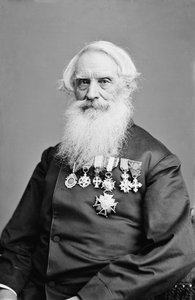
Samuel Finley Breese Morse
1791 - 1872 , United States of America
Quick Facts
- Artistic Movement Or Style: Romanticism
- Artists Who Influenced This Artist: ['Washington Allston']
- Date Of Birth: April 27, 1791
- Date Of Death: 1872
- Full Name: Samuel Finley Breese Morse
- Nationality: American
- Notable Artworks:
- Dying Hercules
- Landing of Pilgrims
- Judgment of Jupiter
- Place Of Birth: Charlestown, USA
Related Articles

American Realism's Defining Works: 10 Masterpieces for Your Home
Explore 10 defining American Realism masterpieces – Hopper, Homer & more. Discover the stories behind these iconic paintings and bring timeless art to your home with ArtsDot's museum-quality reproductions. Explore the full collection online.

Crimson Threads of Narrative: Exploring Symbolism & Representation in Artworks Featuring the Red Dress
Explore the rich symbolism of the red dress in art history! From ancient power displays to iconic portraits like Cézanne’s 'Madame Cezanne', discover the cultural and artistic significance behind this captivating color. Expert analysis & insights.

Grant Wood & American Regionalism: Identity, Myth & the Rural Landscape
Explore the world of Grant Wood & American Regionalism with ArtsDot. Discover the symbolism behind 'American Gothic', recurring themes, and the movement's lasting impact on art history. High-quality reproductions available.

The Enduring Legacy of Oil on Canvas: Technique, History & Aesthetic Impact
Explore the rich history & techniques of oil painting – from Renaissance masters to Impressionism. Discover pigments, layering methods, and why this timeless medium endures. Expert insights for artists & art enthusiasts.
19th Century Masterpieces: 10 Paintings That Defined an Era | ArtsDot
Journey through 19th century art with ArtsDot! Explore 10 iconic paintings – from Monet & Renoir to Courbet – and discover the stories behind Romanticism, Realism & Impressionism. Find museum-quality reproductions for your home decor. Explore the full collection online!