 Preview
 Send
Send Share
Share
 Details

 Download
 Similars
 X-Ray
X-Ray Diaporama
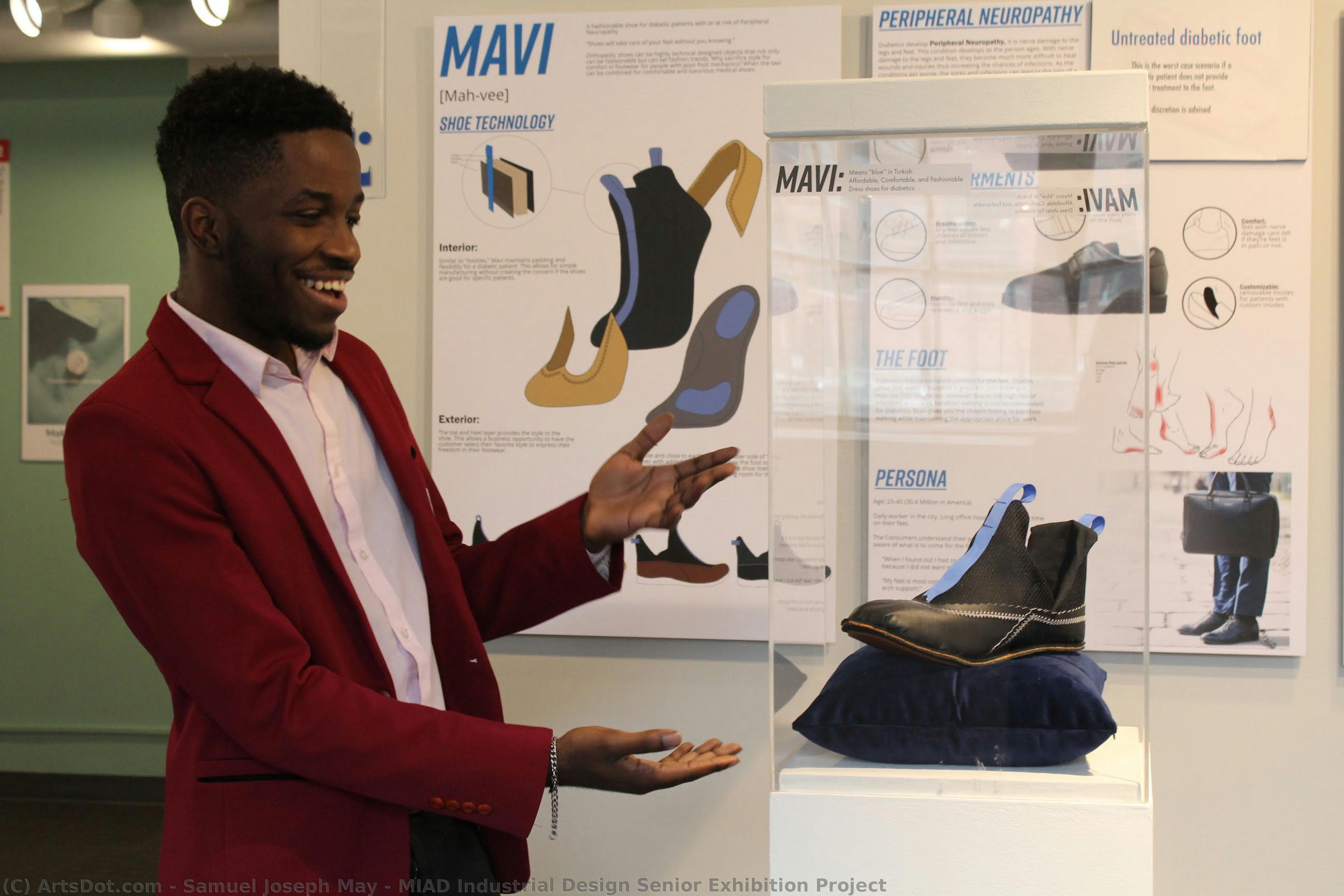
MIAD Industrial Design Senior Exhibition Project


 Read More
Hand Made Oil Reproduction
Hand-painted oil on canvas in your size and frame, made to order by our artists. ( Buy Print Buy Image)




































Pick from our preset sizes that match the artwork's original proportions.

You may enter your own dimensions to fit a specific frame or space. If your selected size does not match the original image's proportions, we will either crop the artwork or extend the painting with additional hand-painted elements. A digital mockup will be sent for your approval before production begins.
Please note that the on-screen preview does not reflect the actual cropping or extension. Only the mockup will accurately show the final composition.
While custom sizes are available, we recommend selecting a dimension from the predefined list to preserve the original proportions.
After order, ArtsDot.com team will email client for instructions and provide a mockup preview
Worldwide Delivery () in 3/4 weeks instead of standard 5 weeks. (27 August). No compromise on quality.

Free Worldwide Express Shipping

High-Quality Linen Canvas

Full Shipping Insurance

Customs Tax Refund Guarantee

True Color Matching Guarantee

60-Day Return Policy (Defects Only)

100% Money-Back Guarantee

Bulk Discount Offer
 Glass option is only available in size under 110 CM

MIAD Industrial Design Senior Exhibition Project
Reproduction Medium
Reproduction Size
-


Total Price
$ 263
Related Artworks










Artist Biography
The Architect of Moral Vision: The Life and Legacy of Samuel Joseph May
In the tapestry of nineteenth-century American history, few figures weave together the threads of spiritual conviction and social activism as intricately as Samuel Joseph May. Born in 1797 into the prestigious Sewall lineage of Boston, May’s early life was shaped by a profound intersection of privilege and tragedy. The untimely loss of his brother, Edward, during their childhood served as a transformative crucible, instilling in him a lifelong mission to rectify the world's injustices. This deep-seated desire for spiritual redemption led him toward the halls of Harvard, where he graduated from Divinity School in 1820, emerging not merely as a theologian but as a man prepared to use every medium—be it the pulpit, the pen, or the architectural blueprint—to champion the cause of human dignity.
May’s intellectual development was deeply rooted in the Unitarian tradition, nurtured by the guidance of luminaries such as Noah Worcester and James Freeman. These mentors instilled in him a philosophy of peaceful opposition, a principle that would become the cornerstone of his activism. As he moved through his early ministry at Chauncy Place Church, May’s voice grew resonant within the movements for education, women's rights, and most notably, the abolition of slavery. He possessed a rare ability to bridge the gap between abstract moral theory and tangible social reform, arguing passionately that the fundamental rights of humanity must always supersede the legalistic rights of property.
Monumental Ambition and Industrial Design
While history often remembers May as a reformer, his creative spirit found expression in the physical world through his work as an architect and industrial designer. He believed that grand gestures could serve as powerful symbols for burgeoning social movements. This conviction culminated in one of his most enduring legacies: the Monument to Wilberforce. Erected in London in 1833, this towering granite edifice was far more than a feat of masonry; it was a soaring testament to the abolitionist cause, designed to embody the permanence and strength of the fight against oppression. Through such monumental design, May sought to capture the very essence of moral triumph in stone.
Beyond his architectural pursuits, May’s influence extended into the realm of industrial innovation and economic justice. He was a visionary who looked toward the future of labor, advocating for minimum wages and legal constraints on the accumulation of wealth to protect the working classes. His work reflected a belief that progress was not merely technological but deeply ethical. In his eyes, the design of our physical structures and the organization of our industries were inseparable from the moral character of our society.
A Lasting Historical Significance
The historical significance of Samuel Joseph May lies in his refusal to compartmentalize his talents. He did not see a distinction between the sermon and the structure, or between theological truth and social equity. His life was a continuous effort to harmonize the spiritual with the material. As the brother of Abby May Alcott—the mother of the celebrated novelist Louisa May Alcott—he belonged to a family of profound intellectual and creative influence that helped shape the American literary and social landscape.
Today, we look back at May as a pioneer who utilized every tool at his disposal to advocate for a more just world. His achievements include:
- Championing Abolitionism: Using his platform to fight against the institution of slavery through both rhetoric and symbolic architecture.
- Advocating for Labor Rights: Promoting economic reforms such as minimum wages to ensure the dignity of all working people.
- Architectural Symbolism: Creating lasting monuments, like the Monument to Wilberforce, that served as physical anchors for social justice movements.
- Educational Reform: Believing in the power of humanist learning and education as the primary vehicle for cultivating moral character.
Though he passed away in 1871, the echoes of his monumental vision remain. Samuel Joseph May remains a testament to the idea that art, architecture, and activism can converge to create a lasting impact on the conscience of a nation.

samuel joseph may
1797 - 1871 , United States of America
Quick Facts
- Artistic Movement Or Style: American Realism
- Artists Or Movements Influenced By This Artist: ['Johann Pestalozzi']
- Artists Who Influenced This Artist:
- James Freeman
- Noah Worcester
- Date Of Birth: September 12, 1797
- Date Of Death: July 1, 1871
- Full Name: Samuel Joseph May
- Nationality: American
- Notable Artworks: ['Monument to Wilberforce']
- Place Of Birth: Boston, United States