 Preview
 Send
Send Share
Share
 Details

 Download
 Similars
 X-Ray
X-Ray Diaporama
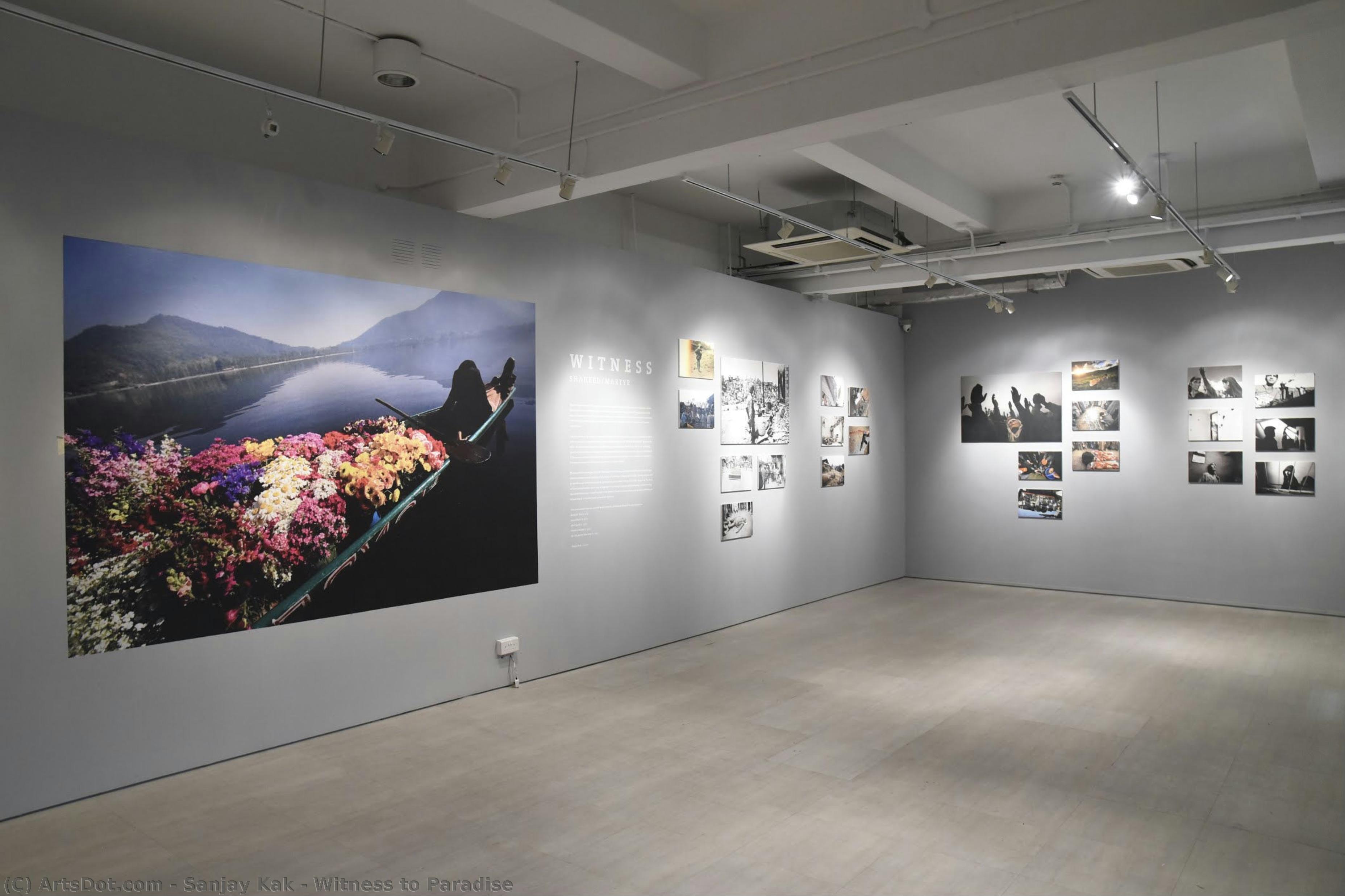
Witness to Paradise

 Read More
Hand Made Oil Reproduction
Hand-painted oil on canvas in your size and frame, made to order by our artists. ( Buy Print Buy Image)




































Pick from our preset sizes that match the artwork's original proportions.

You may enter your own dimensions to fit a specific frame or space. If your selected size does not match the original image's proportions, we will either crop the artwork or extend the painting with additional hand-painted elements. A digital mockup will be sent for your approval before production begins.
Please note that the on-screen preview does not reflect the actual cropping or extension. Only the mockup will accurately show the final composition.
While custom sizes are available, we recommend selecting a dimension from the predefined list to preserve the original proportions.
After order, ArtsDot.com team will email client for instructions and provide a mockup preview
Worldwide Delivery () in 3/4 weeks instead of standard 5 weeks. (22 August). No compromise on quality.

Free Worldwide Express Shipping

High-Quality Linen Canvas

Full Shipping Insurance

Customs Tax Refund Guarantee

True Color Matching Guarantee

60-Day Return Policy (Defects Only)

100% Money-Back Guarantee

Bulk Discount Offer
 Glass option is only available in size under 110 CM

Witness to Paradise
Reproduction Medium
Reproduction Size
-


Total Price
$ 263
Related Artworks






Artist Biography
A Witness to Paradise: The Life and Work of Sanjay Kak
Sanjay Kak, born in Pune, India, in 1958, is more than a filmmaker; he’s a chronicler of resistance, an advocate for the marginalized, and a visual poet whose work resonates with the urgent pulse of social justice. Rooted in his Kashmiri Pandit heritage – a community originating from the contested Kashmir Valley – Kak's journey began not as a formally trained artist but as a keen observer of a rapidly changing India. His upbringing instilled within him a deep sensitivity to displacement, political turmoil, and the enduring power of human spirit, themes that would become central to his evolving body of work. He studied economics and sociology at Delhi University, providing a foundational understanding of the societal structures he would later dissect through his lens. However, it was self-education in filmmaking, coupled with active involvement in movements against censorship and for cinematic resistance, that truly defined his path.Early Explorations: From Punjab to Cambodia
Kak’s early films were characterized by an inquisitive spirit and a commitment to documenting untold stories. Punjab: Doosra Adhay (1986), his debut work, plunged into the complexities of the Khalistan struggle, offering a nuanced perspective on a period fraught with violence and political upheaval. This was followed by Pradakshina (1987), a meditative exploration of the sacred river Ganges, hinting at an emerging concern for environmental issues that would later become prominent in his oeuvre. He didn’t confine himself to India; Angkor Remembered (1990) took him to Cambodia, where he documented the haunting beauty and painful history of Angkor Wat, a testament to both human creativity and resilience in the face of devastation. These early films weren't merely recordings of events but attempts to understand the underlying currents shaping these societies – the political tensions, cultural identities, and the enduring impact of historical trauma. The 1990s saw further exploration with documentaries focusing on the Indian diaspora in England (This Land, My Land, Eng-land, 1993) and South Africa (A House and a Home, 1993), broadening his scope to encompass themes of migration, identity, and belonging.The Explicitly Political Turn: One Weapon & Beyond
Kak’s work took an explicitly political turn with One Weapon (1997). As *The Caravan* magazine aptly noted, this film marked a pivotal moment in his career, solidifying his reputation as a filmmaker unafraid to confront difficult truths. This was followed by In the Forest Hangs a Bridge (1999), a powerful documentary about bridge construction in Northeast India that garnered critical acclaim, including the Golden Lotus at the National Film Awards and an Asian Gaze Award at the Pusan Short Film Festival. These films weren’t simply observational; they actively engaged with power dynamics, challenging dominant narratives and giving voice to those often silenced. Words on Water (2002) further cemented his commitment to environmental activism, documenting the protests against the Narmada dams in central India and winning the Best Long Film prize at the International Festival of Environmental Film & Video in Brazil.Kashmir as a Focal Point: Jashn-e-Azadi & Until My Freedom Comes
Kak’s most significant work arguably revolves around Kashmir, his ancestral homeland. Jashn-e-Azadi – How We Celebrate Freedom (2007) became a landmark documentary, profoundly influencing perceptions of the Kashmiri separatist movement in India. The film's screening history was fraught with challenges, reflecting the sensitivity and political complexities surrounding the topic. He followed this with Until My Freedom Has Come – The New Intifada in Kashmir (2011), an edited volume that further explored the evolving dynamics of resistance and self-determination in the region. His participation in Manifesta7, a European Biennale of Art in 2008, with the installation A Shrine to the Future: The Memory of a Hill, about bauxite mining in Odisha, demonstrated his ability to connect local struggles to global issues of resource exploitation and environmental degradation.Red Ant Dream & A Legacy of Witnessing
Kak’s latest feature-length documentary, Red Ant Dream (2013), is a deeply immersive exploration of the Maoist movement in India, born from over three years of painstaking research and fieldwork. This film, like much of his work, isn't about providing easy answers but about bearing witness to the complexities of conflict, resistance, and the enduring hope for social change. Sanjay Kak’s legacy lies not just in the films he has made but in the questions they raise, the narratives they challenge, and the voices they amplify. He is a filmmaker who understands that cinema isn't merely entertainment; it’s a powerful tool for understanding, empathy, and ultimately, action. His work continues to inspire a new generation of filmmakers and activists committed to documenting the struggles and triumphs of marginalized communities around the world.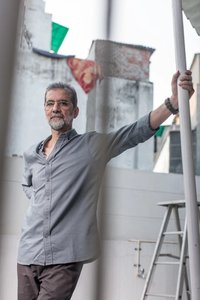
sanjay kak
1958 - , India
Quick Facts
- Artistic Movement Or Style: Documentary Film
- Date Of Birth: 1958
- Full Name: Sanjay Kak
- Nationality: Indian
- Notable Artworks:
- Red Ant Dream
- Witness to Paradise
- Jashn-e-Azadi
- Place Of Birth: Pune, India