

 Preview
 Send
Send Share
Share
 Details

 Download
 Similars
 X-Ray
X-Ray Diaporama
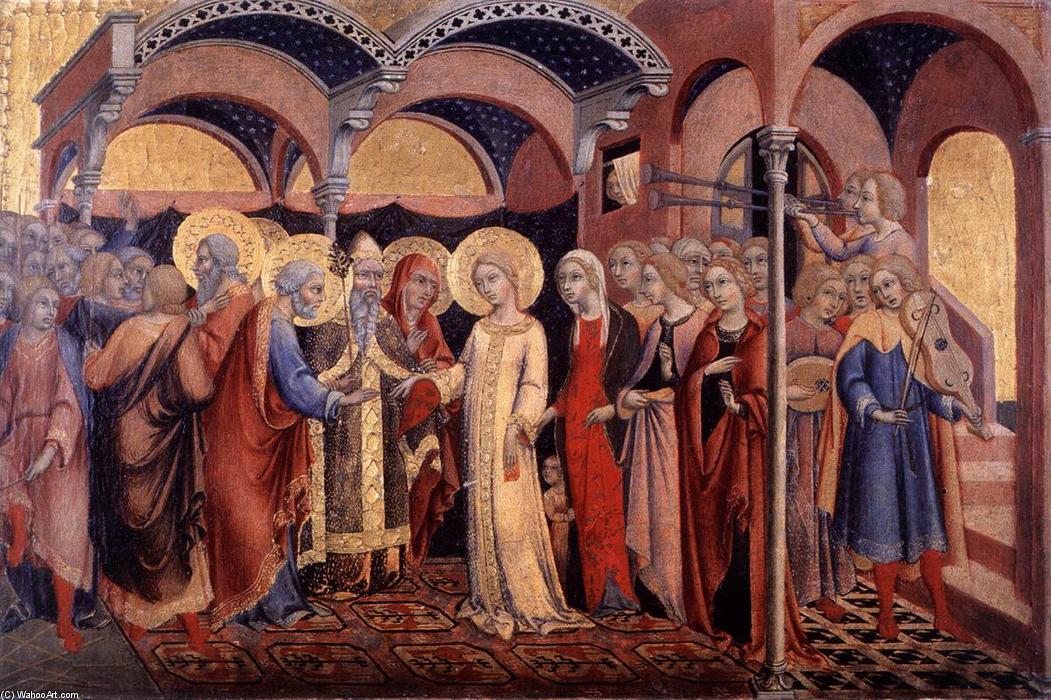
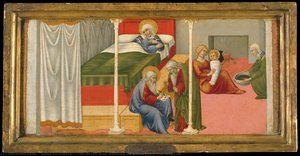
Marriage of the Virgin
 Acrylic On Canvas
- WallArt
- Renaissance
 1448
1448 32.0 x 46.0 cm
 Pinacoteca
 Read More
Purchase a high-resolution, enhanced digital image, far superior to the online preview.
Each file is meticulously prepared by our in-house specialists using advanced tools and expert manual retouching. We ensure every image has exceptional clarity, precise color accuracy, and fine detail.
The final file is delivered via email within 72 hours, optimized for immediate use in professional, editorial, and print environments. This is the same quality trusted by top-tier design studios, publishers, and galleries.
Digital Image
Download a high-resolution file for personal display, printing, and creative projects. ( Buy Print Buy Hand Made Painting)
Included in Every Digital Image Order
Expert Digital Delivery, Guaranteed
When you choose ArtsDot.com, you're not just getting an image - you're receiving a professionally enhanced digital artwork, crafted with precision and backed by a satisfaction guarantee. Here's everything that comes with your order, automatically:

Fast Email Delivery
Your high-resolution digital image file will be emailed to you within 72 hours of ordering - ready for immediate use.

AI-Enhanced Digital File
Your artwork is professionally optimized using advanced AI tools and manual editing, ensuring maximum detail, clarity, and color accuracy.

Free Lifetime Re-Delivery
Accidentally deleted or lost your file? No worries - we'll resend it to you anytime, free of charge.

No Import Fees - Ever
Enjoy your artwork instantly with zero customs, duties, or delivery fees - digital downloads are always tax-free.

Color Accuracy Guarantee
We ensure your digital image reflects the original colors as closely as possible using professional tools and color management.

60-Day Satisfaction Guarantee
If you're not satisfied with your digital image, we'll revise it or refund 100% within 60 days - no questions asked.

100% Money-Back Guarantee
Not satisfied? Get a full refund within 60 days of receiving your digital file - no questions asked.

Bulk Order Discounts
Buy 3 images, save 10% - Buy 5, save 15% - Buy 10+, save 20%. Great for creative projects, galleries, and agencies.
Collectible Description
The Marriage of the Virgin: A Sienese Tapestry of Faith
Sano di Pietro’s “Marriage of the Virgin,” painted in 1448, isn't merely a depiction of a biblical event; it’s a profound meditation on faith, lineage, and the very soul of Siena. This tempera painting, measuring just 32 x 46 centimeters, housed within the Pinacoteca in Vatican City, is a remarkably intimate work that belies its grand historical context. It's a window into the vibrant religious life of 15th-century Italy, where piety and artistic expression were inextricably intertwined. Sano, a master of his craft, eschewed the burgeoning Florentine Renaissance’s emphasis on realism in favor of a distinctly Sienese style—one characterized by luminous colors, intricate drapery, and an almost ethereal quality that speaks to the spiritual realm.
The scene itself is deceptively simple. We witness the union of Mary and St. Joseph, not as a grand, celebratory event, but rather as a solemn, deeply meaningful ceremony. The composition is carefully orchestrated, drawing our eye towards the central figures while subtly incorporating elements that hint at the deeper theological significance. Notice how Sano utilizes perspective—not with the precise mathematical rigor of later Renaissance masters, but with a more intuitive sense of depth and space, creating an atmosphere of both intimacy and grandeur. The architectural backdrop, featuring arches and columns reminiscent of Romanesque design, anchors the scene within a timeless narrative, connecting it to the foundations of Christian faith.
A Symphony of Color and Light
Sano’s mastery lies not just in his composition but also in his extraordinary command of color. He employs a rich palette—deep reds, vibrant blues, shimmering golds—that evokes a sense of opulence and divine grace. The red robes worn by Mary and Joseph are particularly striking, symbolizing their purity and royalty. The use of gold leaf, likely applied to the drapery and halos, further enhances the painting’s luminosity, creating an almost otherworldly glow. This deliberate use of color wasn't simply decorative; it was a carefully considered means of conveying spiritual meaning, reflecting the importance of these figures within the Christian narrative.
Furthermore, Sano expertly manipulates light and shadow to create a sense of three-dimensionality and drama. The soft, diffused lighting illuminates the central figures, drawing our attention to their expressions and gestures. The subtle gradations of tone—from the darkest shadows to the brightest highlights—add depth and richness to the painting, making it feel remarkably alive. This masterful use of light is a hallmark of Sano’s style and distinguishes his work from many of his contemporaries.
Symbolism Woven into the Fabric
Beyond its visual beauty, “The Marriage of the Virgin” is laden with symbolism. The presence of St. Joseph, holding a scroll or document, represents the legal agreement and lineage connecting Mary to the royal line of David—a crucial element in the Christian understanding of Jesus’s birthright. Mary's halo, rendered in brilliant blue, signifies her purity and divinity, while the intricate folds of her robe evoke a sense of grace and majesty. The architectural setting itself is symbolic, referencing the ancient roots of Christianity and connecting the scene to the foundations of faith.
The painting’s genesis within the Capella dei Signore in Siena's Palazzo Pubblico adds another layer of significance. This predella—a series of panels depicting scenes from the life of the Virgin Mary—was commissioned for an altarpiece, suggesting that Sano intended this work to be part of a larger devotional cycle. The story behind its creation – replacing a previous painting by Simone Martini – further highlights Sano’s role as a key figure in Siena's artistic heritage.
A Legacy of Spiritual Depth
“The Marriage of the Virgin” is more than just a beautiful painting; it’s a testament to Sano di Pietro’s profound understanding of faith and his exceptional artistic skill. It stands as a remarkable example of Sienese art, embodying the region's unique blend of religious devotion and artistic innovation. Its luminous colors, intricate details, and symbolic richness continue to captivate viewers centuries after its creation. Reproductions offer a chance to experience this masterpiece’s beauty and spiritual depth, bringing a touch of Siena’s timeless artistry into any space.
Additional Research: For further exploration of Sano di Pietro's work, visit this page. You can also delve into the broader context of Sienese painting by examining the works of Niccolò di Pietro Gerini and exploring the Oratory of San Bernardino in Siena, where many of Sano’s paintings are housed.
Related Artworks
![Scrovegni - [12] - Wedding Procession — Giotto Di Bondone, Proto-renaissance](/media/artworks/images-thumb/c6/73/c6736271740d6a4ae45df5c606277c3f.jpg)
Artist Biography
A Visionary of Siena’s Gothic Soul
Sano di Pietro, born around 1405/06, remains a name that resonates with the grandeur and ethereal beauty characteristic of Sienese painting during the Quattrocento. While much of the Italian art world was beginning to pivot toward the burgeoning Florentine Renaissance—a movement defined by rigorous realism and humanist ideals—Sano’s artistic vision clung steadfastly to the traditions of Siena's Gothic heritage. This commitment allowed him to imbue his canvases with a spiritual depth and a luminous quality that distinguishes him as one of the most original and enduring voices of his era. His life was deeply woven into the civic and spiritual fabric of Siena; beyond the studio, he served as the leader of the San Donato district and even acted as an arbitrator in disputes between fellow masters, proving himself to be a man of significant social standing and integrity.
The workshop established by Sano was a prolific engine of creativity, producing an astonishing array of artworks that spanned various media. He was not merely a painter of altarpiements; his mastery extended to the delicate art of miniatures, the expansive scale of frescoes, and even the intricate craft of book bindings. His distinctive style is immediately recognizable to any admirer of the Sienese school, characterized by vibrant, sumptuous colors juxtaposed with elegant, flowing draperies. These elements work in harmony to create compositions that seem to shimmer with an inner light. Much of this aesthetic sensibility can be traced back to the influence of Sassetta, whose innovative use of color and perspective provided a foundation upon which Sano built his own unique, devotional language.
Masterpieces of Devotion and Narrative
The breadth of Sano’s oeuvre offers a window into the profound religious narratives that defined the fifteenth century. His ability to translate complex biblical stories into accessible, emotive imagery is perhaps best seen in his various depictions of sacred figures. Some of his most notable achievements include:
- St Jerome: A stunning portrayal of the biblical figure in his study, where Sano utilizes rich colors and intricate detail to create a masterpiece of devotional art that invites quiet contemplation.
- Assumption of the Virgin: A celestial vision from 1448, this work captures the Virgin Mary ascending amidst a host of angels, perfectly embodying the ethereal beauty and divine grace of the Gothic era.
- Scenes from the Life of St Jerome: These tempera panels showcase his ability to weave complex religious narratives through vibrant figures and a mastery of the Sienese tradition.
- Martyrdom of Saint Agatha: A poignant and luminous depiction within an initial, demonstrating his skill in the delicate realm of manuscript illumination.
Through these works, Sano di Pietro achieved a rare balance between the ornamental beauty of the Gothic style and a profound emotional resonance. His death in 1481 was marked by a moving tribute, noting him as "a famous painter and a man wholly dedicated to God." This epitaph serves as a fitting summary of his legacy—an artist whose life and work were inseparable from the spiritual devotion of Siena, leaving behind a luminous trail of art that continues to enchant the modern eye.
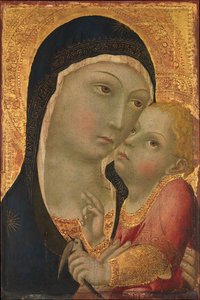
Sano di Pietro
1406 - 1481 , Italy
Quick Facts
- Artistic Movement Or Style: Sienese School
- Artists Who Influenced This Artist:
- Giovanni di Paolo
- Sassetta
- Date Of Birth: 1406
- Date Of Death: 1481
- Full Name: Sano di Pietro
- Nationality: Italian
- Notable Artworks:
- Madonna and Child with Four Angels
- St Jerome
- Marriage of the Virgin
- Place Of Birth: Siena, Italy

