

 Preview
 Send
Send Share
Share
 Details

 Download
 Similars
 X-Ray
X-Ray Diaporama
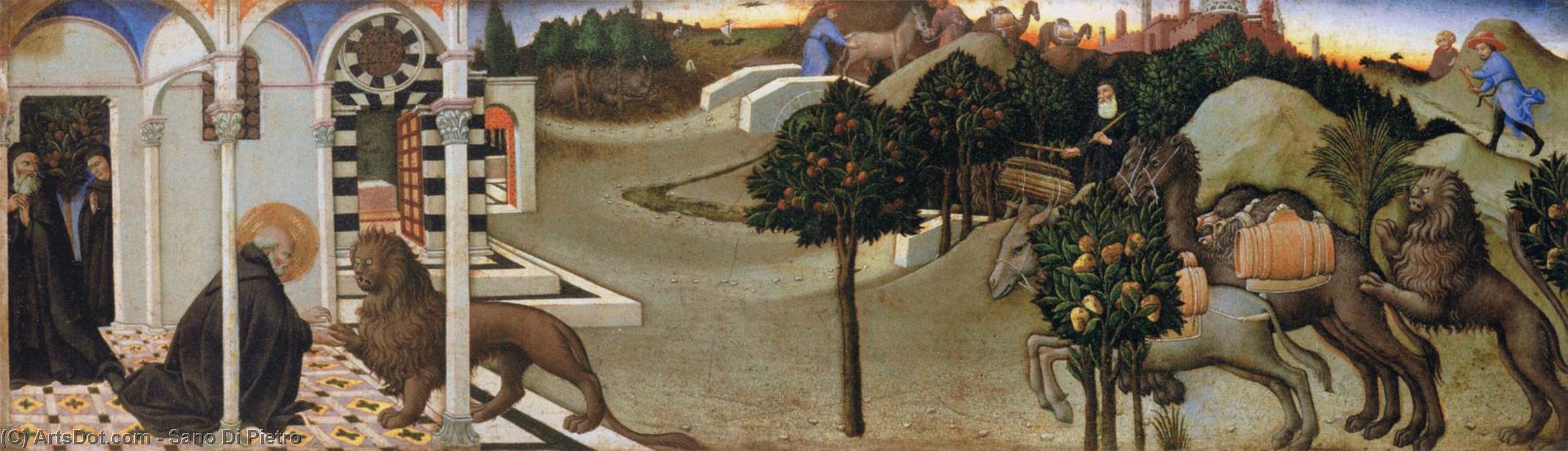
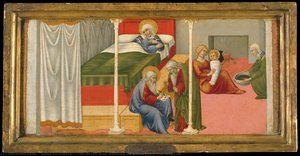
Scenes from the Life of St Jerome
 Oil On Canvas
- WallArt
- Sienese Gothic Tradition
 1444
1444 23.0 x 78.0 cm
 The Louvre
 Read More
Purchase a high-resolution, enhanced digital image, far superior to the online preview.
Each file is meticulously prepared by our in-house specialists using advanced tools and expert manual retouching. We ensure every image has exceptional clarity, precise color accuracy, and fine detail.
The final file is delivered via email within 72 hours, optimized for immediate use in professional, editorial, and print environments. This is the same quality trusted by top-tier design studios, publishers, and galleries.
Digital Image
Download a high-resolution file for personal display, printing, and creative projects. ( Buy Print Buy Hand Made Painting)
Included in Every Digital Image Order
Expert Digital Delivery, Guaranteed
When you choose ArtsDot.com, you're not just getting an image - you're receiving a professionally enhanced digital artwork, crafted with precision and backed by a satisfaction guarantee. Here's everything that comes with your order, automatically:

Fast Email Delivery
Your high-resolution digital image file will be emailed to you within 72 hours of ordering - ready for immediate use.

AI-Enhanced Digital File
Your artwork is professionally optimized using advanced AI tools and manual editing, ensuring maximum detail, clarity, and color accuracy.

Free Lifetime Re-Delivery
Accidentally deleted or lost your file? No worries - we'll resend it to you anytime, free of charge.

No Import Fees - Ever
Enjoy your artwork instantly with zero customs, duties, or delivery fees - digital downloads are always tax-free.

Color Accuracy Guarantee
We ensure your digital image reflects the original colors as closely as possible using professional tools and color management.

60-Day Satisfaction Guarantee
If you're not satisfied with your digital image, we'll revise it or refund 100% within 60 days - no questions asked.

100% Money-Back Guarantee
Not satisfied? Get a full refund within 60 days of receiving your digital file - no questions asked.

Bulk Order Discounts
Buy 3 images, save 10% - Buy 5, save 15% - Buy 10+, save 20%. Great for creative projects, galleries, and agencies.
Collectible Description
A Window into Siena’s Soul: Sano di Pietro's Scenes from the Life of St. Jerome
Sano di Pietro’s “Scenes from the Life of St. Jerome,” painted in 1444, isn’t merely a depiction of biblical narratives; it’s a vibrant snapshot of Siena at the turn of the fifteenth century – a city brimming with piety, artistic fervor, and a deep connection to its Gothic heritage. This predella panel, originally part of an altarpiece, offers a captivating glimpse into the daily life and spiritual concerns of its time, rendered in a style that’s both profoundly moving and remarkably intimate.
The painting unfolds as a series of four interconnected scenes, each meticulously crafted with a masterful understanding of composition and color. The first depicts St. Jerome in his monastic cell, surrounded by the familiar comforts of his study – a writing desk, books, and a simple chair. Two figures stand beside him, perhaps representing visitors or fellow monks, engaged in conversation, suggesting a life of contemplation interwoven with human interaction. This initial scene immediately establishes a sense of quiet dignity and scholarly devotion. The second shows three individuals seated on a bench, likely discussing matters of faith or simply enjoying each other’s company; the arrangement is deliberately informal, inviting the viewer into their shared space. The third scene portrays a man and woman seated together, a subtle yet poignant representation of human connection within the framework of religious devotion. Finally, the fourth depicts a solitary figure standing before a wall, perhaps contemplating God or reflecting on his past. These figures are not idealized; they possess a tangible humanity, their faces etched with emotion and their postures conveying a range of experiences – from solemnity to curiosity.
The Gothic Echoes of Siena
Sano di Pietro’s artistic vision is deeply rooted in the traditions of Sienese painting. Unlike the burgeoning Florentine Renaissance, which championed realism and humanism, Sano remained steadfastly committed to the expressive power of Gothic art. His figures are elongated and stylized, their features imbued with a sense of spiritual intensity rather than anatomical accuracy. The use of color is rich and vibrant, dominated by deep reds, blues, and greens – colors that evoke a sense of solemnity and reverence. The background, set against a building adorned with a clock, subtly references the importance of time and divine judgment, reflecting the prevailing religious anxieties of the era. Sano’s work demonstrates a clear influence from his master, Sassetta, known for his elegant figures and intricate details.
Symbolism Woven into the Narrative
Beyond the straightforward depiction of biblical events, “Scenes from the Life of St. Jerome” is laden with symbolic meaning. The animals – a lion, two dogs, and three birds – are not merely decorative elements; they represent virtues and vices, earthly desires and spiritual aspirations. The lion, often associated with strength and courage, could symbolize St. Jerome’s unwavering faith in the face of adversity. The dogs might represent loyalty and fidelity to God. The birds, on the other hand, could signify temptation and the fleeting nature of worldly pleasures. Even the clock on the building's facade serves as a potent symbol – a reminder of mortality and the urgency of seeking salvation.
A Timeless Reflection on Faith and Humanity
“Scenes from the Life of St. Jerome” is more than just a historical artifact; it’s a profoundly moving meditation on faith, humanity, and the complexities of the human condition. Sano di Pietro masterfully captures the essence of Siena's spiritual life, offering viewers a glimpse into a world where piety and earthly concerns intertwined. The painting’s enduring appeal lies in its ability to evoke empathy and contemplation, inviting us to reflect on our own lives and our relationship with the divine. Reproductions of this remarkable work offer a beautiful way to bring this evocative scene into any space, serving as a constant reminder of Siena's artistic legacy and the timeless power of faith.
Related Artworks
Artist Biography
A Visionary of Siena’s Gothic Soul
Sano di Pietro, born around 1405/06, remains a name that resonates with the grandeur and ethereal beauty characteristic of Sienese painting during the Quattrocento. While much of the Italian art world was beginning to pivot toward the burgeoning Florentine Renaissance—a movement defined by rigorous realism and humanist ideals—Sano’s artistic vision clung steadfastly to the traditions of Siena's Gothic heritage. This commitment allowed him to imbue his canvases with a spiritual depth and a luminous quality that distinguishes him as one of the most original and enduring voices of his era. His life was deeply woven into the civic and spiritual fabric of Siena; beyond the studio, he served as the leader of the San Donato district and even acted as an arbitrator in disputes between fellow masters, proving himself to be a man of significant social standing and integrity.
The workshop established by Sano was a prolific engine of creativity, producing an astonishing array of artworks that spanned various media. He was not merely a painter of altarpiements; his mastery extended to the delicate art of miniatures, the expansive scale of frescoes, and even the intricate craft of book bindings. His distinctive style is immediately recognizable to any admirer of the Sienese school, characterized by vibrant, sumptuous colors juxtaposed with elegant, flowing draperies. These elements work in harmony to create compositions that seem to shimmer with an inner light. Much of this aesthetic sensibility can be traced back to the influence of Sassetta, whose innovative use of color and perspective provided a foundation upon which Sano built his own unique, devotional language.
Masterpieces of Devotion and Narrative
The breadth of Sano’s oeuvre offers a window into the profound religious narratives that defined the fifteenth century. His ability to translate complex biblical stories into accessible, emotive imagery is perhaps best seen in his various depictions of sacred figures. Some of his most notable achievements include:
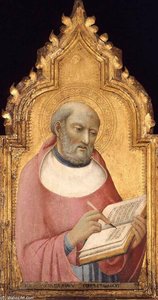
- St Jerome: A stunning portrayal of the biblical figure in his study, where Sano utilizes rich colors and intricate detail to create a masterpiece of devotional art that invites quiet contemplation.
- Assumption of the Virgin: A celestial vision from 1448, this work captures the Virgin Mary ascending amidst a host of angels, perfectly embodying the ethereal beauty and divine grace of the Gothic era.
- Scenes from the Life of St Jerome: These tempera panels showcase his ability to weave complex religious narratives through vibrant figures and a mastery of the Sienese tradition.
- Martyrdom of Saint Agatha: A poignant and luminous depiction within an initial, demonstrating his skill in the delicate realm of manuscript illumination.
Through these works, Sano di Pietro achieved a rare balance between the ornamental beauty of the Gothic style and a profound emotional resonance. His death in 1481 was marked by a moving tribute, noting him as "a famous painter and a man wholly dedicated to God." This epitaph serves as a fitting summary of his legacy—an artist whose life and work were inseparable from the spiritual devotion of Siena, leaving behind a luminous trail of art that continues to enchant the modern eye.
Sano di Pietro
1406 - 1481 , Italy
Quick Facts
- Artistic Movement Or Style: Sienese School
- Artists Who Influenced This Artist:
- Giovanni di Paolo
- Sassetta
- Date Of Birth: 1406
- Date Of Death: 1481
- Full Name: Sano di Pietro
- Nationality: Italian
- Notable Artworks:
- Madonna and Child with Four Angels
- St Jerome
- Marriage of the Virgin
- Place Of Birth: Siena, Italy

