 Preview
 Send
Send Share
Share
 Details

 Download
 Similars
 X-Ray
X-Ray Diaporama
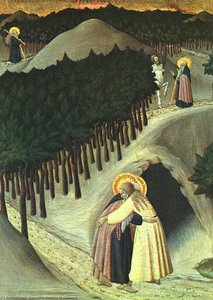
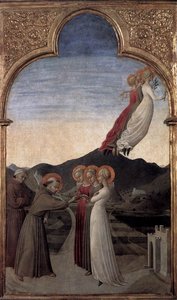
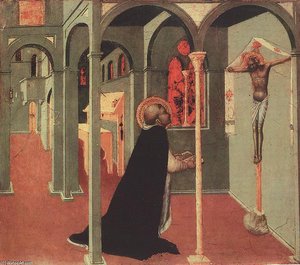
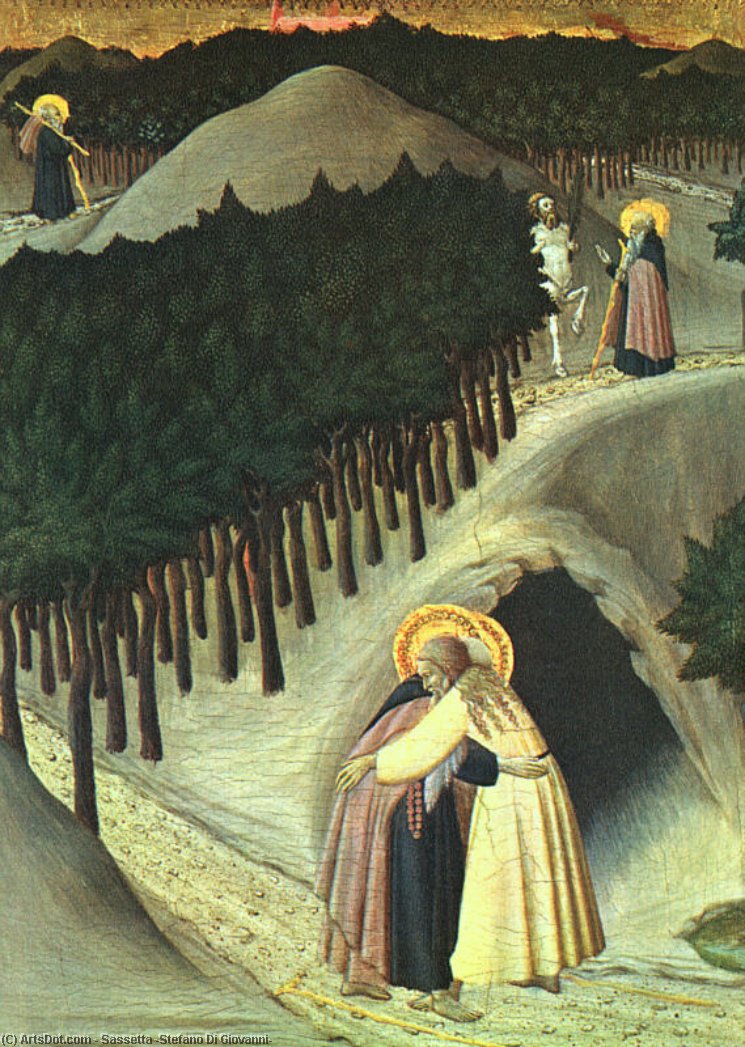
The Meeting of St. Anthony and St. Paul


 Read More
Hand Made Oil Reproduction
Hand-painted oil on canvas in your size and frame, made to order by our artists. ( Buy Print Buy Image)




P118B $10

P118H $10

P118W $10

P438Z $10

P508JH $12

P508YH $12

P805H $10

P805Z $10

P919BZ $10

P919G $10

P919XJ $10

P959ZH $10

P968JZ $12

W106C $8

W218G $10

W218JH $8

W218Y $10

W307PJ $10

W316G $10

W316PJ $8

W316Y $10

W398PJ $8

W4111J $10

W500HY $15

W500JH $15

W692G $12

W849H $8

W940BG $15

W953PJ $8




Pick from our preset sizes that match the artwork's original proportions.

You may enter your own dimensions to fit a specific frame or space. If your selected size does not match the original image's proportions, we will either crop the artwork or extend the painting with additional hand-painted elements. A digital mockup will be sent for your approval before production begins.
Please note that the on-screen preview does not reflect the actual cropping or extension. Only the mockup will accurately show the final composition.
While custom sizes are available, we recommend selecting a dimension from the predefined list to preserve the original proportions.
After order, ArtsDot.com team will email client for instructions and provide a mockup preview
Worldwide Delivery () in 3/4 weeks instead of standard 5 weeks. (16 August). No compromise on quality.

Free Worldwide Express Shipping

High-Quality Linen Canvas

Full Shipping Insurance

Customs Tax Refund Guarantee

True Color Matching Guarantee

60-Day Return Policy (Defects Only)

100% Money-Back Guarantee

Bulk Discount Offer
 Glass option is only available in size under 110 CM

The Meeting of St. Anthony and St. Paul
Reproduction Medium
Reproduction Size
-


Total Price
$ 263
Artwork Description
The Meeting of St. Anthony and St. Paul: A Dialogue in the Wilderness
Stefano di Giovanni’s “The Meeting of St. Anthony and St. Paul,” painted around 1440, isn't merely a religious depiction; it’s a profound meditation on faith, solitude, and the transformative power of spiritual connection. Created during a pivotal transition in Sienese art – a movement bridging the Gothic’s ornate elegance with the burgeoning realism of Florence – this panel exemplifies Sassetta’s unique approach: he masterfully blended decorative elements with an emerging sense of naturalism, creating a scene both deeply symbolic and remarkably human.
The painting unfolds within a stark, almost desolate wilderness landscape. The figures, St. Anthony and St. Paul, are rendered not as idealized saints but as weathered men, their faces etched with the marks of hardship and contemplation. This deliberate choice immediately grounds the scene in earthly reality, emphasizing the arduous journey towards spiritual enlightenment. Sassetta’s technique is characterized by a remarkable attention to detail – observe the folds of their robes, the texture of the rocks beneath their feet, and the subtle play of light on their faces. He employs a layered approach, building up form through delicate brushstrokes and meticulous modeling, creating an illusion of depth and volume that was revolutionary for its time.
A Narrative of Encounter
The composition itself is meticulously crafted to guide the viewer’s eye through the narrative. The two figures are positioned in a close embrace, their arms wrapped around each other's shoulders – a gesture of profound mutual respect and understanding. This intimate connection contrasts sharply with the vastness of the surrounding wilderness, suggesting that true spiritual communion can only be found within oneself and through shared faith. Note the subtle details: St. Anthony’s hand rests gently on St. Paul’s shoulder, conveying a sense of paternal guidance; St. Paul's gaze is fixed upward, perhaps reflecting his contemplation of divine grace.
The inclusion of the demonic figures – a centaur and a satyr – adds another layer of complexity to the scene. These creatures, traditionally associated with temptation and chaos, are depicted not as menacing adversaries but as helpful guides, subtly pointing the way towards the meeting. This unexpected element underscores Sassetta’s belief that even in the darkest corners of the soul, there exists the potential for redemption and divine intervention. The centaur's gesture is particularly intriguing – he seems to be indicating a path forward, while the satyr offers a reassuring presence.
Symbolism and Spiritual Resonance
The painting’s symbolism is rich and layered. St. Anthony, known for his ascetic lifestyle and struggle against demonic forces, represents the pursuit of spiritual purity. St. Paul, the apostle who spread Christianity throughout the Roman Empire, embodies the message of salvation through faith. Their meeting in the wilderness symbolizes a convergence of these two paths – a testament to the enduring power of divine grace and the transformative potential of human devotion.
The setting itself is significant. The desolate landscape reflects the challenges faced by those who choose to dedicate their lives to spiritual pursuits. It’s a place of solitude, hardship, and temptation, yet it also represents an opportunity for profound self-discovery. Sassetta's masterful use of light and shadow further enhances the painting’s emotional impact, creating a sense of drama and mystery that draws the viewer into the scene.
A Legacy of Innovation
“The Meeting of St. Anthony and St. Paul” stands as a landmark achievement in Sienese art, marking a crucial transition from Gothic formalism to Renaissance realism. Sassetta’s innovative use of narrative composition, his meticulous attention to detail, and his profound understanding of human psychology established him as one of the most important artists of his time. Reproductions of this captivating work continue to resonate with viewers today, offering a glimpse into the spiritual depths of the Italian Renaissance and reminding us of the enduring power of faith, friendship, and the search for meaning in a complex world.
Related Artworks
Artist Biography
Lorenzo Ghiberti: The Sculptor of Florentine Light
Born in Pelago, near Florence, in 1378, Lorenzo di Cione Ghiberti’s life was a testament to the burgeoning artistic spirit of Renaissance Italy. His early training as a goldsmith under his father, Bartoluccio, laid the foundation for a career that would ultimately redefine the possibilities of sculpture and profoundly influence generations of artists. More than simply a craftsman, Ghiberti possessed an innate understanding of human form, light, and space—qualities he meticulously honed through relentless experimentation and a deep engagement with classical ideals.
Ghiberti’s early years were marked by both opportunity and challenge. Florence in the late 14th and early 15th centuries was a crucible of artistic innovation, fueled by the patronage of wealthy families like the Medici and the ambition of guilds seeking to enhance their prestige. Ghiberti's apprenticeship within the Silk and Gold Guild provided him with invaluable experience, but it also exposed him to the competitive pressures of the Florentine art market. His relocation to Rimini in 1400, prompted by a devastating plague, offered a crucial period of artistic development, allowing him to study under the renowned sculptor Andrea del Verrocchio—a master whose workshop served as a breeding ground for some of Florence’s most celebrated artists.
The Gates of Paradise: A Revolutionary Vision
Ghiberti's rise to prominence began with his triumph in the 1401 competition to design the north doors of the Baptistery of Florence. Against formidable rivals like Filippo Brunelleschi and Jacopo della Quercia, Ghiberti’s innovative approach—characterized by a masterful manipulation of perspective and an unprecedented naturalism—secured him the coveted commission. These doors, collectively known as the “Gates of Paradise,” represent a watershed moment in Renaissance sculpture. Unlike the predominantly Gothic style prevalent at the time, Ghiberti embraced a more open, airy aesthetic, drawing inspiration from classical models and employing techniques that created a remarkable illusion of depth and volume.
The sheer scale and complexity of the project demanded years of dedicated labor. Ghiberti’s meticulous attention to detail—from the delicate folds of drapery to the subtle expressions on the faces of his figures—is breathtaking. Each panel within the doors depicts scenes from the Old Testament, rendered with a vibrant palette and an almost photographic realism. The use of *chiaroscuro* – the interplay of light and shadow – further enhances the sense of three-dimensionality, imbuing the sculptures with a palpable sense of life.
Beyond the Baptistery: Expanding Horizons
Following his success with the Gates of Paradise, Ghiberti continued to receive prestigious commissions that showcased his versatility and artistic ambition. In 1412, he was entrusted with creating a monumental bronze statue of John the Baptist for the Orsanmichele, a civic monument in Florence. This ambitious undertaking required not only sculptural skill but also architectural expertise, as Ghiberti designed the surrounding niches and oversaw the construction of the entire structure. The statue itself—a powerful depiction of the prophet’s solemnity and spiritual intensity—became an instant icon.
Throughout his career, Ghiberti remained a prolific innovator, constantly pushing the boundaries of sculptural technique. He explored new methods of modeling, casting, and finishing bronze, refining his skills with each project. His work extended beyond monumental sculptures to include stained-glass windows for the Florence Cathedral and intricate relief panels adorning guildhalls and private residences. His influence can be seen in the works of numerous artists who followed him, including Donatello and Masaccio.
Legacy and Influence
Lorenzo Ghiberti’s legacy extends far beyond his individual masterpieces. He fundamentally altered the course of Renaissance sculpture by introducing a new emphasis on naturalism, perspective, and emotional expression. His pioneering use of *chiaroscuro* and his masterful manipulation of space created an unprecedented sense of realism that captivated audiences and inspired generations of artists. Ghiberti’s work stands as a testament to the transformative power of artistic innovation and the enduring beauty of Florentine art.
Ghiberti died in Florence in 1455, leaving behind a body of work that continues to inspire awe and admiration. His sculptures are housed in museums around the world, serving as reminders of his genius and his pivotal role in shaping the artistic landscape of the Renaissance.
sassetta (stefano di giovanni)
1392 - 1450 , Italy
Quick Facts
- Artistic Movement Or Style: Early Renaissance
- Artists Or Movements Influenced By This Artist: ['Leon Battista Alberti']
- Artists Who Influenced This Artist: ['Alhazen']
- Date Of Birth: 1378
- Date Of Death: 1455
- Full Name: Lorenzo di Cione Ghiberti
- Nationality: Italian
- Notable Artworks:
- Gates of Paradise
- Baptistery Doors
- Place Of Birth: Pelago, Italy
Related Articles
Paul Klee's Masterpieces: Explore 25 Iconic Paintings & Prints | ArtsDot
Journey through Paul Klee's 25 most iconic paintings & prints. Explore his abstract style, Bauhaus influence, and vibrant color palettes. Find museum-quality art reproductions & decor ideas at ArtsDot.com. Discover all masterpieces online.

Cézanne's Masterpieces: 25 Iconic Artworks to Transform Your Space
Journey through 25 iconic artworks by Paul Cézanne – a master of Impressionism and Post-Impressionism. Explore his landscapes, still lifes, and the stories behind these timeless masterpieces. Discover museum-quality reproductions & curated decor at ArtsDot.com.

High Medieval Art: 10 Masterpieces That Shaped an Era | ArtsDot
Journey through High Medieval Art! Explore 10 iconic masterpieces – from Giotto's frescoes to stunning Gothic cathedrals. Discover the stories behind these timeless paintings, sculptures & illuminated manuscripts. Find museum-quality art reproductions at ArtsDot.com.

Giotto's Masterpieces: 25 Renaissance Artworks for Your Home | ArtsDot
Explore 25 breathtaking artworks by Giotto di Bondone, a Renaissance master. Discover the stories behind iconic frescoes & paintings like the Scrovegni Chapel cycle. Find museum-quality Giotto reproductions and elevate your home decor with ArtsDot.com.

El Greco's Masterpieces: Explore 25 Iconic Paintings & Spiritual Visions | ArtsDot
Journey through El Greco's 25 most iconic paintings! Explore the spiritual depth & dramatic beauty of this Spanish Renaissance master. Discover art history, techniques & find museum-quality reproductions for your home at ArtsDot.com.