 Preview
 Send
Send Share
Share
 Details

 Download
 Similars
 X-Ray
X-Ray Diaporama
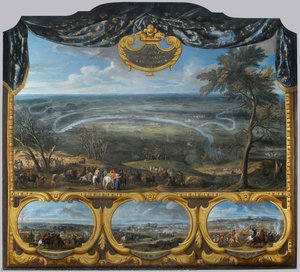
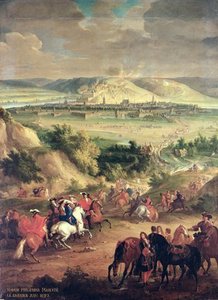
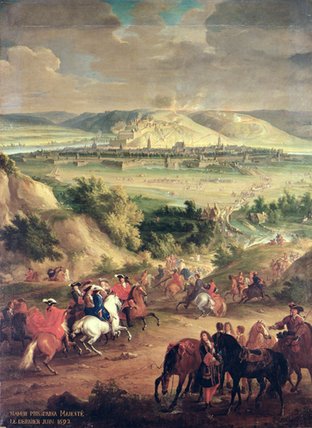
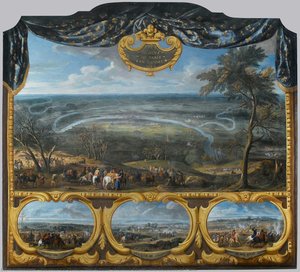
The Siege Of Namur, June

 Read More
Hand Made Oil Reproduction
Hand-painted oil on canvas in your size and frame, made to order by our artists. ( Buy Print Buy Image)




































Pick from our preset sizes that match the artwork's original proportions.

You may enter your own dimensions to fit a specific frame or space. If your selected size does not match the original image's proportions, we will either crop the artwork or extend the painting with additional hand-painted elements. A digital mockup will be sent for your approval before production begins.
Please note that the on-screen preview does not reflect the actual cropping or extension. Only the mockup will accurately show the final composition.
While custom sizes are available, we recommend selecting a dimension from the predefined list to preserve the original proportions.
After order, ArtsDot.com team will email client for instructions and provide a mockup preview
Worldwide Delivery () in 3/4 weeks instead of standard 5 weeks. (26 August). No compromise on quality.

Free Worldwide Express Shipping

High-Quality Linen Canvas

Full Shipping Insurance

Customs Tax Refund Guarantee

True Color Matching Guarantee

60-Day Return Policy (Defects Only)

100% Money-Back Guarantee

Bulk Discount Offer
 Glass option is only available in size under 110 CM

The Siege Of Namur, June
Reproduction Medium
Reproduction Size
-


Total Price
$ 263
Related Artworks









Artist Biography
Sauveur Le Conte: The Architect of War’s Grandeur
The 17th century witnessed a dramatic shift in European warfare, moving away from the chivalric ideals of mounted knights towards disciplined infantry and meticulously planned campaigns. Amidst this transformation, Sauveur Le Conte (1659-1694) emerged as one of France’s most celebrated military artists, a painter who captured the brutal beauty and strategic complexity of battle with unprecedented realism and dramatic flair. More than simply depicting battles, Le Conte crafted visual narratives—epic panoramas that served as both historical records and potent propaganda for the House of Orléans, particularly under the ambitious leadership of the Grand Condé.
Born into a family steeped in artistic tradition – his father, Meiffren Conte, was a respected painter in Paris – Le Conte’s early training undoubtedly shaped his approach. He began his career as an assistant to Adam van der Meulen, a leading figure in the French Baroque school and a master of historical painting. Van der Meulen's influence is evident in Le Conte’s early works, particularly his meticulous attention to detail, his use of light and shadow, and his ability to convey a sense of scale and drama. However, Le Conte quickly developed his own distinctive style, characterized by a dynamic composition, a heightened sense of movement, and an almost theatrical quality that elevated battle scenes beyond mere documentation.
The Grand Condé’s Patronage: A Commission for History
Le Conte's career truly took flight under the patronage of Louis-Henri de Bourbon, Prince de Condé – later known as the Great Condé – a brilliant military commander and one of France’s most formidable figures. Recognizing Le Conte’s talent, the Condé commissioned him to create a series of monumental paintings depicting his key victories and campaigns between 1640 and 1674. This vast undertaking—over a dozen large-scale canvases—became Le Conte's magnum opus and cemented his reputation as the foremost military artist of his time. These weren’t simply records of battles; they were carefully constructed narratives designed to glorify the Condé’s achievements, showcasing his strategic brilliance and martial prowess.
The “Actions du Grand Condé” series is particularly noteworthy for its scale and ambition. Each painting depicts a specific engagement—the Battle of Rocroi (1643), the Blockade of Paris (1649), the Passage du Rhin (1672)—with remarkable detail and dramatic intensity. Le Conte employed a sophisticated technique, utilizing aerial perspective to create a sense of depth and distance, and employing dynamic compositions that captured the chaos and fury of battle. The figures are rendered with anatomical accuracy, conveying both their physical strength and their emotional turmoil. Notably, Le Conte’s work moved beyond simply illustrating victory; he depicted the suffering of soldiers on both sides, adding a layer of moral complexity to his narratives.
Technique and Style: Baroque Drama in Military Art
Le Conte's artistic style is firmly rooted in the Baroque period, characterized by dramatic lighting, rich colors, and dynamic compositions. He skillfully employed chiaroscuro—the contrast between light and dark—to create a sense of theatricality and heighten the emotional impact of his scenes. His use of color is equally striking, with vibrant reds and golds used to depict armor and banners, while cooler tones are reserved for the wounded and dying. Le Conte’s compositions are often asymmetrical, creating a sense of movement and instability that mirrors the chaotic nature of battle.
Crucially, Le Conte was not merely a recorder of events; he was an artist who understood how to manipulate perspective and scale to create a powerful visual experience. He frequently employed a “bird’s-eye view,” depicting battles from a high vantage point as if the viewer were soaring above the fray. This technique allowed him to capture the entire scope of the engagement, highlighting the strategic importance of key terrain features and showcasing the movements of troops across vast distances. His meticulous attention to detail—from the glint of steel on armor to the expressions of fear and determination on the faces of soldiers—contributed significantly to the realism and immediacy of his paintings.
Legacy and Historical Significance
Despite dying prematurely at the age of 35, Sauveur Le Conte left an indelible mark on the history of military art. His “Actions du Grand Condé” series became a model for subsequent generations of artists who sought to depict battles with realism and dramatic intensity. His work profoundly influenced the development of French military painting and helped establish a new standard for historical accuracy and artistic expression.
Today, Le Conte’s paintings are housed primarily in the Musée Condé at Chantilly, where they continue to captivate viewers with their power, drama, and historical significance. They offer a unique glimpse into the world of 17th-century warfare—a world of strategic maneuvering, brutal combat, and unwavering loyalty—and serve as a testament to the enduring legacy of Sauveur Le Conte, the architect of war’s grandeur.
sauveur le conte
1659 - 1694 , France
Quick Facts
- Artistic Movement Or Style: Baroque, Military Art
- Artists Or Movements Influenced By This Artist: ['Le Brun']
- Artists Who Influenced This Artist: ['Van der Meulen']
- Date Of Birth: 1659
- Date Of Death: 1694
- Full Name: Sauveur Le Conte
- Nationality: French
- Notable Artworks:
- The Siege of Namur
- Blockade of Paris
- Place Of Birth: France (Paris)