 Preview
 Send
Send Share
Share
 Details

 Download
 Similars
 X-Ray
X-Ray Diaporama
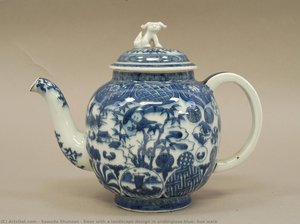
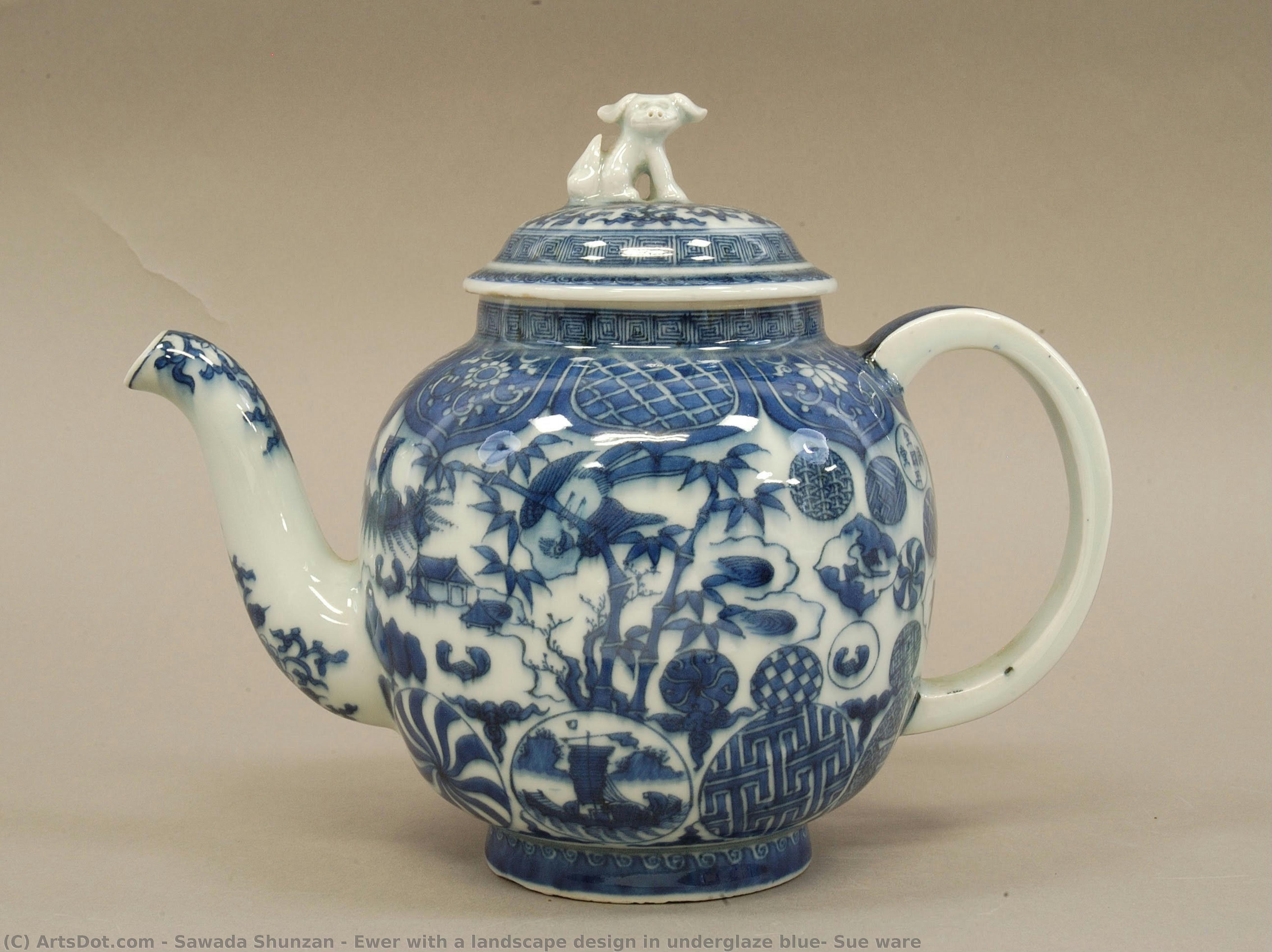
Ewer with a landscape design in underglaze blue, Sue ware


 Read More
Giclée / Art Print
Museum-quality giclée or canvas print with fast production and flexible finish options. ( Buy Hand Made Painting Buy Image)




































Pick from our preset sizes that match the artwork's original proportions.

You may enter your own dimensions to fit a specific frame or space. If your selected size does not match the original image's proportions, we will either crop the artwork or extend the image with a mirrored or solid-fill edge. A digital mockup will be sent for your approval before production begins.
Please note that the on-screen preview does not reflect the actual cropping or extension. Only the mockup will accurately show the final composition.
While custom sizes are available, we recommend selecting a dimension from the predefined list to preserve the original proportions.
Worldwide Delivery () in 2 weeks instead of standard 4/5 weeks. (24 August)

Free Worldwide Express Shipping

High-Quality Linen Canvas

Full Shipping Insurance

Customs Tax Refund Guarantee

True Color Matching Guarantee

60-Day Return Policy (Defects Only)

100% Money-Back Guarantee

Bulk Discount Offer
 Glass option is only available in size under 110 CM

Ewer with a landscape design in underglaze blue, Sue ware
Giclée / Art Print
Reproduction Size
-


Total Price
$ 63
Collectible Description
Related Artworks









Artist Biography
Sawada Shunzan: A Silent Language of Clay
The world of Japanese ceramics often reveals itself through subtle gestures, intricate details, and a profound connection to tradition. Among the many skilled artisans who have contributed to this rich heritage, Sawada Shunzan stands out not for grand pronouncements or elaborate exhibitions, but for the quiet intensity and singular vision evident in his Sue ware creations. Born in Saitama, Japan, Shunzan’s journey into art began within the supportive environment of Nakayoshi Fukushikai, a social welfare organization dedicated to providing creative outlets for individuals with disabilities. This formative experience profoundly shaped his artistic approach – one characterized by deep introspection, meticulous execution, and an almost meditative state during his work.
Shunzan’s primary focus is Sue ware, a distinctive style renowned for its delicate blue underglaze designs, often depicting serene landscapes and natural motifs. However, Shunzan transcends mere replication; he imbues each piece with a unique sensibility. His process is remarkably consistent yet deeply personal. He typically works in a simple, open-sided sheet metal hut during the warmer months, utilizing readily available materials like clay and found objects – remnants of sweets wrappers, for instance – to build up layers of texture and form. The resulting surfaces are rarely glazed, allowing the natural variations in the clay’s color and the subtle effects of firing to take center stage. The ‘thorns,’ as they've been described by observers, are a defining element of his work—densely packed, often straight lines that ripple across the surface, adding a dynamic tension to the otherwise tranquil imagery.
A Life Rooted in Simplicity and Observation
Details about Shunzan’s early life remain scarce, reflecting a deliberate choice for privacy and a focus on his art. He spent much of his youth within the supportive community of Nakayoshi Fukushikai, where he honed his skills and developed an unwavering dedication to his craft. His artistic development wasn't driven by formal training but rather by an innate sensitivity to form, texture, and color—qualities that seem to have been nurtured through years of quiet observation and hands-on experience. Shunzan’s work is often described as “outsider art,” a term that acknowledges the absence of conventional artistic training while recognizing the profound emotional depth and unique aesthetic vision present in his creations.
The influence of Akio Kontani, another artist who shared the same workshop space, is subtly apparent in Shunzan’s later work. Around 2017, a shift occurred in Shunzan's style—a move away from the densely packed ‘thorns’ and towards a greater emphasis on the faces depicted within his pieces. This evolution suggests a deepening of his artistic exploration, perhaps driven by a desire to convey more complex emotions and narratives through his art.
Recognition and Legacy
Despite his largely solitary practice, Shunzan's work has garnered significant recognition within the international art world. His pieces have been featured in prestigious exhibitions such as *The Encyclopedic Palace* at the 55th Venice Biennale (2013), curated by Massimiliano Gioni, and *The Doors of Perception* at Frieze New York (2019). His work is now held in the permanent collections of institutions including the Collection de l’Art Brut in Lausanne, the Centre Pompidou in Paris, and the Herbert F. Johnson Museum of Art at Cornell University. These inclusions underscore the enduring value and artistic merit of his creations.
In 2024, a touring museum show titled “All About 25” will bring Shunzan’s work to audiences across America, accompanied by a new monograph documenting his life's work. This widespread recognition is not merely about showcasing an artist; it’s about amplifying the voice of someone who communicates through a language beyond words—a silent dialogue expressed through the tactile beauty and profound serenity of clay.
The Essence of Sue Ware and Shunzan’s Vision
Shunzan's mastery lies not just in his technical skill but in his ability to capture the essence of Sue ware – its delicate blue hues, its evocative landscapes, and its inherent sense of tranquility. He doesn’t simply replicate traditional motifs; he imbues them with a personal resonance, reflecting his own contemplative state and connection to nature. The absence of glaze allows the clay itself to speak—its subtle variations in color and texture creating a dynamic interplay of light and shadow that draws the viewer into a world of quiet contemplation. His work serves as a reminder that art can be found not just in grand gestures or elaborate displays, but also in the simple beauty of everyday materials and the profound depth of human experience.
sawada shunzan
Japan
Quick Facts
- Artistic Movement Or Style: Sue ware pottery
- Artists Or Movements Influenced By This Artist: ['Akio Kontani']
- Artists Who Influenced This Artist: ['']
- Date Of Birth: Saitama, Japan (unknown)
- Date Of Death: Living
- Full Name: Sawada Shunzan
- Nationality: Japanese
- Notable Artworks:
- Ewer with landscape design
- Various Sue ware pieces
- Place Of Birth: Saitama, Japan