 Preview
 Send
Send Share
Share
 Details

 Download
 Similars
 X-Ray
X-Ray Diaporama
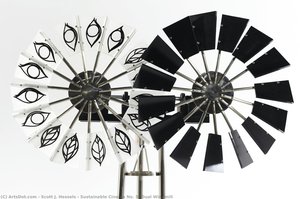
Sustainable Cinema No. 2: Lenticular Bicycle


 Read More
Hand Made Oil Reproduction
Hand-painted oil on canvas in your size and frame, made to order by our artists. ( Buy Print Buy Image)




































Pick from our preset sizes that match the artwork's original proportions.

You may enter your own dimensions to fit a specific frame or space. If your selected size does not match the original image's proportions, we will either crop the artwork or extend the painting with additional hand-painted elements. A digital mockup will be sent for your approval before production begins.
Please note that the on-screen preview does not reflect the actual cropping or extension. Only the mockup will accurately show the final composition.
While custom sizes are available, we recommend selecting a dimension from the predefined list to preserve the original proportions.
After order, ArtsDot.com team will email client for instructions and provide a mockup preview
Worldwide Delivery () in 3/4 weeks instead of standard 5 weeks. (27 August). No compromise on quality.

Free Worldwide Express Shipping

High-Quality Linen Canvas

Full Shipping Insurance

Customs Tax Refund Guarantee

True Color Matching Guarantee

60-Day Return Policy (Defects Only)

100% Money-Back Guarantee

Bulk Discount Offer
 Glass option is only available in size under 110 CM

Sustainable Cinema No. 2: Lenticular Bicycle
Reproduction Medium
Reproduction Size
-


Total Price
$ 263
Related Artworks








Artist Biography
A Cinematic Cartographer of the Environment: The World of Scott J. Hessels
Scott J. Hessels, born in Los Angeles in 1958, is an artist whose work transcends traditional categorization. He isn’t simply a filmmaker or sculptor; he's a media archaeologist, a kinetic engineer, and a profound observer of the evolving relationship between humanity and the natural world. His journey began with a fascination for the origins of moving images—the pre-digital mechanics of animation—and has blossomed into an expansive practice encompassing film, video installation, robotics, GPS technology, and even collaborations with institutions like NASA and the Federal Aviation Administration. Hessels’s art isn't confined to galleries or museums; it actively seeks engagement with its surroundings, often utilizing environmental forces – wind, water, sunlight – as integral components of its operation.Early Explorations and the Genesis of Sustainable Cinema
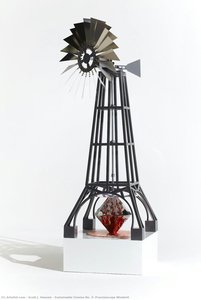
Hessels’s early work laid the foundation for his signature exploration of interactivity and environment. He wasn't content to merely *represent* the world through film; he sought to create systems that responded to it, blurring the lines between artwork and active participant in its own ecosystem. This ethos culminated in the “Sustainable Cinema” series—a collection of kinetic sculptures that are perhaps his most recognizable achievement. These aren’t simply beautiful objects; they are functioning cinematic machines powered by renewable energy sources. The *Praxinoscope Windmill*, for example, reimagines a 19th-century optical toy driven by wind power, projecting animated images onto surrounding surfaces. This series is more than just an aesthetic statement; it's a poignant commentary on the history of cinema and a hopeful vision for its future—one powered by sustainability rather than fossil fuels. The sculptures act as time machines, connecting us to the earliest forms of visual storytelling while simultaneously propelling us toward innovative solutions for environmental challenges.Interactivity, Technology, and the Expansion of Artistic Boundaries
As Hessels’s career progressed, his work became increasingly interactive, incorporating sensors, robotics, and GPS systems. He began to explore how technology could be used not just to capture or represent reality but to *augment* it, creating experiences that were deeply responsive to their environment and the presence of viewers. Projects involving NASA demonstrate this ambition—utilizing satellite data and real-time environmental information to create dynamic installations that reflect the planet’s ever-changing conditions. This period also saw collaborations with Nokia, pushing the boundaries of mobile technology and its potential for artistic expression. Hessels's willingness to embrace new technologies isn’t driven by a simple desire for innovation; it stems from a deeper interest in how these tools can facilitate connection—connection between people, between art and science, and ultimately, between humanity and the environment.Teaching and The Extreme Environments Program
Currently an associate professor at the School of Creative Media at City University of Hong Kong, Hessels’s influence extends beyond his own artistic practice. He is also the executive producer of the *Extreme Environments Program*, a unique initiative that organizes art/science expeditions to environmentally significant sites around the world. This program embodies Hessels's belief in the power of interdisciplinary collaboration and the importance of firsthand experience in understanding complex environmental issues. By bringing artists and scientists together, he fosters a new generation of creatives equipped with both technical skills and a deep sense of ecological awareness. The Program isn’t simply about documenting these environments; it’s about actively engaging with them, creating art that is informed by scientific research and driven by a commitment to sustainability.Historical Significance and a Legacy of Innovation
Scott J. Hessels occupies a unique position in contemporary art—bridging the gap between sculpture, filmmaking, and new media installation. His work has been recognized not only for its aesthetic qualities but also for its technical innovation, earning him patents for developed technologies and widespread coverage in cultural publications like *Wired* and *Discover*. More importantly, Hessels’s legacy lies in his ability to challenge conventional notions of artistic practice. He demonstrates that art can be more than just a passive object of contemplation; it can be an active agent of change, a catalyst for dialogue, and a powerful tool for environmental awareness. His cinematic cartography—mapping the world through moving images, responsive systems, and sustainable technologies—offers a compelling vision for a future where art and science converge to create a more harmonious relationship between humanity and the planet.
scott j. hessels
1958 - , United States of America
Quick Facts
- Artistic Movement Or Style: New Media Art
- Current Status: Living
- Date Of Birth: 1958
- Full Name: Scott J. Hessels
- Nationality: American
- Notable Artworks:
- Sustainable Cinema No. 1
- Lenticular Bicycle
- Praxinoscope Windmill
- Place Of Birth: Los Angeles, USA