

 Preview
 Send
Send Share
Share
 Details

 Download
 Similars
 X-Ray
X-Ray Diaporama
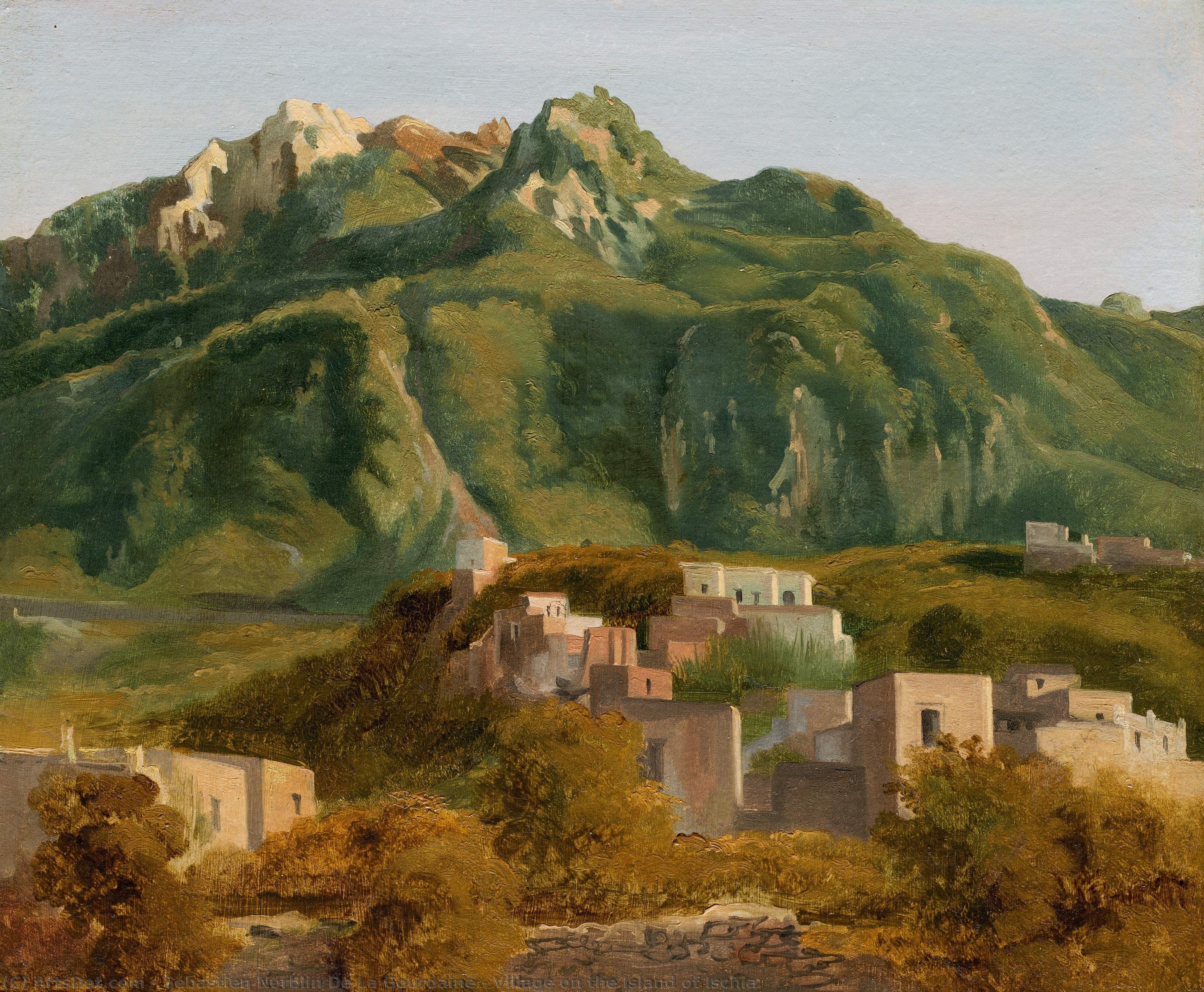
Village on the Island of Ischia
 1826
1826 44.0 x 50.0 cm
 Read More
Purchase a high-resolution, enhanced digital image, far superior to the online preview.
Each file is meticulously prepared by our in-house specialists using advanced tools and expert manual retouching. We ensure every image has exceptional clarity, precise color accuracy, and fine detail.
The final file is delivered via email within 72 hours, optimized for immediate use in professional, editorial, and print environments. This is the same quality trusted by top-tier design studios, publishers, and galleries.
Digital Image
Download a high-resolution file for personal display, printing, and creative projects. ( Buy Print Buy Hand Made Painting)
Included in Every Digital Image Order
Expert Digital Delivery, Guaranteed
When you choose ArtsDot.com, you're not just getting an image - you're receiving a professionally enhanced digital artwork, crafted with precision and backed by a satisfaction guarantee. Here's everything that comes with your order, automatically:

Fast Email Delivery
Your high-resolution digital image file will be emailed to you within 72 hours of ordering - ready for immediate use.

AI-Enhanced Digital File
Your artwork is professionally optimized using advanced AI tools and manual editing, ensuring maximum detail, clarity, and color accuracy.

Free Lifetime Re-Delivery
Accidentally deleted or lost your file? No worries - we'll resend it to you anytime, free of charge.

No Import Fees - Ever
Enjoy your artwork instantly with zero customs, duties, or delivery fees - digital downloads are always tax-free.

Color Accuracy Guarantee
We ensure your digital image reflects the original colors as closely as possible using professional tools and color management.

100-Day Satisfaction Guarantee
If you're not satisfied with your digital image, we'll revise it or refund 100% within 100 days - no questions asked.

100% Money-Back Guarantee
Not satisfied? Get a full refund within 100 days of receiving your digital file - no questions asked.

Bulk Order Discounts
Buy 3 images, save 10% - Buy 5, save 15% - Buy 10+, save 20%. Great for creative projects, galleries, and agencies.
Related Artworks










Artist Biography
A Life Etched in Light: The World of Sébastien Norblin De La Gourdaine
Sébastien Norblin De La Gourdaine, a name perhaps less immediately recognizable than some of his contemporaries, nevertheless occupies a fascinating and pivotal position within the artistic landscape of 18th-century Europe. Born in Paris around 1740 – precise dates remain elusive, adding to the mystique surrounding this gifted artist – Norblin’s life was one of remarkable travel, astute observation, and an unparalleled ability to capture the essence of diverse cultures through his delicate yet powerfully expressive drawings. He wasn't merely a recorder of sights; he was an interpreter, translating the exotic into a visual language that captivated aristocratic patrons across the continent. His journey began with formal training in France, likely under the guidance of renowned masters, though specific details are scarce. This foundation instilled within him a mastery of draftsmanship and a keen eye for detail – qualities that would define his entire career.From Versailles to Istanbul: A Cosmopolitan Artist
Norblin’s trajectory took an extraordinary turn in 1765 when he accepted a position as *dessinateur du cabinet du roi* under Count de Choiseul, Louis XV's powerful secretary of state. This appointment propelled him into the orbit of French diplomacy and, crucially, led to his assignment to Constantinople (modern-day Istanbul) in 1767. This was not a typical diplomatic posting; Norblin’s mission wasn’t political negotiation but rather artistic documentation. He was tasked with visually chronicling life within the Ottoman Empire – its customs, architecture, costumes, and people. For nearly a decade, he immersed himself in this vibrant world, becoming one of the first Western artists to depict Ottoman society with such sensitivity and accuracy. He wasn’t simply sketching what he saw; he lived amongst the people, learning their languages, understanding their traditions, and forging relationships that allowed him access beyond the superficial observations of a casual visitor. This period proved transformative, shaping his artistic style and establishing his reputation as an expert in Orientalism – though it's crucial to note that Norblin’s work transcends simple categorization, offering a nuanced perspective far removed from later, often romanticized depictions of the East.The Art of Observation: Technique and Style
Norblin’s artistic technique was characterized by its remarkable precision and economy of line. He favored black chalk, bistre, and watercolor washes, employing a delicate touch to create drawings that are both incredibly detailed and remarkably atmospheric. His compositions often feature carefully arranged figures within expansive landscapes or richly decorated interiors. What truly sets his work apart is his ability to capture the *psychological* essence of his subjects. His portraits aren’t merely likenesses; they reveal character, dignity, and a profound sense of humanity. He was a master of capturing gesture and expression, imbuing his figures with life and individuality. He also possessed an exceptional talent for architectural rendering, meticulously documenting the grandeur of Ottoman mosques, palaces, and public spaces. His drawings are not just beautiful objects; they are invaluable historical records, providing a glimpse into a world that was largely inaccessible to Europeans at the time. His attention to detail extended beyond the visual – he also documented clothing styles, weaponry, and everyday objects, creating a comprehensive portrait of Ottoman material culture.Patronage and Legacy: Disseminating Eastern Visions
Upon his return to Paris in 1776, Norblin found himself at the center of a thriving artistic community. His drawings quickly gained recognition among aristocratic collectors, including Queen Marie Antoinette herself. He produced lavish albums of his Ottoman sketches, which were highly sought after and circulated amongst the elite. He also collaborated with engravers to create prints based on his work, further disseminating his images throughout Europe. This widespread circulation played a significant role in shaping European perceptions of the Ottoman Empire. Norblin’s influence extended beyond his immediate circle of patrons. His drawings served as inspiration for other artists and designers, contributing to the growing fascination with Oriental motifs in French art and decorative arts during the late 18th century. While he continued to work on commissions throughout his life, including illustrations for books and designs for tapestries, his Ottoman series remains his most celebrated achievement. He died in Paris sometime after 1804, leaving behind a legacy of artistic excellence and cultural understanding that continues to resonate today. His work stands as a testament to the power of observation, the importance of cross-cultural exchange, and the enduring beauty of human diversity.Rediscovering Norblin: A Modern Appreciation
For many years, Sébastien Norblin De La Gourdaine remained a relatively obscure figure in art history. However, recent scholarship has brought renewed attention to his remarkable achievements. His drawings are now recognized as invaluable historical documents and masterpieces of 18th-century draftsmanship.- Museums around the world are actively acquiring his work.
- Scholars are reevaluating his role in shaping European perceptions of the Ottoman Empire.
- His drawings provide a unique and nuanced perspective on a fascinating period of cultural exchange.
