

 Send
Send Share
Share
 Details

 Download
 Similars
 Diaporama
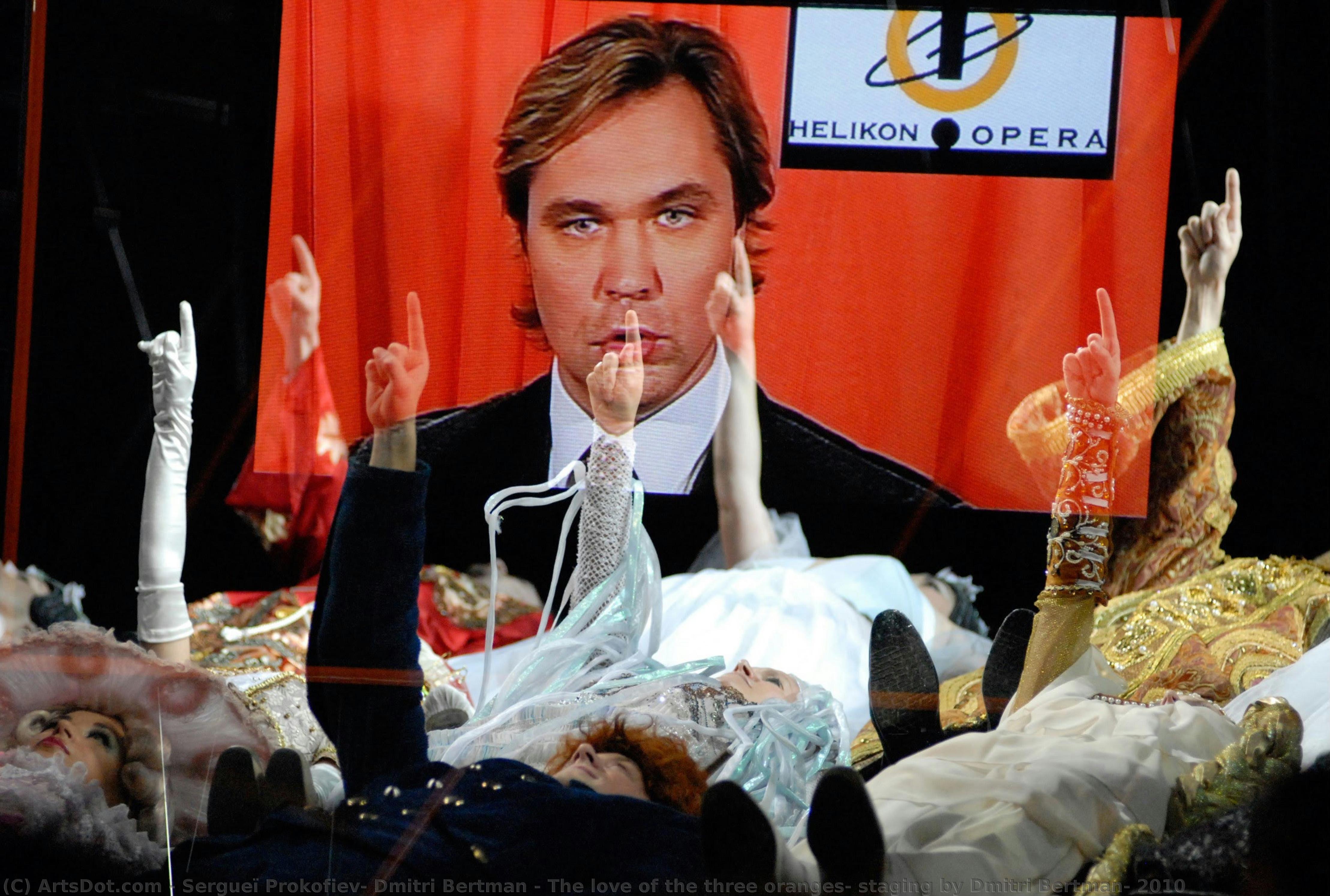
The love of the three oranges, staging by Dmitri Bertman, 2010


 Read More
Hand Made Oil Reproduction
Hand-painted oil on canvas in your size and frame, made to order by our artists. ( Buy Print Buy Image)




































Pick from our preset sizes that match the artwork's original proportions.

You may enter your own dimensions to fit a specific frame or space. If your selected size does not match the original image's proportions, we will either crop the artwork or extend the painting with additional hand-painted elements. A digital mockup will be sent for your approval before production begins.
Please note that the on-screen preview does not reflect the actual cropping or extension. Only the mockup will accurately show the final composition.
While custom sizes are available, we recommend selecting a dimension from the predefined list to preserve the original proportions.
After order, ArtsDot.com team will email client for instructions and provide a mockup preview
Worldwide Delivery () in 3/4 weeks instead of standard 5 weeks. (26 August). No compromise on quality.

Free Worldwide Express Shipping

High-Quality Linen Canvas

Full Shipping Insurance

Customs Tax Refund Guarantee

True Color Matching Guarantee

60-Day Return Policy (Defects Only)

100% Money-Back Guarantee

Bulk Discount Offer
 Glass option is only available in size under 110 CM

The love of the three oranges, staging by Dmitri Bertman, 2010
Reproduction Medium
Reproduction Size
-


Total Price
$ 263
Artwork Description
A Theatrical Vision of Surrealism and Sound
In the mesmerizing intersection of musical composition and visual staging, "The Love of the Three Oranges" emerges as a profound exploration of theatricality and surrealist imagery. This evocative work, stemming from the 2010 production directed by Dmitri Bertman and composed by the legendary Sergueï Prokofiev, transcends the boundaries of traditional opera to become a visual masterpiece. The scene captures a moment of heightened drama, where the boundary between reality and performance dissolves. A central figure, characterized by his striking blond hair, stands poised before a television screen that unexpectedly displays a human face, creating a jarring yet poetic juxtaposition of modern technology and classical stagecraft. This unexpected element introduces a layer of contemporary commentary into an otherwise operatic setting, inviting the viewer to question the nature of perception and the mediation of art through screens.
The composition is rich with the tension of a live performance, set against the deep, velvety textures of a red theatrical curtain that frames the stage. The presence of other figures—some partially obscured, others caught in moments of focused attention—adds a sense of depth and communal experience to the piece. As the man points toward the glowing screen, he directs not only the eyes of the audience but also our own curiosity toward the mystery contained within the digital frame. This gesture serves as a bridge between the physical space of the opera house and the ethereal, projected image, embodying the very essence of Prokofiev’s ability to blend the tangible with the fantastical.
Symbolism and the Palette of Emotion
Beyond its literal depiction of a stage production, the artwork is steeped in symbolic resonance. The recurring motif of oranges—scattered across the scene or central to the narrative—serves as a vibrant burst of color against the more somiment tones of the theater. These citrus elements act as symbols of fertility, unexpected joy, and perhaps the fragmented nature of desire within the operatic plot. The use of bold, striking orange hues creates a visual rhythm that guides the eye through the geometric staging, while the interplay of light and shadow evokes a sense of mystery and psychological depth.
For the discerning collector or interior designer, this piece offers more than mere decoration; it provides a focal point of intellectual and emotional intrigue. The technique, which blends elements of digital painting with the dramatic flair of classical staging, allows for a unique texture that feels both modern and timeless. The way the light catches the formal attire of the figures and the heavy folds of the crimson curtain creates an atmosphere of luxury and drama, making it an ideal centerpiece for spaces designed to inspire conversation and reflection. To possess a reproduction of this work is to bring a fragment of the grand operatic tradition into the contemporary home, celebrating the enduring power of storytelling through both sound and sight.
Related Artworks



Artist Biography
A Life Bridging Worlds: Sergei Prokofiev and the Theatrical Vision of Dmitri Bertman
Sergei Sergeyevich Prokofiev, born in 1891 in the small Ukrainian village of Sontsovka, was a titan of 20th-century music. His journey wasn’t one of simple progression but a fascinating negotiation between burgeoning modernism and enduring classical traditions. From his earliest childhood explorations at the piano – composing an opera by age nine – Prokofiev displayed a remarkable gift, a precocious talent that would soon challenge conventional musical boundaries. He was not merely a composer; he was a storyteller, a dramatist who believed deeply in music’s power to evoke vivid imagery and profound emotion. His initial training at the St. Petersburg Conservatory honed his formidable skills as both pianist and composer, but it also fostered a rebellious spirit that would define much of his early work.
Prokofiev emerged onto the scene with a distinctive voice – often dissonant, frequently percussive, always energetic. His compositions weren’t designed to soothe; they were intended to provoke, to challenge, and ultimately, to captivate through their sheer originality. Works like his first two piano concertos immediately established him as an iconoclast, a composer unafraid to push the boundaries of harmonic language and rhythmic complexity. However, this early notoriety didn’t translate into universal acclaim. He sought recognition not just for technical brilliance but for emotional depth, a quality that sometimes eluded audiences accustomed to more traditional forms.
The Operatic Impulse and Collaboration with Bertman
Throughout his career, Prokofiev harbored a deep passion for opera. It was in this genre that he felt most fully able to express his dramatic vision. While he composed seven completed operas, it was “The Love for Three Oranges” (1921) that truly cemented his reputation as an operatic innovator. The work, commissioned by the Chicago Opera, is a fantastical tale brimming with wit, satire, and musical inventiveness. It’s a story of Prince Calaf who must overcome the machinations of the sorcerer Truffaldino to find love, and it's a piece that demands both vocal virtuosity and theatrical flair.
This is where the collaboration with Dmitri Bertman becomes particularly significant. Bertman’s 2010 staging of “The Love for Three Oranges” wasn’t simply a revival; it was a radical reinterpretation that breathed new life into Prokofiev's masterpiece. Bertman, known for his bold and often provocative productions, understood the opera’s inherent theatricality – its blend of comedy, social commentary, and surreal imagery. His staging emphasized power dynamics and geometric precision, utilizing striking orange hues to create a visually arresting experience. The figures in formal attire, as depicted in ArtsDot's reproductions, are not merely characters but symbols representing broader societal forces.
Prokofiev’s Return to the Soviet Union and Mature Style
The 1930s marked a turning point for Prokofiev. The economic hardships of the Great Depression diminished opportunities in the West, leading him to increasingly seek commissions within the Soviet Union. His return to his homeland in 1936 was both a pragmatic decision and a reflection of his evolving artistic sensibilities. While navigating the complexities of Soviet cultural politics, he produced some of his most beloved works, including Lieutenant Kijé, Peter and the Wolf, and the ballet Romeo and Juliet. These pieces demonstrate a remarkable ability to blend accessibility with artistic integrity.
His later works, such as the Fifth Symphony (1944) and the operatic adaptation of Tolstoy’s War and Peace, reveal a composer at the height of his powers. The symphony, written during the tumultuous years of World War II, is a powerful statement of human resilience and hope. War and Peace, though fraught with challenges due to political pressures, remains a testament to Prokofiev’s ambition and dramatic vision.
Legacy and Enduring Influence
Sergei Prokofiev died in 1953, leaving behind a vast and diverse body of work that continues to inspire and challenge audiences today. His music is characterized by its unique blend of modernism and classical techniques, its lyrical beauty, and its dramatic power. He was a master orchestrator, capable of creating textures both delicate and overwhelming. His influence can be heard in the works of countless composers who followed him.
The collaborations with artists like Dmitri Bertman serve as a reminder that Prokofiev’s music is not static; it's open to interpretation and reinterpretation. Bertman’s staging of “The Love for Three Oranges” demonstrates how contemporary vision can illuminate the enduring relevance of Prokofiev’s work, revealing new layers of meaning and ensuring its continued vitality for generations to come. Prokofiev wasn’t just a composer; he was a theatrical visionary whose music continues to resonate with audiences worldwide.

sergueï prokofiev, dmitri bertman
1891 - 1953 , Ukraine
Quick Facts
- Artistic Movement Or Style: Modernist music
- Date Of Birth: 1891
- Date Of Death: 1953
- Full Name: Sergei Prokofiev & Dmitri Bertman
- Nationality: Russian
- Notable Artworks: ['The Love for Three Oranges']
- Place Of Birth: Sontsovka, Ukraine
Related Articles

Henri Matisse's Masterpieces: Explore 25 Iconic Paintings & Art Decor Ideas
Journey through Henri Matisse's 25 most iconic paintings! Explore Fauvism, vibrant colors & the stories behind masterpieces like 'The Dance'. Find museum-quality art reproductions and curated decor ideas to elevate your space. Discover all masterpieces on ArtsDot.com.
Earthy Hues & Masterpieces: Top 10 Paintings Dominated by Clay Tones |
Explore 10 iconic paintings dominated by rich clay tones – from Rembrandt's warmth to Van Gogh’s earthy landscapes. Discover art history, techniques & find museum-quality reproductions at . Explore the full collection online!

Mark Rothko's Masterpieces: 25 Paintings That Define Abstract Expressionism | ArtsDot
Explore 25 iconic Mark Rothko paintings that define Abstract Expressionism. Discover the stories, colors & emotions behind these masterpieces. Find museum-quality art reproductions and curated decor ideas at ArtsDot.com.

Rosy Brown Hues: 10 Master Paintings & Timeless Decor Ideas |
Explore 10 iconic paintings bathed in captivating rosy brown tones! From Rembrandt to Titian, discover the stories behind these masterpieces & their warm color palettes. Find museum-quality art reproductions and decor inspiration at .
Paul Klee's Masterpieces: Explore 25 Iconic Paintings & Prints | ArtsDot
Journey through Paul Klee's 25 most iconic paintings & prints. Explore his abstract style, Bauhaus influence, and vibrant color palettes. Find museum-quality art reproductions & decor ideas at ArtsDot.com. Discover all masterpieces online.

