

 Send
Send Share
Share
 Details

 Download
 Similars
 Diaporama
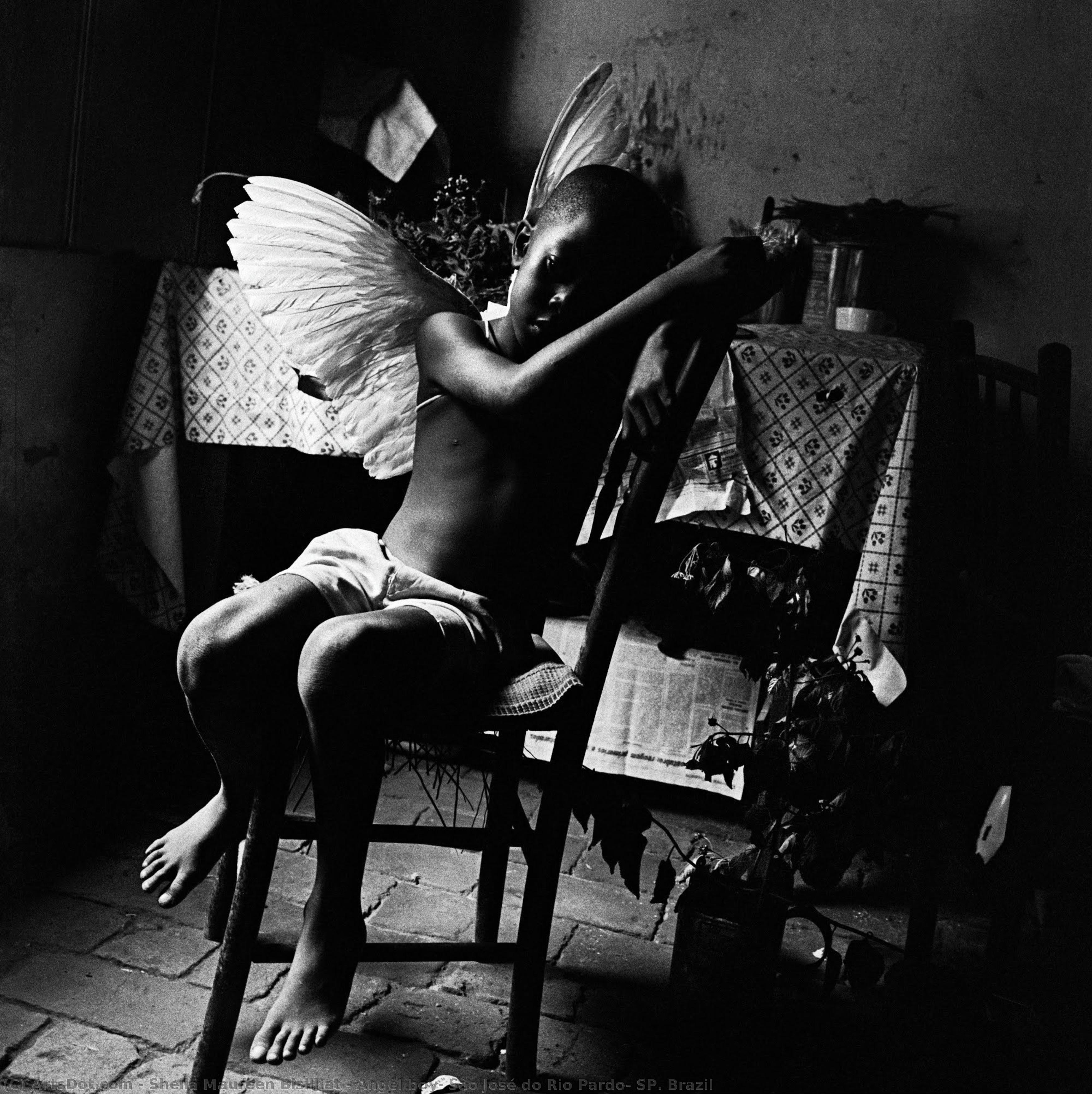
Angel boy, São José do Rio Pardo, SP. Brazil
 Black and White Photography
- Photo
- Documentary Photography
 Modern
 46.0 x 46.0 cm
 Instituto Moreira Salles
 Read More
Purchase a high-resolution, enhanced digital image, far superior to the online preview.
Each file is meticulously prepared by our in-house specialists using advanced tools and expert manual retouching. We ensure every image has exceptional clarity, precise color accuracy, and fine detail.
The final file is delivered via email within 72 hours, optimized for immediate use in professional, editorial, and print environments. This is the same quality trusted by top-tier design studios, publishers, and galleries.
Digital Image
Download a high-resolution file for personal display, printing, and creative projects. ( Buy Print Buy Hand Made Painting)
Included in Every Digital Image Order
Expert Digital Delivery, Guaranteed
When you choose ArtsDot.com, you're not just getting an image - you're receiving a professionally enhanced digital artwork, crafted with precision and backed by a satisfaction guarantee. Here's everything that comes with your order, automatically:

Fast Email Delivery
Your high-resolution digital image file will be emailed to you within 72 hours of ordering - ready for immediate use.

AI-Enhanced Digital File
Your artwork is professionally optimized using advanced AI tools and manual editing, ensuring maximum detail, clarity, and color accuracy.

Free Lifetime Re-Delivery
Accidentally deleted or lost your file? No worries - we'll resend it to you anytime, free of charge.

No Import Fees - Ever
Enjoy your artwork instantly with zero customs, duties, or delivery fees - digital downloads are always tax-free.

Color Accuracy Guarantee
We ensure your digital image reflects the original colors as closely as possible using professional tools and color management.

60-Day Satisfaction Guarantee
If you're not satisfied with your digital image, we'll revise it or refund 100% within 60 days - no questions asked.

100% Money-Back Guarantee
Not satisfied? Get a full refund within 60 days of receiving your digital file - no questions asked.

Bulk Order Discounts
Buy 3 images, save 10% - Buy 5, save 15% - Buy 10+, save 20%. Great for creative projects, galleries, and agencies.
A Celestial Encounter in Monochrome
In the quiet, shadowed corners of mid-century Brazil, Sheila Maureen Bisilliat captured a moment that feels less like a photograph and more like a whispered prayer. "Angel Boy, São José do Rio Pardo" is a profound meditation on innocence and the ethereal, presented through the masterful lens of black-and-white film. The image centers on a young boy, seated with a heavy, peaceful stillness upon a simple wooden chair. He appears caught in the delicate threshold between sleep and wakefulness, his posture slumped in a way that suggests total surrender to the moment. Yet, it is the presence of the outstretched, feathered wings that transforms this domestic scene into something transcendent. These wings, rendered in exquisite detail, break the boundaries of the mundane, inviting the viewer to contemplate the divine hidden within the everyday life of the Brazilian sertanejo culture.
The technical brilliance of Bisilliat lies in her command of chiaroscuro—the dramatic interplay between light and deep, velvety shadow. A singular, strong light source illuminates the boy’s face and the soft texture of his skin, creating a luminous focal point that pulls the eye inward. This stark contrast does more than just define form; it imbues the subject with a sense of vulnerability and mystery. The monochromatic palette strips away the distractions of color, forcing us to engage with the raw textures of the scene: the rough grain of the wooden chair, the delicate, organic edges of the feathers, and the subtle patterns of the tabletop. Through this careful manipulation of light, Bisilliat creates a sense of depth that makes the background recede into an infinite, contemplative darkness, leaving only the boy and his angelic mantle to exist in the light.
Symbolism and the Soul of Brazil
Beyond its visual strikingness, the photograph serves as a poignant window into the soul of a nation. Bisilliat, though born in London, became a dedicated chronicler of the Brazilian spirit, deeply influenced by the country's rich anthropological landscape and evocative literature. In "Angel Boy," the symbolism of the wings acts as a bridge between the earthly and the spiritual, suggesting that purity and transcendence are not distant concepts but are present even in the most humble settings. The composition, while grounded by the strong vertical lines of the chair and the horizontal stability of the table, is softened by the curved, organic shapes of the boy’s form and the plumage of the wings. This balance between structure and fluidity mirrors the tension between the physical reality of rural life and the spiritual aspirations of its people.
< p>For the discerning collector or interior designer, this piece offers a timeless elegance that transcends era and decor style. Its ability to evoke melancholy, peace, and wonder simultaneously makes it a powerful anchor for a room. Whether placed in a minimalist modern gallery or a classic, richly textured study, the photograph commands attention through its quiet intensity. It is not merely an image of a child; it is an invitation to slow down, to breathe, and to find the extraordinary within the ordinary. Owning a high-quality reproduction of this work means bringing a piece of photographic history into one's space—a piece that continues to whisper stories of light, shadow, and the enduring magic of the human spirit.Related Artworks

Artist Biography
Sheila Maureen Bisilliat: A Brazilian Soul Captured Through Time
Born in London, England, in 1931, Sheila Maureen Bisilliat’s artistic journey began far from her birthplace, ultimately leading her to become one of Brazil's most enduring and insightful photographic chroniclers. Her life is a fascinating tapestry woven with threads of international experience – she was the sister of French cyclist Louis Bisilliat – yet it was her deep connection to Brazil that shaped her distinctive visual language. Moving to the country in 1957, she quickly established herself as an observer and interpreter of Brazilian culture, capturing its vibrant rhythms, profound spirituality, and often-overlooked complexities with a sensitivity rarely matched by her contemporaries.
Early Life and Artistic Foundations
Sheila’s early life was marked by exposure to the arts. She studied painting in Paris under André Lhote and honed her skills at the Art Students League in New York City with Morris Kantor, experiences that provided a crucial foundation for her later photographic work. This initial training instilled in her an appreciation for composition, light, and form – elements she skillfully adapted to the unique challenges of documentary photography. Her father’s diplomatic career meant she spent much of her childhood navigating diverse cultures, fostering a cosmopolitan perspective that informed her approach to subjects both familiar and foreign.
The Rise of a Brazilian Eye
Bisilliat's photographic career truly blossomed in Brazil starting in the early 1960s. Initially working as a photojournalist for the influential magazine *Quatro Rodas* and later for *Realidade*, she quickly gained recognition for her ability to capture authentic moments of everyday life. Her work wasn’t merely observational; it was imbued with respect, empathy, and a genuine desire to understand the lives of those she photographed – primarily the *sertanejos* (rural inhabitants) and *indians* of Brazil's interior. This approach distinguished her from many Western photographers who often presented a romanticized or exploitative view of indigenous cultures.
Beyond Journalism: A Commitment to Cultural Preservation
Bisilliat’s contributions extended beyond journalistic assignments. In 1972, she co-founded the O Bode folk art gallery in São Paulo alongside her husband, Jacques Bisilliat, and architect Antônio Marcos Silva. This venture was instrumental in showcasing and preserving the work of Brazil's *artesãos* (craftspeople) – a vital element of Brazilian cultural heritage. The gallery’s collection grew through extensive travels throughout Latin America, documenting the traditions and artistry of diverse communities. Her involvement with the Fundação Memorial da América Latina further solidified her commitment to celebrating and archiving these often-marginalized artistic expressions.
A Legacy in Images: Style and Significance
Bisilliat’s photographic style is characterized by its intimacy, honesty, and a remarkable ability to convey emotion. Her images are rarely staged; instead, she patiently observes her subjects, capturing fleeting moments of dignity, resilience, and connection with the natural world. Her work frequently features scenes of rural life – charcoal burning, fishing expeditions, religious ceremonies – offering a poignant glimpse into Brazil’s diverse cultural landscape. Throughout her career, she received numerous accolades, including a Guggenheim Fellowship and grants from various Brazilian research foundations, recognizing the profound impact of her visual storytelling. Her extensive archive, now housed at the Moreira Salles Institute in São Paulo, stands as a testament to her dedication and a valuable resource for understanding Brazil’s rich cultural heritage. Sheila Maureen Bisilliat's photographs are not simply images; they are windows into the soul of a nation.
sheila maureen bisilliat
1931 - , United Kingdom
Quick Facts
- Artistic Movement Or Style: Documentary Photography
- Date Of Birth: 1931
- Full Name: Sheila Maureen Bisilliat
- Nationality: English-born Brazilian
- Notable Artworks: ['The queen and participants of the reisado cycle']
- Place Of Birth: London, United Kingdom

