 Preview
 Send
Send Share
Share
 Details

 Download
 Similars
 X-Ray
X-Ray Diaporama
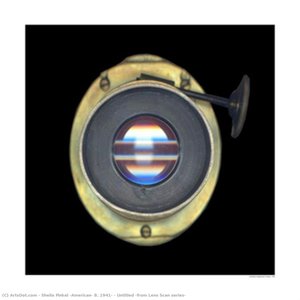
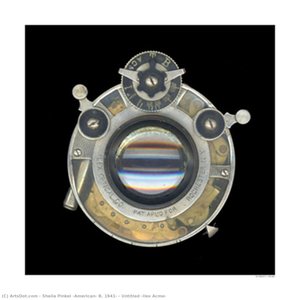
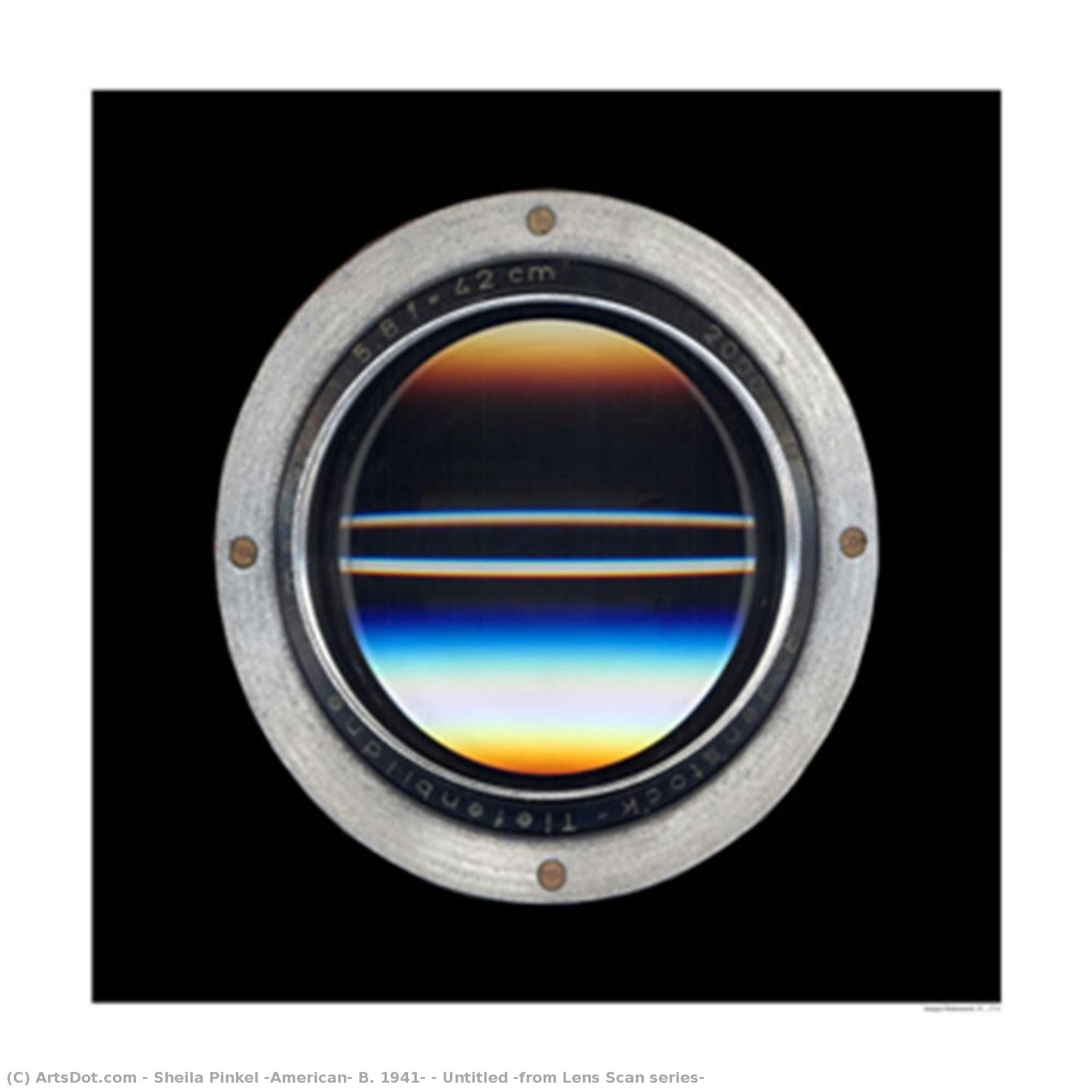
Untitled (from Lens Scan series)
 2016
2016 61.0 x 61.0 cm
 USC Fisher Museum of Art
 Read More
Giclée / Art Print
Museum-quality giclée or canvas print with fast production and flexible finish options. ( Buy Hand Made Painting Buy Image)




































Pick from our preset sizes that match the artwork's original proportions.

You may enter your own dimensions to fit a specific frame or space. If your selected size does not match the original image's proportions, we will either crop the artwork or extend the image with a mirrored or solid-fill edge. A digital mockup will be sent for your approval before production begins.
Please note that the on-screen preview does not reflect the actual cropping or extension. Only the mockup will accurately show the final composition.
While custom sizes are available, we recommend selecting a dimension from the predefined list to preserve the original proportions.
Worldwide Delivery () in 2 weeks instead of standard 4/5 weeks. (25 August)

Free Worldwide Express Shipping

High-Quality Linen Canvas

Full Shipping Insurance

Customs Tax Refund Guarantee

True Color Matching Guarantee

60-Day Return Policy (Defects Only)

100% Money-Back Guarantee

Bulk Discount Offer
 Glass option is only available in size under 110 CM

Untitled (from Lens Scan series)
Giclée / Art Print
Reproduction Size
-


Total Price
$ 63
Related Artworks






Artist Biography
Sheila Pinkel: A Weaver of the Unseen
Sheila Pinkel, born in Newport News, Virginia in 1941, is an American visual artist whose career has spanned decades, marked by a profound and evolving engagement with light, photography, and social consciousness. Her work isn’t simply about capturing images; it's a deliberate attempt to reveal the hidden—the unseen forces shaping our world, from the intricate geometries of nature to the complex realities of war, incarceration, and consumption. Pinkel’s journey as an artist has been deeply intertwined with her intellectual curiosity, her activist leanings, and a persistent fascination with technology’s capacity to both illuminate and obscure. Early influences included her father's work in the secretive world of nuclear research – a revelation that profoundly shaped her later artistic inquiries into the ethical implications of scientific advancement – and her grandfather’s dedication to labor organizing, instilling within her a commitment to social justice.Early Experiments with Light and Form
Pinkel's artistic trajectory began in the mid-1970s, driven by an exploration of light itself. Rejecting traditional photographic practices, she embarked on a series of groundbreaking experiments that bypassed the camera altogether. Inspired by her studies with physicist Don Villarejo, Pinkel investigated the physics of light and its potential to create form, moving beyond mere representation towards pure abstraction. This period yielded remarkable results: “Folded Paper” photograms (1974-82), where she manipulated shaped photographic paper exposed to light, creating delicate, two-dimensional sculptures; and “Manifestations of a Cube” (1974-1979), a meticulous documentation of a small glass dish using various techniques including photography, video, and cyanotypes – each method chosen to reveal different facets of the object’s essence. These early works demonstrated Pinkel's innovative approach, blending scientific rigor with artistic intuition, and establishing her as a pioneer in experimental light studies. The Los Angeles Times critic Suzanne Muchnic described these pieces as “handsome abstractions with the gee-whiz appeal of successful illusionism and the longer-lasting satisfaction of well-composed subtleties.”Socially Conscious Photography and Data Visualization
As Pinkel’s career progressed, her artistic focus shifted towards addressing critical social issues. Influenced by conceptual artists like Hans Haacke and Allan Sekula, she began to employ photography as a tool for investigative journalism and social critique. In the 1980s and 90s, she undertook extensive research projects documenting the experiences of marginalized communities – Cambodian refugees, garment workers in Los Angeles, and others facing systemic injustice. These investigations weren’t simply portraits; they were meticulously researched narratives, often incorporating data visualization techniques to expose patterns of inequality and trauma. Her work during this period was frequently met with censorship due to its challenging subject matter and critical stance. Pinkel's commitment to revealing the unseen extended beyond individual stories, leading her to confront complex issues such as the military-industrial complex, nuclear proliferation, and the impact of war on survivors – subjects she continues to explore in her current work.The Lens Scan Series and Contemporary Practice
A defining moment in Pinkel’s artistic evolution was the development of her “Lens Scan” series, utilizing advanced brass microscope technology to create stunningly detailed, almost hallucinatory images. These large-format photographs, often imbued with golden tones, capture the intricate beauty of natural forms – leaves, flowers, and geological formations – revealing hidden textures and patterns previously invisible to the naked eye. The process itself—a complex interplay between light, optics, and digital manipulation—mirrors Pinkel’s broader artistic philosophy: a desire to expose the underlying structures and forces shaping our perception of reality. More recently, she has continued to push the boundaries of her practice, incorporating data visualization techniques into her work, creating layered narratives that combine photographic documentation with statistical analysis and conceptual reflection. Her current projects continue to grapple with themes of social justice, environmental sustainability, and the ethical implications of technology.Legacy and Recognition
Sheila Pinkel’s body of work has garnered significant recognition throughout her career. She has been awarded grants from prestigious institutions including the National Endowment for the Humanities, the Center for the Study of Political Graphics, and the National Endowment for the Arts. Her photographs are held in public collections at museums such as the Los Angeles County Museum of Art, Centre Pompidou, Hammer Museum, and the Museum of Contemporary Photography. Beyond her artistic achievements, Pinkel has also contributed to the field through her writing, publishing essays in journals like *Leonardo*, *Afterimage*, and *Heresies*, and teaching at Pomona College. Her work stands as a testament to the power of art to illuminate hidden truths, challenge conventional perspectives, and foster critical engagement with the world around us.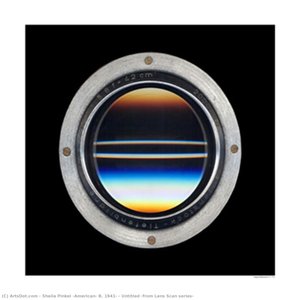
sheila pinkel (american, b. 1941)
1941 - , United States of America
Quick Facts
- Artistic Movement Or Style: Experimental light, photography, social art
- Artists Or Movements Influenced By This Artist:
- Conceptual art
- Hans Haacke
- Joseph Beuys
- Artists Who Influenced This Artist: ['Robert Heinecken']
- Date Of Birth: 1941
- Full Name: Sheila Pinkel
- Nationality: American
- Notable Artworks:
- Folded Paper
- Manifestations of a Cube
- Pinkelgraphs
- Place Of Birth: Newport News, Virginia, USA