 Preview
 Send
Send Share
Share
 Details

 Download
 Similars
 X-Ray
X-Ray Diaporama
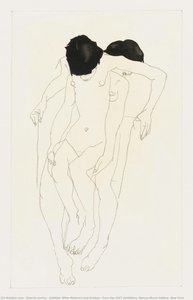
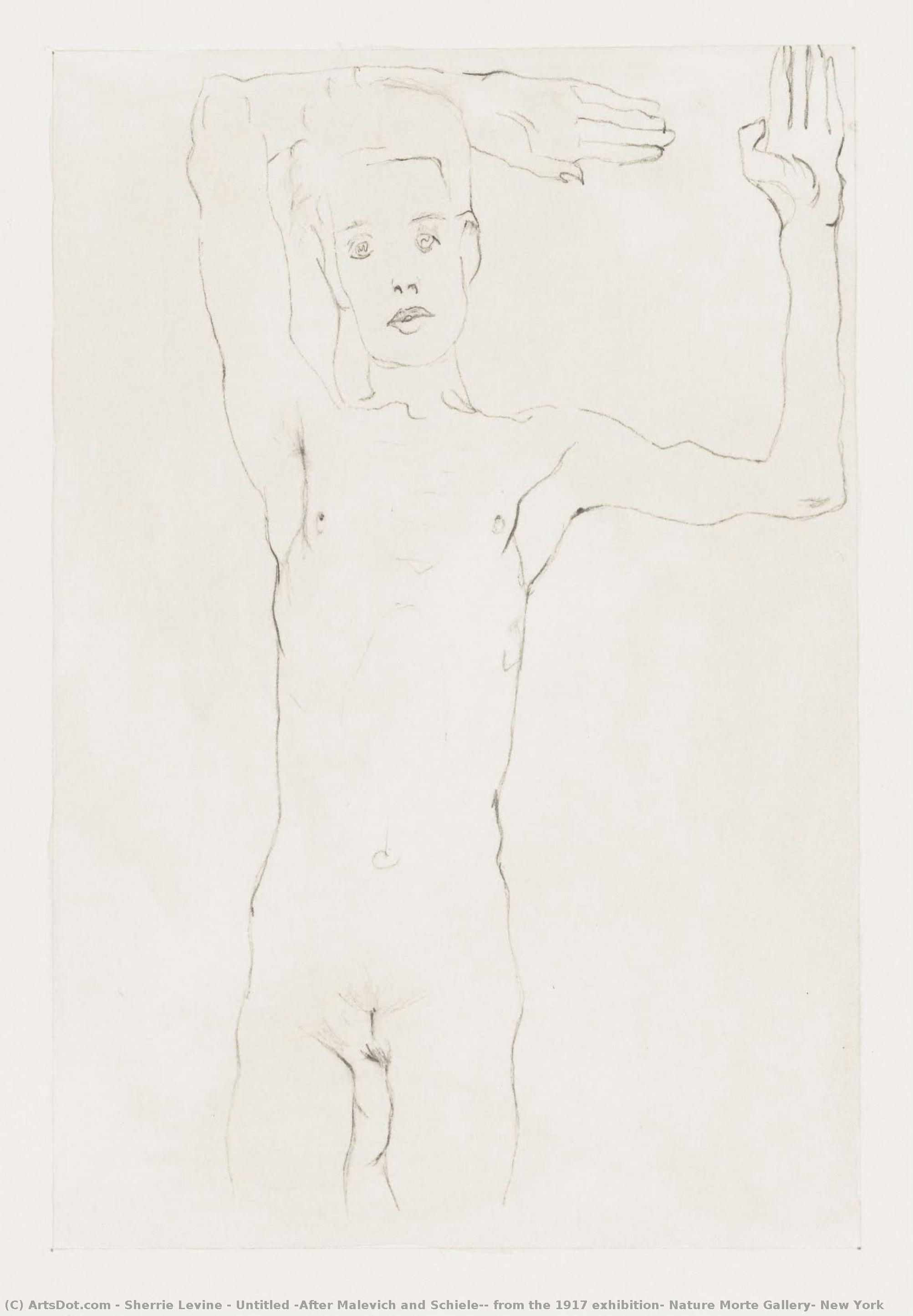
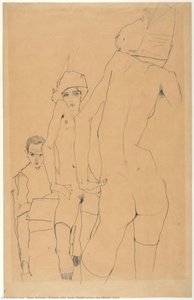
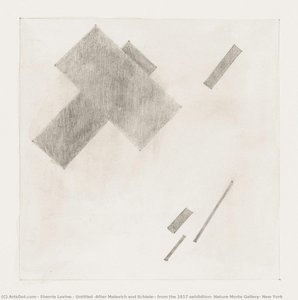
Untitled (After Malevich and Schiele), from the 1917 exhibition, Nature Morte Gallery, New York
 Graphite Pencil
- WallArt
- Expressionist Drawing
 1984
1984- Contemporary
 27.0 x 35.0 cm
 MOMA - Museum of Modern Art
 Read More
Giclée / Art Print
Museum-quality giclée or canvas print with fast production and flexible finish options. ( Buy Hand Made Painting Buy Image)




P118B $10

P118H $10

P118W $10

P438Z $10

P508JH $12

P508YH $12

P805H $10

P805Z $10

P919BZ $10

P919G $10

P919XJ $10

P959ZH $10

P968JZ $12

W106C $8

W218G $10

W218JH $8

W218Y $10

W307PJ $10

W316G $10

W316PJ $8

W316Y $10

W398PJ $8

W4111J $10

W500HY $15

W500JH $15

W692G $12

W849H $8

W940BG $15

W953PJ $8




Pick from our preset sizes that match the artwork's original proportions.

You may enter your own dimensions to fit a specific frame or space. If your selected size does not match the original image's proportions, we will either crop the artwork or extend the image with a mirrored or solid-fill edge. A digital mockup will be sent for your approval before production begins.
Please note that the on-screen preview does not reflect the actual cropping or extension. Only the mockup will accurately show the final composition.
While custom sizes are available, we recommend selecting a dimension from the predefined list to preserve the original proportions.
Worldwide Delivery () in 2 weeks instead of standard 4/5 weeks. (22 August)

Free Worldwide Express Shipping

High-Quality Linen Canvas

Full Shipping Insurance

Customs Tax Refund Guarantee

True Color Matching Guarantee

60-Day Return Policy (Defects Only)

100% Money-Back Guarantee

Bulk Discount Offer
 Glass option is only available in size under 110 CM

Untitled (After Malevich and Schiele), from the 1917 exhibition, Nature Morte Gallery, New York
Giclée / Art Print
Reproduction Size
-


Total Price
$ 63
Collectible Description
Untitled (After Malevich and Schiele), from the 1917 exhibition, Nature Morte Gallery, New York
This arresting black and white drawing, titled “Untitled (After Malevich & Schiele),” embodies Sherrie Levine’s groundbreaking approach to artistic practice—appropriation. Executed in 1984, it's a masterful reimagining of seminal works by Kazimir Malevich and Oskar Schiele, reflecting the spirit of abstraction and expressive figuration prevalent in early 20th-century art movements. Presented within a simple frame, the image immediately draws attention to its central subject: a nude male figure positioned vertically against a muted gray backdrop. The composition prioritizes dynamism through diagonal lines emanating from the torso upwards towards the outstretched arms. This deliberate gesture speaks volumes about aspiration and perhaps a yearning for transcendence—a thematic resonance amplified by the reference to Malevich’s geometric abstraction, particularly his iconic “Black Square,” which challenged conventional notions of representation and championed pure visual form. Simultaneously, Schiele's influence is palpable in the figure’s posture, mirroring Schiele’s characteristic depiction of human anatomy with unflinching honesty and vulnerability—a hallmark of Expressionist drawing techniques. The artist skillfully employs graphite pencils on paper to achieve a remarkably smooth texture, devoid of surface irregularities. Lines are meticulously crafted to delineate the contours of the body, conveying both anatomical accuracy and an underlying sense of movement. The monochromatic palette – shades of gray – contributes to an atmosphere of contemplative stillness, inviting viewers to contemplate themes of introspection and artistic exploration. The subtle gradations in tone mimic the diffused lighting found in Schiele’s studio, fostering a feeling of intimacy and immediacy. Beyond its formal qualities, “Untitled” operates on multiple symbolic levels. The upward gaze embodies a desire for spiritual elevation, mirroring the existential concerns explored by artists of the period grappling with rapid societal change. Furthermore, Levine's appropriation—reproducing Malevich and Schiele’s images without altering them—forces us to reconsider questions of originality and authorship. It prompts reflection on how artistic ideas can be disseminated and transformed through repetition, ultimately enriching our understanding of art history and its enduring relevance. This piece is a testament to Levine’s ability to distill complex concepts into a powerfully evocative visual statement.- Artist: Sherrie Levine
- Year: 1984
- Medium: Graphite Pencil on Paper
- Dimensions: 27 x 35 cm
Historical Context & Artistic Influences
The drawing’s genesis lies within the broader artistic landscape of the mid-1980s, a period marked by significant shifts in postmodern art theory. Sherrie Levine's work directly engages with debates surrounding appropriation and originality—concepts central to challenging established hierarchies within the art world. Her decision to reproduce existing images underscores the transformative potential of repetition and invites viewers to consider how artistic ideas circulate and evolve across time. The references to Malevich’s geometric abstraction and Schiele’s expressive figuration situate “Untitled” firmly within the traditions of Russian Suprematism and Austrian Expressionism respectively, demonstrating Levine's astute awareness of art historical precedents.Technique & Artistic Considerations
Levine’s meticulous approach to drawing is evident in the careful line work employed to capture the human form with remarkable precision. The graphite pencil allows for nuanced tonal variations—essential for conveying depth and texture—creating a subtle interplay of light and shadow that enhances the image's visual impact. The artist’s deliberate restraint in applying pressure contributes to the drawing’s understated elegance, prioritizing clarity of form over flamboyant ornamentation. This technique aligns seamlessly with Schiele’s stylistic choices, emphasizing anatomical accuracy alongside emotional intensity.Symbolism & Emotional Resonance
The upward gaze of the nude figure serves as a potent symbol of aspiration and spiritual longing—a motif frequently explored by artists confronting existential dilemmas during the period. The pose embodies vulnerability yet simultaneously conveys strength and resilience. Ultimately, “Untitled” transcends mere visual representation, inviting viewers to contemplate profound questions about human experience and artistic creativity. It’s a piece that lingers in the mind long after viewing, prompting contemplation on themes of identity, perception, and the enduring power of art to communicate emotion and intellect.Related Artworks
Artist Biography
The Architect of Appropriation: The Life and Legacy of Sherrie Levine
Sherrie Levine stands as a pivotal figure in contemporary art, recognized for her pioneering exploration of appropriation—a practice that fundamentally challenged notions of originality and authorship within the postmodern landscape. Born in 1947 in Hazleton, Pennsylvania, Levine’s formative years were shaped by experiences rooted in the American Midwest, notably spending her childhood and adolescence in the suburbs of St. Louis, Missouri. Early exposure to art fostered a lifelong fascination with visual culture, beginning with visits to the St. Louis Art Museum where she observed her mother—a passionate painter—introducing her to the transformative power of artistic expression at just eight years old. This familial influence extended beyond mere observation; Levine’s mother instilled in her a love for art house films and cinematic storytelling, shaping an aesthetic sensibility that would later inform her profound engagement with the layers of visual history.
Levine pursued formal education with rigorous dedication, earning her B.A. from the University of Wisconsin–Madison in 1969. Her academic pursuits solidified her understanding of art history and critical theory, preparing her for a career dedicated to conceptual exploration. Continuing her studies at UW-Madison, she earned an M.F.A. in 1973, honing her artistic skills and refining her approach to visual communication. It was during this period that Levine began to develop her signature style—a deliberate act of appropriation—drawing inspiration from the groundbreaking works of modernist masters such as Walker Evans, Edgar Degas, Marcel Duchamp, and Constantin Brancusi. By re-presenting existing images, she sought to interrogate the very essence of what it means to create in an age of infinite reproduction.
Challenging the Canon through Rephotography and Drawing
The late 1970s witnessed a surge of appropriation art within New York’s East Village scene, fueled by a desire to interrogate established artistic conventions. Alongside contemporaries like Louise Lawler and Barbara Kruger, Levine pushed the boundaries of creativity, establishing herself as a prominent voice in a movement that questioned the sanctity of the "original" masterpiece. Her work often utilizes rephotography—the act of photographing existing photographs—to create a dialogue between the past and the present. This technique allows her to strip away the traditional aura of the artist's hand, instead focusing on the way images circulate, persist, and transform through time.
Beyond her photographic interventions, Levine has explored the starkness of minimalist drawing to echo the movements of early modernism. Her 1984 work, Untitled (After Malevich and Schiele), serves as a profound example of this technique. In this piece, she utilizes minimalist graphite to create a geometric abstraction that references the pioneering spirits of Kazimir Malevich and Egon Schiele. Through these drawings, Levine does not merely copy; she inhabits the visual language of her predecessors, using stark lines and shadows to embody a bold challenge to artistic originality. This work showcases her ability to engage deeply with the history of art while simultaneously deconstructing its most fundamental myths.
Historical Significance and the Postmodern Dialogue
The enduring significance of Sherrie Levine lies in her ability to transform the act of looking into an act of critical critique. Her career has been a continuous investigation into the politics of representation, gender, and the ownership of imagery. By reclaiming the works of male masters, she has performed a feminist intervention, subtly shifting the gaze and questioning the patriarchal structures inherent in the art historical canon.
Her contributions can be summarized through several key artistic pillars:
- The Reconceptualization of Authorship: Levine’s practice forces the viewer to confront the blurred lines between the creator and the curator, making the act of selection a primary creative force.
- Engagement with Modernist Legacies: Through her appropriation of figures like Walker Evans and Malevich, she keeps the dialogue of modernism alive while simultaneously critiquing its foundations.
- The Power of the Image in Flux: Her work highlights how meaning is not fixed within an object but is instead generated through the context, repetition, and re-presentation of visual culture.
Today, Levine remains a vital presence in the art world, her work continuing to resonate within the ongoing debates regarding digital reproduction, intellectual property, and the ever-evolving nature of the image in the contemporary era.
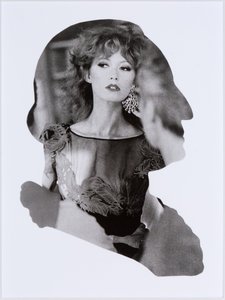
Sherrie Levine
1947 - , United States of America
Quick Facts
- Artistic Movement Or Style: Appropriation Art
- Artists Or Movements Influenced By This Artist:
- Louise Lawler
- Mike Bidlo
- Artists Who Influenced This Artist:
- Walker Evans
- Marcel Duchamp
- Date Of Birth: 1947
- Full Name: Sherrie Levine
- Nationality: American
- Notable Artworks:
- Untitled (After Walker Evans)
- Untitled (After Malevich & Schiele)
- Place Of Birth: Hazleton, United States
Related Articles
Egon Schiele's Masterpieces: 25 Paintings That Define Expressionism | ArtsDot
Delve into the haunting world of Egon Schiele with our curated selection of his 25 most iconic Expressionist paintings. Explore the artist's life, technique & emotional depth. Find museum-quality Schiele reproductions and elevate your home decor on ArtsDot.com.
Kazimir Malevich: 25 Masterpieces of Suprematism & Abstract Art | ArtsDot
Explore 25 iconic artworks by Kazimir Malevich, pioneer of Suprematism & abstract art. Discover the stories behind 'Black Square' and more! Find museum-quality prints & elevate your home decor with ArtsDot.com.
Expressionist Painting: 10 Masterpieces That Defined a Movement | ArtsDot
Explore 10 Expressionist paintings that revolutionized art! Discover Munch, Kirchner & Kandinsky's iconic works. Find museum-quality reproductions and vibrant canvas prints to elevate your home decor on ArtsDot.com.
The Eloquent Form: A Historical & Aesthetic Exploration of the Nude in Art
Explore the captivating history of the nude in art! From ancient Greece to modern masters, discover its evolving symbolism, techniques & enduring beauty. Expert insights for collectors and enthusiasts.
Egon Schiele: Expressionism, Anxiety & the Modern Condition – A Comprehensive Exploration
Explore the emotionally charged world of Egon Schiele (1890-1918). Discover his Expressionist masterpieces, psychological themes, and lasting impact on modern art. A comprehensive guide for collectors & enthusiasts.