 Preview
 Send
Send Share
Share
 Details

 Download
 Similars
 X-Ray
X-Ray Diaporama
 Stats
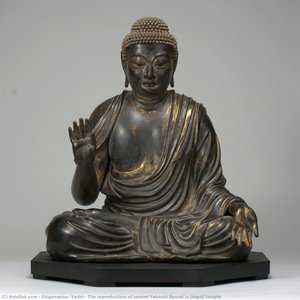
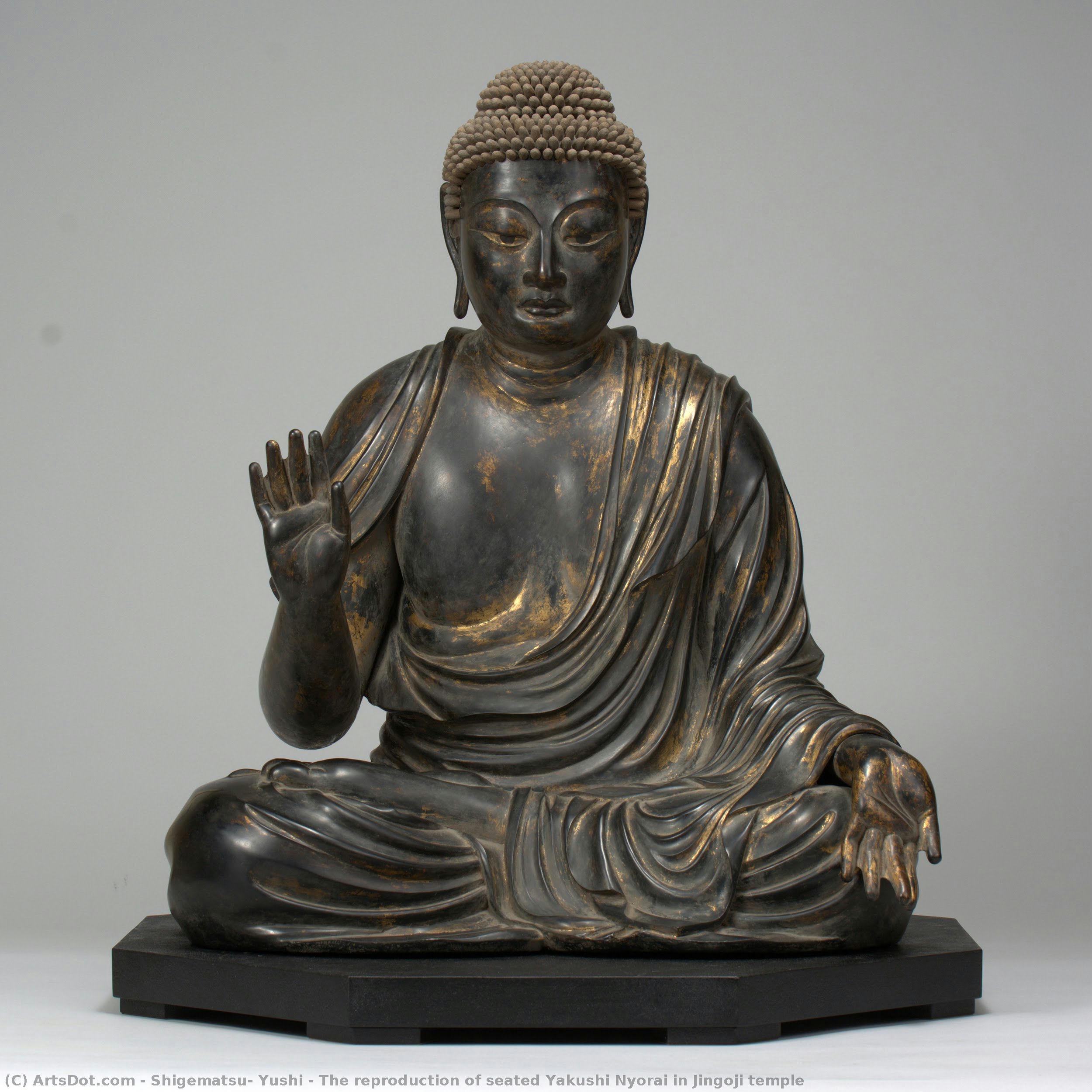
StatsThe reproduction of seated Yakushi Nyorai in Jingoji temple
 2017
2017 70.0 x 57.0 cm
 Read More
Giclée / Art Print
Museum-quality giclée or canvas print with fast production and flexible finish options. ( Buy Hand Made Painting Switch to Digital Image)




































Pick from our preset sizes that match the artwork's original proportions.

You may enter your own dimensions to fit a specific frame or space. If your selected size does not match the original image's proportions, we will either crop the artwork or extend the image with a mirrored or solid-fill edge. A digital mockup will be sent for your approval before production begins.
Please note that the on-screen preview does not reflect the actual cropping or extension. Only the mockup will accurately show the final composition.
While custom sizes are available, we recommend selecting a dimension from the predefined list to preserve the original proportions.
Worldwide Delivery () in 2 weeks instead of standard 4/5 weeks. (10 September)

Free Worldwide Express Shipping

High-Quality Linen Canvas

Full Shipping Insurance

Customs Tax Refund Guarantee

True Color Matching Guarantee

100-Day Return Policy (Defects Only)

100% Money-Back Guarantee

Bulk Discount Offer
 Glass option is only available in size under 110 CM

The reproduction of seated Yakushi Nyorai in Jingoji temple
Giclée / Art Print
Reproduction Size
-


Total Price
$ 63
Related Artworks





Artist Biography
Yushi Shigematsu: The Silent Language of Lacquer
Born in Tsuyama, Japan, in 1963, Yushi Shigematsu is a master craftsman whose dedication to the ancient art of lacquerware has earned him considerable recognition within Japan and increasingly, internationally. While details about his early life remain somewhat sparse – a characteristic perhaps reflective of the deliberate quietude often found within traditional Japanese arts – his work speaks volumes, revealing a profound respect for history, meticulous technique, and an ability to imbue inanimate materials with a remarkable sense of presence and emotion.
Shigematsu’s artistic journey began within the rich tradition of lacquerware production in Tsuyama, a region renowned throughout Japan for its centuries-long legacy of this exquisite craft. Tsuyama is particularly celebrated for its *nashiji* lacquer – a technique utilizing mother-of-pearl powder to create shimmering, iridescent surfaces. This inherent beauty and the demanding nature of the process likely shaped Shigematsu’s artistic sensibilities from the outset. His early training undoubtedly involved absorbing the wisdom passed down through generations of artisans, learning not just the technical skills but also the philosophical underpinnings that connect lacquerwork to Japanese spirituality and aesthetics.
The Reverence for Buddhist Imagery
Shigematsu’s most celebrated work, and perhaps his defining achievement, is undoubtedly his meticulous reproductions of Buddhist figures. The 2017 recreation of Seated Yakushi Nyorai (Medicine Buddha) at Jingoji Temple stands as a testament to his skill and devotion. This project wasn't merely a technical exercise in replication; it was an act of profound reverence, demanding an intimate understanding of the iconography, posture, and spiritual significance of the figure. The painstaking process involved layering countless thin sheets of lacquer, each meticulously shaped and polished to achieve the desired luminosity and depth. The result is not simply a copy but a living embodiment of the Buddha’s serenity and compassion.
The choice of Seated Yakushi Nyorai is particularly significant. Yakushi, representing healing and enlightenment, embodies a core tenet of Buddhist philosophy – the path to liberation through compassion and understanding. Shigematsu's rendering captures this essence with remarkable subtlety, conveying not just the physical form but also the inner state of meditative grace.
Technique and Tradition
The creation of lacquerware is an extraordinarily complex and time-consuming process, often taking years to complete a single piece. Shigematsu’s mastery lies in his seamless integration of traditional techniques with a contemporary sensibility. He employs the *urushi* (lacquer) derived from the sap of the urushi tree, applying it through multiple layers – *oshi*, *nuri*, and *miyabi* – each requiring specific tools, temperatures, and drying times. The use of mother-of-pearl powder (*nashiji*) is central to his work, creating the characteristic shimmering effect that defines Tsuyama lacquerware.
Furthermore, Shigematsu’s approach demonstrates a deep respect for the historical context of his craft. He doesn't simply replicate existing designs; he engages with the spirit and intention behind them. His meticulous attention to detail—from the subtle curve of a finger to the delicate folds of drapery—reflects a commitment to honoring the legacy of Japanese lacquer art while simultaneously forging his own unique artistic voice.
A Living Legacy
Despite the relative scarcity of biographical information readily available, Yushi Shigematsu’s work continues to resonate with audiences and collectors alike. His dedication to preserving and advancing the traditions of *nashiji* lacquerware ensures that this ancient art form will endure for generations to come. His commitment to replicating iconic Buddhist figures not only provides a tangible connection to Japan's rich spiritual heritage but also serves as a powerful reminder of the enduring beauty and profound meaning found within traditional crafts.
As an artist deeply rooted in his cultural heritage, Shigematsu’s work invites contemplation on themes of faith, craftsmanship, and the timeless pursuit of enlightenment. His silent language of lacquer speaks volumes to those willing to listen.

shigematsu, yushi
1963 - , Japan
Quick Facts
- Artistic Movement Or Style: Lacquer art
- Date Of Birth: 1963
- Full Name: Yushi Shigematsu
- Nationality: Japanese
- Notable Artworks:
- Seated Yakushi Nyorai
- Jingoji Temple Reproduction
- Place Of Birth: Tsuyama, Japan