 Preview
 Send
Send Share
Share
 Details

 Download
 Similars
 X-Ray
X-Ray Diaporama
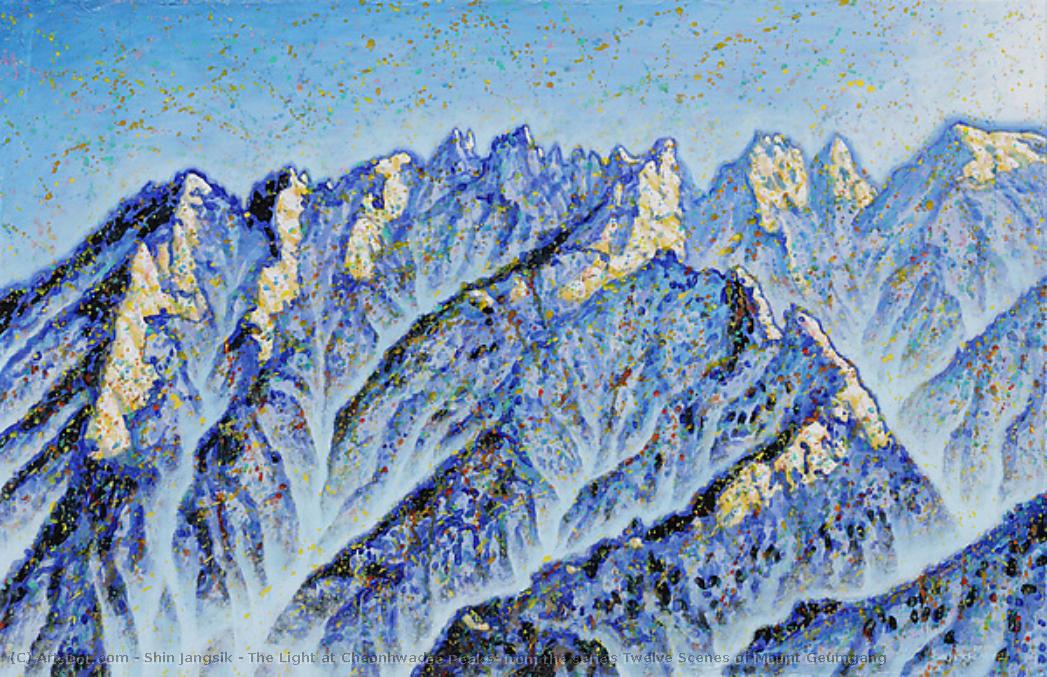
The Light at Cheonhwadae Peaks, from the series Twelve Scenes of Mount Geumgang
 2014
2014 64.0 x 98.0 cm
 Read More
Hand Made Oil Reproduction
Hand-painted oil on canvas in your size and frame, made to order by our artists. ( Buy Print Buy Image)




































Pick from our preset sizes that match the artwork's original proportions.

You may enter your own dimensions to fit a specific frame or space. If your selected size does not match the original image's proportions, we will either crop the artwork or extend the painting with additional hand-painted elements. A digital mockup will be sent for your approval before production begins.
Please note that the on-screen preview does not reflect the actual cropping or extension. Only the mockup will accurately show the final composition.
While custom sizes are available, we recommend selecting a dimension from the predefined list to preserve the original proportions.
After order, ArtsDot.com team will email client for instructions and provide a mockup preview
Worldwide Delivery () in 3/4 weeks instead of standard 5 weeks. (27 August). No compromise on quality.

Free Worldwide Express Shipping

High-Quality Linen Canvas

Full Shipping Insurance

Customs Tax Refund Guarantee

True Color Matching Guarantee

60-Day Return Policy (Defects Only)

100% Money-Back Guarantee

Bulk Discount Offer
 Glass option is only available in size under 110 CM

The Light at Cheonhwadae Peaks, from the series Twelve Scenes of Mount Geumgang
Reproduction Medium
Reproduction Size
-


Total Price
$ 263
Artwork Description
Related Artworks









Artist Biography
Shin Jangshik: Painting the Soul of Mount Geumgang
Shin Jangshik, born in Seoul, South Korea, in 1959, is a profoundly dedicated painter and printmaker whose artistic life has been almost entirely consumed by capturing the majestic Diamond Mountains (Geumgangsan). This singular focus, spanning over four decades, has resulted in a body of work that’s both intensely personal and remarkably resonant with Korean identity and landscape tradition. Initially trained in Western techniques, Jangshik's distinctive style is deeply rooted in the Kanō School of Japanese painting – a lineage known for its dramatic use of strong outlines, bold colors, and lavish application of gold leaf, creating an immediate visual impact of power and luxury. However, he skillfully blends these influences with a distinctly Korean sensibility, resulting in a unique artistic voice that speaks to the spirit of his homeland.Early Life and Artistic Foundations
Jangshik’s formal training began at Kookmin University, where he earned both a BFA (1984) and an MFA (1982). This academic grounding provided him with a solid foundation in traditional Korean art while simultaneously exposing him to broader artistic principles. Crucially, his early exposure to Western painting techniques – particularly acrylics – proved pivotal in shaping his distinctive approach. He wasn’t simply replicating the landscape; he was actively interpreting it through a lens of both Eastern and Western aesthetics. His decision to focus almost exclusively on the Diamond Mountains began in the early 1990s, driven by a deep connection to this iconic Korean range. Interestingly, Jangshik began painting the mountains before ever physically visiting them, demonstrating an initial engagement fueled by imagination and research.The “Twelve Scenes of Mount Geumgang” Series
Jangshik’s most celebrated work undoubtedly lies within the "Twelve Scenes of Mount Geumgang" series (금강산 12경). This ambitious project, completed in 2014, represents a culmination of his lifelong dedication to capturing the essence of the Diamond Mountains. Each painting meticulously depicts a different location within the range, rendered during the four distinct seasons. The series is not merely a topographical record; it’s an emotional and spiritual exploration of the mountains' profound significance to Korean culture. The centerpiece of this series, “The Light at Cheonhwadae Peaks,” gained particular recognition, notably being featured as a backdrop for the inter-Korean summit in 2018 – a powerful symbol of hope and reconciliation. The use of acrylic on canvas (and sometimes Korean mulberry paper) allows him to capture the vibrant light and atmosphere with remarkable intensity.Technique and Influences
Jangshik’s artistic process is characterized by a deliberate blending of traditional and contemporary techniques. While he embraces the bold outlines, rich colors, and luxurious application of gold leaf reminiscent of the Kanō School, he also utilizes modern materials like acrylic paint. He frequently employs Korean mulberry paper alongside canvas, adding texture and depth to his works. This combination creates a visual richness that is both immediately engaging and subtly layered with historical reference. His work reflects an ongoing dialogue between tradition and innovation, resulting in a style that feels simultaneously ancient and contemporary. The influence of Chinese landscape painting is also evident in his compositions and color palettes, further enriching the complexity of his artistic vision.Recognition and Legacy
Shin Jangshik’s paintings are exhibited extensively throughout Korea and internationally, including prestigious institutions such as the National Museum of Korea and the Korean Art Museum Association. His work has been recognized for its technical mastery, emotional depth, and profound connection to Korean identity. He continues to inspire future generations of artists through his dedication to his craft and his unwavering focus on a single, compelling subject. The British Museum holds one of his works, demonstrating international recognition of his artistic merit. Jangshik’s legacy is not simply that of a painter; he's become a visual embodiment of the Diamond Mountains themselves – a symbol of Korean resilience, beauty, and cultural heritage.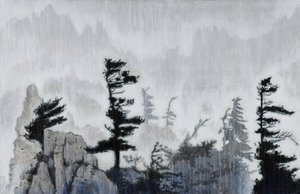
shin jangshik
1959 - , South Korea
Quick Facts
- Artistic Movement Or Style: Kanō School influence
- Artists Or Movements Influenced By This Artist: ['Japanese painting']
- Artists Who Influenced This Artist: ['Kanō School']
- Date Of Birth: 1959-08-23
- Full Name: Shin Jangshik
- Nationality: Korean
- Notable Artworks:
- The Light at Cheonhwadae Peaks
- Birds and Flowers of the Four Seasons
- Art of Japanese Paper
- Place Of Birth: Seoul, South Korea