 Preview
 Send
Send Share
Share
 Details

 Download
 Similars
 X-Ray
X-Ray Diaporama
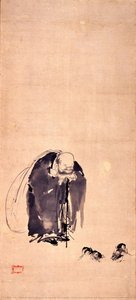
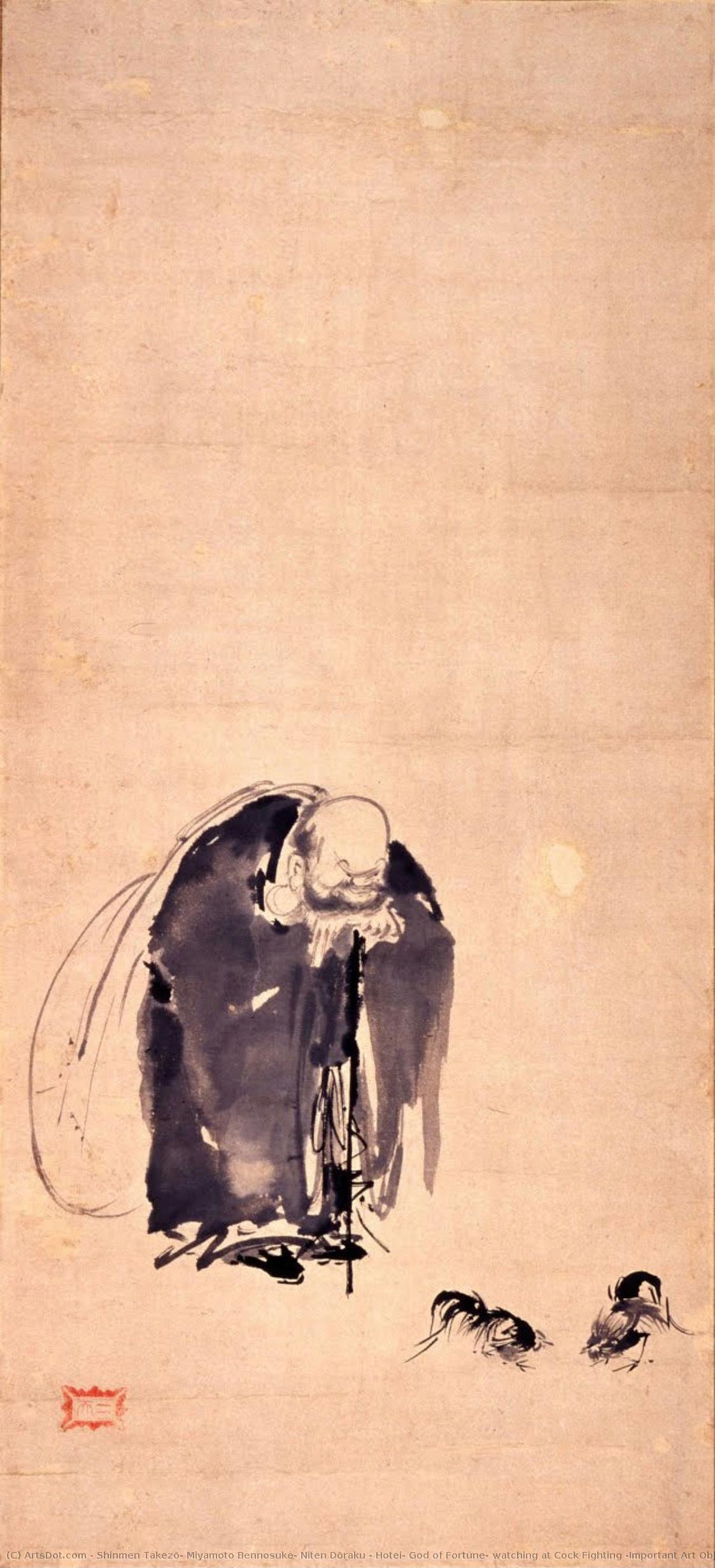
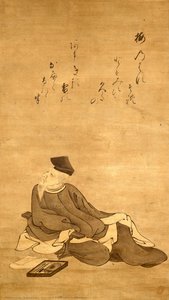
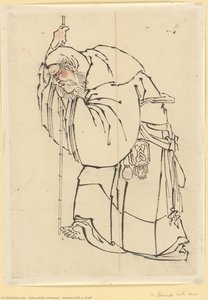
Hotei, God of Fortune, watching at Cock Fighting (Important Art Object)
 32.0 x 71.0 cm
 Fukuoka Art Museum
 Read More
Giclée / Art Print
Museum-quality giclée or canvas print with fast production and flexible finish options. ( Buy Hand Made Painting Buy Image)




































Pick from our preset sizes that match the artwork's original proportions.

You may enter your own dimensions to fit a specific frame or space. If your selected size does not match the original image's proportions, we will either crop the artwork or extend the image with a mirrored or solid-fill edge. A digital mockup will be sent for your approval before production begins.
Please note that the on-screen preview does not reflect the actual cropping or extension. Only the mockup will accurately show the final composition.
While custom sizes are available, we recommend selecting a dimension from the predefined list to preserve the original proportions.
Worldwide Delivery () in 2 weeks instead of standard 4/5 weeks. (5 September)

Free Worldwide Express Shipping

High-Quality Linen Canvas

Full Shipping Insurance

Customs Tax Refund Guarantee

True Color Matching Guarantee

60-Day Return Policy (Defects Only)

100% Money-Back Guarantee

Bulk Discount Offer
 Glass option is only available in size under 110 CM

Hotei, God of Fortune, watching at Cock Fighting (Important Art Object)
Giclée / Art Print
Reproduction Size
-


Total Price
$ 63
Related Artworks


Artist Biography
Shinmen Takezō, Miyamoto Musashi: The Sword Saint’s Legacy
Miyamoto Musashi – a name synonymous with unparalleled swordsmanship and a philosophy of relentless self-improvement – remains one of the most compelling figures in Japanese history. More than just a warrior, he was an artist, strategist, writer, and a profound thinker whose influence continues to resonate today. Born Shinmen Takezō in 1584 in Ōhara-chō, Mimasaka Province (modern Okayama Prefecture), his early life remains shrouded in some mystery, deliberately obscured by the man himself – a deliberate tactic designed to cultivate an aura of legend and mystique. His journey from a humble background to becoming recognized as a *kensei* – a sword saint – is a testament to his dedication, intellect, and unwavering pursuit of mastery.Early Years and the Crucible of Conflict
The precise details surrounding Musashi’s childhood are scarce, deliberately so. He himself offered only fragmented accounts in *The Book of Five Rings*, stating simply that he was born in Harima Province. What is known is that his father, Shinmen Munisai, was a respected martial artist and master of the *jutte* (a short sword used for thrusting), inheriting his skills from his own father, Hirata Shōgen, a vassal of the powerful Shinmen clan. This lineage instilled in Musashi a deep respect for tradition while simultaneously fueling a desire to forge his own path. His early life was marked by hardship and instability; he reportedly never bathed himself, believing it would diminish his awareness of his surroundings – a testament to his intense focus and heightened senses. Crucially, at the tender age of thirteen, Musashi engaged in his first duel against Arima Kihei, a swordsman practicing the Kashima Shintō-ryū style, emerging victorious. These early encounters weren’t merely displays of skill; they were rigorous training grounds, shaping his strategic thinking and honing his reflexes – laying the foundation for his later undefeated record.The Duels and the Rise of Legend
Musashi's reputation began to blossom as he embarked on a relentless circuit of duels across Japan. He systematically dismantled opponents from various schools and lineages, each victory adding another layer to his legend. These weren’t casual contests; they were meticulously planned engagements where Musashi employed not just physical prowess but also psychological warfare and innovative tactics. He faced formidable adversaries like Tadashima Akiyama at sixteen, and later, in Kyoto, he triumphed over three members of the prestigious Yoshioka family – a feat considered almost impossible at the time. His victory against Matashichiro Yoshioka, a thirteen-year-old prodigy, was particularly notable, showcasing his ability to anticipate and exploit an opponent’s weaknesses with ruthless efficiency. These duels weren't simply about defeating opponents; they were about testing himself, refining his skills, and solidifying his position as the foremost swordsman in Japan. The stories surrounding these encounters – often embellished over time – contributed significantly to the creation of the larger-than-life persona that Musashi cultivated.Artistic Vision: Beyond the Blade
While renowned for his martial prowess, Miyamoto Musashi was also a remarkably talented artist and calligrapher. His artistic style was deeply influenced by Kaiho Yusho, a prominent painter of the late Muromachi period, particularly in his use of bold brushstrokes and dynamic compositions. Simultaneously, he drew inspiration from Liáng Kǎi, a renowned Chinese calligrapher from the Southern Song Dynasty, evident in the elegant curves and flowing lines of his calligraphy. His paintings often depicted scenes from everyday life – cockfights, landscapes, and figures engaged in various activities – rendered with an unusual blend of realism and symbolic meaning. One particularly striking example is *Hotei*, the God of Fortune, watching a cockfight, currently housed at the Fukuoka Art Museum. This painting exemplifies Musashi’s unique approach: he wasn't simply depicting a scene; he was conveying a philosophical message through his artistic choices. His artwork provides a fascinating counterpoint to his martial life, revealing a mind equally adept at strategic thinking and aesthetic expression.The Book of Five Rings: A Treatise on Strategy and Philosophy
Perhaps Musashi’s most enduring legacy is *The Book of Five Rings* (Gorin no Sho), a philosophical treatise disguised as a manual for swordsmanship. Written in his later years, the book transcends its martial subject matter to offer profound insights into strategy, leadership, and self-discipline. It's not merely a guide to combat; it’s a meditation on life itself. Musashi emphasizes the importance of understanding one’s opponent, adapting to changing circumstances, and cultivating an unwavering spirit. He advocates for simplicity, directness, and a rejection of unnecessary complexity – principles that have resonated with business leaders, military strategists, and anyone seeking to master their craft. The book's enduring popularity is a testament to its timeless wisdom and Musashi’s ability to distill complex ideas into accessible language.Niten Dōraku: A Symbol of Unwavering Resolve
Musashi’s name, Niten Dōraku (二天道楽), literally translates to “Two Gods’ Pleasure,” reflecting his mastery of the twin-sword technique – *Niten Ichi-ryū*. This distinctive style, characterized by its speed, precision, and unorthodox movements, became synonymous with Musashi's unique approach to combat. Beyond the battlefield, Niten Dōraku has become a powerful symbol of unwavering resolve, self-mastery, and the pursuit of excellence – an enduring legacy etched in the annals of Japanese history.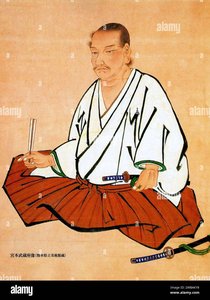
shinmen takezō, miyamoto bennosuke, niten dōraku
1584 - 1645 , Japan
Quick Facts
- Artistic Movement Or Style: Kensei (Sword Saint)
- Artists Or Movements Influenced By This Artist: ['Niten Ichi-ryū']
- Artists Who Influenced This Artist:
- Kaiho Yusho
- Liang Kai
- Date Of Birth: 1584
- Date Of Death: 1645
- Full Name: Shinmen Takezō, Miyamoto Bennosuke, Niten Dōraku
- Nationality: Japanese
- Notable Artworks: ['Hotei, god of fortune']
- Place Of Birth: Ōhara-chō, Japan