

 Preview
 Send
Send Share
Share
 Details

 Download
 Similars
 X-Ray
X-Ray Diaporama
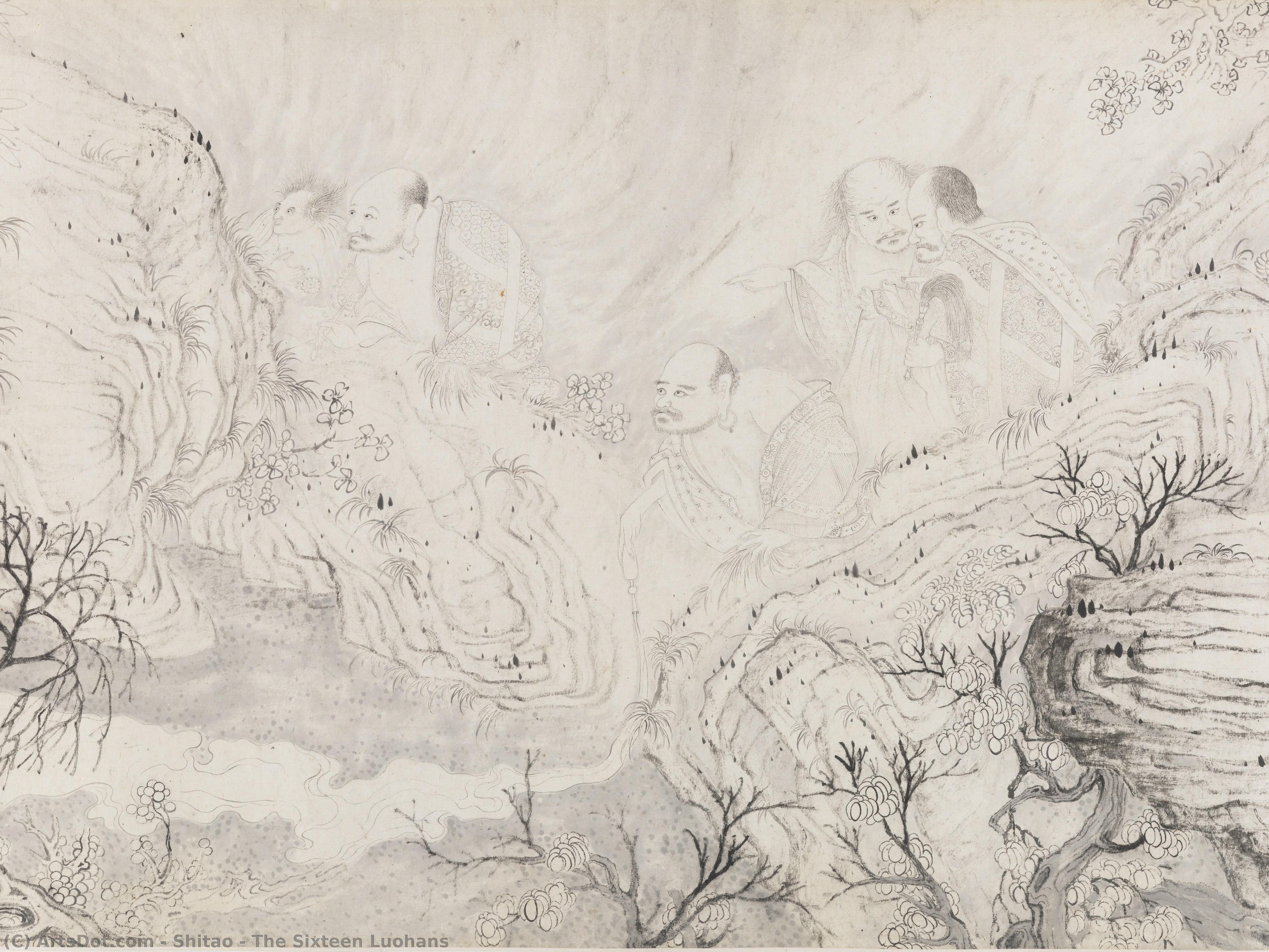
The Sixteen Luohans
 Chinese Landscape Painting
 1667
1667 46.0 x 599.0 cm
 Metropolitan Museum of Art
 Read More
Purchase a high-resolution, enhanced digital image, far superior to the online preview.
Each file is meticulously prepared by our in-house specialists using advanced tools and expert manual retouching. We ensure every image has exceptional clarity, precise color accuracy, and fine detail.
The final file is delivered via email within 72 hours, optimized for immediate use in professional, editorial, and print environments. This is the same quality trusted by top-tier design studios, publishers, and galleries.
Digital Image
Download a high-resolution file for personal display, printing, and creative projects. ( Buy Print Buy Hand Made Painting)
Included in Every Digital Image Order
Expert Digital Delivery, Guaranteed
When you choose ArtsDot.com, you're not just getting an image - you're receiving a professionally enhanced digital artwork, crafted with precision and backed by a satisfaction guarantee. Here's everything that comes with your order, automatically:

Fast Email Delivery
Your high-resolution digital image file will be emailed to you within 72 hours of ordering - ready for immediate use.

AI-Enhanced Digital File
Your artwork is professionally optimized using advanced AI tools and manual editing, ensuring maximum detail, clarity, and color accuracy.

Free Lifetime Re-Delivery
Accidentally deleted or lost your file? No worries - we'll resend it to you anytime, free of charge.

No Import Fees - Ever
Enjoy your artwork instantly with zero customs, duties, or delivery fees - digital downloads are always tax-free.

Color Accuracy Guarantee
We ensure your digital image reflects the original colors as closely as possible using professional tools and color management.

60-Day Satisfaction Guarantee
If you're not satisfied with your digital image, we'll revise it or refund 100% within 60 days - no questions asked.

100% Money-Back Guarantee
Not satisfied? Get a full refund within 60 days of receiving your digital file - no questions asked.

Bulk Order Discounts
Buy 3 images, save 10% - Buy 5, save 15% - Buy 10+, save 20%. Great for creative projects, galleries, and agencies.
Collectible Description
Related Artworks
Artist Biography
The Reclusive Genius: Shitao and the Art of Individual Expression
Shitao, a towering figure in the late Ming and early Qing dynasties, stands as one of China’s most individualistic and influential painters. Born into a prominent scholar-official family around 1642 – precise dates remain elusive, characteristic of his deliberately obscured personal history – Shitao navigated a period of immense upheaval and transition with an unwavering commitment to artistic self-expression. His life was deeply marked by the fall of the Ming dynasty in 1644, an event that profoundly shaped his worldview and fueled his rejection of conventional norms. Unlike many artists who sought patronage from the newly established Qing court, Shitao chose a path of deliberate seclusion, embracing a monastic lifestyle and dedicating himself to exploring the spiritual dimensions of landscape painting. This withdrawal wasn’t merely a political statement; it was an integral part of his artistic philosophy – a quest for authenticity unburdened by worldly expectations. He believed that true art stemmed from a direct connection with nature and an inner understanding of its rhythms, rather than adherence to established techniques or the demands of the market.A Lineage of Scholarship and Early Artistic Training
Shitao’s family background provided him with a rigorous education steeped in classical Chinese literature, philosophy, and calligraphy. His grandfather, Shitao's namesake, was a renowned painter himself, and his father continued the family tradition of artistic pursuit alongside their official duties. This early exposure to art undoubtedly laid the foundation for Shitao’s technical skills and aesthetic sensibilities. However, he quickly surpassed his predecessors, demonstrating an exceptional talent for capturing the essence of natural forms with remarkable fluidity and expressiveness. He initially studied in the Zhe School style, known for its meticulous brushwork and vibrant colors, but soon found it restrictive. The prevailing academic approach felt too contrived, lacking the spontaneity and emotional depth he sought. This dissatisfaction led him to explore a wider range of artistic influences, including the works of earlier masters like Ni Zan and Huang Gongwang, whose minimalist landscapes resonated with his own spiritual inclinations. He also absorbed elements from literati painting traditions, emphasizing personal expression and poetic sensibility over mere representational accuracy.The Development of a Unique Landscape Style
Shitao’s mature style is characterized by its bold simplicity, dynamic compositions, and evocative use of ink washes. He often employed dry brushwork to create textured surfaces that suggest the ruggedness of mountains and the weathered appearance of rocks. His landscapes are not depictions of specific locations but rather expressions of his inner state – reflections on the impermanence of life, the power of nature, and the search for enlightenment. A key element of his technique was the use of “one corner method,” where he would focus intensely on a single section of a landscape, leaving large areas of blank space to suggest vastness and mystery. This approach allowed him to convey a sense of depth and atmosphere with minimal means, inviting viewers to complete the image in their own minds. He also developed a distinctive system of brushstrokes known as “folding branches,” which created intricate patterns that resembled natural growth while simultaneously embodying his philosophical ideas about interconnectedness and transformation. His paintings are often imbued with poetic inscriptions, further enhancing their spiritual resonance and providing insights into his artistic intentions.Influences and Philosophical Underpinnings
Shitao’s art was deeply rooted in Chan (Zen) Buddhism, which he embraced wholeheartedly during his years of seclusion. The principles of Zen – emphasizing direct experience, intuition, and the rejection of intellectual constructs – profoundly influenced his artistic approach. He believed that painting should be a form of meditation, a way to transcend the limitations of the ego and connect with the ultimate reality. His landscapes often evoke a sense of stillness and tranquility, inviting viewers to contemplate the nature of existence. Beyond Zen Buddhism, Shitao was also inspired by Daoist philosophy, particularly its emphasis on harmony between humans and nature. He saw mountains as sacred spaces, embodying the energy of the universe and offering pathways to spiritual awakening.- Ni Zan: His minimalist landscapes influenced Shitao’s preference for simplicity.
- Huang Gongwang: Provided inspiration for his dynamic compositions and expressive brushwork.
- Chan Buddhism: Shaped his artistic philosophy, emphasizing intuition and direct experience.
- Daoism: Influenced his reverence for nature and the search for harmony.
Legacy and Historical Significance
Shitao’s impact on Chinese painting is immeasurable. He challenged conventional norms, rejected established hierarchies, and paved the way for a more individualistic and expressive style of landscape painting. His emphasis on personal experience and spiritual depth resonated with later generations of artists who sought to break free from academic constraints. Although he deliberately avoided seeking fame or fortune during his lifetime, his works were highly prized by connoisseurs and collectors after his death in 1707 (or possibly later). Today, Shitao is recognized as one of the “Four Wangs” – a group of influential painters who revitalized Chinese painting in the early Qing dynasty. His paintings are held in major museums around the world, and he continues to inspire artists and scholars with his profound vision and unwavering commitment to artistic integrity. He remains a symbol of rebellion against conformity and a testament to the power of art as a means of spiritual exploration.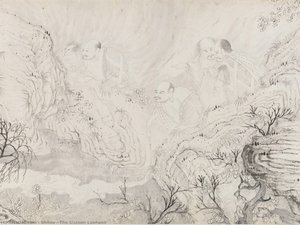
Quick Facts
- Artistic Movement Or Style: Zen Buddhism painting
- Date Of Death: Living
- Full Name: Shitao
- Nationality: Chinese
- Notable Artworks:
- Landscape after Ni Zan
- Eight Perspectives
- Turbid Stream
- Autumn Colors

