 Preview
 Send
Send Share
Share
 Details

 Download
 Similars
 X-Ray
X-Ray Diaporama
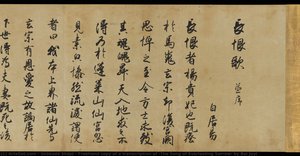
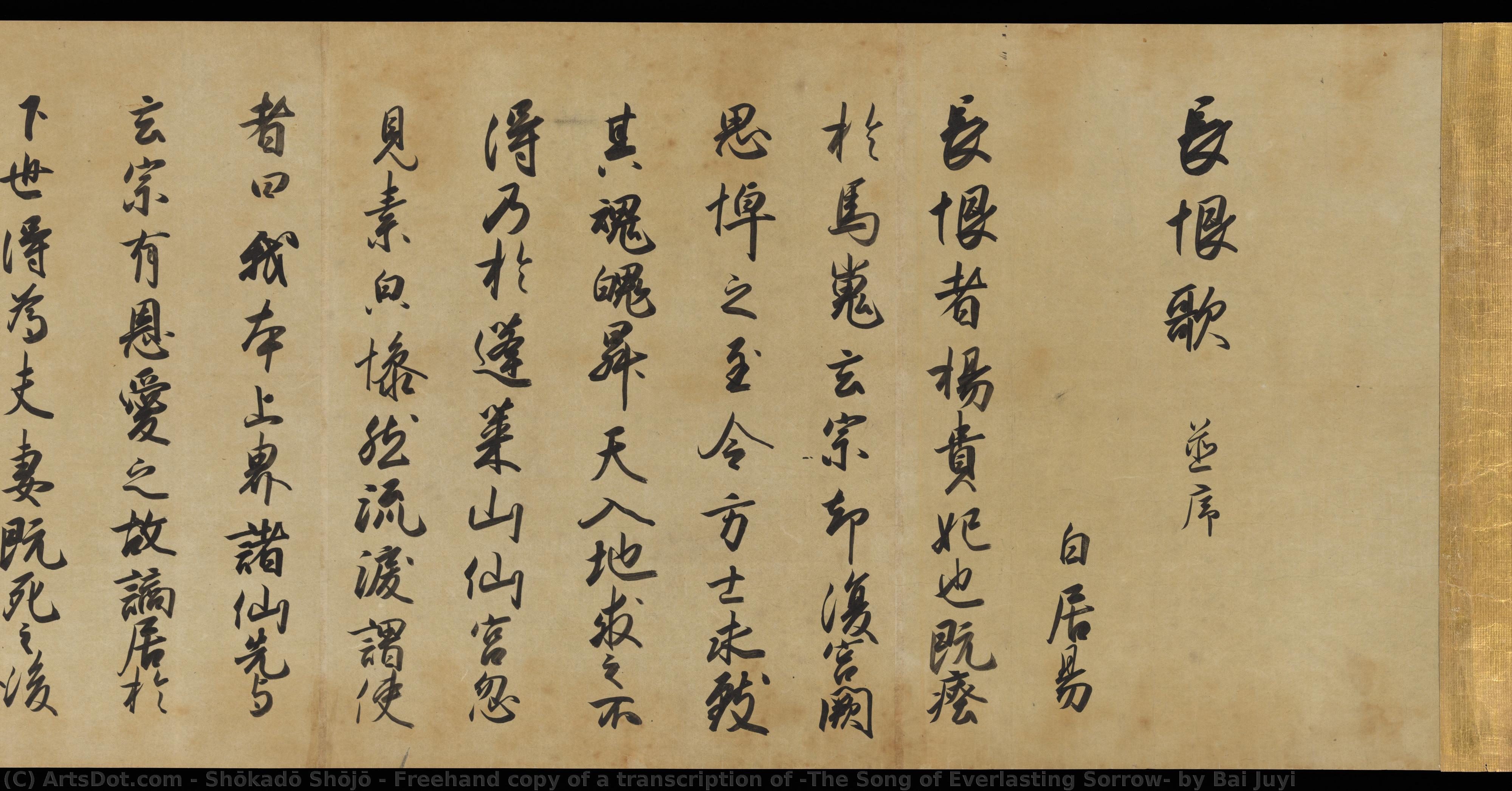
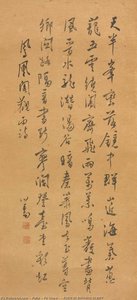
Freehand copy of a transcription of “The Song of Everlasting Sorrow” by Bai Juyi
 1614
1614 35.0 x 785.0 cm
 Read More
Giclée / Art Print
Museum-quality giclée or canvas print with fast production and flexible finish options. ( Buy Hand Made Painting Buy Image)




































Pick from our preset sizes that match the artwork's original proportions.

You may enter your own dimensions to fit a specific frame or space. If your selected size does not match the original image's proportions, we will either crop the artwork or extend the image with a mirrored or solid-fill edge. A digital mockup will be sent for your approval before production begins.
Please note that the on-screen preview does not reflect the actual cropping or extension. Only the mockup will accurately show the final composition.
While custom sizes are available, we recommend selecting a dimension from the predefined list to preserve the original proportions.
Worldwide Delivery () in 2 weeks instead of standard 4/5 weeks. (7 September)

Free Worldwide Express Shipping

High-Quality Linen Canvas

Full Shipping Insurance

Customs Tax Refund Guarantee

True Color Matching Guarantee

100-Day Return Policy (Defects Only)

100% Money-Back Guarantee

Bulk Discount Offer
 Glass option is only available in size under 110 CM

Freehand copy of a transcription of “The Song of Everlasting Sorrow” by Bai Juyi
Giclée / Art Print
Reproduction Size
-


Total Price
$ 63
Related Artworks



Artist Biography
early life and spiritual pursuits
shōjō shōkadō, a prominent figure in japan's edo period, was born in 1584 in the yamato province. his life took a significant turn when he entered the hachiman shrine on otoko-yama (yawata) near kyoto, where he received his buddhist name, shōjō. this marked the beginning of his spiritual journey as a buddhist monk.artistic pursuits and mastery
shōjō's artistic talents extended to painting, calligraphy, and mastery of the tea ceremony. he is notably recognized as one of the 'three brushes of the kan'ei period' (寛永三筆, kan'ei sanpitsu), a testament to his exceptional skill in the art world.artistic style and influences
shōjō's painting style was characterized by the use of monochromatic ink, influenced by the works of mu-ch’i fa-ch’ang and yin-t’o-lo, a 13th-century chinese monk-artist. his adherence to traditional japanese painting styles, such as yamato-e, further solidified his reputation as a versatile artist.notable works and legacy
though specific paintings by shōjō are not widely documented, his influence on the development of japanese art is undeniable. as part of the kanō school style art movement, his work contributed to the evolution of a distinctly japanese aesthetic.- explore shōjō shōkadō's profile on ArtsDot
- discover the ukiyo-e art movement, which influenced many japanese artists, including those from the kanō school.
- learn more about the new medievialism art movement, a contemporary movement inspired by medieval artistic techniques.
conclusion
shōjō shōkadō's legacy, though shrouded in mystery, remains an integral part of japan's rich cultural heritage. his contributions to the world of art and spirituality continue to inspire artists and scholars alike. important dates: - born: 1584, yamato province, japan - died: 1639 museum collections: though specific works by shōjō are not listed here, explore his profile on ArtsDot for more information on his artistic contributions.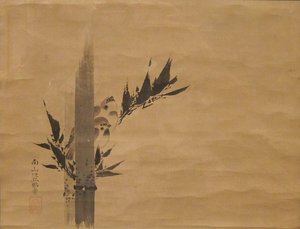
shōjō shōkadō
1584 - 1639 , Japan
Quick Facts
- Artistic Movement Or Style: Dutch Golden Age painting
- Artists Or Movements Influenced By This Artist: ['Later artists in Leiden']
- Artists Who Influenced This Artist:
- Jacques de Gheyn II
- Cornelius van der Voort
- Date Of Birth: 1584
- Date Of Death: 1657
- Full Name: David Bailly
- Nationality: Dutch
- Notable Artworks:
- Boy with a Basket of Fruit
- The Musicians
- Self-portraits
- Place Of Birth: Leiden, Netherlands