 Preview
 Send
Send Share
Share
 Details

 Download
 Similars
 X-Ray
X-Ray Diaporama
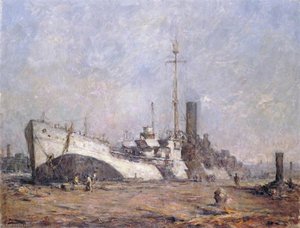
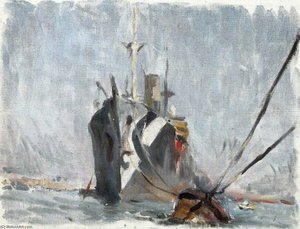
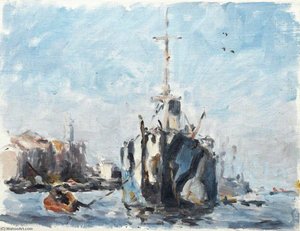
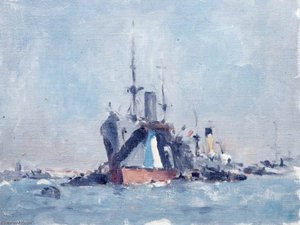
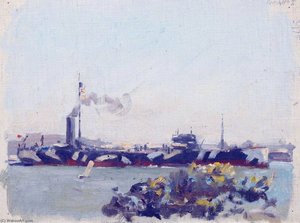
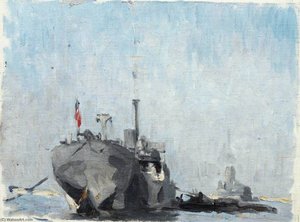
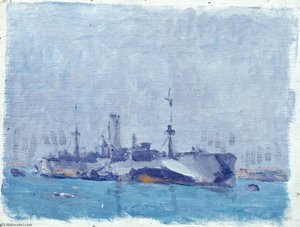
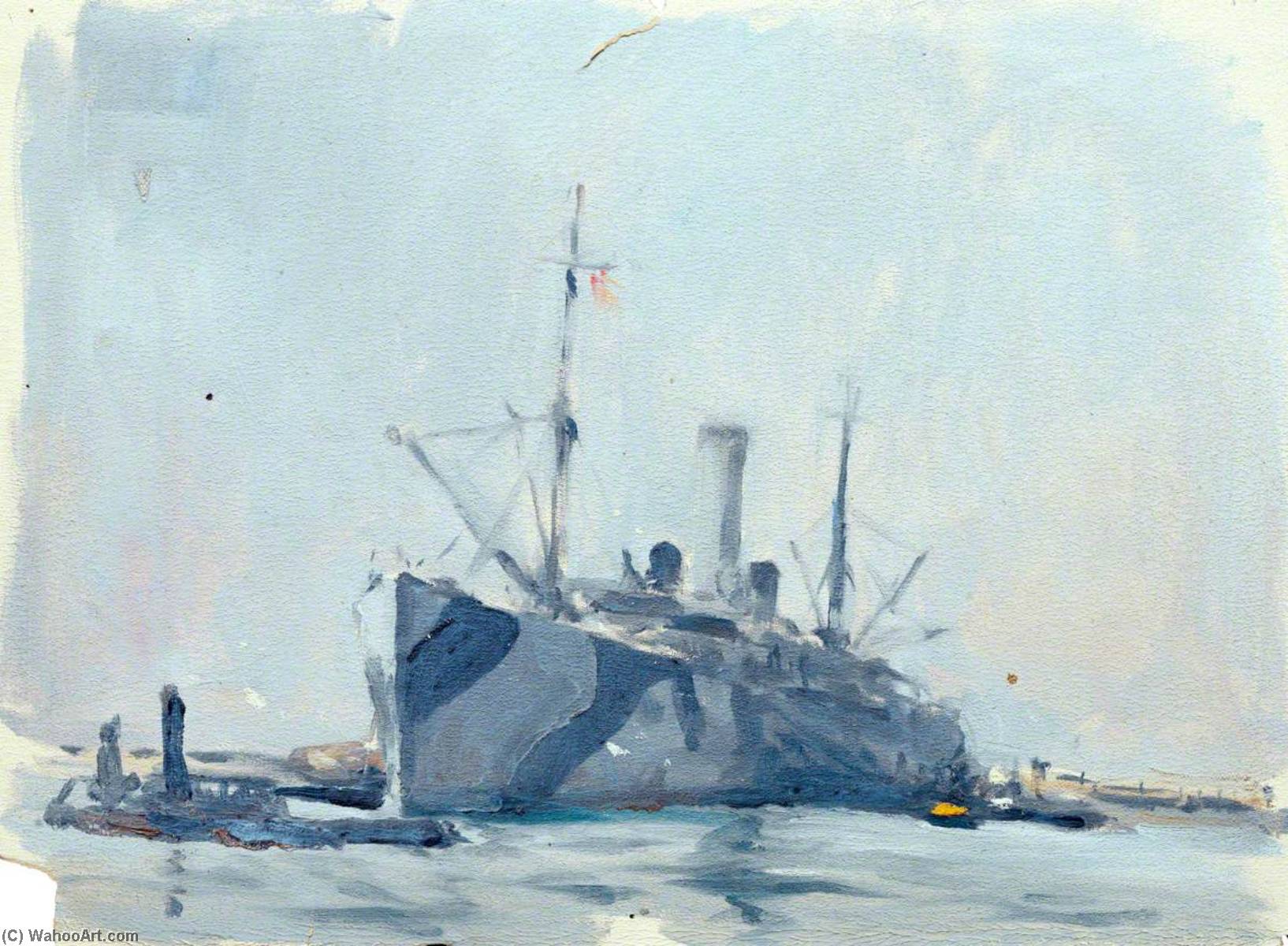
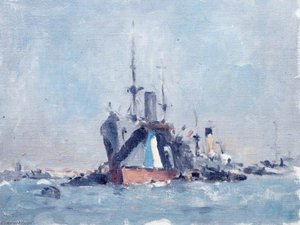
Dazzled Steamer and Tug
 1919
1919 30.0 x 41.0 cm
 Read More
Giclée / Art Print
Museum-quality giclée or canvas print with fast production and flexible finish options. ( Buy Hand Made Painting Buy Image)




































Pick from our preset sizes that match the artwork's original proportions.

You may enter your own dimensions to fit a specific frame or space. If your selected size does not match the original image's proportions, we will either crop the artwork or extend the image with a mirrored or solid-fill edge. A digital mockup will be sent for your approval before production begins.
Please note that the on-screen preview does not reflect the actual cropping or extension. Only the mockup will accurately show the final composition.
While custom sizes are available, we recommend selecting a dimension from the predefined list to preserve the original proportions.
Worldwide Delivery () in 2 weeks instead of standard 4/5 weeks. (21 August)

Free Worldwide Express Shipping

High-Quality Linen Canvas

Full Shipping Insurance

Customs Tax Refund Guarantee

True Color Matching Guarantee

60-Day Return Policy (Defects Only)

100% Money-Back Guarantee

Bulk Discount Offer
 Glass option is only available in size under 110 CM

Dazzled Steamer and Tug
Giclée / Art Print
Reproduction Size
-


Total Price
$ 63
Related Artworks









Artist Biography
Sholto Johnstone Douglas: A Highland Visionary
The canvases of Sholto Johnstone Douglas, a Scottish painter working primarily in the late 19th and early 20th centuries, offer a rare glimpse into the heart of the Highlands – not merely as picturesque landscapes, but as imbued with a profound sense of history, atmosphere, and subtle emotional resonance. Born Robert Sholto Johnstone Douglas in Edinburgh in 1871, he was a member of the aristocratic Queensberry family, a lineage deeply intertwined with Scottish identity and tradition. His upbringing within this prominent clan instilled in him a reverence for his homeland’s rugged beauty and its complex social fabric – themes that would become central to his artistic vision.
Douglas's early life was marked by exposure to both the formal arts and the practicalities of Highland life. He received instruction at the Slade School of Fine Art in London, absorbing the influences of academic painting while simultaneously forging a distinctive style rooted in observation and personal experience. Crucially, his family connections provided access to a world of privilege and patronage, allowing him to travel extensively throughout Scotland and beyond, documenting its diverse landscapes and people. This combination of formal training and immersive fieldwork proved instrumental in shaping his unique artistic approach.
A Painter of Light and Shadow
Douglas’s technique is characterized by a masterful manipulation of light and shadow – a hallmark of the Impressionist movement, yet tempered with a distinctly Scottish sensibility. He eschewed bright, saturated colors in favor of muted tones, often employing a palette dominated by browns, greys, and ochres to capture the subtle shifts in illumination that define Highland weather and terrain. His brushwork is loose and expressive, conveying a sense of immediacy and spontaneity – as if he were attempting to capture fleeting moments of beauty before they vanished.
His subjects ranged from grand vistas of lochs and mountains to intimate portraits of Highlanders engaged in their daily lives. He was particularly adept at depicting the Highland way of life, capturing the stoicism, resilience, and deep connection to the land that characterized its inhabitants. His paintings are not simply representations of scenery; they are imbued with a palpable sense of place – transporting the viewer directly into the heart of the Scottish Highlands.
Notable Works and Influences
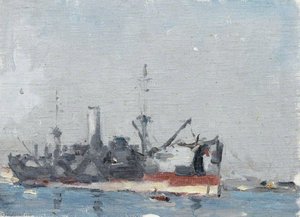
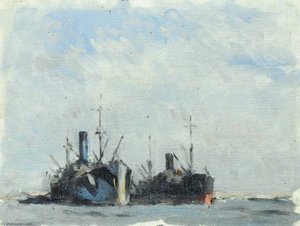
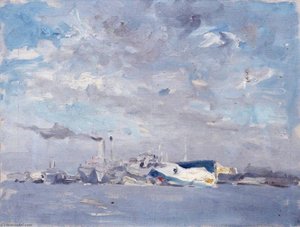
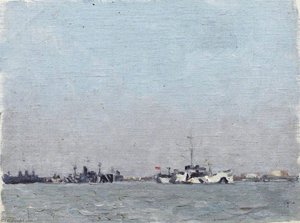
Among Douglas’s most celebrated works is “SS Ben Lomond” (1919), an evocative depiction of a storm-tossed freighter battling turbulent seas. This painting, now housed at the Imperial War Museum, showcases his ability to convey drama and tension through carefully observed details and dynamic composition. Similarly, "SS Lackawanna" (1919) captures the hazy atmosphere of a Mersey harbor scene with remarkable sensitivity.
Douglas’s artistic development was profoundly influenced by several key figures. His time at the Slade School exposed him to the principles of academic painting, while his travels throughout Europe – particularly in Paris and Antwerp – introduced him to the innovations of Impressionism and Post-Impressionism. However, he never fully embraced these movements, retaining a distinctly Scottish sensibility that set him apart from his European contemporaries. The influence of Whistler is often noted, particularly in his use of light and atmosphere.
A Legacy of Highland Art
Sholto Johnstone Douglas’s artistic legacy extends beyond the individual paintings he created. He played a significant role in documenting and preserving the cultural heritage of the Scottish Highlands, offering a valuable record of its landscapes, people, and traditions. His work continues to be exhibited and studied by art historians and collectors alike, cementing his place as one of Scotland's most important painters of the late 19th and early 20th centuries.
His connection with Oscar Wilde is also noteworthy; he stood surety for Wilde’s bail during his trial in 1895, a testament to their complex relationship. This anecdote adds another layer of intrigue to Douglas's life and work, suggesting that his artistic sensibilities were intertwined with the broader social and cultural currents of his time.
Further Exploration
For further information on Sholto Johnstone Douglas, consider visiting the following resources:
- Wikipedia: A comprehensive overview of his life and work.
- Douglas History Society: Detailed information about the Douglas family and their artistic legacy.
- Gerber Fine Art: An online gallery featuring a selection of his paintings.
sholto johnstone douglas
1871 - 1958
Quick Facts
- Artistic Movement Or Style: Figurative painting
- Artists Or Movements Influenced By This Artist: ['Impressionism']
- Artists Who Influenced This Artist:
- Whistler
- Oscar Wilde
- Date Of Birth: December 3, 1871
- Date Of Death: March 10, 1958
- Full Name: Sholto Johnstone Douglas
- Nationality: Scottish
- Notable Artworks:
- SS Ben Lomond
- SS Lackawanna
- Cedric (White Star Liner)
- Place Of Birth: Edinburgh, Scotland