 Preview
 Send
Send Share
Share
 Details

 Download
 Similars
 X-Ray
X-Ray Diaporama
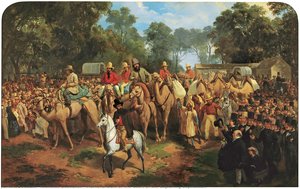
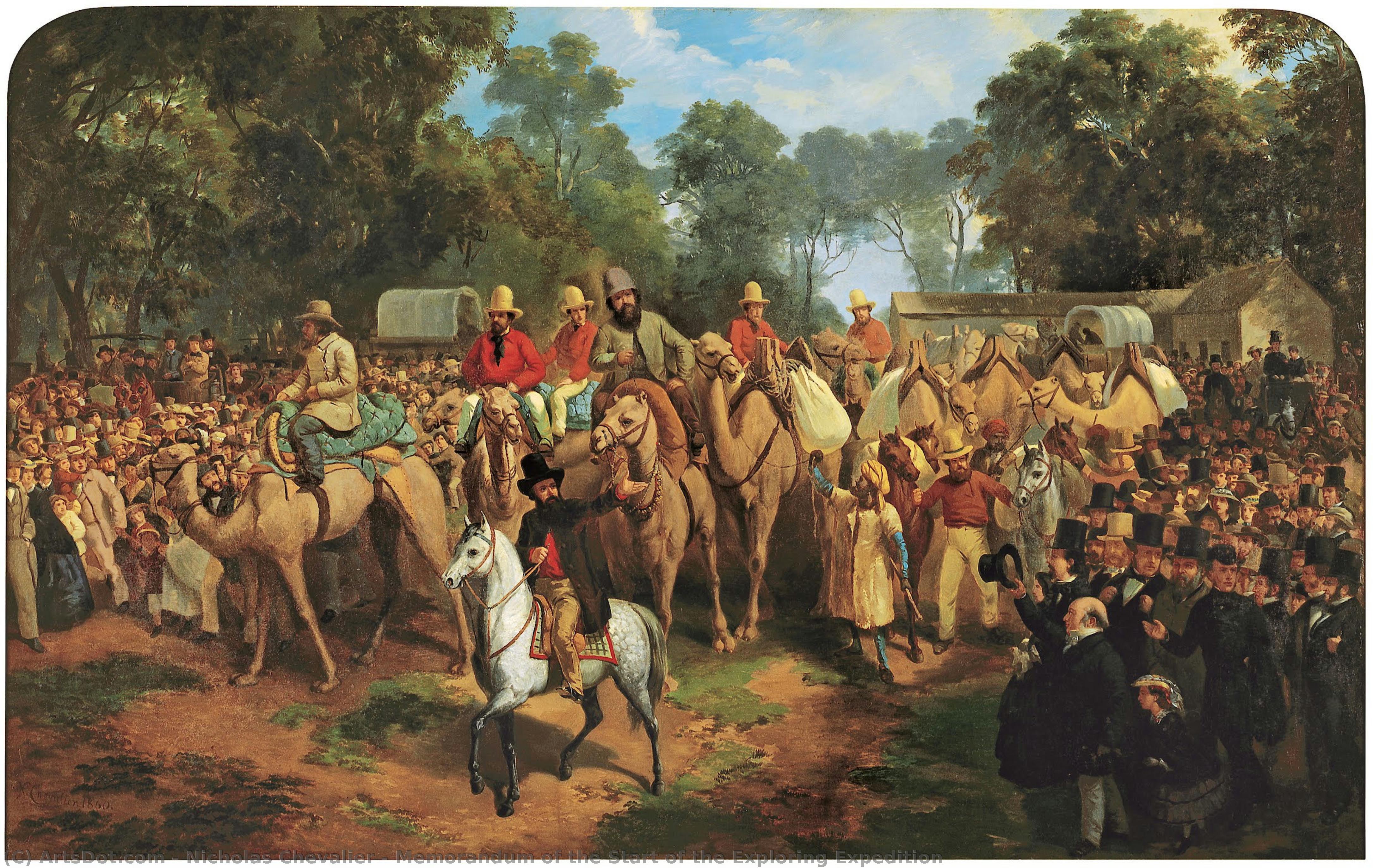
Memorandum of the Start of the Exploring Expedition
 Oil
Oil- WallArt
- Realism
 1860
1860- 19th Century
 153.0 x 97.0 cm
 Art Gallery of South Australia
 Read More
Hand Made Oil Reproduction
Hand-painted oil on canvas in your size and frame, made to order by our artists. ( Buy Print Buy Image)




P118B $10

P118H $10

P118W $10

P438Z $10

P508JH $12

P508YH $12

P805H $10

P805Z $10

P919BZ $10

P919G $10

P919XJ $10

P959ZH $10

P968JZ $12

W106C $8

W218G $10

W218JH $8

W218Y $10

W307PJ $10

W316G $10

W316PJ $8

W316Y $10

W398PJ $8

W4111J $10

W500HY $15

W500JH $15

W692G $12

W849H $8

W940BG $15

W953PJ $8




Pick from our preset sizes that match the artwork's original proportions.

You may enter your own dimensions to fit a specific frame or space. If your selected size does not match the original image's proportions, we will either crop the artwork or extend the painting with additional hand-painted elements. A digital mockup will be sent for your approval before production begins.
Please note that the on-screen preview does not reflect the actual cropping or extension. Only the mockup will accurately show the final composition.
While custom sizes are available, we recommend selecting a dimension from the predefined list to preserve the original proportions.
After order, ArtsDot.com team will email client for instructions and provide a mockup preview
Worldwide Delivery () in 3/4 weeks instead of standard 5 weeks. (17 August). No compromise on quality.

Free Worldwide Express Shipping

High-Quality Linen Canvas

Full Shipping Insurance

Customs Tax Refund Guarantee

True Color Matching Guarantee

60-Day Return Policy (Defects Only)

100% Money-Back Guarantee

Bulk Discount Offer
 Glass option is only available in size under 110 CM

Memorandum of the Start of the Exploring Expedition
Reproduction Medium
Reproduction Size
-


Total Price
$ 263
Artwork Description
A Journey Through Time: The Spirit of Exploration
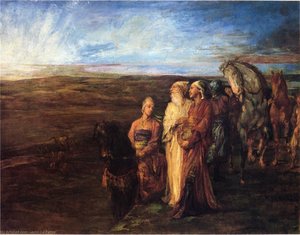
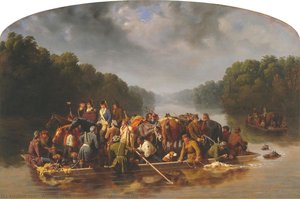
In the vast, sun-drenched expanse of the mid-19th century landscape, Nicholas Chevalier captures more than just a moment in time; he captures the very essence of human ambition. Memorandum of the Start of the Exploring Expedition serves as a breathtaking window into an era defined by discovery and the relentless pursuit of the unknown. The painting presents a sweeping historical tableau where a group of intrepid travelers, mounted on sturdy horses, prepares to venture into the arid heart of the desert. There is a palpable sense of anticipation held within the brushstrokes, as if the dust kicked up by the hooves carries the weight of destiny itself. Through his masterful composition, Chevalier invites the viewer to step alongside these pioneers, feeling the heat of the sun and the quiet tension that precedes a great undertaking.
The technical prowess of Chevalier is on full display in this 1860 masterpiece. Utilizing a rich, layered approach characteristic of his classical training in Munich and Lausanne, the artist employs a palette that breathes life into the desert terrain. The warm, earthy tones of the sand and scrubland are balanced by the subtle, atmospheric shifts in the horizon, creating a profound sense of depth and scale. Notice how the figures in the foreground—some adorned with formal ties and hats, others more ruggedly dressed—are rendered with a precision that allows their individual stories to emerge. The inclusion of a solitary dog near the center and a distant wagon adds layers of narrative texture, grounding the epic scale of the expedition in the intimate, everyday realities of life on the frontier.
Symbolism and the Call of the Wild
Beyond its literal depiction of an expedition, the artwork functions as a profound symbol of the colonial and exploratory spirit that shaped the nineteenth-century world. The desert, often viewed as a formidable adversary, is transformed by Chevalier into a stage for human courage. The movement of the riders, directed toward the unseen horizon, symbolizes the forward momentum of progress and the indomative human will. For the collector or interior designer, this piece offers a sophisticated narrative element; it is not merely a landscape, but a conversation piece about resilience and the romanticism of the frontier. The interplay between the organized group of men and the untamed wilderness creates a compelling tension that resonates deeply with anyone moved by the concept of adventure.
For those seeking to adorn a space with art that inspires contemplation and strength, this reproduction offers an unparalleled opportunity. Whether placed in a grand study, a library, or a contemporary living area, the painting brings a sense of historical gravity and warmth. The composition’s ability to command attention through its sweeping vistas and detailed character studies makes it a timeless addition to any curated collection. It serves as a reminder that every great journey begins with a single, determined step into the unknown, making it an evocative centerpiece for any home designed to celebrate history, culture, and the enduring beauty of the natural world.
Related Artworks
Artist Biography
early life and career
nicholas chevalier, a russian-born artist, left an indelible mark on the art world with his works in australia and new zealand. born on may 9, 1828, in st petersburg, russia, chevalier was the son of louis chevalier, who oversaw the estates of prince de wittgenstein in russia. his mother was russian. in 1845, nicholas left russia with his father, studying painting and architecture in lausanne, switzerland, and at munich.artistic journey
chevalier's artistic journey took him to london in 1851, where he worked as an illustrator in lithography and watercolour. his designs included a fountain erected in the royal grounds at osborne, and two of his paintings were showcased at the academy in 1852. further study in rome preceded his move to australia in late 1854.- mount arapiles, a painting from this period, is one of his most recognized pieces.
- he collaborated with lady barkly on a present for the princess of wales, featuring australian life icons.
- in 1864, his oil painting the buffalo ranges was selected by the national gallery of victoria, making it the first picture painted in australia to be included in the melbourne collection.
legacy and later life
chevalier's later life saw him commissioned by queen victoria to paint a picture of the duke of edinburgh's marriage. he made london his base, exhibiting at the academy from 1871 to 1887. though he practically gave up painting by 1895, his legacy endures.- nicholas chevalier married caroline wilkie in 1855, a relative of sir david wilkie.
- he spoke fluent french, english, russian, german, italian, and portuguese, and was an amateur musician.
- works by chevalier are held in public collections including the museum of new zealand te papa tongarewa, the dunedin public art gallery, and the national gallery of victoria.
explore more
for a deeper dive into chevalier's work, visit [https://ArtsDot.com/@/nicholas-chevalier](https://ArtsDot.com/@/nicholas-chevalier) to explore his paintings and learn more about his artistic journey. wikipedia also offers an in-depth look at his life and career: [https://en.wikipedia.org/wiki/nicholas_chevalier](https://en.wikipedia.org/wiki/nicholas_chevalier). discover the musée baron gérard (france) and its masterpieces, a must-visit destination for art lovers, showcasing works from prehistory to the 20th century: /en/art/show/art-d3cest-en/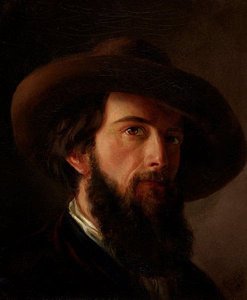
nicholas chevalier
1828 - 1902 , Russia
Quick Facts
- Artistic Movement Or Style: Victorian Art
- Artists Or Movements Influenced By This Artist: ['Romanticism']
- Artists Who Influenced This Artist: ['David Wilkie']
- Date Of Birth: May 9, 1828
- Date Of Death: 1902
- Full Name: Nicholas Chevalier
- Nationality: Russian
- Notable Artworks:
- Mount Arapiles
- The Buffalo Ranges
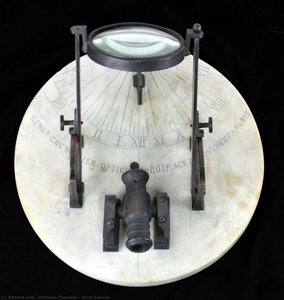
- Noon Cannon
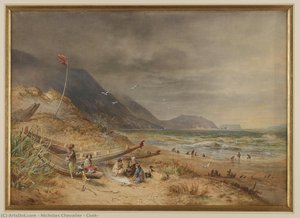
- Sketch at Maxwell
- Place Of Birth: Saint Petersburg, Russia
Related Articles
F.A.Q.: Urgent Orders - Expedited Service for Elite Collectors
Need art urgently? delivers exceptional quality & speed for elite collectors. Expedited oil painting commissions, secure global shipping & dedicated concierge service – experience the difference.
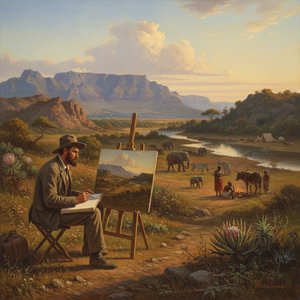
Thomas Baines: Pioneering Landscape Art & Visual Documentation of 19th-Century Southern Africa
Explore the life & art of Thomas Baines, a pioneering British explorer and artist who documented 19th-century Southern Africa & Australia. Discover his stunning landscapes, war paintings, and invaluable cartographic contributions.