 Preview
 Send
Send Share
Share
 Details

 Download
 Similars
 X-Ray
X-Ray Diaporama
Judith with the Head of Holofernes
 Oil
Oil- WallArt
- Italian Mannerism
 1580
1580- Early Modern
 100.0 x 111.0 cm
 Kunsthistorisches Museum
 Read More
Hand Made Oil Reproduction
Hand-painted oil on canvas in your size and frame, made to order by our artists. ( Buy Print Buy Image)




P118B $10

P118H $10

P118W $10

P438Z $10

P508JH $12

P508YH $12

P805H $10

P805Z $10

P919BZ $10

P919G $10

P919XJ $10

P959ZH $10

P968JZ $12

W106C $8

W218G $10

W218JH $8

W218Y $10

W307PJ $10

W316G $10

W316PJ $8

W316Y $10

W398PJ $8

W4111J $10

W500HY $15

W500JH $15

W692G $12

W849H $8

W940BG $15

W953PJ $8




Pick from our preset sizes that match the artwork's original proportions.

You may enter your own dimensions to fit a specific frame or space. If your selected size does not match the original image's proportions, we will either crop the artwork or extend the painting with additional hand-painted elements. A digital mockup will be sent for your approval before production begins.
Please note that the on-screen preview does not reflect the actual cropping or extension. Only the mockup will accurately show the final composition.
While custom sizes are available, we recommend selecting a dimension from the predefined list to preserve the original proportions.
After order, ArtsDot.com team will email client for instructions and provide a mockup preview
Worldwide Delivery () in 3/4 weeks instead of standard 5 weeks. (17 August). No compromise on quality.

Free Worldwide Express Shipping

High-Quality Linen Canvas

Full Shipping Insurance

Customs Tax Refund Guarantee

True Color Matching Guarantee

60-Day Return Policy (Defects Only)

100% Money-Back Guarantee

Bulk Discount Offer
 Glass option is only available in size under 110 CM

Judith with the Head of Holofernes
Reproduction Medium
Reproduction Size
-


Total Price
$ 263
Artwork Description
A Masterpiece of Venetian Drama and Devotion
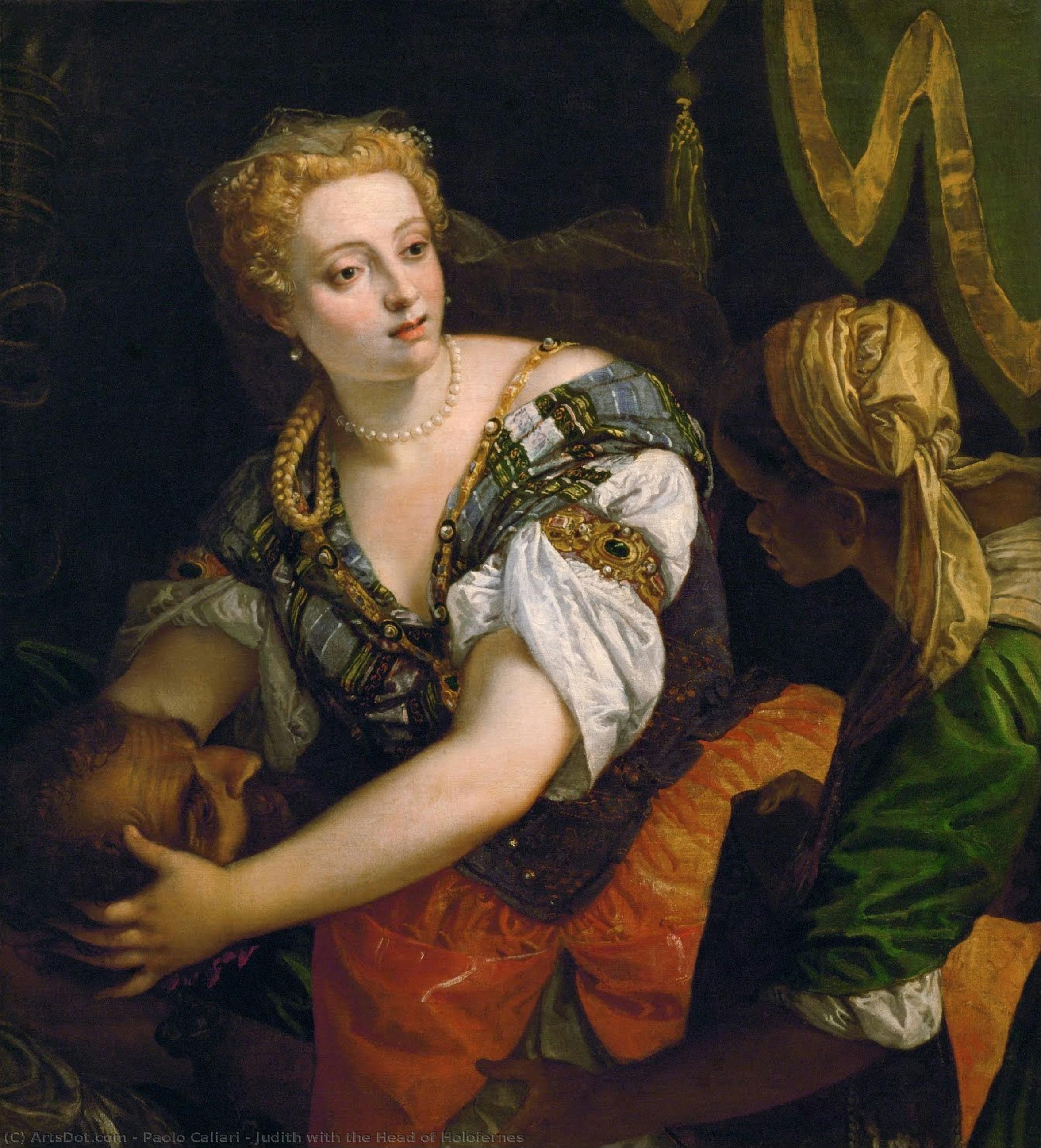
In the grand tradition of Venetian Mannerism, Paolo Caliari, universally known as Veronese, presents a scene of profound psychological tension and breathtaking opulence in Judith with the Head of Holofernes. Completed around 1580, this work is far more than a mere biblical illustration; it is a visceral exploration of courage and the heavy cost of victory. The painting captures the pivotal moment from the Old Testament where the widow Judith, driven by a divine mission to save her people, Bethulia, infiltrates the camp of the Assyrian general Holofernes. As she stands over the fallen conqueror, the canvas vibrates with the silent aftermath of a life-altering act of defiance.
The composition is a masterclass in chiaroscuro, where Veronese utilizes dramatic light and deep shadow to sculpt the figures within a richly ornamented chamber. The artist directs our gaze with surgical precision toward the severed head of Holofernes, using the darkness to heighten the macabre reality of the scene while simultaneously illuminating the regal splendor of Judith herself. This interplay of light does not merely provide depth; it serves as a narrative tool, pulling the viewer into the intimate, claustrophobic space of the assassination, making the historical event feel immediate and hauntingly present.
Chromatic Brilliance and Artistic Sophistication
To behold this painting is to witness Veronese’s signature chromatic brilliance. The palette is a luxurious tapestry of orange-reds, deep blues, and shimmering golds that reflect the aristocratic elegance of late 16th-century Venice. Judith’s garments are not merely clothing but symbols of her status and the gravity of her mission; the vibrant hues suggest a nobility that remains unbowed even in the face of violence. The meticulous detail in the textures—from the soft glow of pearls to the heavy folds of silk—demonstrates a level of technical virtuosity that makes this piece an essential study for any connoisseur of the Renaissance.
Beyond the surface beauty, there is a profound emotional complexity at play. Unlike many of his contemporaries who might have sought to glorify the triumph, Veronese imbues the scene with a sense of quiet contemplation and subtle unease. There is no jubilant celebration here; instead, we see a moment of heavy realization. This psychological depth makes the artwork particularly captivating for modern collectors and interior designers alike, as it offers a sophisticated focal point that invites long periods of reflection and conversation.
An Eternal Inspiration for Refined Interiors
For those seeking to infuse a space with historical gravity and artistic prestige, a high-quality reproduction of this masterpiece serves as an unparalleled centerpiece. The painting’s ability to command attention through its scale and dramatic intensity makes it ideal for grand halls, private libraries, or curated gallery walls. It brings with it the spirit of the Kunsthistorisches Museum, offering a window into the soul of Venetian history.
Integrating such a work into a contemporary or classical interior allows for a dialogue between the past and the present. The rich textures and bold color palette can anchor a room, providing a sense of permanence and cultural depth. Whether you are an art lover drawn to the narrative of Judith’s bravery or a designer looking for a piece that embodies dramatic elegance, Veronese’s work remains a timeless testament to the power of human emotion captured through the brush.
Related Artworks


Artist Biography
early life and training
paolo caliari, known as paolo veronese, was born in 1528 in verona, italy. he was the fifth child of a stonecutter, gabriele, and his wife caterina. veronese's early life was marked by his apprenticeship with antonio badile and later with giovanni francesco caroto, leading painters in verona.artistic style and influences
veronese developed a naturalist style of painting, influenced by the renowned artist titian. his work is characterized by its chromatic brilliance, splendor, and aristocratic elegance. despite being part of the "great trio" of venetian painters, veronese's work has been felt to lack expression of the profound, human, or sublime.notable works and museums
* the wedding at cana (1563) and the feast in the house of levi (1573) are two of veronese's most famous works, showcasing his mastery of color and large-scale narrative cycles. * the biblioteca nazionale marciana (venice, italy) features several of veronese's artworks, including plato and aristotele, both oil on canvas. * the museum san sebastiano (venice, italy) is home to veronese's view of the façade, a stunning example of his ability to capture light and shadow.legacy and admiration
despite being often considered the least appreciated by modern criticism, veronese has been admired by many great artists, including:- rubens
- watteau
- tiepolo
- delacroix
- renoir
- view veronese's artworks on ArtsDot.com
- learn more about veronese's life and work on wikipedia
selected paintings by paolo caliari
* the crucifixion (149 x 90 cm, museum of fine arts, budapest, hungary, oil on canvas) * view of the façade (san sebastiano, venice, italy) * plato and aristotele (biblioteca nazionale marciana, venice, italy, oil on canvas)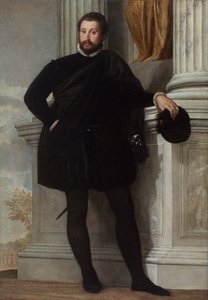
paolo caliari
1528 - 1588 , Italy
Quick Facts
- Artistic Movement Or Style: Venetian Renaissance
- Artists Or Movements Influenced By This Artist:
- Rubens
- Tintoretto
- Artists Who Influenced This Artist: Titian
- Date Of Birth: 1528
- Full Name: Paolo Caliari
- Nationality: Italian
- Notable Artworks:
- The Wedding at Cana
- The Feast in the House of Levi
- Place Of Birth: Verona, Italy
Related Articles
Paolo Veronese: A Renaissance Master of Color, Composition, and Venetian Splendor
Explore the vibrant world of Paolo Veronese, a Renaissance master renowned for his opulent compositions, masterful use of color, and dramatic Venetian scenes. Discover key artworks & legacy.

Crimson Threads of Narrative: Exploring Symbolism & Representation in Artworks Featuring the Red Dress
Explore the rich symbolism of the red dress in art history! From ancient power displays to iconic portraits like Cézanne’s 'Madame Cezanne', discover the cultural and artistic significance behind this captivating color. Expert analysis & insights.

Mark Rothko's Masterpieces: 25 Paintings That Define Abstract Expressionism | ArtsDot
Explore 25 iconic Mark Rothko paintings that define Abstract Expressionism. Discover the stories, colors & emotions behind these masterpieces. Find museum-quality art reproductions and curated decor ideas at ArtsDot.com.

Henri Matisse's Masterpieces: Explore 25 Iconic Paintings & Art Decor Ideas
Journey through Henri Matisse's 25 most iconic paintings! Explore Fauvism, vibrant colors & the stories behind masterpieces like 'The Dance'. Find museum-quality art reproductions and curated decor ideas to elevate your space. Discover all masterpieces on ArtsDot.com.

Jacopo Tintoretto's Masterpieces: 25 Paintings That Define Venetian Drama | ArtsDot
Explore 25 breathtaking masterpieces by Jacopo Tintoretto, the Venetian master of drama and light. Discover the stories behind iconic Renaissance paintings & find museum-quality art reproductions to elevate your home decor on ArtsDot.com.