

 Preview
 Send
Send Share
Share
 Details

 Download
 Similars
 X-Ray
X-Ray Diaporama
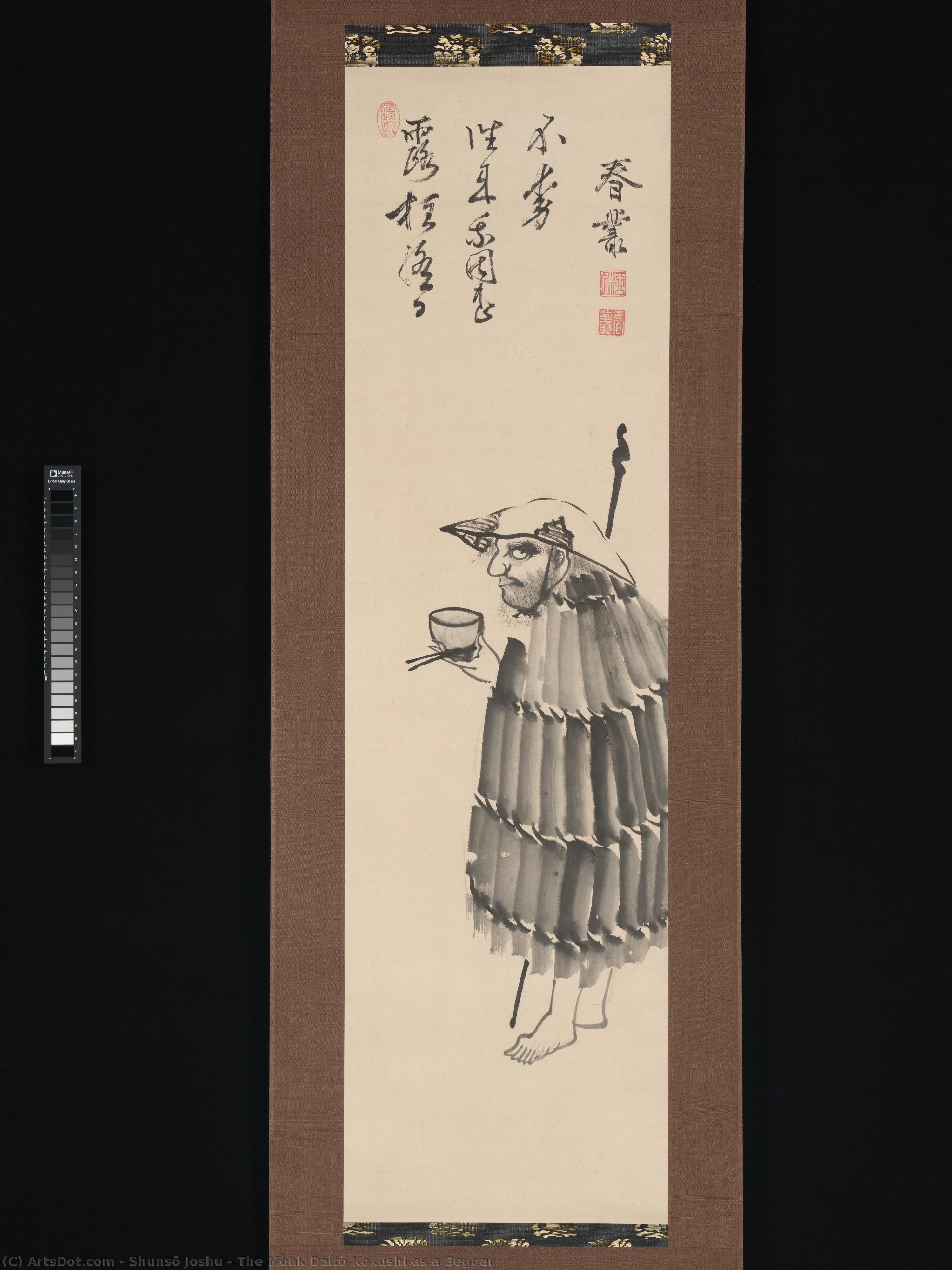
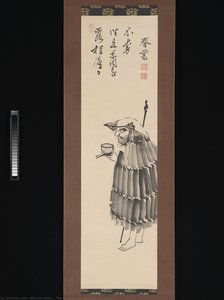
The Monk Daitō Kokushi as a Beggar
 801
801 99.0cm x 28.0cm
 Read More
Purchase a high-resolution, enhanced digital image, far superior to the online preview.
Each file is meticulously prepared by our in-house specialists using advanced tools and expert manual retouching. We ensure every image has exceptional clarity, precise color accuracy, and fine detail.
The final file is delivered via email within 72 hours, optimized for immediate use in professional, editorial, and print environments. This is the same quality trusted by top-tier design studios, publishers, and galleries.
Digital Image
Download a high-resolution file for personal display, printing, and creative projects. ( Buy Print Buy Hand Made Painting)
Included in Every Digital Image Order
Expert Digital Delivery, Guaranteed
When you choose ArtsDot.com, you're not just getting an image - you're receiving a professionally enhanced digital artwork, crafted with precision and backed by a satisfaction guarantee. Here's everything that comes with your order, automatically:

Fast Email Delivery
Your high-resolution digital image file will be emailed to you within 72 hours of ordering - ready for immediate use.

AI-Enhanced Digital File
Your artwork is professionally optimized using advanced AI tools and manual editing, ensuring maximum detail, clarity, and color accuracy.

Free Lifetime Re-Delivery
Accidentally deleted or lost your file? No worries - we'll resend it to you anytime, free of charge.

No Import Fees - Ever
Enjoy your artwork instantly with zero customs, duties, or delivery fees - digital downloads are always tax-free.

Color Accuracy Guarantee
We ensure your digital image reflects the original colors as closely as possible using professional tools and color management.

60-Day Satisfaction Guarantee
If you're not satisfied with your digital image, we'll revise it or refund 100% within 60 days - no questions asked.

100% Money-Back Guarantee
Not satisfied? Get a full refund within 60 days of receiving your digital file - no questions asked.

Bulk Order Discounts
Buy 3 images, save 10% - Buy 5, save 15% - Buy 10+, save 20%. Great for creative projects, galleries, and agencies.
Related Artworks






Artist Biography
The Enigmatic Brush of Shunsō Joshu
Shunsō Joshu remains a figure shrouded in the mists of Japanese art history, an artist whose life details are sparsely documented yet whose work speaks volumes about the transition between traditional and modern aesthetics. Born in Japan (the exact year is currently unknown), Joshu emerged during a period of rapid societal change, as the nation grappled with Westernization while simultaneously striving to preserve its cultural heritage. Unlike many artists who embraced new techniques wholesale, Joshu forged a unique path—one deeply rooted in classical Japanese painting styles, particularly those of the Rinpa school, yet subtly infused with an atmosphere that anticipates the psychological depth of 20th-century art. His surviving works suggest a deliberate and introspective approach, favoring intimate compositions over grand narratives.Early Influences and Artistic Development
The precise details of Joshu’s early training remain elusive. However, scholars believe he received instruction in traditional *sumi-e* (ink wash painting) techniques, mastering the delicate balance between brushstroke, ink density, and empty space—hallmarks of Zen Buddhist aesthetics. The influence of the Rinpa school is undeniable; his use of bold colors, stylized forms, and decorative patterns echoes the work of artists like Ogata Kōrin and Tawaraya Sōtatsu. Yet, Joshu’s palette often leans towards a more subdued tonality, creating an air of melancholy and refinement that distinguishes him from his predecessors. He wasn't merely replicating established styles; he was internalizing them, filtering them through a distinctly personal sensibility. This early period likely involved meticulous study of classical literature and poetry, as evidenced by the frequent inclusion of calligraphic elements in his paintings—often verses that subtly enhance the emotional resonance of the visual imagery.Themes and Techniques: A World of Symbolic Resonance
Joshu’s oeuvre is characterized by a recurring set of motifs: birds and flowers, landscapes imbued with atmospheric perspective, and depictions of everyday objects rendered with exquisite detail. However, these are not simply representational images. They function as vehicles for conveying deeper philosophical ideas—the transience of life (*mono no aware*), the beauty of imperfection (*wabi-sabi*), and the interconnectedness of all things. His technique is marked by a remarkable control of ink wash painting; he could achieve an astonishing range of tonal values with minimal brushwork, creating images that are both ethereal and intensely focused. He frequently employed *tarashikomi*, a technique involving layering washes of ink to create subtle gradations and textures. The use of gold leaf, inherited from the Rinpa tradition, is also prominent in many of his works, adding a touch of opulence and symbolic weight. His landscapes are particularly noteworthy, often depicting misty mountains or secluded gardens—spaces that invite contemplation and evoke a sense of spiritual solitude.Historical Significance and Legacy
While Shunsō Joshu did not achieve widespread recognition during his lifetime, his work has garnered increasing attention in recent decades as scholars reassess the artistic landscape of late 19th-century Japan. He occupies a unique position—bridging the gap between traditional Japanese painting and the burgeoning modern art movements that would emerge in the early 20th century. His subtle yet profound exploration of psychological themes, coupled with his mastery of classical techniques, anticipates the work of artists like Kayahara Yoshio and Uemura Shōen. Though biographical details remain scarce, Joshu’s paintings offer a compelling glimpse into the mind of an artist deeply attuned to the beauty and fragility of existence. His legacy lies not in revolutionary innovation but in a quiet refinement—a testament to the enduring power of tradition and the transformative potential of individual vision.- His work is held in several private collections, primarily within Japan.
- Scholarly research continues to uncover more about his life and artistic connections.
- He represents a crucial link between the Rinpa school and early modern Japanese painting.
Quick Facts
- Artistic Movement Or Style: Ukiyo-e
- Date Of Death: Living
- Full Name: Shunsō Joshu
- Nationality: Japanese
- Notable Artworks: ['None listed']

