 Preview
 Send
Send Share
Share
 Details

 Download
 Similars
 X-Ray
X-Ray Diaporama
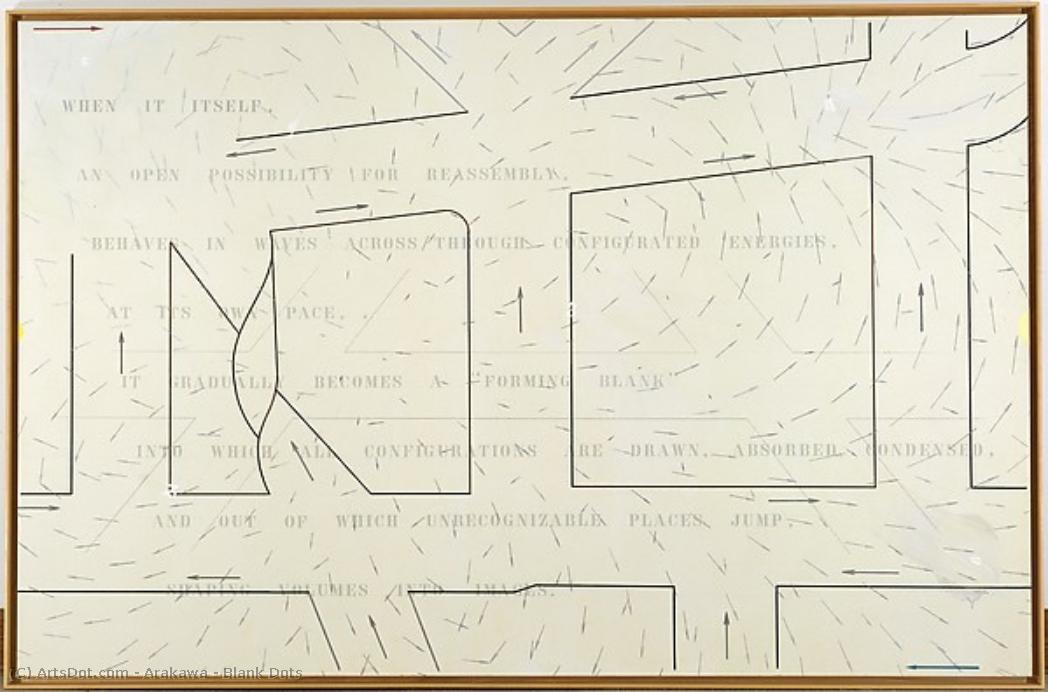
Blank Dots
 1982
1982 229.0 x 351.0 cm
 Read More
Hand Made Oil Reproduction
Hand-painted oil on canvas in your size and frame, made to order by our artists. ( Buy Print Buy Image)




































Pick from our preset sizes that match the artwork's original proportions.

You may enter your own dimensions to fit a specific frame or space. If your selected size does not match the original image's proportions, we will either crop the artwork or extend the painting with additional hand-painted elements. A digital mockup will be sent for your approval before production begins.
Please note that the on-screen preview does not reflect the actual cropping or extension. Only the mockup will accurately show the final composition.
While custom sizes are available, we recommend selecting a dimension from the predefined list to preserve the original proportions.
After order, ArtsDot.com team will email client for instructions and provide a mockup preview
Worldwide Delivery () in 3/4 weeks instead of standard 5 weeks. (18 August). No compromise on quality.

Free Worldwide Express Shipping

High-Quality Linen Canvas

Full Shipping Insurance

Customs Tax Refund Guarantee

True Color Matching Guarantee

60-Day Return Policy (Defects Only)

100% Money-Back Guarantee

Bulk Discount Offer
 Glass option is only available in size under 110 CM

Blank Dots
Reproduction Medium
Reproduction Size
-


Total Price
$ 263
Related Artworks
Artist Biography
A Life Disrupted: The Conceptual Vision of Shūsaku Arakawa
Shūsaku Arakawa, born in Nagoya, Japan, in 1936 and passing away in New York City in 2010, was an artist who dedicated his life to dismantling conventional perceptions. His journey wasn’t simply a progression through artistic styles but a sustained philosophical inquiry manifested through painting, sculpture, film, poetry, and ultimately, architecture. Arakawa's early experiences growing up in the aftermath of World War II profoundly shaped his worldview, instilling within him a questioning spirit that would become central to his art. Initially trained in traditional Japanese painting, he quickly felt constrained by its limitations, seeking instead a more radical means of expression—one capable of challenging fundamental assumptions about reality itself. This search led him to embrace the burgeoning currents of existentialism and phenomenology, philosophies that emphasized individual experience and the subjective nature of perception. A pivotal moment arrived with his arrival in New York in 1961, where an encounter with Marcel Duchamp proved deeply influential, encouraging Arakawa’s experimentation with conceptual approaches and a rejection of traditional artistic values.The Collaborative Universe: Arakawa & Gins
Arakawa's artistic trajectory underwent a transformative shift in 1963 with his meeting of Madeline Gins, an American poet and artist who would become not only his life partner but also his essential collaborator. Their partnership wasn’t merely one of shared studio space; it was the genesis of a unified intellectual project—a relentless exploration into the very mechanisms of meaning-making. Together, they embarked on “The Mechanism of Meaning,” a decades-long research endeavor aimed at deconstructing ingrained modes of perception and forging a new language for experiencing reality directly. This collaboration extended across diverse mediums, from paintings and films to poetry and architectural designs, all unified by their shared philosophical concerns. Their work consistently sought to disrupt established visual norms, employing unconventional materials and challenging viewers to question their assumptions about space, form, and the nature of existence itself. They weren’t interested in creating objects of beauty or representation; they aimed to provoke a cognitive shift, forcing audiences to actively participate in the construction of meaning.Reversible Destiny: Challenging Mortality Through Design
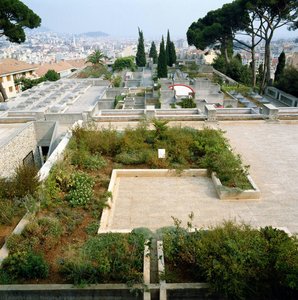
Central to Arakawa and Gins's artistic vision was the concept of “Reversible Destiny.” This wasn’t simply an aesthetic principle but a radical philosophical proposition—a belief that death isn’t an inevitable endpoint, but rather a construct shaped by our environment and habitual ways of thinking. They posited that through conscious design, particularly in architecture, it might be possible to disrupt these ingrained patterns and prolong life, not necessarily in years, but in the richness and intensity of experience. This idea found its most concrete expression in their architectural projects, notably the *Site of Reversible Destiny* in Mitaka, Japan. This complex structure is deliberately disorienting, featuring undulating floors, asymmetrical walls, and unexpected spatial arrangements—all designed to challenge habitual patterns of movement and perception. The intention wasn’t to create a comfortable or aesthetically pleasing space but rather to force inhabitants to be constantly aware of their bodies and surroundings, thereby disrupting the automatic routines that Arakawa and Gins believed contributed to physical and mental decline. Their co-authored books, *Making Dying Illegal* (2006) and *Architecture Against Death* (2007), articulated this radical vision with uncompromising clarity, outlining a future where architecture actively combats mortality.A Legacy of Disruption: Historical Significance
Shūsaku Arakawa’s work occupies a unique and challenging position within the history of 20th and 21st-century art. He was a true pioneer of conceptual art, pushing the boundaries of artistic practice and questioning the very definition of what art could be. His collaboration with Madeline Gins exemplified an interdisciplinary approach that seamlessly integrated art, architecture, philosophy, and science—a model for creative inquiry that continues to inspire artists and thinkers today. Despite facing financial hardships – including significant losses in the Bernie Madoff scandal – they remained steadfastly committed to their vision until Arakawa’s death in 2010. The Reversible Destiny Foundation, established in his memory, carries forward their ideas and architectural principles, ensuring that their legacy of disruption and innovation continues to resonate. Arakawa's enduring contribution lies not in providing answers but in relentlessly questioning the fundamental assumptions about life, death, and the human experience, prompting us to reconsider our relationship with the world around us and to imagine new possibilities for a more conscious and meaningful existence.Notable Works
- Another Cemetery (Series)
- The Mechanism of Meaning No.2 Splitting of Meaning
- Gentle Friend
- Blank Dots
- Site of Reversible Destiny
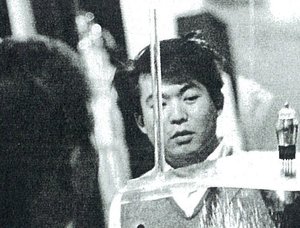
Shūsaku Arakawa
1936 - 2010 , Japan
Quick Facts
- Artistic Movement Or Style: Conceptual Art, Neo-Dada
- Artists Or Movements Influenced By This Artist: ['Conceptual Art']
- Artists Who Influenced This Artist: ['Marcel Duchamp']
- Date Of Birth: July 6, 1936
- Date Of Death: May 19, 2010
- Full Name: Shūsaku Arakawa
- Nationality: Japanese
- Notable Artworks:
- Another Cemetery
- Gentle Friend
- Blank Dots
- Site of Reversible Destiny
- Place Of Birth: Nagoya, Japan