 Preview
 Send
Send Share
Share
 Details

 Download
 Similars
 X-Ray
X-Ray Diaporama
 Stats
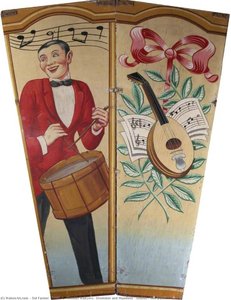
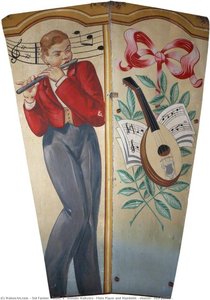
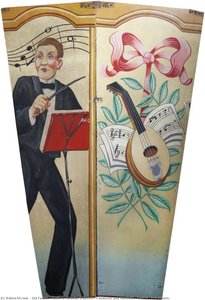
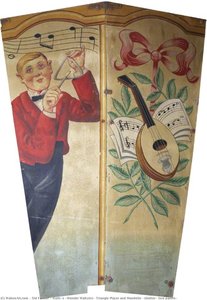
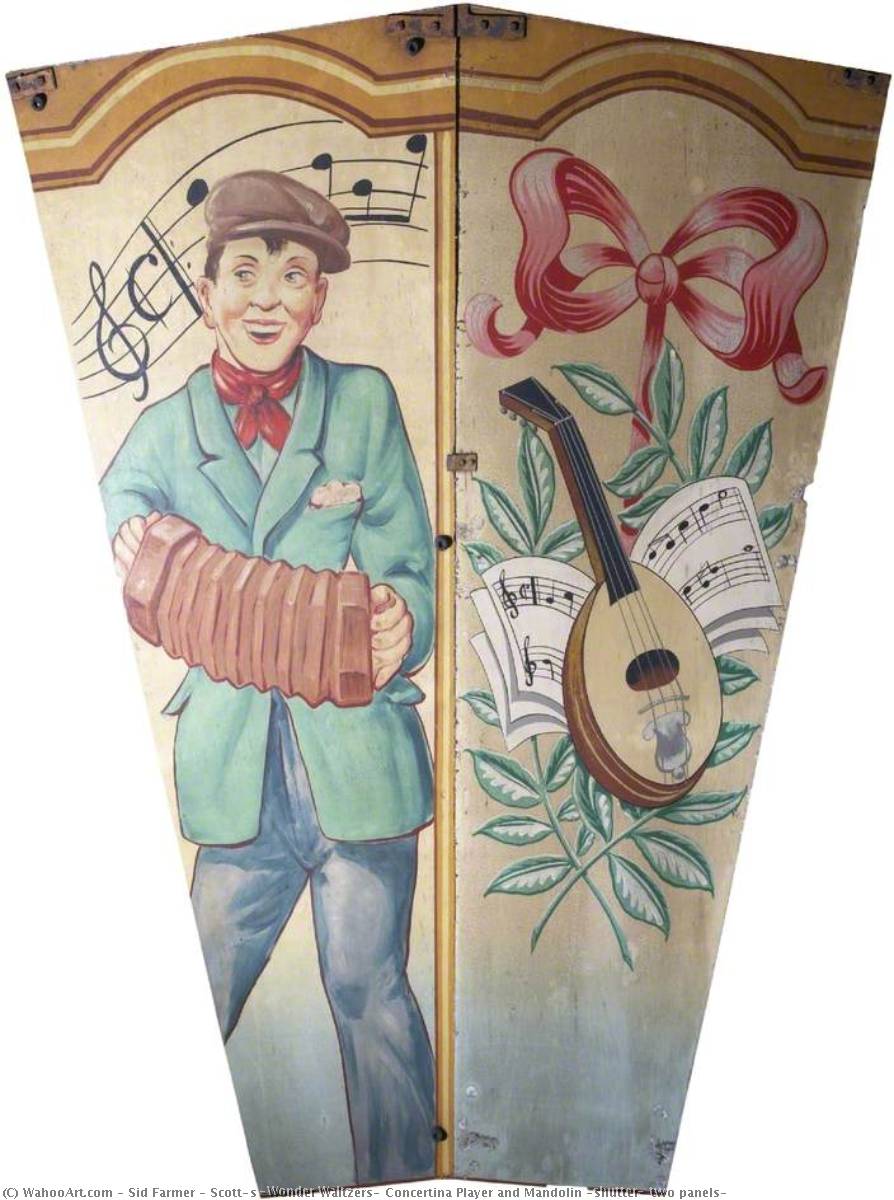
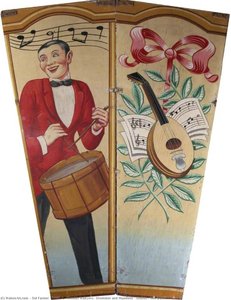
StatsScott's 'Wonder Waltzers' Concertina Player and Mandolin (shutter, two panels)
 1955
1955 180.0 x 80.0 cm
 The Dingles Fairground Heritage Centre
 Read More
Hand Made Oil Reproduction
Hand-painted oil on canvas in your size and frame, made to order by our artists. ( Switch to Print Switch to Digital Image)




































Pick from our preset sizes that match the artwork's original proportions.

You may enter your own dimensions to fit a specific frame or space. If your selected size does not match the original image's proportions, we will either crop the artwork or extend the painting with additional hand-painted elements. A digital mockup will be sent for your approval before production begins.
Please note that the on-screen preview does not reflect the actual cropping or extension. Only the mockup will accurately show the final composition.
While custom sizes are available, we recommend selecting a dimension from the predefined list to preserve the original proportions.
After order, ArtsDot.com team will email client for instructions and provide a mockup preview
Worldwide Delivery () in 3/4 weeks instead of standard 5 weeks. (7 September). No compromise on quality.

Free Worldwide Express Shipping

High-Quality Linen Canvas

Full Shipping Insurance

Customs Tax Refund Guarantee

True Color Matching Guarantee

100-Day Return Policy (Defects Only)

100% Money-Back Guarantee

Bulk Discount Offer
 Glass option is only available in size under 110 CM

Scott's 'Wonder Waltzers' Concertina Player and Mandolin (shutter, two panels)
Reproduction Medium
Reproduction Size
-


Total Price
$ 263
Related Artworks









Artist Biography
The Visionary of the Shutter: The Life and Legacy of Sid Farmer
In the flickering gaslight of the late nineteenth century, a new kind of eye began to emerge, one capable of capturing not just the static stillness of a portrait, but the very pulse of urban life. Sid Farmer, born circa 1863, was a pioneer of this movement, standing as a singular figure in the annals of photography. While his contemporaries often sought the quiet dignity of landscapes or the formal rigidity of studio portraiture, Farmer turned his lens toward the chaotic, dazzling, and deeply human atmosphere of the Victorian music halls. His work serves as a remarkable visual record of an era defined by spectacle, social interaction, and the burgeoning energy of London’s popular entertainment venues.
Farmer’s artistic journey was inextricably linked to the rapid evolution of photographic technology. He possessed a profound fascination with the emerging shutter camera, recognizing its potential to reproduce images with an unprecedented level of detail and temporal nuance. This technical curiosity led him to master the complex art of "shutter panoramas." Through this ambitious process, Farmer meticulously assembled multiple exposures onto a single sheet of paper, a technique that demanded immense technical prowess and artistic sensitivity. By precisely aligning and blending individual frames, he achieved a breathtaking illusion of depth and movement, creating composite images that felt less like static photographs and more like immersive experiences.
A Romantic Eye in a Mechanical Age
Though his medium was rooted in the mechanical precision of the camera, Farmer’s aesthetic soul was deeply influenced by the emotive power of classical art. The influence of Eugène Delacroix and the Romantic movement is palpable within his compositions. Much like the great French painter, Farmer sought to convey feeling rather than merely documenting reality. He utilized dramatic lighting and carefully orchestrated compositional arrangements to heighten the emotional impact of his scenes, ensuring that the viewer felt the swell of the music and the roar of the crowd. His work transcends simple documentation; it is an interpretation of atmosphere.
< p>This pursuit of emotion allowed him to bridge the gap between the burgeoning field of documentary photography and the expressive traditions of fine art. In his hands, the shutter was not just a tool for recording facts, but a brush for painting with light. His ability to capture the fleeting expressions of performers and the swirling energy of the audience transformed the music hall from a mere subject into a stage for profound human drama.The 'Wonder Waltzers' and Historical Significance
Farmer’s most celebrated achievement remains his series of works known as the 'Wonder Waltzers'. These pieces, often presented in two-panel formats, capture specific, vibrant moments of musical performance that have become iconic within the study of Victorian culture. His ability to freeze the motion of a flute player, a trumpeter, or a concertina player alongside the intricate details of their instruments provides an invaluable window into the past. Through these works, we gain glimpses into the costumes, the textures of the era, and the very spirit of Victorian London.
The historical significance of Sid Farmer’s oeuvre cannot be overstated. At a time when academic art circles often favored idealized and much more formal representations, Farmer embraced the dynamism and complexity of everyday life. His dedication to documenting the "low" culture of the music halls reflected a broader, transformative trend toward realism and social documentation. Today, his photographic legacy stands as a vital bridge between the technological innovations of the nineteenth century and the birth of modern visual storytelling, offering us a window into a world of vanished splendor.
Quick Facts
- Artistic Movement Or Style: Photography
- Full Name: Sid Farmer
- Nationality: British
- Notable Artworks: ['Wonder Waltzers']