

 Preview
 Send
Send Share
Share
 Details

 Download
 Similars
 X-Ray
X-Ray Diaporama
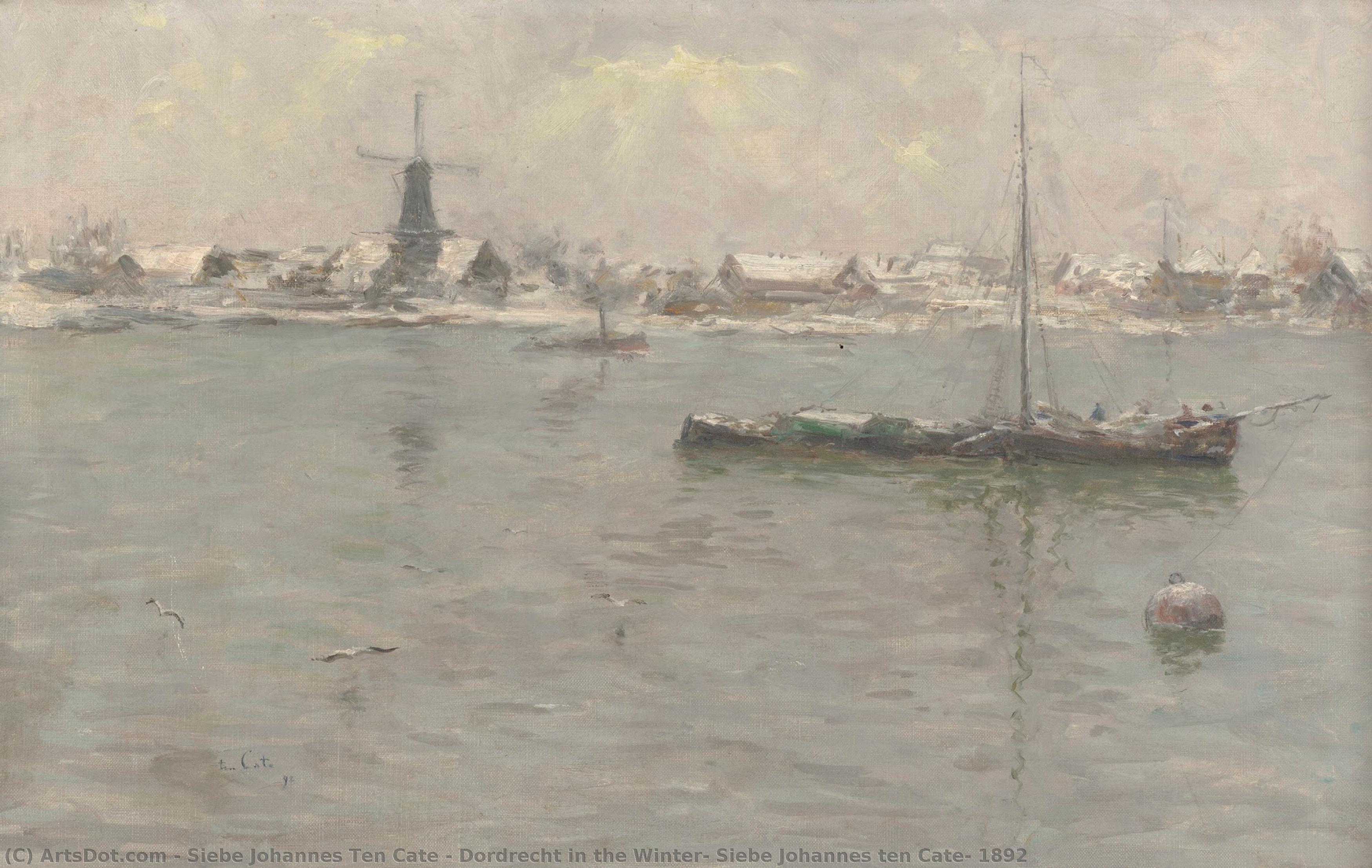
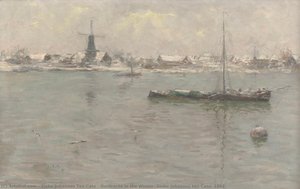
Dordrecht in the Winter, Siebe Johannes ten Cate, 1892
 1892
1892 38.0 x 61.0 cm
 Read More
Purchase a high-resolution, enhanced digital image, far superior to the online preview.
Each file is meticulously prepared by our in-house specialists using advanced tools and expert manual retouching. We ensure every image has exceptional clarity, precise color accuracy, and fine detail.
The final file is delivered via email within 72 hours, optimized for immediate use in professional, editorial, and print environments. This is the same quality trusted by top-tier design studios, publishers, and galleries.
Digital Image
Download a high-resolution file for personal display, printing, and creative projects. ( Buy Print Buy Hand Made Painting)
Included in Every Digital Image Order
Expert Digital Delivery, Guaranteed
When you choose ArtsDot.com, you're not just getting an image - you're receiving a professionally enhanced digital artwork, crafted with precision and backed by a satisfaction guarantee. Here's everything that comes with your order, automatically:

Fast Email Delivery
Your high-resolution digital image file will be emailed to you within 72 hours of ordering - ready for immediate use.

AI-Enhanced Digital File
Your artwork is professionally optimized using advanced AI tools and manual editing, ensuring maximum detail, clarity, and color accuracy.

Free Lifetime Re-Delivery
Accidentally deleted or lost your file? No worries - we'll resend it to you anytime, free of charge.

No Import Fees - Ever
Enjoy your artwork instantly with zero customs, duties, or delivery fees - digital downloads are always tax-free.

Color Accuracy Guarantee
We ensure your digital image reflects the original colors as closely as possible using professional tools and color management.

60-Day Satisfaction Guarantee
If you're not satisfied with your digital image, we'll revise it or refund 100% within 60 days - no questions asked.

100% Money-Back Guarantee
Not satisfied? Get a full refund within 60 days of receiving your digital file - no questions asked.

Bulk Order Discounts
Buy 3 images, save 10% - Buy 5, save 15% - Buy 10+, save 20%. Great for creative projects, galleries, and agencies.
Related Artworks
Artist Biography
Siebe Johannes ten Cate: A Parisian Impressionist Forged in Frisian Soil
Born in 1858 in the quiet Frisian town of Sneek, Netherlands, Siebe Johannes ten Cate’s artistic journey took him far from his homeland, ultimately establishing him as a significant figure within the vibrant Impressionist movement of late 19th-century France. While initially overshadowed by his contemporaries in the Netherlands, today, ten Cate is increasingly recognized for his evocative landscapes and cityscapes—a testament to his unique vision and enduring appeal. His life story is one of restless exploration, artistic evolution, and a persistent pursuit of capturing fleeting moments of light and atmosphere.
Ten Cate’s early life was steeped in the traditions of his family – his father, Jan ten Cate, a prominent tanner and later Mayor of Sneek, and his grandfather, Steven ten Cate, also held positions of civic leadership. This upbringing instilled in him a sense of discipline and an appreciation for the tangible world, qualities that would undoubtedly inform his artistic practice. He began his formal training at the Rijksakademie in Amsterdam, a prestigious institution known for its rigorous curriculum and emphasis on classical techniques. However, it was his subsequent studies in Antwerp and Brussels that truly ignited his passion for Impressionism, exposing him to the revolutionary ideas of artists like Monet, Pissarro, and Sisley.
In 1880, at the young age of twenty-two, ten Cate made a pivotal decision: he emigrated to Paris. This move proved transformative, catapulting him into the heart of the artistic capital and immersing him in an environment teeming with creative energy. He quickly established himself as a studio painter, diligently honing his skills and developing his distinctive style. His early Parisian years were marked by a close friendship with Kees van Dongen, a fellow artist known for his bold colors and striking portraits. The two briefly shared a home in Montmartre, a bohemian hub that epitomized the spirit of artistic innovation at the time. Van Gogh, a frequent visitor to Paris during this period, offered a succinct assessment of ten Cate: “a very neat man, completely dressed in black cloth,” – a description that hints at both his meticulousness and perhaps a certain reserved demeanor.
Ten Cate’s artistic output was remarkably diverse. He excelled at capturing the essence of landscapes—from the rolling hills of England to the rugged coastlines of Scandinavia, the snow-capped Alps, the North African deserts, and even the bustling harbors of Le Havre. His cityscapes were equally compelling, depicting scenes of urban life with a keen eye for detail and an appreciation for the interplay of light and shadow. Le Havre, in particular, became a favored subject, offering him endless opportunities to paint the harbor’s dynamic atmosphere and the silhouettes of ships against the sky. He wasn't solely focused on grand vistas; he also produced intimate street scenes and portraits, often populated with figures engaged in everyday activities.
Despite his frequent exhibitions at prestigious venues like the Salon d’Automne, ten Cate’s work never achieved the widespread recognition it deserved within the Netherlands. His paintings were appreciated more readily in France, where they resonated with a sensibility attuned to the nuances of Impressionism. This disparity contributed to a period of relative obscurity for the artist following his death in 1908, when he succumbed to “congestion” on a Parisian street – a cause that was later shrouded in unsubstantiated rumors of starvation or foul play. However, in recent years, ten Cate’s legacy has experienced a remarkable resurgence, fueled by a major retrospective at the Fries Scheepvaart Museum in 2012 and renewed scholarly interest.
The Palette and Technique of a Parisian Impressionist
Ten Cate's artistic style is characterized by a meticulous attention to detail combined with an expressive use of color and light. He was not simply replicating what he saw; rather, he was striving to capture the *impression* of a scene—the fleeting effects of sunlight, the subtle shifts in atmosphere, and the emotional resonance of a particular moment. His brushwork is typically loose and broken, creating a sense of movement and spontaneity. He employed a technique known as “broken color,” applying small dabs or strokes of pure pigment directly to the canvas, allowing them to blend optically when viewed from a distance.
His palette was remarkably restrained, favoring muted tones—grays, blues, greens, and browns—that he skillfully layered to create depth and luminosity. He frequently used complementary colors – such as blue and orange or red and green – to heighten the visual impact of his paintings. Ten Cate’s compositions are often asymmetrical, creating a dynamic sense of balance. He paid particular attention to capturing the effects of light on surfaces—the shimmering reflections on water, the dappled shadows cast by trees, and the warm glow of sunset.
Notable Works and Locations
Several of ten Cate’s paintings stand out as particularly compelling examples of his artistic skill. “Dordrecht in the Winter” (1892) offers a poignant depiction of a snow-covered cityscape, capturing the quiet beauty of a winter scene with remarkable precision. “Pont Neuf,” painted in Paris, showcases his ability to convey the atmosphere of a bustling urban environment. "Pont Royal at Sunset" is another iconic work, demonstrating his mastery of light and color. His series of paintings depicting Le Havre—including “On the Quay at Le Havre” – are particularly noteworthy for their vibrant portrayal of the harbor’s activity and its connection to the sea.
Beyond these specific works, ten Cate's travels provided him with a wealth of subject matter. His depictions of English landscapes, Scandinavian fjords, Swiss mountains, and North African deserts reflect his fascination with diverse environments and his ability to translate them onto canvas. He was particularly drawn to scenes of harbors and ports, capturing the energy and drama of maritime life.
Legacy and Rediscovery
For many years after his death, Siebe Johannes ten Cate’s work remained largely forgotten in the Netherlands. However, a major retrospective at the Fries Scheepvaart Museum in 2012 served as a catalyst for a renewed appreciation of his art. The exhibition sparked considerable interest among scholars and collectors, leading to a reassessment of his artistic contributions. Today, ten Cate is increasingly recognized as a significant figure within the Impressionist movement—a testament to his unique vision and enduring appeal.
The rediscovery of ten Cate’s work represents more than just a celebration of an overlooked artist; it also offers valuable insights into the history of art and the complexities of artistic recognition. His story serves as a reminder that even the most talented artists can be marginalized for reasons beyond their own merit, and that it is often through dedicated research and critical reevaluation that their true value can finally be revealed.
Siebe Johannes ten Cate
1858 - 1908 , Netherlands
Quick Facts
- Artistic Movement Or Style: Impressionism
- Artists Or Movements Influenced By This Artist: ['Impressionism']
- Artists Who Influenced This Artist:
- Kees van Dongen
- Van Gogh
- Date Of Birth: February 27, 1858
- Date Of Death: December 9, 1908
- Full Name: Siebe Johannes ten Cate
- Nationality: Dutch-Frisian
- Notable Artworks:
- Dordrecht in the Winter
- Pont Neuf
- Pont Royal at Sunset
- On the Quay at Le Havre
- Street Scene near Notre Dame
- Place Of Birth: Sneek, Netherlands

