

 Preview
 Send
Send Share
Share
 Details

 Download
 Similars
 X-Ray
X-Ray Diaporama
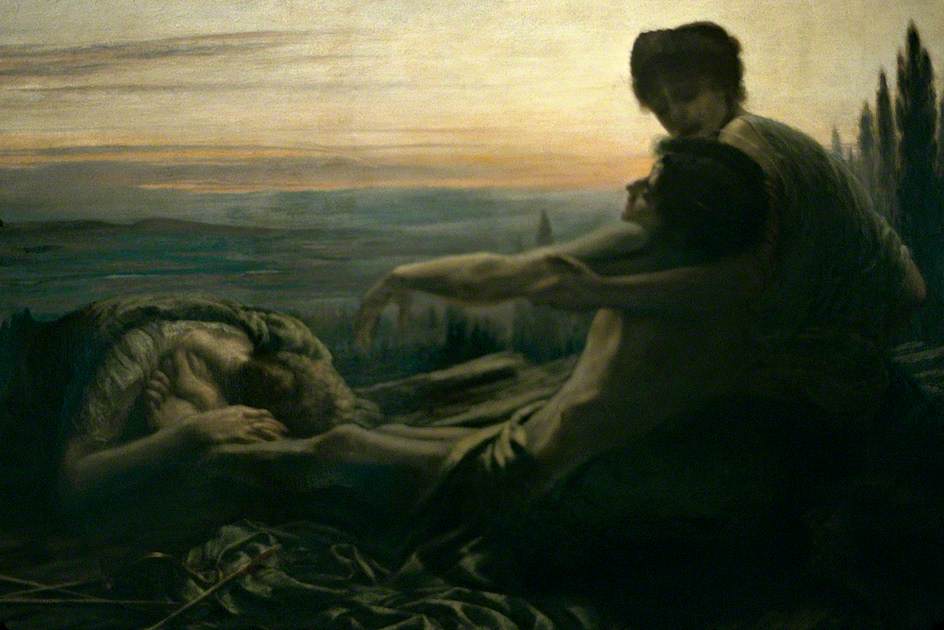
St Sebastian
 1894
1894 105.0 x 172.0 cm
 Read More
Purchase a high-resolution, enhanced digital image, far superior to the online preview.
Each file is meticulously prepared by our in-house specialists using advanced tools and expert manual retouching. We ensure every image has exceptional clarity, precise color accuracy, and fine detail.
The final file is delivered via email within 72 hours, optimized for immediate use in professional, editorial, and print environments. This is the same quality trusted by top-tier design studios, publishers, and galleries.
Digital Image
Download a high-resolution file for personal display, printing, and creative projects. ( Buy Print Buy Hand Made Painting)
Included in Every Digital Image Order
Expert Digital Delivery, Guaranteed
When you choose ArtsDot.com, you're not just getting an image - you're receiving a professionally enhanced digital artwork, crafted with precision and backed by a satisfaction guarantee. Here's everything that comes with your order, automatically:

Fast Email Delivery
Your high-resolution digital image file will be emailed to you within 72 hours of ordering - ready for immediate use.

AI-Enhanced Digital File
Your artwork is professionally optimized using advanced AI tools and manual editing, ensuring maximum detail, clarity, and color accuracy.

Free Lifetime Re-Delivery
Accidentally deleted or lost your file? No worries - we'll resend it to you anytime, free of charge.

No Import Fees - Ever
Enjoy your artwork instantly with zero customs, duties, or delivery fees - digital downloads are always tax-free.

Color Accuracy Guarantee
We ensure your digital image reflects the original colors as closely as possible using professional tools and color management.

60-Day Satisfaction Guarantee
If you're not satisfied with your digital image, we'll revise it or refund 100% within 60 days - no questions asked.

100% Money-Back Guarantee
Not satisfied? Get a full refund within 60 days of receiving your digital file - no questions asked.

Bulk Order Discounts
Buy 3 images, save 10% - Buy 5, save 15% - Buy 10+, save 20%. Great for creative projects, galleries, and agencies.
Related Artworks










Artist Biography
A Life Immersed in Sacred Vision: Sigismund Christian Hubert Goetze
Sigismund Christian Hubert Goetze (1866-1939) remains a compelling, though often overlooked, figure within the landscape of late 19th and early 20th century Hungarian painting. Born into an era defined by both burgeoning nationalism and profound spiritual questioning, Goetze dedicated his artistic life to exploring themes of religious devotion, human dignity, and the subtle nuances of portraiture. While biographical details surrounding his early years are scarce, it is clear that he received a solid academic training, likely within the established art institutions of Budapest or Vienna – centers of artistic activity in the Austro-Hungarian Empire. This foundation equipped him with a masterful technique, evident in the precise rendering of form and the rich, atmospheric quality of his paintings. Goetze wasn’t driven by radical innovation; rather, he sought to refine existing traditions, imbuing them with a deeply personal sensitivity. His work reflects a commitment to representing not merely physical likeness but also the inner life of his subjects, particularly those within religious contexts.The Language of Faith and Form
Goetze’s artistic output is dominated by religious scenes – depictions of biblical narratives, portraits of saints, and intimate studies of devotional figures. These works are not grandiose displays of theological complexity; instead, they possess a quiet intimacy, focusing on moments of personal piety and spiritual contemplation. His palette typically favors muted earth tones—ochres, browns, and grays—creating an atmosphere of solemnity and reverence. Light plays a crucial role in his compositions, often emanating from unseen sources to illuminate key figures or symbolic objects. This use of chiaroscuro not only enhances the dramatic impact of the scenes but also serves as a metaphor for divine grace illuminating the darkness of human existence. He skillfully blended realism with an underlying sense of idealism, elevating ordinary individuals into archetypal representations of faith and virtue. The influence of Renaissance masters is palpable in his compositions—particularly the works of Raphael and Caravaggio—but Goetze adapted these influences to suit his own aesthetic sensibilities and the specific cultural context of Hungary.Portraiture as a Window to the Soul
Beyond his religious paintings, Goetze established himself as a respected portraitist. His portraits are characterized by their psychological depth and meticulous attention to detail. He wasn’t interested in capturing mere social status or outward appearance; instead, he sought to reveal the character and inner life of his sitters.- He achieved this through subtle gestures, expressive eyes, and a careful study of facial features.
- His portraiture often depicts members of the Hungarian clergy and aristocracy, suggesting a close connection to the upper echelons of society.
- These portraits provide valuable insights into the social and cultural milieu of late 19th-century Hungary.
Historical Context and Enduring Legacy
Goetze's career unfolded during a period of significant political and social upheaval in Hungary. The rise of nationalism, the decline of the Austro-Hungarian Empire, and the growing secularization of society all impacted the artistic landscape. While he didn’t actively engage in overtly political themes, his work can be seen as a subtle affirmation of traditional values and religious faith in the face of modernity. His paintings offered a sense of continuity and stability during a time of rapid change. Although Goetze never achieved widespread international recognition, his work remains highly regarded within Hungary. His paintings are held in numerous public and private collections, and he is recognized as an important representative of 19th-century Hungarian art. His enduring legacy lies in his ability to create works that are both technically accomplished and emotionally resonant—paintings that continue to inspire contemplation and reverence. He represents a bridge between the academic traditions of the past and the emerging artistic sensibilities of the modern era, offering a unique perspective on the spiritual and cultural life of Hungary.
sigismund christian hubert goetze
1866 - 1939
Quick Facts
- Artistic Movement Or Style: Romanticism
- Artists Or Movements Influenced By This Artist: ['Pre-Raphaelites']
- Artists Who Influenced This Artist:
- William Holman Hunt
- John Everett Millais
- Date Of Birth: October 24, 1866
- Date Of Death: October 24, 1939
- Full Name: Sigismund Christian Hubert Goetze
- Nationality: English
- Notable Artworks:
- Old Bridge, Glen Moriston
- Tamarisk Tree, Lake Como
- Place Of Birth: London, England

