 Preview
 Send
Send Share
Share
 Details

 Download
 Similars
 X-Ray
X-Ray Diaporama
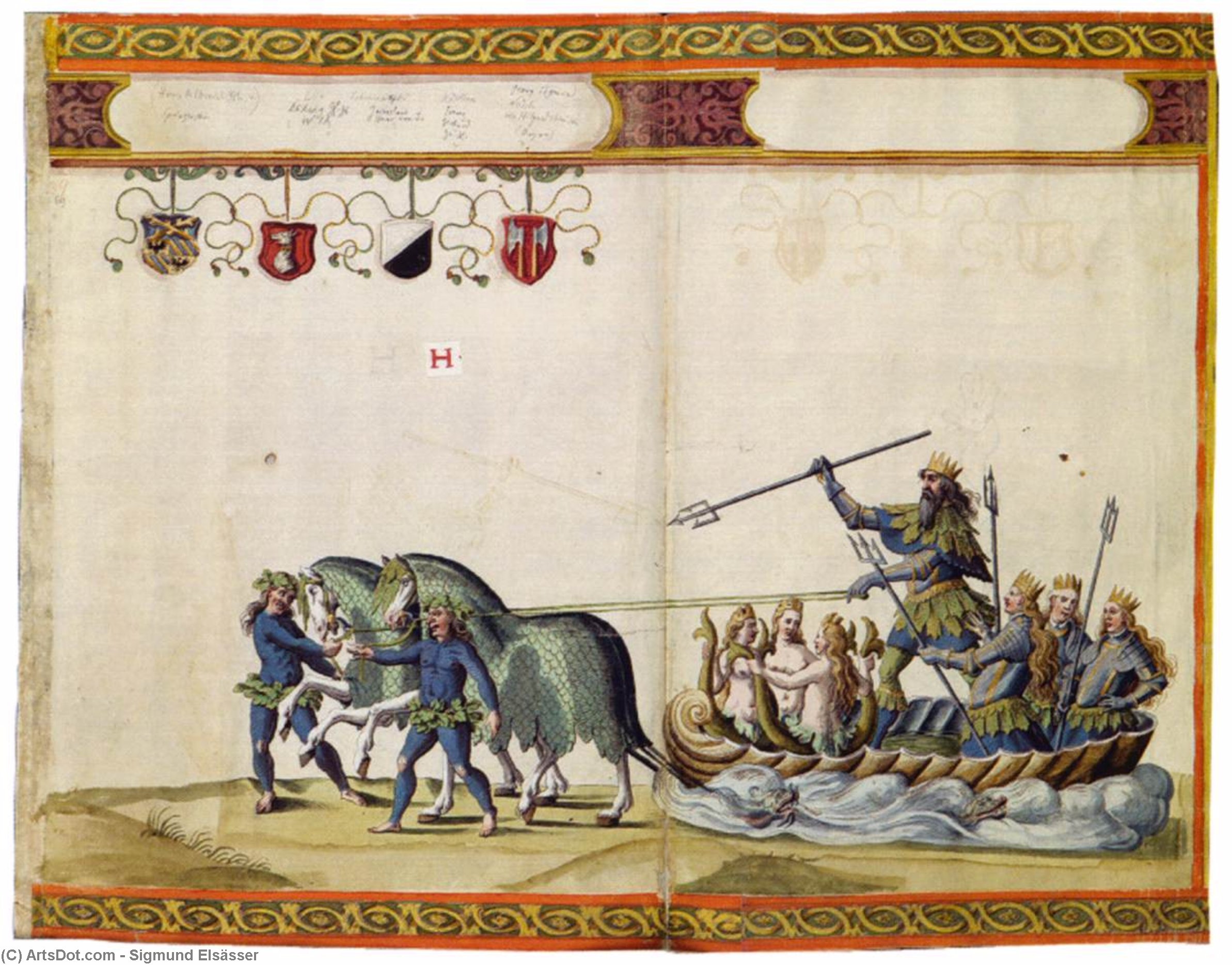
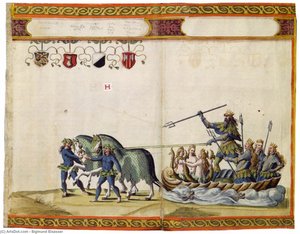
Wedding Festival Book of Archduke Ferdinand II: Neptune
 Woodcut
- Mannerism
 1582
1582- Early Modern
 430.0 x 535.0 cm
 Kunsthistorisches Museum
 Read More
Hand Made Oil Reproduction
Hand-painted oil on canvas in your size and frame, made to order by our artists. ( Buy Print Buy Image)




P118B $10

P118H $10

P118W $10

P438Z $10

P508JH $12

P508YH $12

P805H $10

P805Z $10

P919BZ $10

P919G $10

P919XJ $10

P959ZH $10

P968JZ $12

W106C $8

W218G $10

W218JH $8

W218Y $10

W307PJ $10

W316G $10

W316PJ $8

W316Y $10

W398PJ $8

W4111J $10

W500HY $15

W500JH $15

W692G $12

W849H $8

W940BG $15

W953PJ $8




Pick from our preset sizes that match the artwork's original proportions.

You may enter your own dimensions to fit a specific frame or space. If your selected size does not match the original image's proportions, we will either crop the artwork or extend the painting with additional hand-painted elements. A digital mockup will be sent for your approval before production begins.
Please note that the on-screen preview does not reflect the actual cropping or extension. Only the mockup will accurately show the final composition.
While custom sizes are available, we recommend selecting a dimension from the predefined list to preserve the original proportions.
After order, ArtsDot.com team will email client for instructions and provide a mockup preview
Worldwide Delivery () in 3/4 weeks instead of standard 5 weeks. (4 September). No compromise on quality.

Free Worldwide Express Shipping

High-Quality Linen Canvas

Full Shipping Insurance

Customs Tax Refund Guarantee

True Color Matching Guarantee

60-Day Return Policy (Defects Only)

100% Money-Back Guarantee

Bulk Discount Offer
 Glass option is only available in size under 110 CM

Wedding Festival Book of Archduke Ferdinand II: Neptune
Reproduction Medium
Reproduction Size
-


Total Price
$ 363
A Mythic Voyage Across Turbulent Waters
Behold this breathtaking vision, a testament to the dramatic power of late Renaissance illustration. This piece, evocative of the grand decorative cycles of the era, plunges the viewer into a moment ripped from the pages of classical mythology. At its heart lies a scene of epic struggle and divine intervention: a warrior, perhaps embodying heroism itself, is borne across a churning, tempestuous sea by the magnificent power of a giant steed. The composition is anything but static; it pulses with kinetic energy, capturing the very breath of survival against overwhelming natural forces. One feels the spray of salt water and hears the thunderous gallop beneath the viewer’s feet.
Mastery in Woodcut and Pigment
The technical brilliance of this work is immediately apparent. It originates from a woodcut illustration, a medium that demands both structural strength and delicate artistry. The lines themselves are bold and assertive, characteristic of early printmaking, giving the forms a crisp, almost architectural definition. Yet, these strong black outlines are elevated by meticulous hand-coloring. Observe how the artist has employed hatching and cross-hatching—those intricate networks of fine lines—to build texture into what might otherwise be flat pigment. These techniques breathe life into the depiction of churning water, richly textured drapery, and the powerful musculature of the mythical horse. The overall effect is one of depth achieved not through strict linear perspective, but through masterful layering and the sheer density of detail.
Symbolism of Triumph and Lineage
Beyond the immediate drama, the artwork whispers tales of deeper meaning. The inclusion of ornate borders and visible heraldic shields suggests that this narrative was never merely decorative; it served to commemorate lineage, allegiance, or divine favor. The warrior’s rescue is a potent symbol of triumph—the victory of human spirit, guided by fate or divinity, over chaos. In the context of 16th-century European art, such scenes were deeply imbued with Christian and classical symbolism, speaking to patrons' hopes for stability amidst times of upheaval. It is an allegory rendered in pigment: a promise of enduring glory.
A Touch of Mannerist Drama
Stylistically, the piece leans into the dramatic flair associated with Mannerism. While the foundational structure remains rooted in earlier traditions, there is an elongation to the figures and an exaggeration of gesture that heightens the emotional pitch. The composition feels deliberately orchestrated for maximum impact—a visual crescendo. For the modern collector or designer, this translates into unparalleled decorative drama. Reproducing such a piece allows one to infuse a space with historical gravitas, intellectual depth, and an undeniable sense of epic romance. It is not just art on a wall; it is a narrative moment preserved in time.
Related Artworks

Artist Biography
The Visionary Chronicles of Sigmund Elsässer
To step into the world of Sigmund Elsässer is to enter a period of profound transition, where the structured elegance of the Renaissance began to dance with the dramatic intensity of the Baroque. An artist whose name resonates through the corridors of Austrian art history, Elsässer was far more than a mere chronicler of courtly life; he was a master of capturing the ephemeral pulse of an era. Born in Salzburg, his early years were shaped by the intellectual and religious fervor of a region caught between tradition and upheaval. His formative training at the Salzburg Cathedral School under the guidance of Johann Baptist Sturm provided him with a rigorous foundation in technical precision, yet it was his innate ability to infuse these classical techniques with a sense of spiritual and narrative movement that would eventually define his legacy.
As Elsässer moved toward the vibrant epicenter of Vienna in 1613, his career underwent a transformative evolution. The imperial atmosphere of the Habsburg court offered him an unparalleled stage upon which to display his burgeoning mastery. He became a favored painter for the nobility, particularly through his role as a court painter for Archduke Ferdinand II. This patronage allowed him to document the very essence of aristocratic splendor, turning fleeting moments of celebration into enduring visual legacies. His work often functioned as a tableau vivant, where the opulence of textiles, the sheen of equine coats, and the rhythmic energy of processions were rendered with such meticulous detail that the viewer can almost hear the clamor of the festivities and the pounding of hooves against cobblestones.
Mastery of Light and Mythic Symbolism
The technical brilliance of Elsässer lies in his sophisticated command of light and atmosphere. Utilizing the masterful glazing techniques characteristic of the Austrian Baroque, he achieved a luminous quality that seems to emanate from within the canvas itself. This ethereal glow was not merely a decorative feat but a vital tool for conveying deep theological and mythological truths. In his depictions of classical figures, such as those found in his celebrated etchings for the Wedding Festival Book of Archduke Ferdinand II, he breathes life into deities like Neptune and Mercury. Through these works, he bridged the gap between the human and the divine, using the turbulent seas or the swift motion of a carriage to symbolize the larger cosmic struggles of his time.
His artistic language was deeply influenced by the humanist revival, drawing inspiration from the intellectual currents championed by figures such as Erasmus. This influence is evident in how he balanced the grandeur of his subjects with a profound respect for human dignity and contemplation. Whether he was executing a delicate copperplate etching with watercolor or composing monumental religious altarpieces like The Visitation, Elsässer maintained a signature clarity. He avoided the chaotic excess often found in later Baroque works, opting instead for a precision that allowed every symbolic element—from a solitary bird in a corner to the intricate folds of a liturgical garment—to contribute to a cohesive, spiritual narrative.
A Lasting Legacy in Austrian Art
The historical significance of Sigmund Elsässer extends far beyond his role as a court documentarian. He stands as a pivotal figure who helped navigate the stylistic shift from the late Renaissance into the early Baroque period in Central Europe. His ability to synthesize the meticulousness of his Salzburg training with the dramatic, emotive requirements of the Habsburg era created a unique aesthetic that was both grounded in reality and elevated by myth.
Today, his contributions are preserved as vital windows into the cultural efflorescence of 16th and 17th-century Austria. His works serve as:
- Historical Records: Providing an unparalleled visual archive of Habsburg courtly pageants, weddings, and aristocratic rituals.
- Technical Milestones: Demonstrating the sophisticated use of glazing and etching techniques that defined the era's aesthetic standards.
- Cultural Bridges: Representing the intersection of humanist philosophy and religious devotion through symbolic imagery.
sigmund elsässer
1587 , Austria
Quick Facts
- Artistic Movement Or Style: Renaissance Painting
- Artists Who Influenced This Artist:
- Antonius van Dyck
- Albrecht Dürer
- Date Of Death: 1587
- Full Name: Sigmund Elsässer
- Nationality: Austrian
- Notable Artworks: ['Wedding Festival Book of Archduke Ferdinand II']
- Place Of Birth: Vienna, Austria
Related Articles
Beyond the Guest Book: Unique Wedding Keepsakes Through Custom Artwork
Elevate your wedding memories with unique custom artwork! Discover personalized paintings & prints that capture the magic of your special day. Expert guidance, premium quality, lasting keepsakes.

Love on Canvas: Choosing the Perfect Artistic Style for Your Wedding Portrait
Discover the perfect artistic style for your wedding portrait! Explore realism, impressionism & more. Commission a timeless heirloom with expert guidance. Learn from .
Beyond Photographs: Commissioning Bespoke Paintings of Wedding Venues for Unforgettable Keepsakes
Transform your wedding venue into timeless art! Discover the beauty of bespoke paintings & commissions with 's expert artists. Create a unique, luxurious keepsake.
From Snapshot to Masterpiece: Transforming Wedding Photos into Timeless Oil Paintings
Transform cherished wedding photos into timeless oil paintings! Expert artists at create bespoke portraits & heirloom art. Discover the process, styles & lasting value.
Beyond the Portrait: 10 Unique Artwork Ideas to Celebrate Your Wedding
Discover unique wedding art ideas beyond portraits! Explore custom paintings & artwork to celebrate your special day. Find the perfect personalized gift with 's expert guidance.