

 Preview
 Send
Send Share
Share
 Details

 Download
 Similars
 X-Ray
X-Ray Diaporama
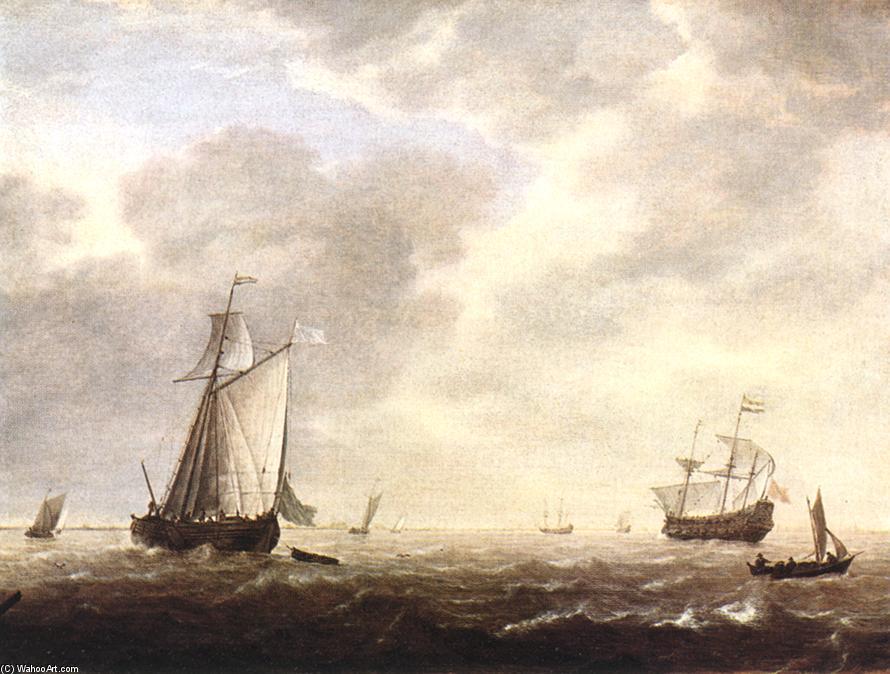
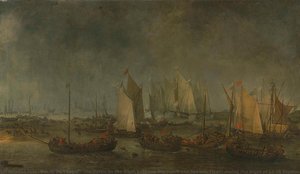
A Dutch Man-of-War and Various Vessels in a Breeze
 Acrylic On Canvas
- WallArt
- Dutch Marine Painting
 1642
1642 41.0 x 55.0 cm
 National Gallery
 Read More
Purchase a high-resolution, enhanced digital image, far superior to the online preview.
Each file is meticulously prepared by our in-house specialists using advanced tools and expert manual retouching. We ensure every image has exceptional clarity, precise color accuracy, and fine detail.
The final file is delivered via email within 72 hours, optimized for immediate use in professional, editorial, and print environments. This is the same quality trusted by top-tier design studios, publishers, and galleries.
Digital Image
Download a high-resolution file for personal display, printing, and creative projects. ( Buy Print Buy Hand Made Painting)
Included in Every Digital Image Order
Expert Digital Delivery, Guaranteed
When you choose ArtsDot.com, you're not just getting an image - you're receiving a professionally enhanced digital artwork, crafted with precision and backed by a satisfaction guarantee. Here's everything that comes with your order, automatically:

Fast Email Delivery
Your high-resolution digital image file will be emailed to you within 72 hours of ordering - ready for immediate use.

AI-Enhanced Digital File
Your artwork is professionally optimized using advanced AI tools and manual editing, ensuring maximum detail, clarity, and color accuracy.

Free Lifetime Re-Delivery
Accidentally deleted or lost your file? No worries - we'll resend it to you anytime, free of charge.

No Import Fees - Ever
Enjoy your artwork instantly with zero customs, duties, or delivery fees - digital downloads are always tax-free.

Color Accuracy Guarantee
We ensure your digital image reflects the original colors as closely as possible using professional tools and color management.

60-Day Satisfaction Guarantee
If you're not satisfied with your digital image, we'll revise it or refund 100% within 60 days - no questions asked.

100% Money-Back Guarantee
Not satisfied? Get a full refund within 60 days of receiving your digital file - no questions asked.

Bulk Order Discounts
Buy 3 images, save 10% - Buy 5, save 15% - Buy 10+, save 20%. Great for creative projects, galleries, and agencies.
Collectible Description
The Tempestuous Majesty of the Sea: Simon de Vlieger’s “A Dutch Man-of-War”
Simon de Vlieger's "A Dutch Man-of-War and Various Vessels in a Breeze," painted in 1642, isn’t merely a depiction of ships at sea; it’s a visceral experience of the ocean’s raw power. This remarkable work transcends simple maritime record to become a profound meditation on human vulnerability against the immensity of nature. De Vlieger, a pivotal figure in the transition from the monochrome seascapes of Jan Porcellis and Willem van de Velde the Elder to a more vibrant and nuanced approach, masterfully captures the drama of a storm brewing over the North Sea. The painting immediately commands attention with its dynamic composition – a chaotic ballet of billowing sails, churning waves, and the looming silhouette of a Dutch man-of-war dominating the scene.
- Subject Matter: The central focus is undeniably the imposing Dutch warship, identifiable by its distinctive sail configuration and the presence of cannons. However, it’s not simply a portrait of a vessel; it's an illustration of naval prowess amidst a formidable natural force. Scattered around are smaller merchant ships, their sails furled in submission, highlighting the disparity between human ambition and the ocean’s indifference.
- Style & Technique: De Vlieger departs significantly from his predecessors by employing a richer palette – blues, greens, and greys dominate, creating an atmosphere of brooding intensity. He utilizes loose brushstrokes and carefully layered glazes to build up texture and suggest movement in the water and wind. The artist’s attention to detail is remarkable; one can almost feel the spray of the waves and hear the creak of the timbers.
A Window into 17th-Century Dutch Maritime Life
To understand “A Dutch Man-of-War,” we must consider the historical context in which it was created. The early 17th century marked a period of immense expansion for the Dutch Republic, fueled by its burgeoning trade and naval power. The Dutch East India Company (VOC) dominated global commerce, and the Dutch navy maintained a formidable presence on the seas. Paintings like this one served not only as records of maritime activity but also as symbols of national pride and economic success. The inclusion of the man-of-war specifically underscores the importance of naval strength in securing Dutch dominance.
Historical Context:- The Dutch Golden Age: This painting exemplifies the artistic flourishing of the Dutch Golden Age, a period characterized by wealth, innovation, and cultural achievement.
- VOC Dominance: The prominence of the man-of-war reflects the critical role played by the VOC in shaping global trade routes and asserting Dutch influence.
Symbolism and Emotional Resonance
Beyond its historical significance, “A Dutch Man-of-War” is rich in symbolism. The storm itself represents chaos, uncertainty, and the limitations of human control. The towering ship, while a symbol of power and authority, appears dwarfed by the vastness of the ocean – a potent reminder of humanity’s precarious position within nature's grand design. The smaller vessels, struggling against the waves, evoke feelings of vulnerability and resilience. The painting doesn’t celebrate conquest; instead, it presents a humbling encounter with an untamable force.
Emotional Impact:- Awe and Wonder: The dramatic lighting and turbulent seas inspire a sense of awe at the power of nature.
- Melancholy and Reflection: The scene evokes a feeling of melancholy, prompting contemplation on human mortality and our place in the universe.
Reproductions and Artistic Legacy
Today, “A Dutch Man-of-War” continues to captivate viewers with its dramatic intensity and masterful technique. High-quality reproductions offer an accessible way to experience this iconic work of art, bringing its tempestuous beauty into any space. Simon de Vlieger’s innovative use of color and his focus on capturing the dynamism of the sea paved the way for future generations of maritime painters, solidifying his place as a key figure in Dutch art history. The painting's enduring appeal lies not only in its technical brilliance but also in its timeless exploration of humanity’s relationship with the untamed forces of nature.
Related Artworks

Artist Biography
Early Life and Apprenticeship in the Dutch Golden Age
Simon de Vlieger, born in Rotterdam around 1601, emerged during the zenith of the Dutch Golden Age—a period defined by unprecedented prosperity, maritime dominance, and artistic flourishing. While specific details regarding his early training remain elusive, it’s understood he began his artistic journey within the vibrant milieu of his hometown. The bustling port city provided an immediate and compelling subject matter for a budding painter: ships. Unlike many artists who initially diversified their skills through genre scenes or portraiture, de Vlieger seems to have focused almost exclusively on marine subjects from a relatively young age, suggesting an early fascination with the sea and its vessels.
His initial style likely drew inspiration from earlier maritime painters like Jan Porcellis, whose work often featured dramatic, turbulent seascapes. However, de Vlieger quickly began to distinguish himself by moving away from the more monochrome palettes favored by his predecessors. He sought a greater degree of realism and luminosity in his depictions, aiming for an accurate representation of light reflecting on water and the intricate details of ship construction.
A Career Navigating Delft and Amsterdam
De Vlieger’s career unfolded across several key Dutch cities, each contributing to his artistic development. In 1627, he married Anna Gerridts van Willige, a union that provided stability as he established himself professionally. He joined the Guild of Saint Luke in Delft in 1634, signifying his acceptance into the established art community. This period saw him honing his skills and building a reputation for capturing the essence of Dutch maritime life.
Around 1638, de Vlieger relocated to Amsterdam, the heart of the Dutch art market and a major center for shipbuilding and trade. Here, he encountered a wider audience and greater opportunities. Despite maintaining a residence in Rotterdam until 1650—when he finally settled in Weesp, a smaller town near Amsterdam—Amsterdam became his primary base of operations. It was during this time that de Vlieger truly solidified his position as one of the leading maritime painters of the era.
Innovation and Artistic Style
De Vlieger’s artistic innovation lay in his meticulous attention to detail and his masterful use of color. He moved beyond simply depicting ships at sea; he sought to capture the *feeling* of being on the water—the spray of the waves, the glint of sunlight on sails, the complex rigging of a vessel. His paintings are characterized by their highly detailed representations of ship construction, reflecting a deep understanding of naval architecture.
He wasn’t merely a recorder of ships; he was an interpreter of maritime life. He painted scenes of ships in harbor, at sea during calm weather, and caught in the throes of violent storms. His storm seascapes are particularly compelling, conveying both the power of nature and the vulnerability of human endeavor. Beyond painting, de Vlieger demonstrated a remarkable versatility, designing tapestries, etchings, and even stained glass windows for Amsterdam’s Nieuwe Kerk and the organ screen for Rotterdam's St. Laurenskerk.
Legacy and Influence on Maritime Painting
Simon de Vlieger’s influence on subsequent generations of maritime painters was profound. He trained several pupils, including Willem van de Velde the Younger, Adriaen van de Velde, and Jan van der Cappelle—all of whom went on to achieve significant recognition in their own right. Van der Cappelle, in particular, held de Vlieger in high esteem, owning nine original paintings and over 1300 prints by his master.
Even after de Vlieger’s death in 1653, his work continued to circulate and inspire. Numerous unfinished works remained in his studio, testament to the constant demand for his art. One such painting—depicting fishermen dragging nets ashore—was sold by Van der Cappelle to Joanna Six, wife of Simon van der Stel, and shipped to the Cape of Good Hope, where it was displayed at Groot Constantia, the Van der Stel family estate. This act underscores the enduring appeal of de Vlieger’s work and its connection to the broader Dutch colonial enterprise.
De Vlieger's legacy extends beyond his technical skill; he captured a crucial aspect of Dutch identity—its relationship with the sea. His paintings are not simply beautiful depictions of ships; they are windows into a world defined by trade, exploration, and the constant interplay between humanity and nature. He remains a pivotal figure in the history of maritime art, celebrated for his realism, luminosity, and enduring ability to evoke the spirit of the Dutch Golden Age.
simon de vlieger
1601 - 1653 , Netherlands
Quick Facts
- Artistic Movement Or Style: Baroque
- Artists Or Movements Influenced By This Artist: ['None known']
- Artists Who Influenced This Artist:
- Guercino
- Guido Reni
- Date Of Birth: 1601
- Date Of Death: 1663
- Full Name: Guido Cagnacci
- Nationality: Italian
- Notable Artworks:
- Repentant Magdalene
- Various religious paintings
- Place Of Birth: Santarcangelo, Romagna

