

 Preview
 Send
Send Share
Share
 Details

 Download
 Similars
 X-Ray
X-Ray Diaporama
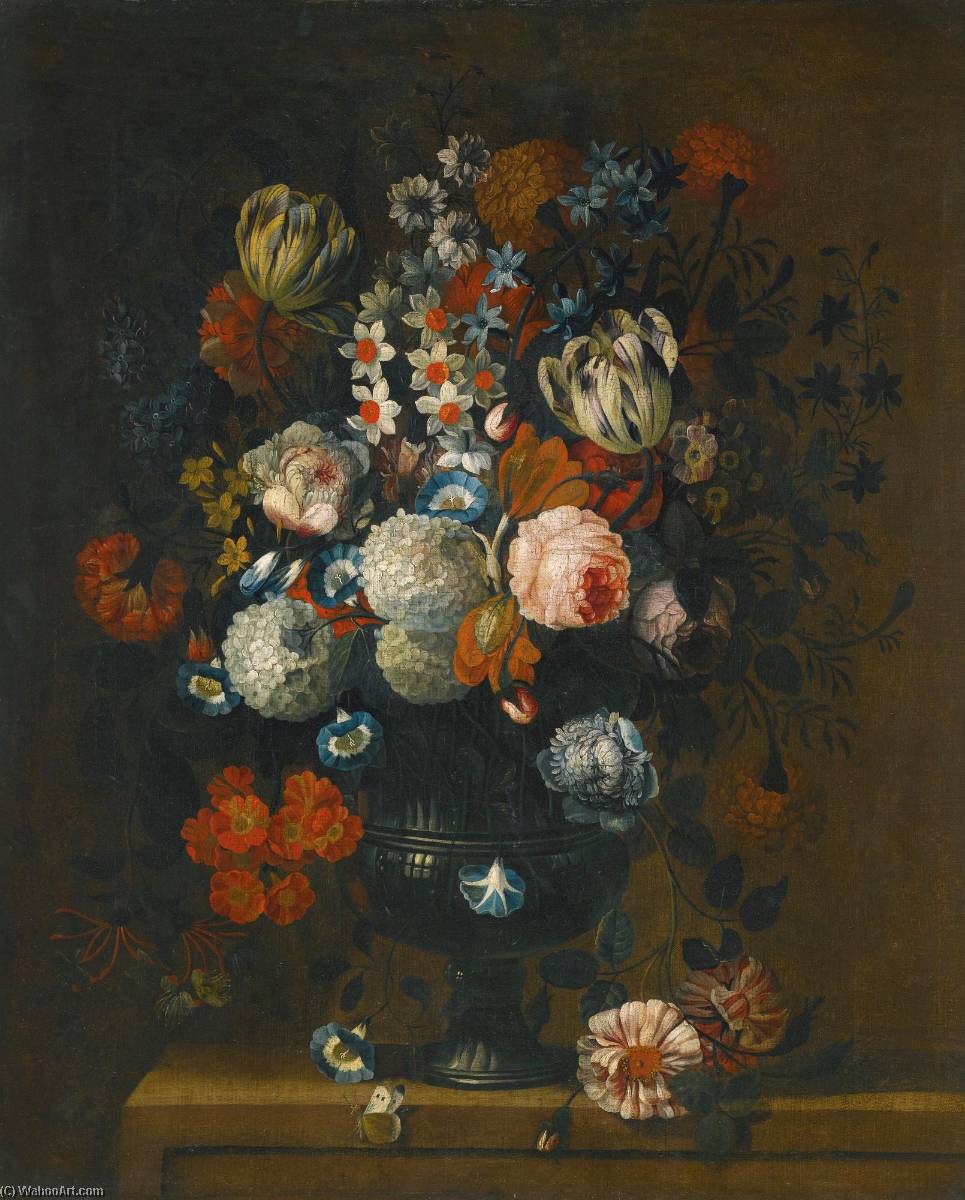
Still life of roses, variegated tulips, peonies, daffodils and other flowers in a sculpted vase
 76.0 x 62.0 cm
 Read More
Purchase a high-resolution, enhanced digital image, far superior to the online preview.
Each file is meticulously prepared by our in-house specialists using advanced tools and expert manual retouching. We ensure every image has exceptional clarity, precise color accuracy, and fine detail.
The final file is delivered via email within 72 hours, optimized for immediate use in professional, editorial, and print environments. This is the same quality trusted by top-tier design studios, publishers, and galleries.
Digital Image
Download a high-resolution file for personal display, printing, and creative projects. ( Buy Print Buy Hand Made Painting)
Included in Every Digital Image Order
Expert Digital Delivery, Guaranteed
When you choose ArtsDot.com, you're not just getting an image - you're receiving a professionally enhanced digital artwork, crafted with precision and backed by a satisfaction guarantee. Here's everything that comes with your order, automatically:

Fast Email Delivery
Your high-resolution digital image file will be emailed to you within 72 hours of ordering - ready for immediate use.

AI-Enhanced Digital File
Your artwork is professionally optimized using advanced AI tools and manual editing, ensuring maximum detail, clarity, and color accuracy.

Free Lifetime Re-Delivery
Accidentally deleted or lost your file? No worries - we'll resend it to you anytime, free of charge.

No Import Fees - Ever
Enjoy your artwork instantly with zero customs, duties, or delivery fees - digital downloads are always tax-free.

Color Accuracy Guarantee
We ensure your digital image reflects the original colors as closely as possible using professional tools and color management.

60-Day Satisfaction Guarantee
If you're not satisfied with your digital image, we'll revise it or refund 100% within 60 days - no questions asked.

100% Money-Back Guarantee
Not satisfied? Get a full refund within 60 days of receiving your digital file - no questions asked.

Bulk Order Discounts
Buy 3 images, save 10% - Buy 5, save 15% - Buy 10+, save 20%. Great for creative projects, galleries, and agencies.
Related Artworks









Artist Biography
The Botanical Elegance of Simon Hardimé
In the golden age of Flemish floral painting, few artists captured the ephemeral splendor of nature with as much charm and decorative grace as Simon Hardimé. A painter of mixed Walloon and Flemish descent, Hardimé emerged from the vibrant artistic landscape of Antwerp to leave an indelible mark on the Baroque tradition. His life, spanning the late seventeenth and early eighteenth centuries, was a journey of movement—from the guild-regulated workshops of his homeland to the bustling courts of the Dutch Republic and eventually the sophisticated circles of London. While history often reserves its highest accolades for giants like Rubens or Rembrandt, Hardimé carved out a specialized niche, becoming a master of the still life, where every petal and dewdrop served as a testament to both botanical precision and artistic whimsy.
Hardimé’s artistic foundation was laid in the prestigious studios of Antwerp, most notably under the tutelage of Jan Baptist de Crépu. This apprenticeship was far more than a technical training period; it was an immersion into a profound symbolic language. In the Baroque era, a flower was rarely just a flower. Through the influence of De Crépu, Hardimeb learned to weave Christian iconography and humanist ideals into his compositions, using lilies to represent purity or wilting blooms to evoke the vanitas—the inevitable passage of time and the transience of earthly beauty. By 1688, his skill was officially recognized when he was registered as a master in the Antwerp Guild of Saint Luke, a milestone that granted him entry into the elite networks of European patronage.
A Journey Through Europe's Artistic Capitals
The trajectory of Hardimé’s career was shaped by both ambition and necessity. Seeking to expand his horizons beyond the borders of Flanders, he traveled to The Hague, where he found companionship and professional connection with his brother, Pieter Hardimé. This period in the Dutch Republic allowed him to absorb the refined sensibilities of Dutch still-life traditions, which often emphasized a luminous clarity and a meticulous attention to texture. However, life as an artist was rarely without turbulence; historical accounts suggest that financial pressures and personal struggles eventually prompted a significant relocation.
In 1702, Hardimé made the pivotal move to London, a city that would become his final home and the stage for his most enduring professional successes. In England, his reputation preceded him, attracting a diverse clientele ranging from the rising bourgeoisie of Brussels and Antwerp to the high aristocracy of the British Isles. His ability to produce works that were both scientifically observant and aesthetically pleasing made him a favorite among those seeking to decorate their grand estates with the vibrant colors of a perpetual spring. Even as he navigated the complexities of life in a foreign land, his brush remained dedicated to the lush, decorative effects that defined his unique style.
Legacy of the Floral Master
The enduring significance of Simon Hardimé lies in his ability to balance naturalistic observation with decorative splendor. Unlike some of his contemporaries who sought a stark, almost clinical realism, Hardimé embraced the rhythmic beauty of composition. His arrangements—often featuring variegated tulips, peonies, and roses set within sculpted vases—possess a theatrical quality that captures the very essence of the Baroque spirit. He did not merely paint plants; he orchestrated visual symphonies of color and light.
Today, his work serves as a vital window into the cultural and aesthetic values of the late seventeenth century. His legacy is preserved through:
- Technical Mastery: His sophisticated use of oil to replicate the velvety texture of petals and the translucent quality of light.
- Cultural Bridge-Building: His role in transporting the Flemish floral tradition across the English Channel, influencing the development of British still-life painting.
- Symbolic Depth: The preservation of the vanitas tradition, reminding modern viewers of the delicate balance between beauty and decay.
Though his life was marked by the typical wanderlust and hardships of a traveling artist, Simon Hardimé’s contribution to the art of the still life remains a blooming testament to the enduring power of nature's most delicate forms.
Quick Facts
- Artistic Movement Or Style: Still Life Painting
- Artists Or Movements Influenced By This Artist: ['European Floral Art']
- Artists Who Influenced This Artist: ['Jan Baptist Crepu']
- Date Of Birth: (unknown)
- Date Of Death: (living)
- Full Name: Simon Hardimé
- Nationality: Belgian
- Notable Artworks:
- Arrangement of tulips...
- Still life of roses...
- Wedding Feast at Cana
- Place Of Birth: Antwerp, Belgium

