 Preview
 Send
Send Share
Share
 Details

 Download
 Similars
 X-Ray
X-Ray Diaporama
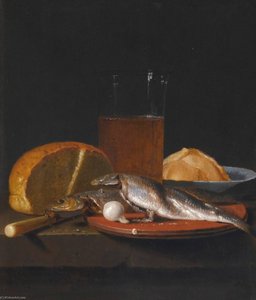
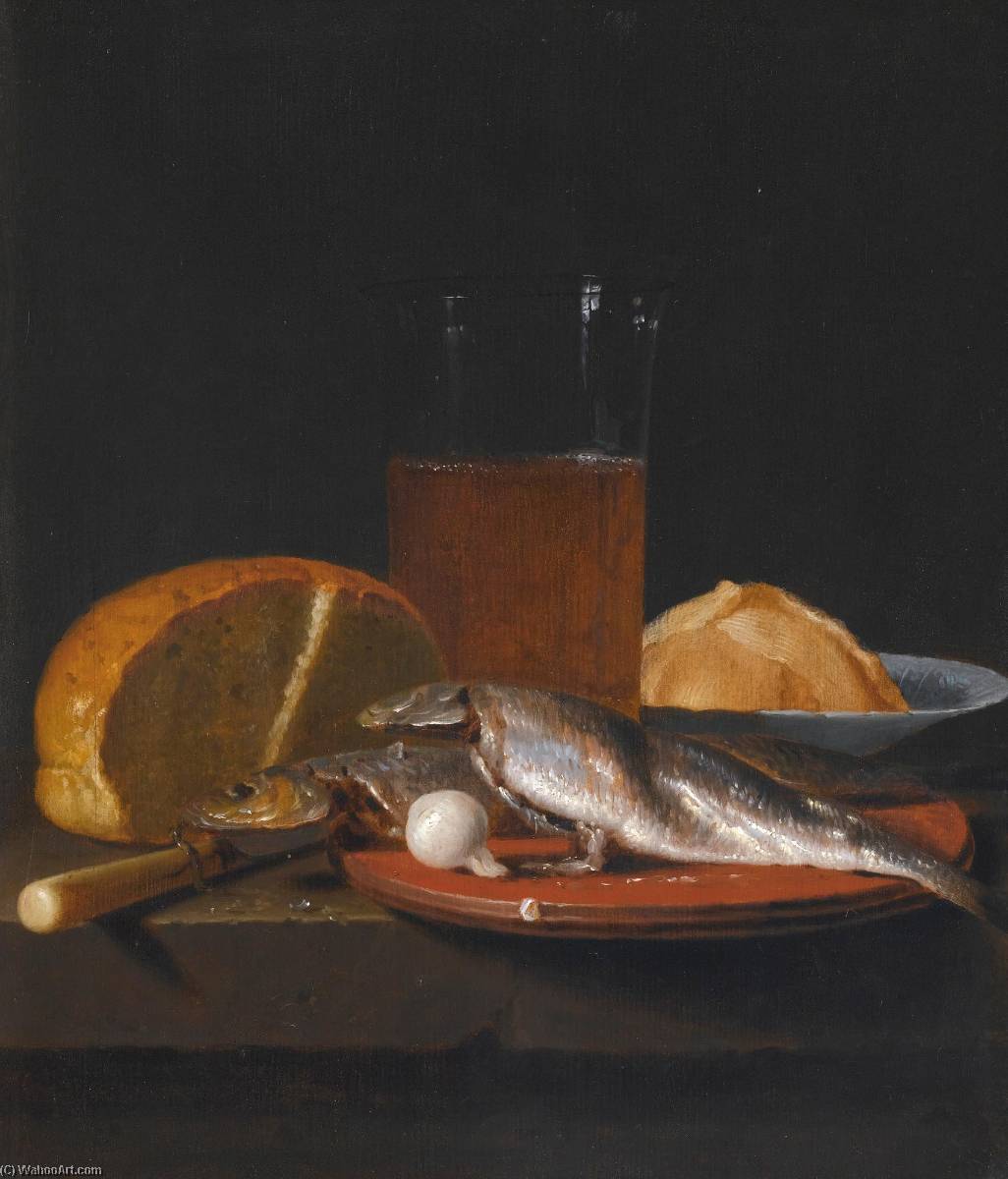
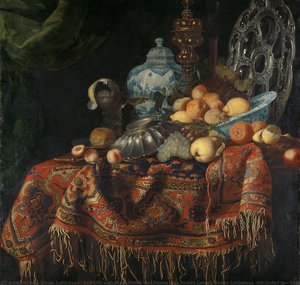
Still life with mackerel, bread, a pewter plate and a glass of beer on a table
 39.0 x 33.0 cm
 Read More
Giclée / Art Print
Museum-quality giclée or canvas print with fast production and flexible finish options. ( Buy Hand Made Painting Buy Image)




































Pick from our preset sizes that match the artwork's original proportions.

You may enter your own dimensions to fit a specific frame or space. If your selected size does not match the original image's proportions, we will either crop the artwork or extend the image with a mirrored or solid-fill edge. A digital mockup will be sent for your approval before production begins.
Please note that the on-screen preview does not reflect the actual cropping or extension. Only the mockup will accurately show the final composition.
While custom sizes are available, we recommend selecting a dimension from the predefined list to preserve the original proportions.
Worldwide Delivery () in 2 weeks instead of standard 4/5 weeks. (22 August)

Free Worldwide Express Shipping

High-Quality Linen Canvas

Full Shipping Insurance

Customs Tax Refund Guarantee

True Color Matching Guarantee

60-Day Return Policy (Defects Only)

100% Money-Back Guarantee

Bulk Discount Offer
 Glass option is only available in size under 110 CM

Still life with mackerel, bread, a pewter plate and a glass of beer on a table
Giclée / Art Print
Reproduction Size
-


Total Price
$ 63
Related Artworks






Artist Biography
A Life Immersed in Stillness: Simon Luttichuys and the Dutch Golden Age
Simon Luttichuys, a name perhaps less immediately recognizable than some of his contemporaries, nevertheless occupies a significant niche within the pantheon of Dutch Golden Age still life painters. Born in London around 1610, his journey reflects the complex artistic currents of the 17th century—a period defined by burgeoning mercantile wealth, scientific inquiry, and an unprecedented fascination with the material world. While details of his early life remain somewhat elusive, it’s believed he may have initially been known as Simon Littlehouse, a painter documented as having created a portrait of Bishop Thomas Morton in Cambridge around 1637-1638. This potential dual identity hints at an early career perhaps rooted in portraiture before fully embracing the captivating genre that would define his legacy. By 1649, Luttichuys had firmly established himself in Amsterdam, a vibrant hub of artistic production and commerce, where he became part of a thriving community of painters dedicated to capturing the beauty and transience of earthly possessions. His personal life took shape with his marriage to Anna van Peene from Norfolk, England, in 1655, further solidifying his connection to both Dutch and English spheres.The Art of Quiet Observation: Luttichuys’s Style and Subject Matter
Luttichuys specialized in still lifes—not merely depictions of objects, but carefully constructed meditations on life, death, and the fleeting nature of existence. His compositions are characterized by a remarkable atmospheric quality, achieved through subtle gradations of light and shadow and a masterful handling of texture. He wasn’t interested in ostentatious displays of wealth; instead, his paintings often feature arrangements of fruit, wine glasses, pewter vessels, and other everyday items rendered with meticulous detail. These weren't simply exercises in realism, however. Luttichuys frequently incorporated symbolic elements—a half-peeled lemon representing decay, a wilting flower alluding to mortality, or an overturned glass signifying the fragility of life—transforming his still lifes into *vanitas* paintings that served as visual reminders of human impermanence. The surfaces gleam with realism, yet there’s always a sense of quiet contemplation underlying the scene, inviting viewers to reflect on their own place within the grand scheme of things. He possessed an exceptional ability to capture the interplay of light and shadow on various materials—the sheen of silver, the translucency of glass, the rough texture of earthenware—creating a palpable sense of presence.Family Ties and Artistic Influences
Luttichuys was not working in isolation; he was part of a family deeply embedded within the artistic landscape of the Dutch Golden Age. His brother, Isaack Luttichuys, was also a painter, known for his fruit and vanitas still lifes as well as portraits. The relationship between the two brothers remains somewhat unclear, but it’s likely they shared techniques and influences. Beyond his familial connections, Simon Luttichuys's work demonstrates an awareness of broader artistic trends prevalent in Amsterdam during his time. He is particularly recognized for his influence on Willem Kalf, a prominent still life painter known for his opulent and dramatic compositions. While Kalf’s style is more flamboyant and theatrical, it’s evident that he drew inspiration from Luttichuys's mastery of light, texture, and symbolic representation.A Lasting Legacy: Historical Significance and Modern Appreciation
Simon Luttichuys died in Amsterdam in 1661, leaving behind a body of work that continues to captivate audiences today. Though he may not have achieved the same level of fame as some of his peers, his paintings offer a unique window into the artistic sensibilities of the Dutch Golden Age. His ability to imbue everyday objects with profound meaning and create atmospheric compositions that evoke a sense of quiet contemplation sets him apart. His influence on subsequent generations of still life painters, particularly Willem Kalf, is undeniable. Today, his works are held in museums and private collections around the world, serving as testaments to the enduring power of stillness and the beauty found within the ordinary.Exploring Luttichuys’s Oeuvre: Key Characteristics
- Masterful Use of Light and Shadow: Creating depth and atmosphere in his compositions.
- Detailed Realism: Rendering textures with exceptional precision, from the sheen of metal to the translucency of glass.
- Symbolic Representation: Incorporating *vanitas* motifs—decaying fruit, wilting flowers, overturned glasses—to convey themes of mortality and impermanence.
- Quiet Contemplation: Evoking a sense of stillness and inviting viewers to reflect on the meaning of life.
- Influence on Willem Kalf: Serving as an inspiration for one of the most prominent still life painters of the Dutch Golden Age.
simon luttichuys
1610 - 1661
Quick Facts
- Artistic Movement Or Style: Still Life Painting
- Artists Or Movements Influenced By This Artist: ['Willem Kalf']
- Date Of Birth: 1610
- Date Of Death: 1661
- Full Name: Simon Luttichuys
- Nationality: Dutch
- Place Of Birth: London, England