 Preview
 Send
Send Share
Share
 Details

 Download
 Similars
 X-Ray
X-Ray Diaporama
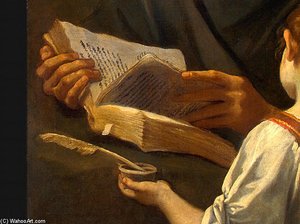
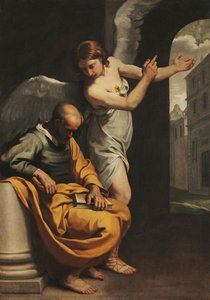
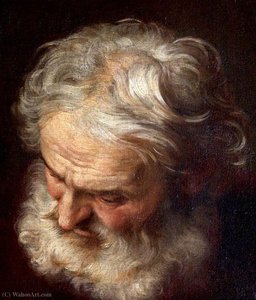
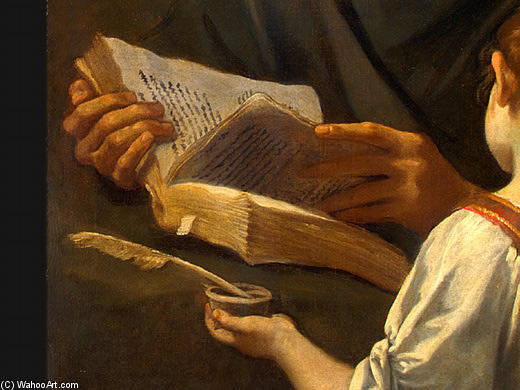
Saint Matthew and the Angel (detail)


 Read More
Hand Made Oil Reproduction
Hand-painted oil on canvas in your size and frame, made to order by our artists. ( Buy Print Buy Image)




P118B $10

P118H $10

P118W $10

P438Z $10

P508JH $12

P508YH $12

P805H $10

P805Z $10

P919BZ $10

P919G $10

P919XJ $10

P959ZH $10

P968JZ $12

W106C $8

W218G $10

W218JH $8

W218Y $10

W307PJ $10

W316G $10

W316PJ $8

W316Y $10

W398PJ $8

W4111J $10

W500HY $15

W500JH $15

W692G $12

W849H $8

W940BG $15

W953PJ $8




Pick from our preset sizes that match the artwork's original proportions.

You may enter your own dimensions to fit a specific frame or space. If your selected size does not match the original image's proportions, we will either crop the artwork or extend the painting with additional hand-painted elements. A digital mockup will be sent for your approval before production begins.
Please note that the on-screen preview does not reflect the actual cropping or extension. Only the mockup will accurately show the final composition.
While custom sizes are available, we recommend selecting a dimension from the predefined list to preserve the original proportions.
After order, ArtsDot.com team will email client for instructions and provide a mockup preview
Worldwide Delivery () in 3/4 weeks instead of standard 5 weeks. (16 August). No compromise on quality.

Free Worldwide Express Shipping

High-Quality Linen Canvas

Full Shipping Insurance

Customs Tax Refund Guarantee

True Color Matching Guarantee

60-Day Return Policy (Defects Only)

100% Money-Back Guarantee

Bulk Discount Offer
 Glass option is only available in size under 110 CM

Saint Matthew and the Angel (detail)
Reproduction Medium
Reproduction Size
-


Total Price
$ 263
Artwork Description
Simone Cantarini’s “Saint Matthew and the Angel”: A Dialogue of Faith and Humanity
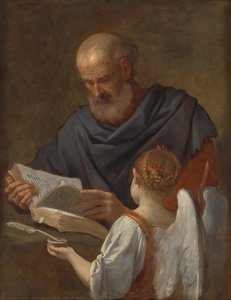
The National Gallery of Art's exquisite rendition of Simone Cantarini’s “Saint Matthew and the Angel” (circa 1645/1648) is more than a mere depiction of a biblical scene; it’s a profound meditation on faith, learning, and the quiet intimacy of spiritual connection. Cantarini, a pivotal figure bridging the Bolognese classicism of his predecessors with the burgeoning naturalism of Venice and the dramatic intensity of Caravaggism, masterfully captures a moment suspended in time – a shared contemplation between the apostle Matthew and an angel, bathed in the soft, diffused light that defines his signature style. The painting isn’t simply illustrating scripture; it's inviting us into a space where divine grace intersects with human understanding.
Cantarini’s genius lies not just in his technical skill – evident in the meticulous rendering of fabrics, the subtle modeling of flesh, and the delicate handling of light – but also in his ability to imbue his subjects with palpable emotion. The figures aren't presented as distant theological icons; they are rendered as individuals engaged in a genuine exchange. Matthew, depicted in the act of studying a book open before him, exudes an aura of focused concentration, while the angel, hovering gently above, seems to offer guidance and perhaps even a shared moment of intellectual curiosity. The composition is remarkably balanced, drawing the eye seamlessly between the two figures and creating a sense of harmonious equilibrium.
A Synthesis of Artistic Influences
Born in Pesaro in 1612 and tragically lost in Mantua just six years later, Simone Cantarini’s life was tragically short but intensely productive. His artistic development is a fascinating testament to his intellectual curiosity and willingness to absorb diverse influences. He began his training under Guido Reni, the leading figure of Bolognese classicism, absorbing the idealized forms and balanced compositions that characterized the style. However, Cantarini quickly ventured beyond these established conventions, seeking inspiration in the vibrant naturalism emerging from Venice – particularly the work of Giorgione and Titian – and the dramatic intensity of Caravaggio’s tenebrist style. This synthesis is brilliantly displayed in “Saint Matthew and the Angel,” where the clarity of form and balanced composition are tempered by a heightened sense of realism and emotional depth.
The painting's setting, reminiscent of a scholarly retreat, further underscores Cantarini’s artistic eclecticism. The table laden with books, the feather resting upon it – symbols of knowledge and contemplation – speak to a world where faith and reason are not necessarily in conflict but rather mutually enriching pursuits. The muted palette, dominated by earthy tones and soft blues and greens, contributes to the painting's serene atmosphere, creating an environment conducive to reflection and spiritual insight.
Symbolism and Spiritual Depth
Beyond its formal qualities, “Saint Matthew and the Angel” is rich in symbolic meaning. The open book held by Matthew represents not just his scholarly pursuits but also his commitment to understanding God’s word. The angel's presence signifies divine guidance and revelation – a reminder that faith is not a solitary endeavor but one guided by grace. The child figure, often interpreted as representing innocence or the future of faith, adds another layer of complexity to the scene, suggesting the enduring legacy of spiritual wisdom.
Notably, the painting’s provenance reveals its journey through European collections, culminating in its current home at the National Gallery of Art. This history underscores the artwork's significance as a cultural treasure and a testament to the enduring power of art to transcend time and connect generations. The inclusion of details like the reference to Hagström, Stockholm, and the subsequent Christie’s sale adds a fascinating layer of historical context, highlighting the painting’s journey through the art market.
A Timeless Masterpiece
“Saint Matthew and the Angel” is more than just a beautiful painting; it's a profound meditation on faith, learning, and the human condition. Simone Cantarini’s masterful synthesis of artistic influences – Bolognese classicism, Venetian naturalism, and Caravaggesque drama – results in a work that is both visually stunning and emotionally resonant. Its quiet intimacy, coupled with its rich symbolic content, ensures that it will continue to captivate viewers for generations to come. Reproductions of this piece offer an exceptional opportunity to bring this timeless masterpiece into any space, fostering contemplation and enriching the visual environment.
Related Artworks
Artist Biography
A Synthesis of Styles: The Life and Art of Simone Cantarini
Simone Cantarini, born in Pesaro in 1612 and tragically lost to mysterious circumstances in Mantua in 1648, remains a compelling figure within the Italian Baroque. Often referred to as Simone da Pesaro or *il Pesarese*, his brief but intensely productive career was marked by a remarkable ability to synthesize diverse artistic influences into a uniquely personal style. He wasn’t merely echoing the masters who came before him; he was actively engaging in a dialogue with them, forging a path that blended Bolognese classicism with the vibrant naturalism emerging from Venice and the dramatic intensity of Caravaggism. Cantarini's father, Girolamo, was a prosperous merchant, providing a stable foundation for his son’s artistic pursuits, though details of Simone’s early childhood remain scarce. What is clear is that he possessed an innate talent and a relentless drive to master his craft.Formative Years: From Pesaro to Bologna
Cantarini's artistic journey began with likely tutelage under Giovanni Giacomo Pandolfi in Pesaro, absorbing the fundamentals of technique and the prevailing local aesthetic. However, it was a sojourn to Venice that truly broadened his horizons. There, he encountered the late-Mannerism of Sante Peranda and honed his draughtsmanship skills under Francesco Mingucci, immersing himself in the city’s rich artistic atmosphere. This Venetian exposure instilled within him an appreciation for color, texture, and dynamic composition – elements that would become hallmarks of his mature work. A pivotal period followed with Claudio Ridolfi, who guided Cantarini towards a deeper understanding of Venetian style and fostered an admiration for Federico Barocci's lyrical grace. Following Ridolfi’s departure, Cantarini embarked on a period of largely self-directed study, meticulously examining the works of the Carracci brothers, Orazio Gentileschi, and Giovanni Francesco Guerrieri. This independent exploration allowed him to refine his artistic vision and develop a distinctive voice. The turning point arrived with an encounter with Guido Reni’s *Madonna and Child with Saints Thomas and Jerome* in Pesaro Cathedral. Captivated by its elegance and spiritual depth, Cantarini traveled to Bologna around 1634 to study under the master himself. While he excelled within Reni's studio, particularly in etching, tensions arose due to his independent spirit and a growing critique of Reni’s later stylistic choices.A Distinctive Artistic Voice: Paintings and Prints
Cantarini quickly established himself as a painter of considerable skill and originality. Early masterpieces like *St Peter Healing the Lame Man* (Fano) already demonstrate the influence of Guido Reni, yet possess a burgeoning naturalism that sets them apart. Notable paintings such as *The Immaculate Conception with Saints* (Pinacoteca Nazionale di Bologna), *Saint Rita of Cascia* (Pesaro), and *Allegory of Painting* (National Museum, Warsaw) showcase his mastery of composition, color, and expressive figuration. His canvases are characterized by a dynamic interplay between classical form and dramatic realism, often imbued with a palpable sense of emotion. However, Cantarini’s contributions extend far beyond painting. He was an exceptionally gifted etcher, renowned for the delicacy and luminosity of his prints. He produced numerous etchings after works by Reni and others, but also created original compositions that demonstrate his technical virtuosity and artistic sensibility. These etchings played a significant role in disseminating his style and contributed to the development of printmaking techniques during the 17th century.Legacy and Shadows: A Complex Reputation
Simone Cantarini’s artistic legacy is one of innovation and synthesis. He carved out a unique space for himself within the Italian Baroque, blending diverse influences into a cohesive and compelling style. His ability to balance classical ideals with naturalistic observation, coupled with his exceptional etching skills, cemented his position as a significant figure in 17th-century art. However, his reputation was somewhat clouded by his contentious relationship with Guido Reni and reports of a scandalous death in Mantua – allegedly poisoned following a dispute over the Gonzaga collection. These stories, while adding an element of intrigue to his biography, should not overshadow his artistic achievements. While perhaps not as widely celebrated as some of his contemporaries, Cantarini’s work profoundly influenced later generations of Italian artists through its innovative style and technical mastery. He remains a testament to the power of individual vision and the enduring allure of Baroque art. His paintings and etchings continue to captivate viewers with their beauty, drama, and emotional depth, ensuring that his artistic voice will resonate for years to come.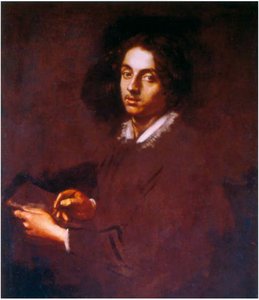
Simone Cantarini
1612 - 1648 , Italy
Quick Facts
- Artistic Movement Or Style: Baroque, Classicism
- Artists Or Movements Influenced By This Artist: ['Later Italian artists']
- Artists Who Influenced This Artist:
- Guido Reni
- Claudio Ridolfi
- Federico Barocci
- Carracci
- Orazio Gentileschi
- Date Of Birth: August 21, 1612
- Date Of Death: October 15, 1648
- Full Name: Simone Cantarini
- Nationality: Italian
- Notable Artworks:
- St Peter Healing the Lame Man
- Immaculate Conception w/ Saints
- Saint Rita of Cascia
- Allegory of Painting
- Mars and Venus
- Holy Family
- Place Of Birth: Pesaro, Italy
Related Articles
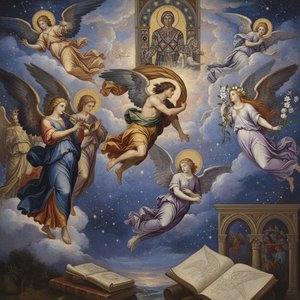
Celestial Messengers: Angels in Painting – A Historical & Artistic Exploration
Explore the captivating history of angels in painting! Discover symbolism, iconic Renaissance & Byzantine masterpieces, and renowned artists. Expert insights for art lovers & collectors at ArtsDot.
Celestial Messengers: A Comprehensive Exploration of Angelic Representation in Art History
Explore the captivating history of angels in art! Discover symbolism, iconic Renaissance masterpieces & renowned artists. Expert insights for art lovers & collectors at ArtsDot.
Discover the Divine: Inspiring Saint Anthony Artworks to Elevate Your Home Decor
Transform your home with the profound beauty of Saint Anthony artworks. Explore exquisite Baroque reproductions by Murillo and Zurbarán, hand-painted on 100% cotton canvas to bring divine serenity and timeless elegance to your interior design.

The Dramatic Flourish: Exploring the Baroque Movement's Enduring Legacy in Art History
Explore the dramatic world of Baroque art! Discover iconic artists like Caravaggio & Rubens, defining techniques, and its lasting impact on art history. Expert insights for collectors & enthusiasts at ArtsDot.

Baroque Masterpieces: 10 Paintings That Defined an Era |
Journey through the drama & grandeur of Baroque art! Explore 10 masterpieces by Caravaggio, Rembrandt, Rubens & more. Discover stunning oil paintings, rich colors & timeless stories. Find museum-quality reproductions at .